Structural Architecture
Filamentous polyurethane provides the primary retractile force within a surrounding sheath of staple fibre to maintain fabric recovery properties. Core-spun elastane relies on this mechanical capture to prevent direct skin contact with the synthetic component and to improve dye uniformity. Spinnerets deposit the elastomer as a continuous strand while a roving of cotton or polyester wraps around the tensioned core during the spinning process.
Production Verification
Lab technicians evaluate the integrity of this composite structure through microscopic analysis of cross-sectional views. Successful manufacturing depends on the consistency of the tension applied to the inner filament relative to the delivery speed of the outer wrapper. Variations in draft ratios cause either exposure of the synthetic core or excessive pilling of the staple fibres.
Mechanical Performance
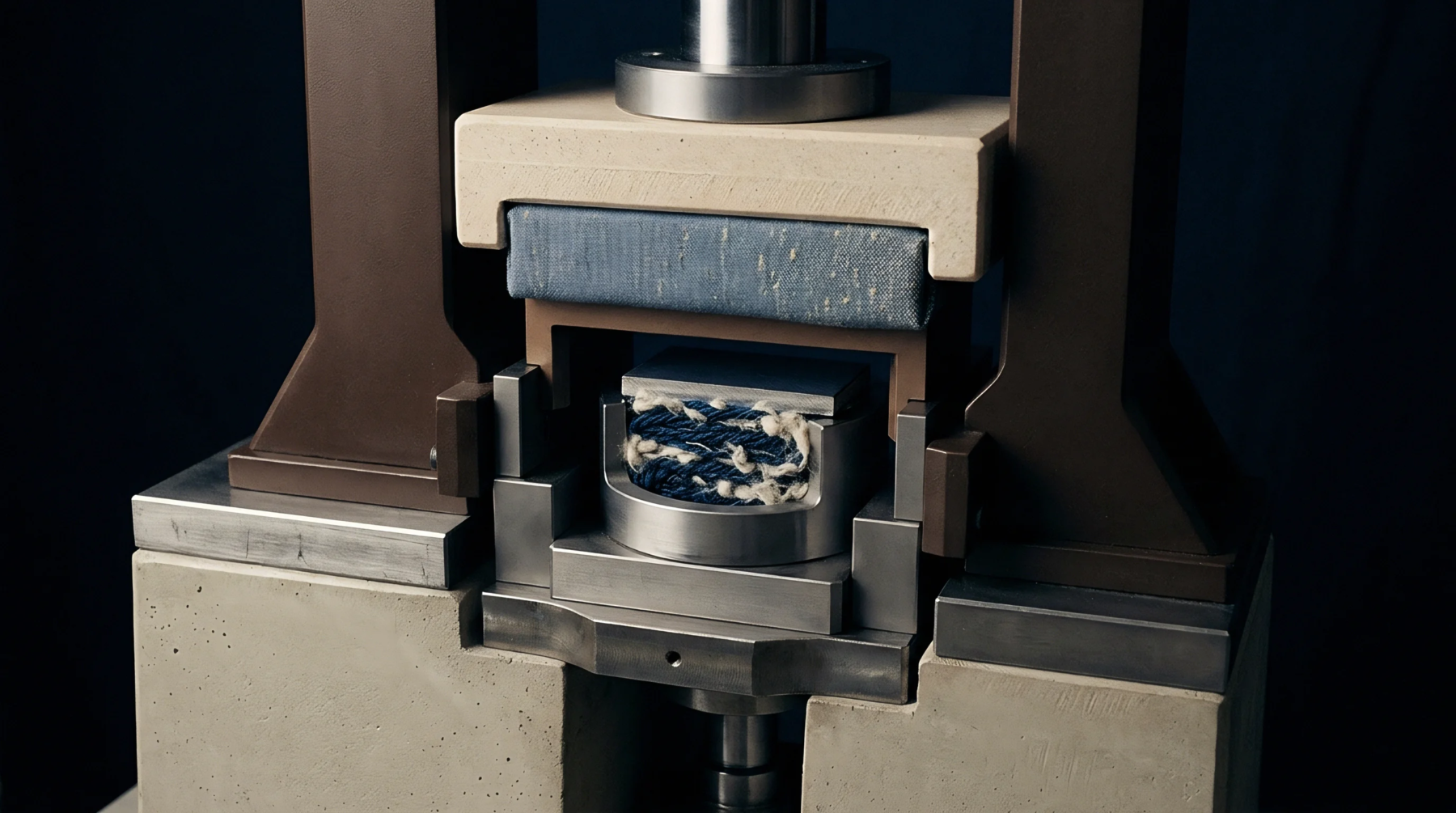
Tensile testing confirms that the encapsulation reduces the characteristic slick surface of raw spandex. This construction modification allows the yarn to mimic the natural hand of the wrapper fibre while retaining the high elongation and recovery of the core material. Resistance to laundering improves as the outer layer protects the core from thermal degradation and frictional wear.
Industry Application
Garment factories select these yarns to balance aesthetic hand feel with the high elasticity required for activewear and slim fit tailoring. Technical specifications for these textiles often list the dtex of the core and the count of the surrounding sheath to ensure compatibility with knitting machines or weaving looms. Consistent alignment within the final fabric prevents torque issues that arise when the core and wrapper have mismatched twist levels.