Standard Core Sampling Techniques for Raw Cashmere Bales
Core sampling raw cashmere bales under IWTO-38 provides objective scoured yield and micron data that prevents commercial overpayment before scouring.

Bore
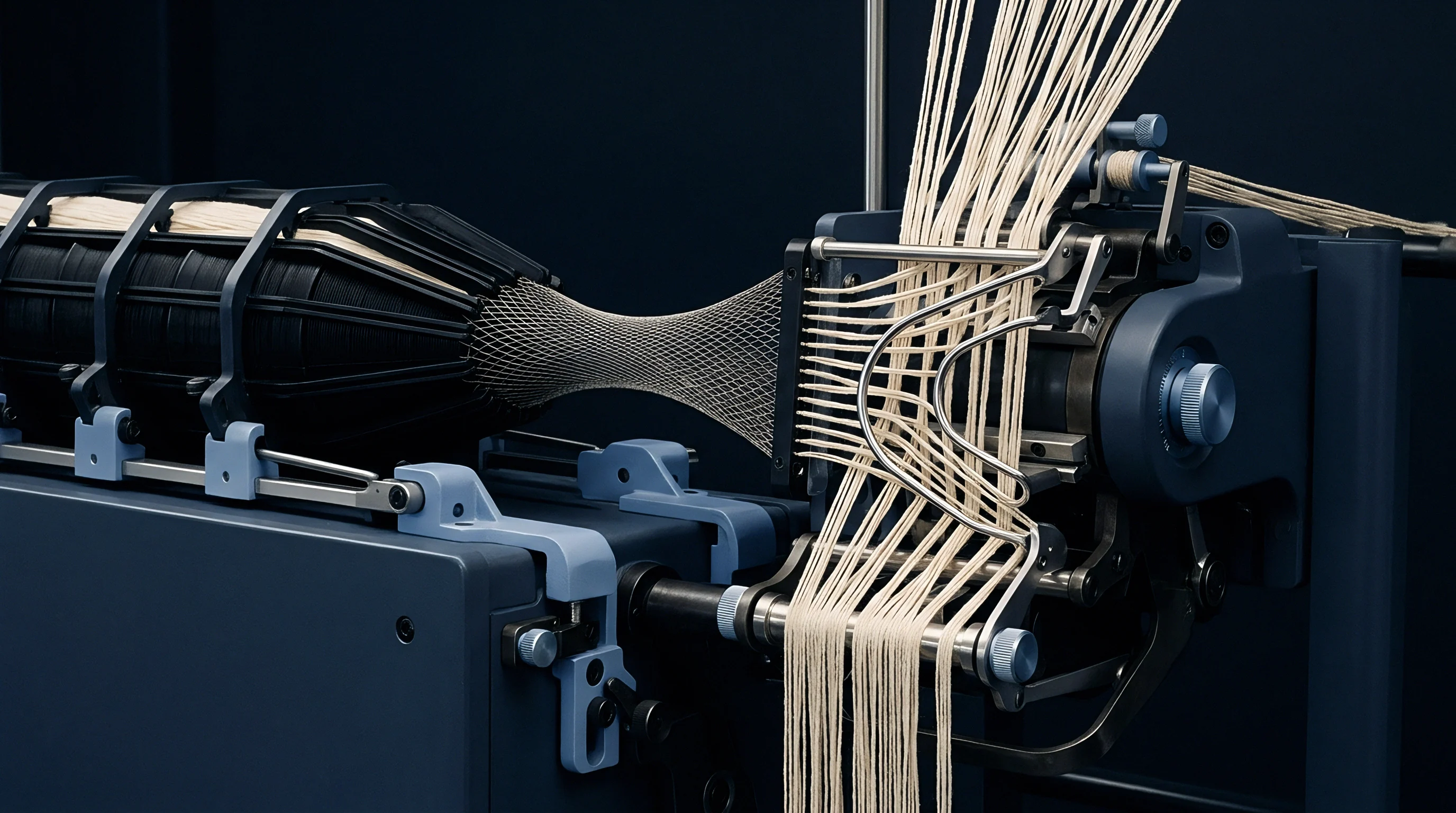
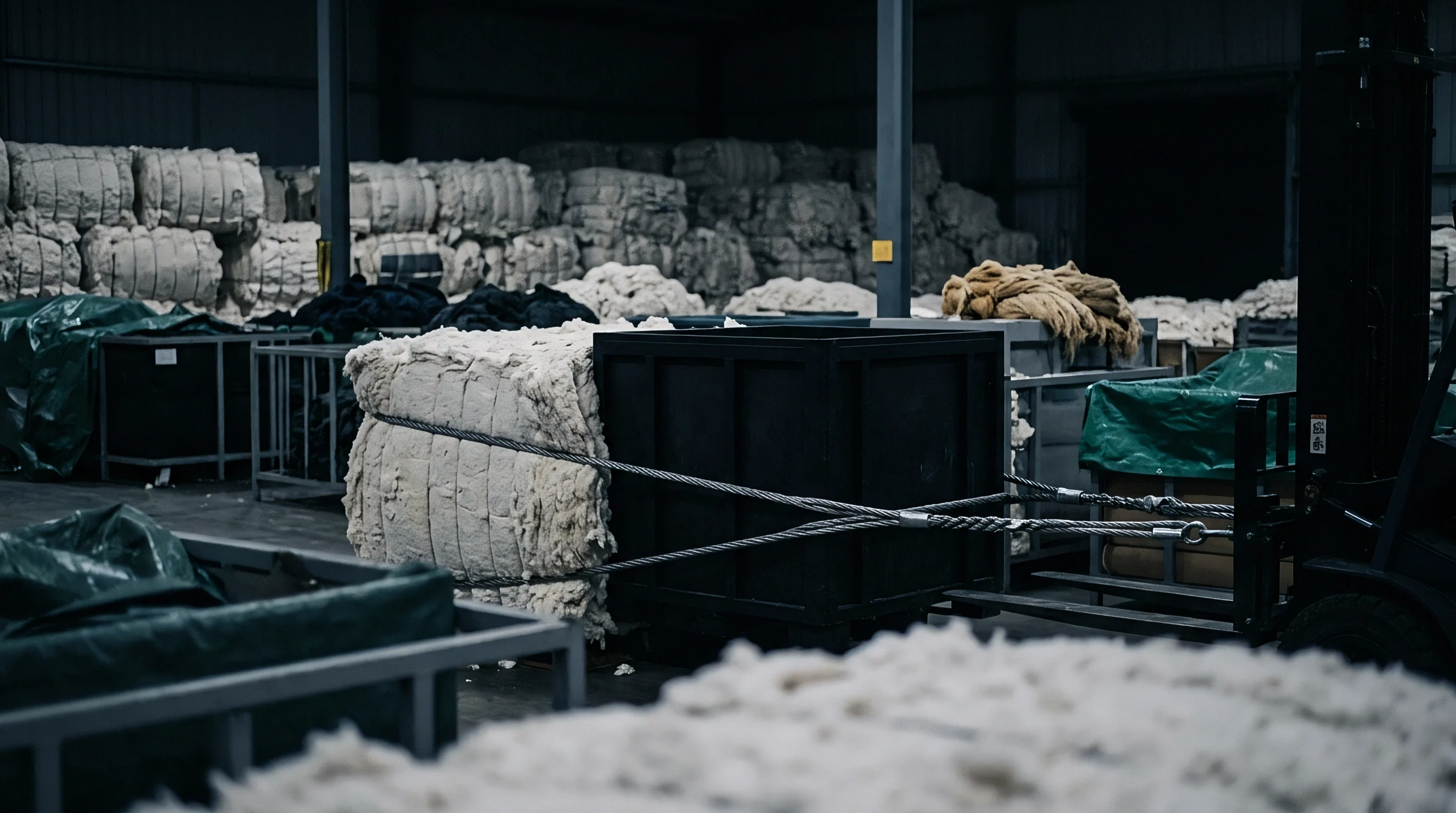
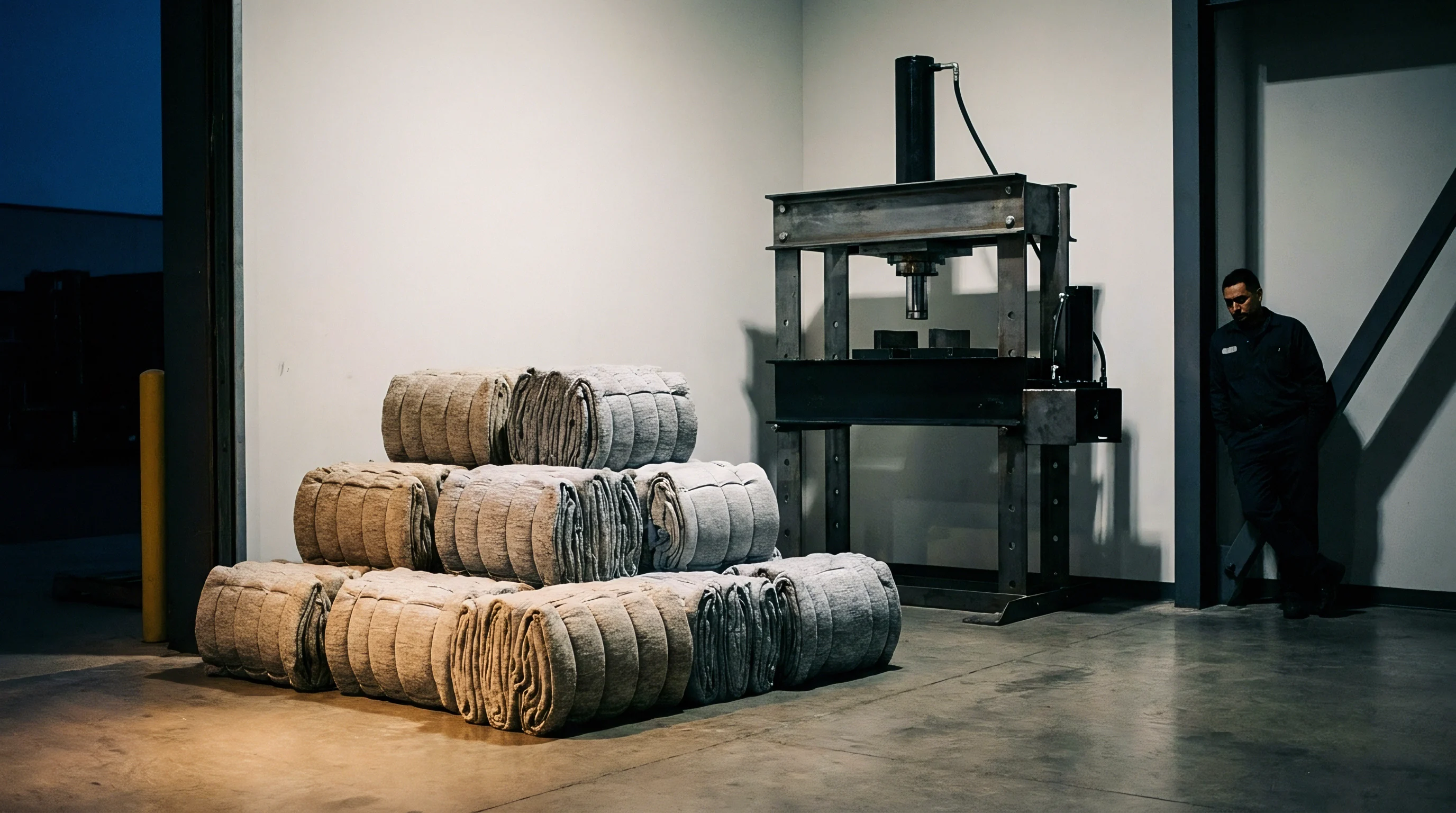
Rotary coring probes cut through dense, compressed fiber packs to extract representative cross-sectional material from commercial raw cashmere bales. Standard coring tubes use hardened stainless steel with an inside diameter of eighteen millimeters, or fifteen millimeters at the cutting tip. Extracting a valid core requires driving the rotating tube completely through the bale, perpendicular to the line of compaction.
That orientation captures every fleece layer across the density gradient built up during hydraulic baling.

Cutting Pressure and Pressure Tube Dynamics
Extraction equipment uses pneumatic cylinders operating between 500 and 700 kilopascals to drive stainless steel cutters into packed fleece. Greasy raw cashmere bales compressed past 350 kilograms per cubic meter offer heavy resistance to the advancing tip. If thrust is inadequate, the cutter head spins against the outer fleece without penetrating, generating localized frictional heat.
Keeping the advance speed steady maintains a continuous cut through the full depth of the bale without stalling or packing fiber inside the tube wall.
Tip Geometry and Thermal Fiber Degradation
Cutter edges ground to a sharp fifteen-degree angle slice cleanly through greasy hair structures without snagging. Keeping the bevel razor-sharp prevents pushing fibers ahead of the tube orifice during insertion. Friction along the inner wall of a blunted tube can raise local temperatures past eighty degrees Celsius within seconds of penetration.
Heat at that level alters residual suint, melts wool grease, and shifts the moisture state of the extracted fiber plugs. Sharpening schedules require inspecting extraction tips after every fifty core penetrations to check their condition.
- Position the raw bale securely on the sampling platform to prevent lateral movement during probe entry.
- Inspect the core tip edge for nicks, micro-burrs, or residual grease build-up before mounting the coring tube to the drive unit.
- Align the pneumatic tube drive perpendicular to the bale face, targeting the center of the compressed fleece layers.
- Activate the rotary drive and advance the tube through the bale at a uniform linear speed until reaching full penetration depth.
- Reverse the drive motor, retract the coring tube, and eject the fiber core plug directly into a pre-weighed airtight polyethylene bag.
Inadequate probe penetration leaves dense inner fleece unmeasured, undercounting dirt content and leaving the buyer with unexpected yield shortfalls at the mill.

Frequency
Statistical sampling plans dictate how many bales in a raw lot undergo coring prior to commercial testing. Standard sampling rates rely on the square-root rule set out in international fiber evaluation standards. Taking too few cores expands the confidence interval for mean fiber diameter beyond commercial tolerances.
Bale Selection Mathematics and Square Root Rules
International testing protocols mandate a sampling schedule based on total lot size to keep confidence limits within narrow bounds. Standard sampling density calls for a minimum number of cored bales calculated by multiplying the square root of total lot bales by five, rounded up to the nearest whole integer. For a fifty-bale shipment of greasy raw cashmere, technicians core twenty-four distinct bales.
Taking two core penetrations per bale yields forty-eight total core plugs. This distribution gathers enough fiber to meet the 150-gram dry mass required for full scoured yield and optical diameter testing under IWTO-38 guidelines.
A minimum sample mass of 150 grams drawn across 20 representative bales provides a fiber diameter confidence interval within 0.2 microns under IWTO-38 test conditions.

Lot Homogeneity and Baling Density Variations
Herds from different regions produce raw greasy clips that vary in dirt content, moisture levels, and hair coarseness. When raw lots combine fleeces of mixed regional origins, standard square-root sampling risks under-representing coarser outer fleece batches. High-density export bales compressed beyond 400 kilograms per cubic meter often show uneven mass distribution, with the core center holding more moisture than the outer surface.
Technicians compensate for lot heterogeneity by increasing core penetration density across both edge and center zones.
- Lot Size Verification matches shipping manifest numbers against physical bale tags prior to tube entry.
- Bale Selection Uniformity forces random sampling across top, middle, and bottom tiers of stored stacks.
- Depth Penetration Checks ensure the tube extends past ninety percent of the bale length during every thrust.
- Sample Container Integrity demands immediate sealing of core plugs inside heavy-gauge, vapor-tight bags.
| Lot Size Bales | Minimum Bales Core Sampled | Cores Per Bale | Target Gross Core Mass Grams | Expected Yield Confidence Limit % |
|---|---|---|---|---|
| 10 | 10 | 2 | 120 | ±0.85 |
| 25 | 16 | 2 | 160 | ±0.62 |
| 50 | 24 | 2 | 200 | ±0.45 |
| 100 | 35 | 2 | 250 | ±0.31 |
Under IWTO-38 Clause 4.2, purchase contracts can mandate that samples drawn without full bale depth penetration forfeit official certification, shifting all laboratory retesting costs to the seller.


Moisture
Raw cashmere contains volatile components including suint, natural grease, surface dirt, and water absorbed from storage environments. Fiber mass shifts continuously as ambient humidity fluctuates. Establishing true commercial mass requires driving off all moisture in standard conditioning ovens while determining clean scoured yield.

Conditioning Chamber Requirements and Mass Determination
Extracted samples are stored at twenty degrees Celsius and sixty-five percent relative humidity prior to gravimetric analysis. Oven drying then exposes the greasy core samples to a forced draft of dry air at 105 degrees Celsius until reaching constant mass. Constant mass is achieved when consecutive weighings taken fifteen minutes apart differ by less than zero point zero five percent.
Contractual valuation based on scoured fiber yield requires immediate oven-drying at 105 degrees Celsius following extraction, preventing unmeasured moisture loss from distorting calculated clean content.

Scoured Yield Calculations and Suint Removal
Washing raw samples in warm aqueous detergent baths removes water-soluble salts and grease before final drying. Scoured clean yield represents the percentage of pure fiber remaining after suint, vegetable impurities, and sand are removed from the greasy core sample. Commercial settlement then adds an agreed moisture regain allowance back to the oven-dry scoured fiber mass.
Under IWTO standards, the official commercial regain allowance for scoured cashmere base fiber is 17.00 percent.
| Material Fraction | Oven Dry Mass Range % | Commercial Allowance % | Analytical Method | Impact on Landed Cost |
|---|---|---|---|---|
| Clean Pure Fiber | 38.0 to 58.0 | 17.00 | IWTO-19 Scouring | Establishes net commercial fiber mass paid |
| Residual Wool Grease | 2.5 to 6.0 | 0.00 | Dichloromethane Extraction | Deducted from gross weight as waste |
| Suint and Dirt | 25.0 to 45.0 | 0.00 | Aqueous Rinsing and Filtration | Deducted from gross weight as inorganic trash |
| Absorbed Moisture | 8.0 to 14.0 | 0.00 | Oven Drying 105C | Replaced by contractual 17.00 percent regain |
Storing coring probes in cool, shaded room conditions before sampling prevents thermal transfer that could drive moisture out of raw fleece samples during penetration.

Sieve
Core samples drawn from greasy bales contain sand, soil, coarse guard hair, and vegetable fragments that interfere with measurement accuracy. Mechanical preparation separates clean cashmere down from non-commercial contaminants prior to diameter testing. Removing abrasive soil particles protects optical glass slide surfaces inside automated fiber diameter analyzers.

Mechanical Trash Separation and Coarse Hair Removal
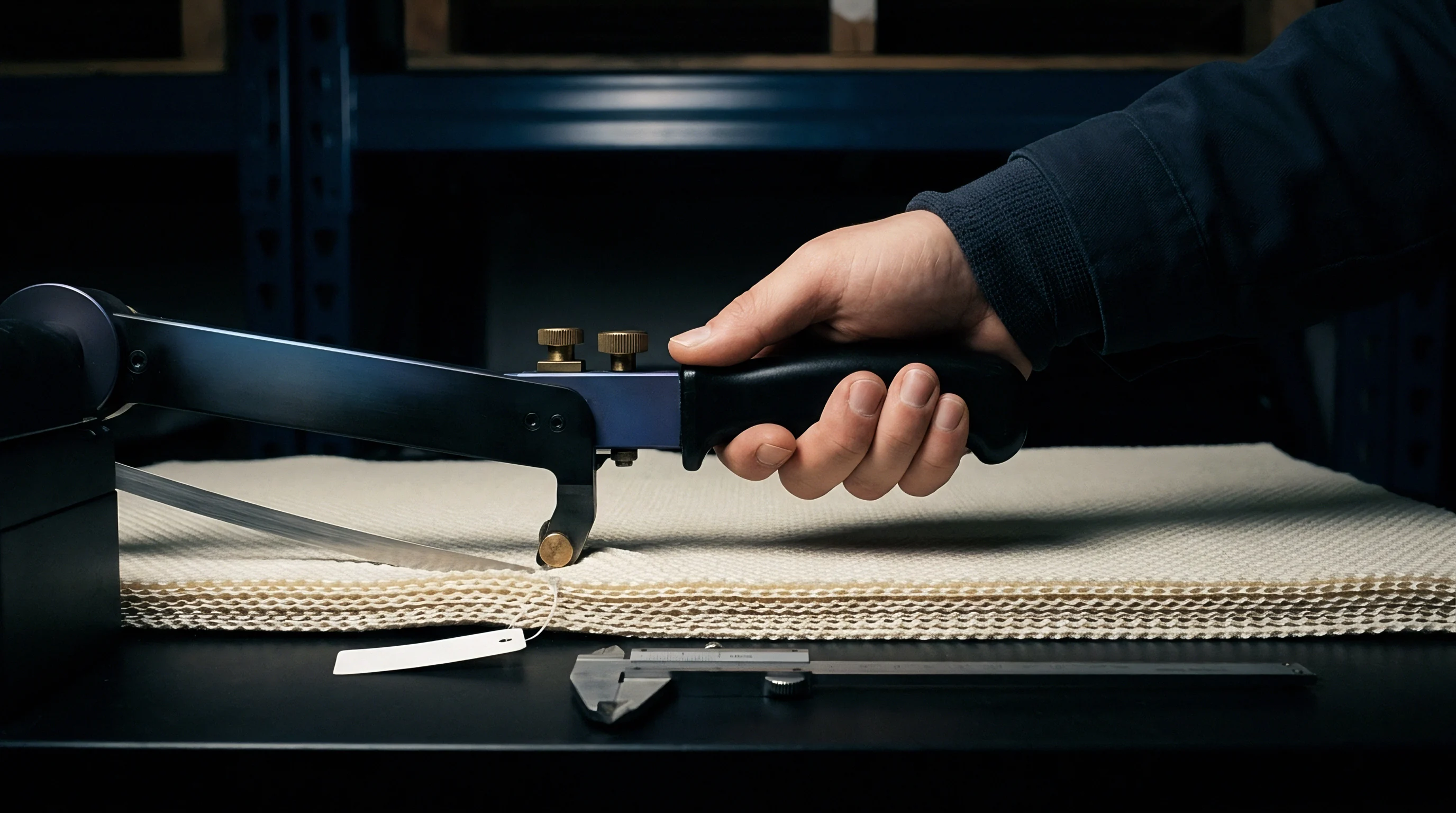
Standardized laboratory mini-cards separate vegetable matter from fine down fiber using differential cylinder speeds. Rotary wire clothing traps coarse guard hair fibers exceeding thirty microns while allowing fine cashmere down through to collection chambers. Mechanical deburring machines combine air suction with slotted mechanical combs to isolate clean down tufts.
If trash removal is incomplete, remaining particles can clog flow channels in automated optical instruments and produce false diameter spikes.
Excessive mechanical carding during fiber cleaning ruptures delicate cashmere tips and skews mean fiber length distributions downward.

Mini Carding versus Solvent Extraction Protocols
Chemical washing with dichloromethane strips residual wax without disturbing fine particle fragments caught inside raw sample plugs. Solvent extraction removes non-polar wool wax from the core sample surface prior to optical diameter analysis. Combining solvent extraction with mild mechanical opening isolates clean fiber strands for Optical Fibre Diameter Analyser or LaserScan testing without breaking soft fiber structures.
This step prevents grease films from inflating measured fiber diameter readings.
- Grease Film Residue leaves sticky coatings on fiber shafts that inflate optical diameter readings by up to zero point four microns.
- Vegetable Matter Entrapment introduces coarse plant cellulose fragments into laser beams, distorting sample standard deviation calculations.
- Guard Hair Contamination mixes coarse fibers exceeding forty microns into fine down distributions, invalidating cashmere purity classifications.
- Dust Particle Static holds fine mineral grains against fiber walls, creating artificial measurement artifacts during image analysis.
Exporters frequently argue that aggressive carding during laboratory preparation strips fine cashmere fibers along with guard hair, understating the actual commercial yield of the raw clip.
Disparity
Commercial valuation disputes arise when independent laboratory test reports return conflicting mean fiber diameter figures for identical greasy cashmeres. Core sample split testing frequently reveals variations between origin certificates and destination arrival tests. Resolving these differences requires statistical tolerance evaluation combined with clear contractual settlement formulas.

Interlaboratory Variance in Fiber Diameter Results
Testing instruments calibrated against different wool standards produce small shifts in micron readings between facilities. For instance, Optical Fibre Diameter Analyser systems measuring two-millimeter snippets can record mean diameter values zero point two microns finer than projection microscopy on identical raw lots. Environmental fluctuations away from standard atmospheric conditions also shift fiber diameter measurements.
Establishing an interlaboratory tolerance band protects trading parties from unnecessary commercial arbitration.
Optical fiber diameter analyzers record finer mean micron values than projection microscopy when residual suint coats the raw sample fibers.
When Do Core Sample Variations Trigger Retesting?
Trade regulations specify a tolerance threshold of zero point three microns between original seller certificates and buyer verification tests. Deviations within this zero point three micron window are resolved by averaging the two lab values for invoice settlement. Variations exceeding zero point three microns trigger mandatory retesting by an accredited neutral referee laboratory, which receives sealed reserve core samples drawn during the initial coring operation.
The referee result supersedes all previous reports, establishing the final contractual micron figure.
Commercial Invoice Adjustments and Landed Cost Arithmetic
Financial settlements apply price multipliers tied directly to clean yield percentage and mean micron thresholds. A typical raw cashmere purchase contract specifies a baseline price of 110.00 USD per clean kilogram for 15.5 micron fiber with a clean yield baseline of 48.00 percent. On a 10,000 kilogram raw greasy cashmere lot, sampling analysis might return an actual clean yield of 46.50 percent and a mean fiber diameter of 15.8 microns.
The 1.50 percent yield shortfall reduces total clean fiber weight from 4,800 kilograms to 4,650 kilograms. A contractual micron penalty clause deducting 4.00 USD per clean kilogram for every zero point one micron coarsening above the 15.5 micron baseline results in a 0.3 micron coarsening penalty of 12.00 USD per clean kilogram, dropping the clean fiber price from 110.00 USD to 98.00 USD per clean kilogram.
| Parameter | Contract Baseline | Test Result | Deviation | Commercial Adjustment USD |
|---|---|---|---|---|
| Gross Greasy Mass | 10,000 kg | 10,000 kg | 0 kg | 0.00 |
| Scoured Clean Yield % | 48.00 % | 46.50 % | -1.50 % | -16,500.00 (Yield deficit loss) |
| Clean Fiber Yield Mass | 4,800 kg clean | 4,650 kg clean | -150 kg clean | Base mass reduction |
| Mean Fiber Diameter | 15.50 microns | 15.80 microns | +0.30 microns | -55,800.00 (Micron penalty) |
| Effective Fiber Price | 110.00 USD/kg clean | 98.00 USD/kg clean | -12.00 USD/kg clean | Price shift per clean kg |
| Final Invoice Settlement | 528,000.00 USD | 455,700.00 USD | -72,300.00 USD | Net payable adjustment |
| Yield calculation follows IWTO-19 scoured clean basis with 17.00% commercial regain allowance. Price adjustments apply linearly per 0.1 micron increment above contract baseline. | ||||
Whether acoustic core drilling can replace mechanical cutting tips without damaging soft cashmere fibers remains an open question across commercial test houses.