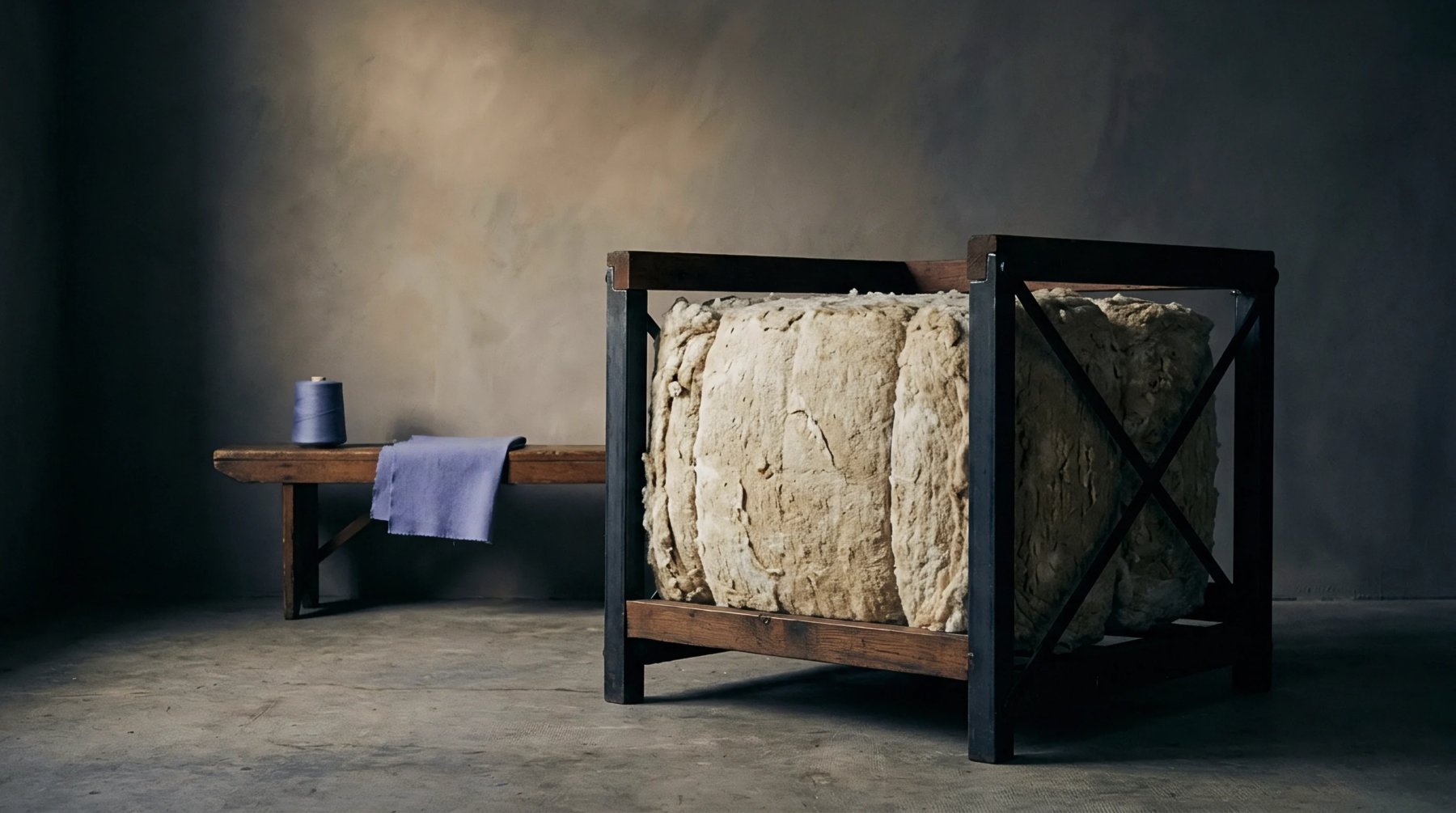
Determining Raw Cashmere Micron Profiles and Dehairing Yields
Determining raw cashmere value requires combined OFDA micron profiling and oven-dry yield mass balance testing to calculate true clean dehaired cost.
Natural grease and potassium salts found within raw sheep fleece constitute the physical mass removed during the initial scouring of industrial wool batches. The suint content represents the water-soluble portion of these impurities that originates from sweat glands and binds to the fibre structure prior to mechanical processing. Manufacturers isolate this specific fraction to distinguish it from the insoluble lanolin or wax components that require chemical surfactants for effective extraction.
High levels of these dried secretions indicate a fleece that carries significant weight beyond the intended keratin yield. Accurate accounting for these mass fractions ensures that procurement contracts reflect the net weight of usable protein fibre rather than the accumulated salts and organic matter from the animal.
Processing facilities measure the suint content by submerging weighted samples of unwashed wool in distilled water at controlled temperatures. This process dissolves the potassium soaps and urea salts into a liquid phase that remains distinct from the solid fibre and the hydrophobic wax layer. Technicians analyze the resulting aqueous solution to determine the total concentration of these soluble solutes.
Stable readings inform the temperature settings for subsequent scouring baths while preventing the overload of wastewater treatment systems with excessive saline discharge. Periodic testing allows for adjustments to the volume of rinse water required to achieve a clean output.
Fibre manufacturers target the suint content because the ionic nature of these residues interferes with downstream chemical treatments such as acid dyeing or bleaching. The alkaline characteristics of the residual salts alter the pH balance of mordant solutions. This shift causes uneven absorption of pigments across the yarn surface during large scale immersion.
Uniform removal of these deposits permits precise control over the uptake of synthetic colourants during the finishing stages of textile production. Proper management minimizes the risk of mottled appearances on finished fabric surfaces.
Quantitative evaluation of the suint content serves as a financial check against the raw bulk delivered from agricultural sources. Mills subtract the calculated percentage of these soluble solids from the gross weight of every received shipment. Suppliers who provide greasy wool with elevated levels of these salts experience price deductions based on the actual fibre yield per kilogram.
The industry standardizes this subtraction to maintain parity when trading different sheep breeds that produce varying ratios of sweat salts to base wool. Total weight loss during the cleaning phase determines the final cost basis for the mill as the residue possesses little secondary value compared to the purified lanolin recovered from other stages. Precise measurement of these non-fibre components remains the only method for validating the commercial worth of raw material deliveries.
Determining raw cashmere value requires combined OFDA micron profiling and oven-dry yield mass balance testing to calculate true clean dehaired cost.
Expertise is a utility, not a secret. sentiention™ publishes its working knowledge as open reference: intelligence layer covering the materials it sources, the markets it enters, and the reference that serves both.