Refining Joint Sampling Mechanics for High Volume Instrument Strength Claim Arbitration
Joint HVI sample drawing demands seventy-five millimetre penetration depth, strict dual-side extraction, and twenty-four-hour conditioning to defend tenacity claims under international cotton rules.
Lot
Bales of raw cotton arriving at mill docks often show marked strength variations from bale to bale. Under International Cotton Association rules, high volume instrument tensile readings govern both lot acceptance and invoice adjustments. Yet when a buyer disputes a seller’s declared bundle strength, the case is frequently decided at the sampling stage, well before any test comb reaches the clamp.
Because cotton fibre strength sets practical spinning limits, arbitration sampling demands strict joint execution by certified representatives for both parties. Unilateral draws carry no legal weight under Bremen Cotton Exchange standards or USDA classing rules. Joint draws ensure that every sampled bale undergoes the same extraction depth, moisture exposure, and tamper-evident sealing.
| Arbitration Standard | Minimum Sampling Ratio | Cut Specimen Mass | Conditioning Window | Allowed Retest Tolerance |
|---|---|---|---|---|
| ICA Rule 210 | 10 percent minimum or 100 percent disputed | 125 grams per side | 24 hours at 65 percent RH | 1.0 gram per tex |
| Bremen Rules Art. 45 | 100 percent of disputed bales | 150 grams per side | 24 hours at 65 percent RH | 0.8 grams per tex |
| CSITC Guideline 3 | 20 percent random lot sampling | 100 grams per side | 12 to 24 hours conditioned | 1.2 grams per tex |
| USDA HVI Classification | 100 percent all bales | 100 grams per side | Active pneumatic 15 mins | 1.0 gram per tex |
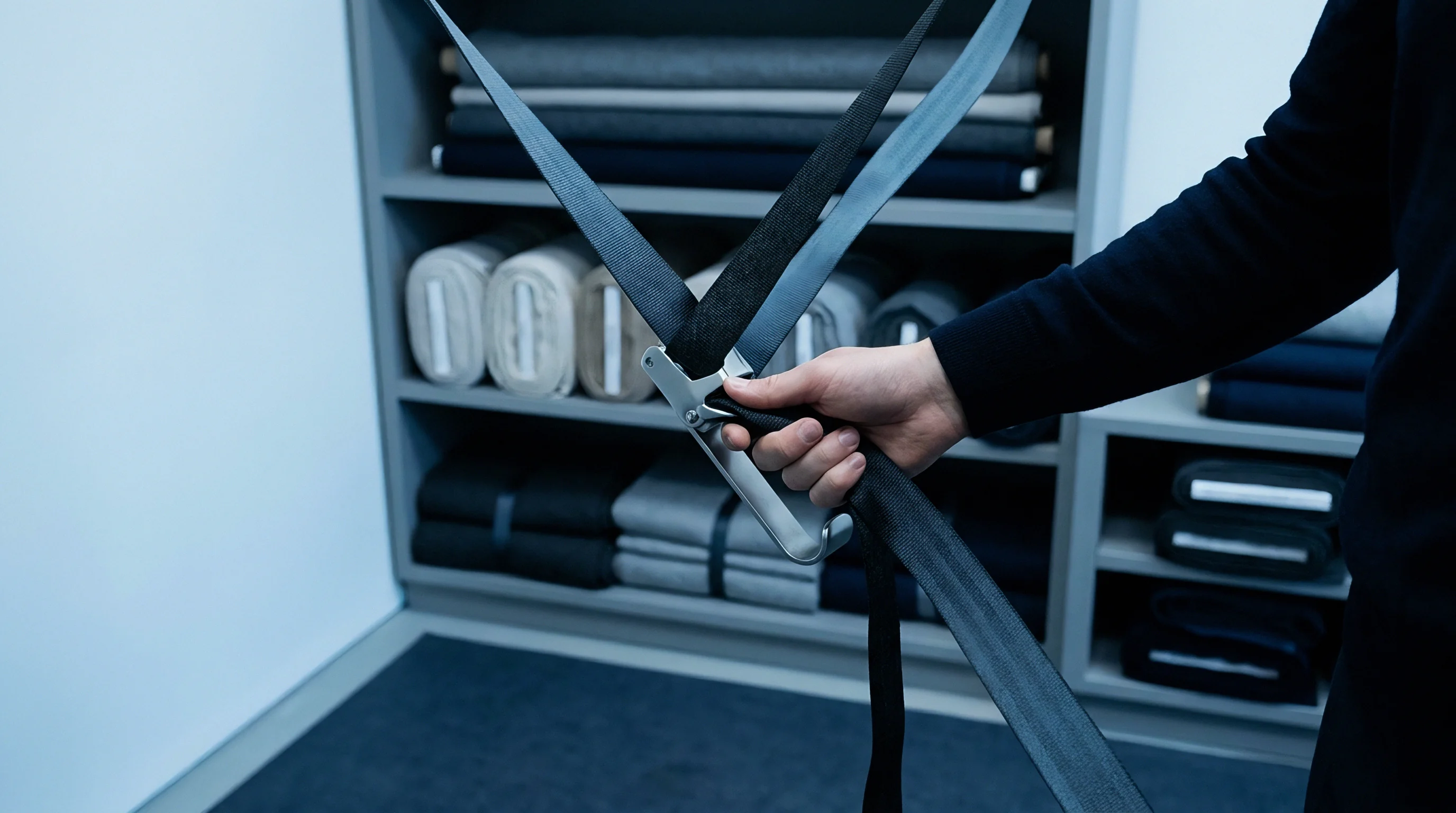
Sampling demands physical symmetry: technicians cut two portions from opposite sides of each bale, driving at least 75 millimetres below the wrapping. Outer layers take on ambient moisture during ocean transit and will distort breaking force if allowed into the test specimen.
Joint sample extraction succeeds only when draw depth penetrates past outer bale layers into undisturbed interior fibre.
Density variations caused by uneven compression across ginning sites create internal strength gradients that skew automated comb preparation. Technicians must draw identical masses from both sides of the bale, packing them into dual-layer tamper-evident paper bags to block moisture exchange en route to the arbitration laboratory.
- Cut outer packaging straps cleanly without disturbing underlying compressed fibre layers.
- Reach seventy-five millimetres beneath the bale surface to bypass weather-exposed raw cotton.
- Extract one hundred fifty grams of raw fibre from the left side of the bale layer.
- Extract one hundred fifty grams of raw fibre from the right side of the same bale layer.
- Combine both extracts into a dual-chamber paper sample envelope stamped with the lot bale number.
- Apply tamper-evident security seals signed jointly by buyer and seller classing agents.
Missing the contractual deadline for joint sampling forfeits all retesting rights. The rejecting party carries the burden of establishing sample integrity through unbroken seals and complete chain-of-custody logs; a loose sample drawn without joint signatures has no standing before international arbitration boards.
Tenacity
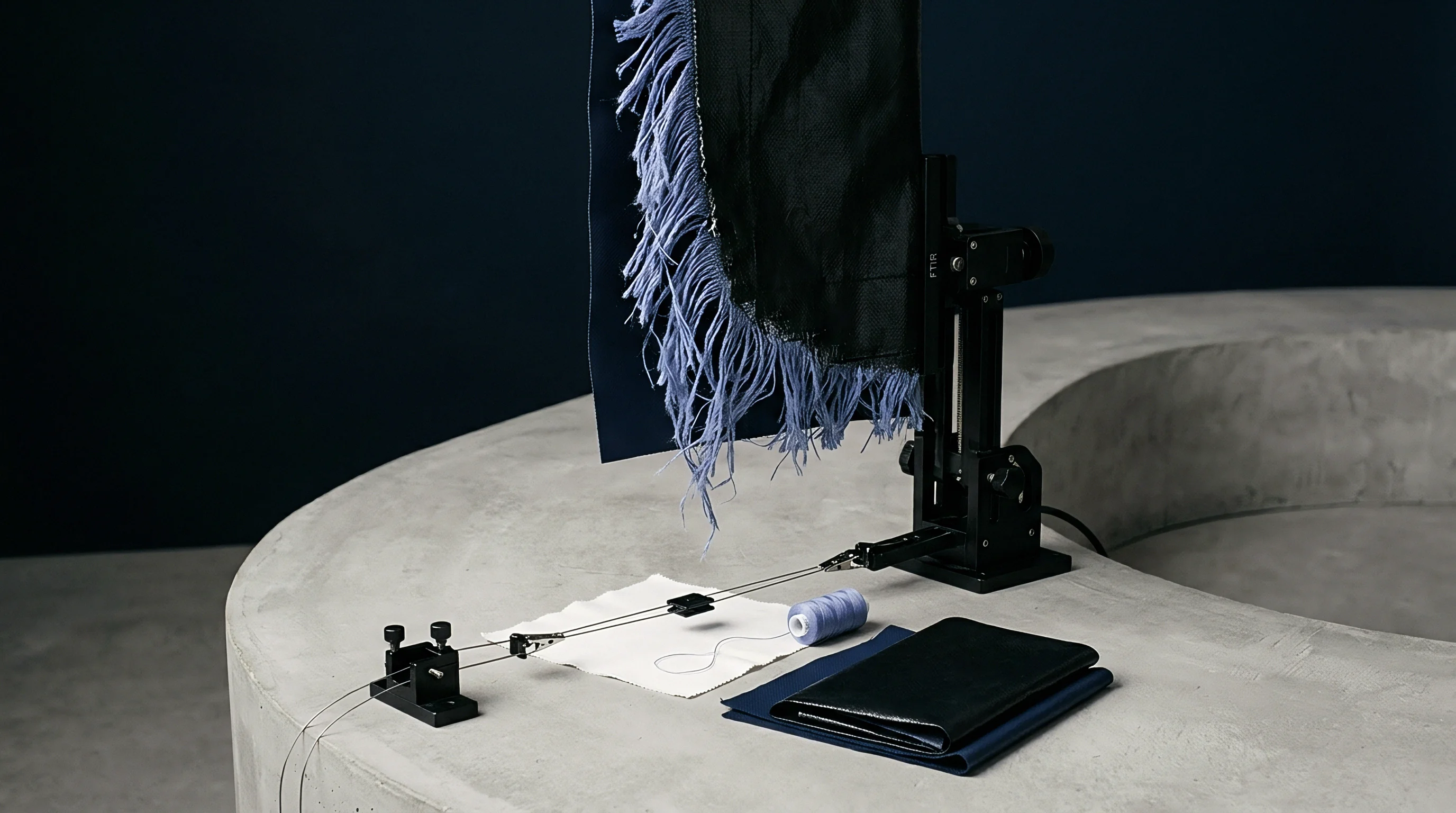
High Volume Instrument bundle testing records the force needed to break a conditioned fibre specimen under fixed clamping geometry. Under ASTM D5867 and ISO 3060, tensile tenacity is calculated as breaking force divided by linear mass density, reported in grams per tex. Reliable figures depend on maintaining an exact 3.175-millimetre gap between the breaker jaws ~ the standard one-eighth-inch gauge.
Moisture directly governs bundle tenacity, causing dry cotton to fail prematurely under tension. As cotton absorbs water, hydrogen bonds in the crystalline cellulose realign, lifting individual fibre tenacity roughly one percent for every 0.1 percent rise in moisture regain across the five to nine percent equilibrium range.
| Conditioning RH (%) | Equilibrium Regain (%) | Measured Tenacity (g/tex) | Variance from Standard | Financial Claim Status |
|---|---|---|---|---|
| 55.0 | 5.2 | 27.1 | -1.9 g/tex | Seller Penalty Applies |
| 60.0 | 6.1 | 28.2 | -0.8 g/tex | Within Retest Tolerance |
| 65.0 (Standard) | 7.0 | 29.0 | 0.0 g/tex (Baseline) | Contract Specification Met |
| 70.0 | 8.0 | 29.9 | +0.9 g/tex | Buyer Claim Rejected |
| 75.0 | 8.9 | 30.7 | +1.7 g/tex | False Performance Gain |
Because linear mass density anchors load calculations, High Volume Instruments estimate micronaire and mass per unit length via optical attenuation or pneumatic resistance along the comb. If optical sensors collect wax, micro-dust, or fine trash, the system overstates linear density, producing an artificially low g/tex reading.
Conditioning cotton below six percent moisture regain reduces measured bundle breaking force by up to two grams per tex.
Standard testing environments require 21 degrees Celsius ± 1 degree and 65 percent relative humidity ± 2 percent. Without continuous logging, humidity drift quickly corrupts arbitration results: a five percent drop in relative humidity can pull a lot out of premium tier straight into claim territory.
Jaw clamping pressure alters breaking mechanics directly: insufficient force lets fibres slip between the pads, lowering tenacity while inflating elongation, whereas excessive pressure pinches and crushes fine-micronaire fibres along the jaw margin to cause premature breaks.
Uncalibrated jaw pressure invalidates high volume instrument tenacity determinations across commercial shipments.
Comb
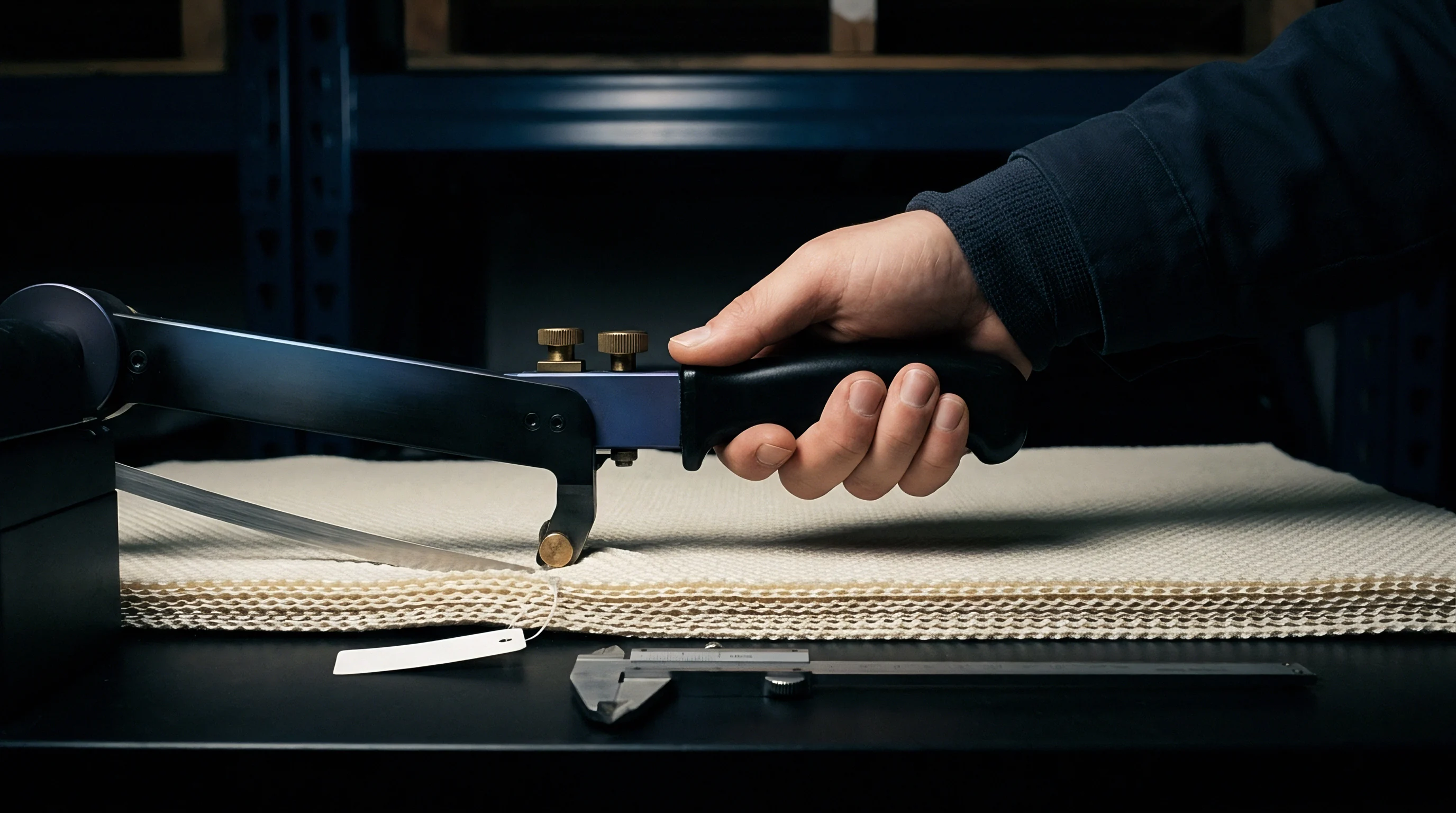
Automated specimen preparation uses mechanical carding teeth to collect and align fibres from the bulk sample. The comb passes through the tray to lift a representative beard, which is then brushed to strip out loose fibres and short fragments before presentation to the breaker jaws.
Comb alignment directly governs beard density. When teeth bend, wear down, or foul with botanical trash, the beard thins below operating thresholds, leading the optical sensor to misread mass distribution along its length and distorting the breaking load during testing.
- Over-Brushing Fibre Extraction removes excessive sound long staple fibers alongside short fiber content, skewing the mean length and artificially elevating bundle strength.
- Insufficient Comb Clamping Force allows longer fibers to pull free from the comb during brushing, creating an asymmetrical beard profile and depressed breaking values.
- Sensor Optical Contamination distorts specimen mass estimation by obscuring light sensors, leading to incorrect mass-to-break force ratios.
- Asymmetrical Specimen Beard Taper causes uneven load distribution across the breaker jaws, causing progressive rather than simultaneous fiber breakage.
Discrepancies between manual flat-bundle methods and automated comb draws remain a source of trade friction. While manual Stelometer tests isolate fibres by hand and discard short fragments altogether, automated HVI combs take an unselected cross-section that more closely matches factory spinning conditions.
ICA Rule 218 mandates joint re-sampling within twenty-one days of claim notification to preserve legal standing for commercial arbitration.
Disagreements over specimen comb preparation frequently surface during formal retest negotiations, where aggressive brushing can strip sound long fibres and depress the laboratory’s final g/tex reading.

Variance
Round-robin trials show persistent divergence between identical cotton samples run on different High Volume Instrument lines. Commercial Standardization of Instrument Testing of Cotton benchmarks record within-lab repeatability standard deviations between 0.9 and 1.2 grams per tex, widening to 1.5 to 2.2 grams per tex for inter-laboratory reproducibility. Contract arbitration has to reckon with this spread before levying discounts.
Retest provisions hold financial claims in check: standard contracts grant a tolerance margin ~ usually 1.0 gram per tex ~ before penalties attach. If a buyer claims a lot invoiced at 30.0 grams per tex delivers only 28.5 grams per tex, the 1.5 gram per tex deficit breaks past the 1.0 gram per tex threshold and initiates formal joint retesting.
| Strength Deficiency Band | Commercial Penalty Level | ICA Rule 220 Invoice Adjustment | Arbitration Retest Action |
|---|---|---|---|
| 0.00 to 0.99 g/tex | Zero Penalty | 100% Invoice Value Retained | Claim Dismissed |
| 1.00 to 1.99 g/tex | Minor Discount | 1.5% Contract Value Deduction | Single Joint Retest Binding |
| 2.00 to 2.99 g/tex | Major Discount | 3.5% Contract Value Deduction | Dual Laboratory Retest Required |
| 3.00 g/tex and above | Rejection Option | Full Lot Rejection or 7.0% Discount | Neutral Reference Lab Final |
Optical sensors determine linear density for breaking calculations. In a practical case involving a 100-bale lot of Upland cotton weighing 22,000 kilograms net, the contract specifies a minimum strength of 29.5 grams per tex at $2.10 per kilogram, for a total value of $46,200. Arrival testing returns 27.8 grams per tex, leaving a 1.7 gram per tex shortfall.
Can Joint Retesting Eliminate Inter-Laboratory Machine Bias?
Joint retesting provides legal standing, not a cure for baseline instrument drift. During the retest, buyer and seller representatives observe conditioning and verify calibration against official USDA calibration cottons. If the joint run yields 28.3 grams per tex, the lot still sits 1.2 grams per tex under specification, exceeding the 1.0 gram per tex contractual allowance.
Laboratory elevation above sea level alters barometric pressure and specimen mass readings unless microbalance calibrations compensate dynamically.
Under ICA terms, a 1.2 gram per tex net shortfall triggers a 1.5 percent discount across the entire shipment. The unit price falls to $2.0685 per kilogram, resulting in a $693.00 credit note due from the seller, plus apportioned retesting costs.
- Standardized Retest Calibration Verification confirms that calibration cotton tiles fall within official USDA target ranges before running disputed lot specimens.
- Dual Envelope Sealing Mechanics ensures neither party accesses cut arbitration samples prior to formal laboratory unsealing.
- Moisture Equilibrium Certification records continuous temperature and relative humidity logs for twenty-four hours preceding specimen break testing.
- Statistical Confidence Interval Assessment calculates whether retest deltas exceed standard instrument reproducibility limits before invoking contractual rejection options.
Bremen Cotton Exchange Rule 48 specifies that when joint arbitration retest values fall within the agreed allowance band, the original bill of lading invoice stands without discount, and the buyer absorbs all retesting fees.
Resolution
International trade rules set out explicit procedures for financial settlement once arbitration retests establish a confirmed strength deficit. Neutral reference facilities, such as ICA Bremen or USDA Cotton Program laboratories, issue binding rulings whose certificates displace earlier shipping documents to settle the final invoice.
Because fibre tenacity directly governs yarn breakage, modern rotor and air-jet frames require high bundle strength to hold end-down rates below twenty per thousand rotor hours. Sub-par cotton degrades spinning efficiency immediately, driving up yarn conversion costs per kilogram.
Tenacity claims have no bearing on customs classification: raw uncarded cotton enters under Harmonized System heading 5201.00 irrespective of measured strength. Commercial settlements are handled entirely through credit notes or revised commercial invoices between the trading parties, avoiding the need for customs amendments.
Purchase contracts avoid protracted disputes when they explicitly define the arbitration authority, retest tolerances, sampling depths, and conditioning protocols upfront. Explicit technical criteria in the initial contract keep arbitration contained and protect working relationships across international cotton supply chains.