Standardizing Core Sampling Protocols for Moisture Mass Adjustments in Wool Imports
Standardized core sampling under IWTO-19 aligns declared wool shipment weights with oven-dry commercial mass, eliminating moisture-driven invoice disputes.

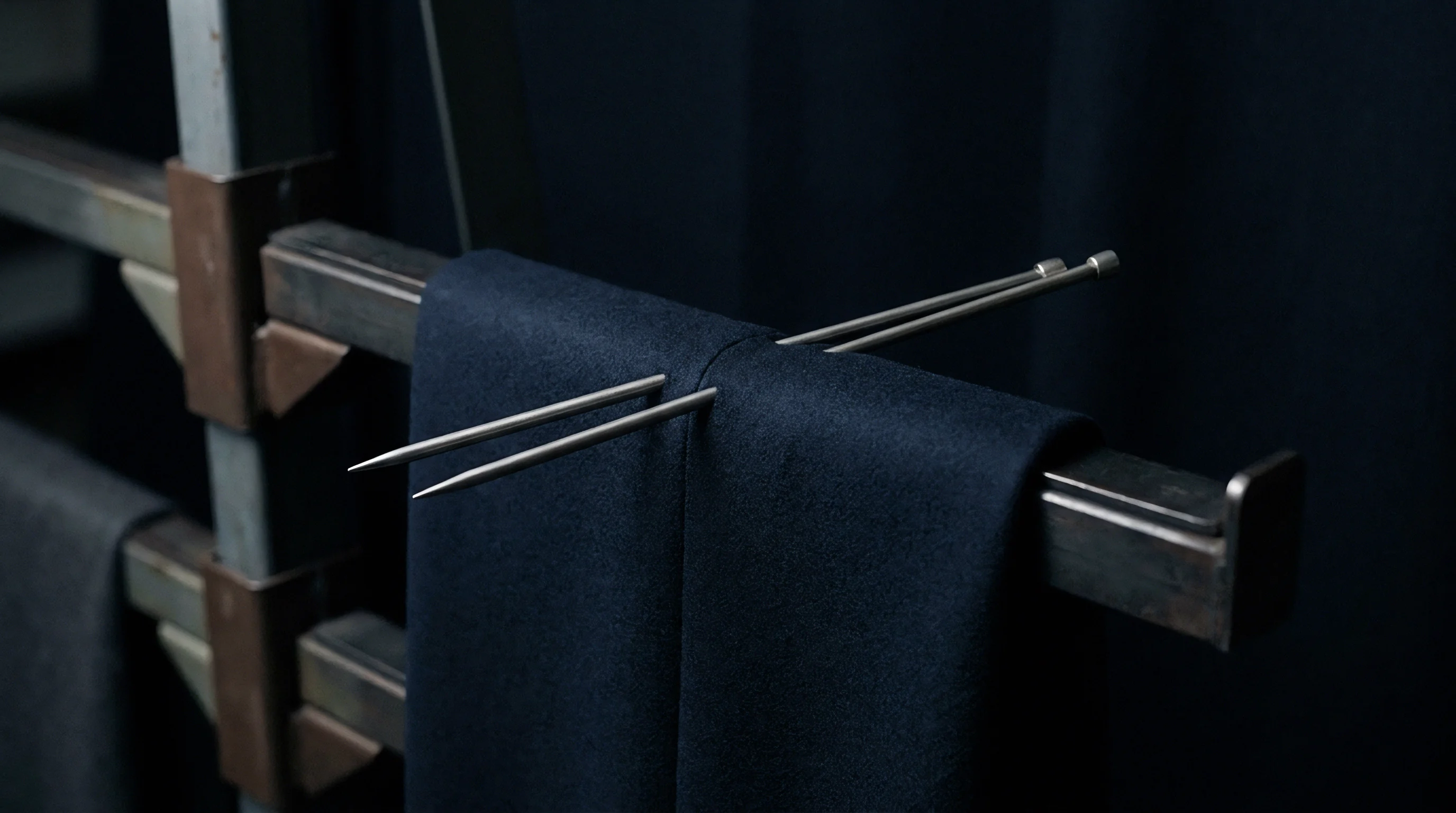
Probe
Inside a high-density export bale, internal pressure reaches thirty megapascals across the outer cap. Extracting a representative core from such a compacted pack requires driving a rigid stainless steel tube deep into the bale center. After forty entries, however, steel cutters dull.
Once the tip loses its edge, the tube pushes dense fiber bundles ahead of the barrel rather than slicing clean plugs ~ a mechanical failure that skews the sample toward coarse outer fibers while missing the finer inner core.
Standard coring equipment uses tip diameters between 12.5 millimetres and 18.5 millimetres. How cleanly the edge severs staple bundles without compressing the surrounding pack depends on the internal bevel of the cutter tip. External bevels, by contrast, increase penetration resistance; the resulting frictional heat evaporates volatile surface moisture as the tube enters.
That frictional heating can lower localized moisture levels by up to zero point five percent before the sample is safely sealed.
Sampling core tubes require sharpened interior bevels to cut clean wool fiber plugs without pushing dense material deeper into the bale pack.
Penetration depth dictates whether a core captures the moisture gradients inside dense packs. Greasy wool stored in unheated port warehouses draws atmospheric water into its outer layers; a shallow probe samples only this humid shell, artificially inflating the moisture figure calculated for the whole shipment. While hydraulic rams drive cutters reliably through dense packs, hand-driven rotary tools often lack the force to reach the geometric center of dumped wool, leaving technicians with superficial samples.
Ambient port humidity during stuffing operations frequently drives sample mass discrepancies recorded upon discharge.

Specimen
Sampling arrays under IWTO-19 establish a minimum core count based on total lot mass and container layout. For a standard twenty-tonne container holding sixty-six high-density bales, obtaining statistical confidence requires at least twenty core extractions. The sampling pattern gives every bale position inside the container an equal chance of being cored.
Because container condensation alters surface bale weight and water absorption inflates cargo mass, concentrating cores on doorway bales exposed to marine air skews the calculated dry mass of the entire lot.
Core sample bags require immediate hermetic sealing after extraction. Polyethylene bags at least one hundred microns thick prevent moisture exchange with ambient air; unsealed containers left in humid port laboratories can gain up to zero point eight percent in mass within two hours. Tube diameter also influences representativeness.
Narrow barrels yield too little mass per core, forcing extra punctures that damage protective packaging.

Grid Selection Strategies for High Density Bales
Stacked bales inside shipping containers create non-uniform pressure gradients that push moisture toward outer surfaces. To bypass these wet spots, technicians lay geometric coordinate patterns across bale faces. Randomized patterns prevent technicians from favoring soft bale shoulders where inserting the tube takes less effort.
The following sampling failure modes routinely compromise import mass calculations in commercial wool testing laboratories:
- Shallow core entry occurs when hand-held coring rigs fail to reach central bale zones, capturing only atmospheric surface moisture.
- Thermal moisture loss develops when dull cutter edges generate frictional heat exceeding forty degrees Celsius during penetration.
- Bag leakage happens when thin sample bags tear along heat-sealed seams, allowing ambient moisture exchange before laboratory weighing.
- Pattern clustering results from technicians coring only accessible doorway bales inside tightly packed shipping containers.

Penetration Depth and Tube Mechanics
Cutter tips ground with a fifteen-degree internal bevel slice cleanly through coarse crossbred wool without tearing individual fibers. Keeping the tip radius below zero point zero five millimetres minimizes the required axial driving force, which in turn stops the wool pack from compressing ahead of the cutting edge.
| Tube Parameter | Standard Specification | Mechanical Tolerance | Impact on Mass Adjustment |
|---|---|---|---|
| Internal Tip Diameter | 15.0 mm | +- 0.2 mm | Controls sample mass per core penetration length |
| Tip Bevel Angle | 15 Degrees Internal | +- 1.0 Degree | Prevents core plug compression and heat generation |
| Barrel Tube Wall | 1.5 mm Stainless Steel | +- 0.1 mm | Resists buckling force inside thirty megapascal bales |
| Minimum Core Depth | 600 mm Entry Depth | +- 10.0 mm | Ensures sampling penetrates central bale core zones |
| All measurements conform to International Wool Textile Organisation standard core sampling equipment specifications. | |||
Thicker tubes suit coarse crossbred clip, whereas narrower barrels are better suited to fine merino bales whose packing density resists entry.

Regain
Dry mass determination under IWTO-33 relies on forced-air oven drying at 105 degrees Celsius until consecutive weighings show constant mass. Raw clip contracts specify commercial moisture regain. Converting greasy core mass into commercial clean weight accounts for scoured yield, residual grease, vegetable matter, and regain adjustments.
Because clean yield drives ultimate value, standard trade conventions fix regain allowances at sixteen percent for scoured wool and eighteen point two five percent for wool tops.
Take a twenty-tonne (20,000 kg) greasy wool import shipment invoiced at gross landed mass. A certified core test shows an oven-dry clean wool yield of 62.5 percent, with 13.0 percent moisture, 1.5 percent residual grease, and 1.0 percent vegetable matter. Grease levels dictate drying thresholds, as excessive heat can char vegetable contaminants.
The calculation sequence converts raw landed lot mass into commercial clean mass:
Base Oven-Dry Clean Mass = 20,000 kg × 0.625 = 12,500 kg.
Commercial Clean Mass = Base Oven-Dry Clean Mass (1 + (Standard Regain Allowance / 100)).
Applying the standard scoured regain allowance of 16.0 percent yields:
Commercial Clean Mass = 12,500 kg × 1.160 = 14,500 kg.
If the lot arrives at 15.5 percent moisture instead of the baseline 13.0 percent, physical weight rises without adding clean fiber. The weighbridge reads 20,588 kg for the same mass of clean wool. Without standard core sample adjustments, an importer pays freight and tariffs on 588 kg of excess water; core testing removes that water weight from the final settlement.
A standard commercial regain of eighteen point two five percent applies to wool tops tested under twenty degrees Celsius and sixty five percent relative humidity.
Laboratory Oven Desiccation and Residual Volatiles
Convective air movement in testing chambers drives off bound moisture while leaving residual grease intact. Operating temperatures are kept at or below 110 degrees Celsius to avoid degrading keratin proteins, as thermal breakdown frees volatile compounds that artificially inflate measured moisture loss.
Unadjusted alcohol extractables inflate declared dry weight, leaving buyers paying wool prices for residual grease and dirt.


Ledger
Financial settlement for imported greasy wool depends on the commercial mass calculated from core test certificates. Worldwide, customs authorities accept standard regain allowances incorporated into this formula. Relying on certified clean mass protects importing mills against paying raw material prices for absorbed sea moisture.
| Wool Classification | Standard Moisture Regain | Commercial Mass Allowance | Trade Application |
|---|---|---|---|
| Greasy Fleece Wool | 13.0 Percent Base | 16.0 Percent Scoured Equivalent | Raw Auction and Export Contracts |
| Scoured Fleece Wool | 16.0 Percent Standard | 16.0 Percent Commercial Allowance | Direct Mill Import Intake |
| Combed Wool Slivers | 18.25 Percent Standard | 18.25 Percent Commercial Mass | Worsted Spinning Applications |
| Carbonized Clip | 17.0 Percent Standard | 17.0 Percent Commercial Allowance | Woollen Carding and Felt Stock |
Commercial Mass Formula Mechanics
Standard calculations convert oven-dry sample mass into tradeable weight using recognized regulatory allowances, isolating clean wool fiber from volatile compounds and non-wool matter.
- Verify weighbridge gross mass against container shipping manifests upon arrival at port terminals.
- Extract core samples across container bales following IWTO-19 selection grids within twenty-four hours of discharge.
- Seal combined core specimens in moisture-impermeable bags and record initial gross sample weight immediately.
- Perform oven drying under IWTO-33 conditions until consecutive weighings show mass change under zero point zero two percent.
- Calculate commercial mass by applying standard regional regain allowances to the resulting oven-dry figures.
- Issue an adjusted commercial invoice deducting excess water mass prior to customs tariff declaration filing.
Tariff Classification Impacts
Customs authorities assess duties on landed net mass adjusted for scoured yield rather than total gross weight. Unsealed core bags exposed to port humidity produce inaccurate readings. Port authorities hold shipments when verified laboratory moisture certificates conflict with manifest bills of lading.
The following verification steps prevent financial overpayment on moisture-inflated wool imports:
- Weighbridge cross-check verifies physical gross container mass against origin bill of lading declarations.
- Yield adjustment clause recalculates net payable mass based on laboratory core test yield certificates.
- Hysteresis correction factors ambient relative humidity shifts during long sea transit voyages.
- Tariff line alignment applies duty rates solely to calculated clean wool mass equivalents.
Including IWTO Core Test Regulations Clause 6.3 in the contract shifts retest costs to the losing party whenever initial yield determinations differ by more than zero point seven percent.
Dispute
Retest requests arise when destination weighbridge figures differ from origin certificates by more than one percent, often triggered by scale calibration errors. When moisture discrepancies occur, reserve core specimens drawn during initial discharge are submitted to an independent accredited laboratory under identical storage conditions to determine whether mass shifts stem from transit humidity or testing errors at origin.
IWTO-19 procedures void core certificates if sample bags remain unsealed for longer than forty five seconds post extraction.

Where Do Core Mass Variance Claims Stall during Customs Clearance?
Customs inspectors reject mass adjustments derived from informal sampling that fails IWTO-19 compliance. Because tariff classification under Harmonized System Chapter 51 depends directly on clean scoured yield percentages, oversaturated bales distort clean fiber estimates, triggering customs audits for undervaluation or weight misdeclaration.
Dispute resolution requires joint resampling inside customs bonded warehouses, where independent survey teams core ten percent of the remaining sealed bales using certified pressure equipment. Lab test variance bands under IWTO-31 limit acceptable yield divergence between origin and destination facilities to zero point six percent. Deviations within this margin do not trigger commercial invoice adjustments under standard international wool trade contracts.
Whether automated near-infrared core analysis will eventually replace oven-drying reference methods remains unsettled among international trade bodies due to calibration drift across variable grease profiles.