Standard Tensile Strength Test Methods for Woven Apparel Goods
ASTM D5034 grab and ISO 13934-1 strip tests yield non-equivalent values; purchase orders require explicit standard numbers, jaw types, and speed limits.

Specimen
Tensile Standards for Apparel Fabrics
Tensile characterisation in commercial woven apparel transactions determines whether a textile structure survives tailoring tensions, retail laundering, and active wearing forces. In standard purchase contracts, buyers specify tensile strength using one of two dominant international testing protocols: ASTM D5034, which defines breaking force via grab and modified grab procedures, or ISO 13934-1 and ISO 13934-2, which cover strip and grab mechanics under European and international norms. ISO 13934-1 uses strip specimens where the entire width of a prepared strip is mounted within the jaws of a constant-rate-of-extension tensile frame.
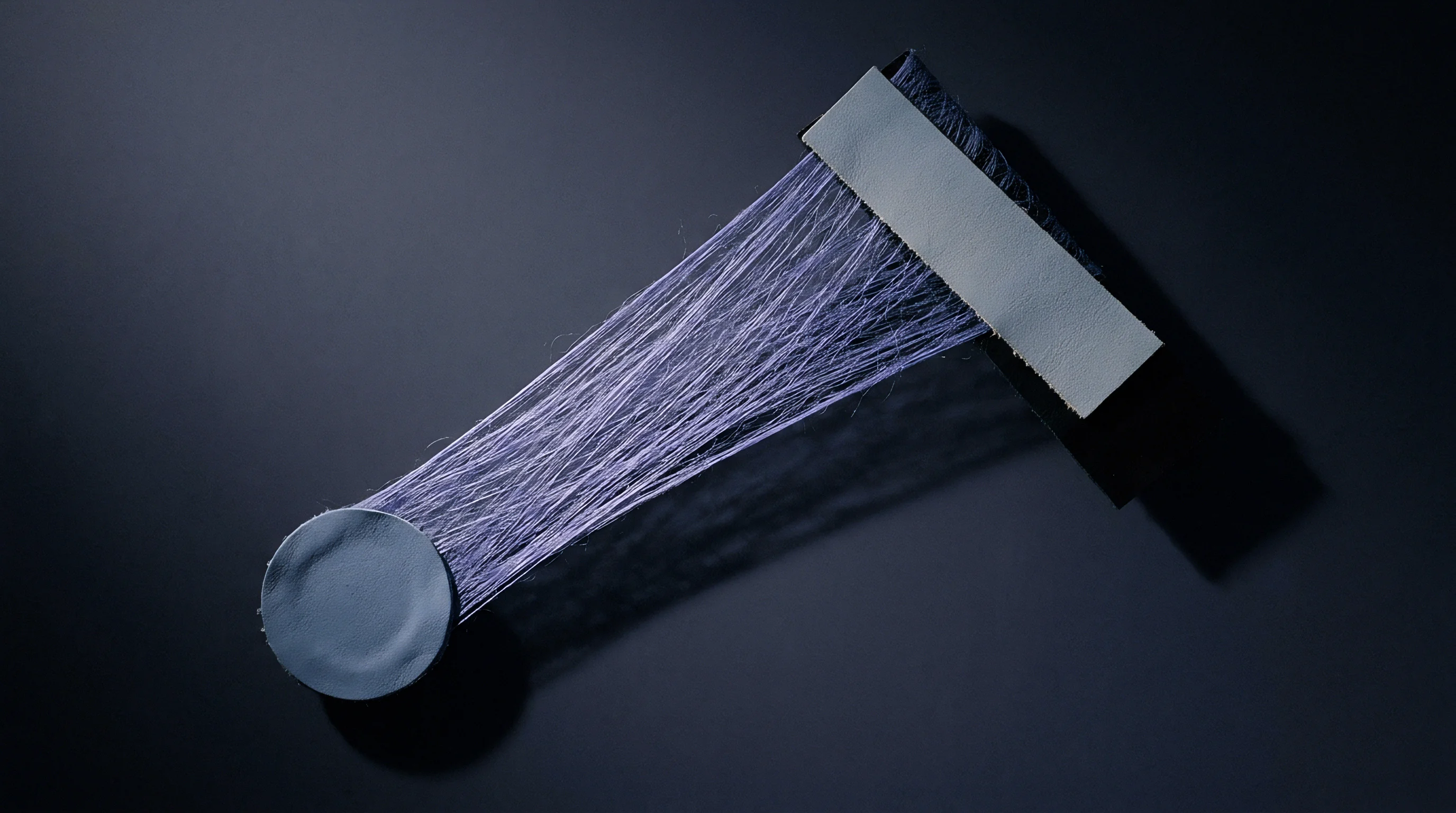
ASTM D5034 clamps a wider fabric swatch between narrower jaws, allowing the side yarns adjacent to the gripped section to reinforce the stressed central zone.
The mechanical divergence between these geometries produces distinct numerical values. A laboratory testing an identical 120 gram per square meter plain-weave cotton poplin records higher breaking forces under ASTM D5034 grab testing than under ISO 13934-1 strip testing. The untensioned lateral yarn segments in the grab specimen act as a mechanical buffer, distributing load across adjacent float intersections through inter-yarn friction before terminal rupture occurs.
Grab test results register higher values than strip tests on identical cloth because lateral yarns transfer tensile shear across the perimeter.
Specimen preparation governs baseline test validity across both testing architectures. Technicians cut five warp and eight weft specimens per sample direction for ASTM D5034 compliance, excluding fabric within one-tenth of the overall roll width to eliminate selvedge tension distortion. When testing via ISO 13934-1, technicians prepare raveled strips by cutting swatches wider than the nominal 50-millimeter gauge and carefully removing longitudinal threads until the width measures exactly 50 millimeters.
This fraying procedure prevents premature yarn edge unraveling during longitudinal displacement, which would otherwise initiate catastrophic premature tears at low forces. The raw fabric roll yields unrepresentative results when cut without this manual unraveling step.
Moisture conditioning alters ultimate tensile performance across botanical and synthetic fiber classes. Cellulosic fibers such as cotton and linen experience increased breaking strength in the wet state due to plasticization of amorphous inter-microfibrillar regions, which balances internal stress distributions across the polymer chain network. Synthetic polyesters and polyamides maintain stable or depressed breaking loads when conditioned to absolute saturation.
Standard atmospheric preparation according to ISO 139 or ASTM D1776 requires exposure of specimens to a controlled environment of 20 plus or minus 2 degrees Celsius and 65 plus or minus 4 percent relative humidity for a minimum of four continuous hours prior to load application. High-density apparel twills demand twenty-four hours to achieve thermodynamic moisture equilibrium throughout the core yarn structures.
Failure to condition cloth correctly voids cross-laboratory reproducibility and results in immediate contractual discrepancies when retests occur at port receiving stations.

Clamp
Grip Configurations and Jaw Mechanics
Universal testing machines execute tensile evaluations through precisely controlled mechanical grips driven by lead screws or hydraulic actuators. Modern compliance regimens reject constant-rate-of-traverse and constant-rate-of-load legacy systems in favor of constant-rate-of-extension machinery governed by ISO 2062 and ASTM D76. The rate of extension is standardized: ASTM D5034 sets the crosshead displacement speed at 300 millimeters per minute with a gauge length of 75 millimeters.
ISO 13934-1 requires 100 millimeters per minute for 200-millimeter gauge lengths, or 50 millimeters per minute when testing non-standard 100-millimeter gauge specimens. Jaw face dimensions define the physical interface. In grab testing under ASTM D5034, the front jaw face measures 25 by 25 millimeters, while the opposing rear face measures 25 by 50 millimeters or larger, aligned with the long dimension parallel to the pull direction.
ISO 13934-2 grab standards mandate paired 25 by 25 millimeter surfaces.
| Standard | Method Type | Specimen Dimensions | Jaw Face Size | Crosshead Speed | Gauge Length |
|---|---|---|---|---|---|
| ASTM D5034 | Grab Test | 100 mm x 150 mm | 25 mm x 25 mm front; 25 mm x 50 mm back | 300 mm/min | 75 mm |
| ASTM D5035 | Strip Test | 50 mm x 150 mm raveled | 25 mm x 50 mm or wider | 300 mm/min | 75 mm |
| ISO 13934-1 | Strip Test | 50 mm x 200 mm raveled | Flat faces ≥ 50 mm wide | 100 mm/min | 200 mm |
| ISO 13934-2 | Grab Test | 100 mm x 200 mm | 25 mm x 25 mm paired | 50 mm/min | 100 mm |
| GB/T 3923.1 | Strip Test | 50 mm x 200 mm raveled | Flat faces ≥ 50 mm wide | 100 mm/min | 200 mm |
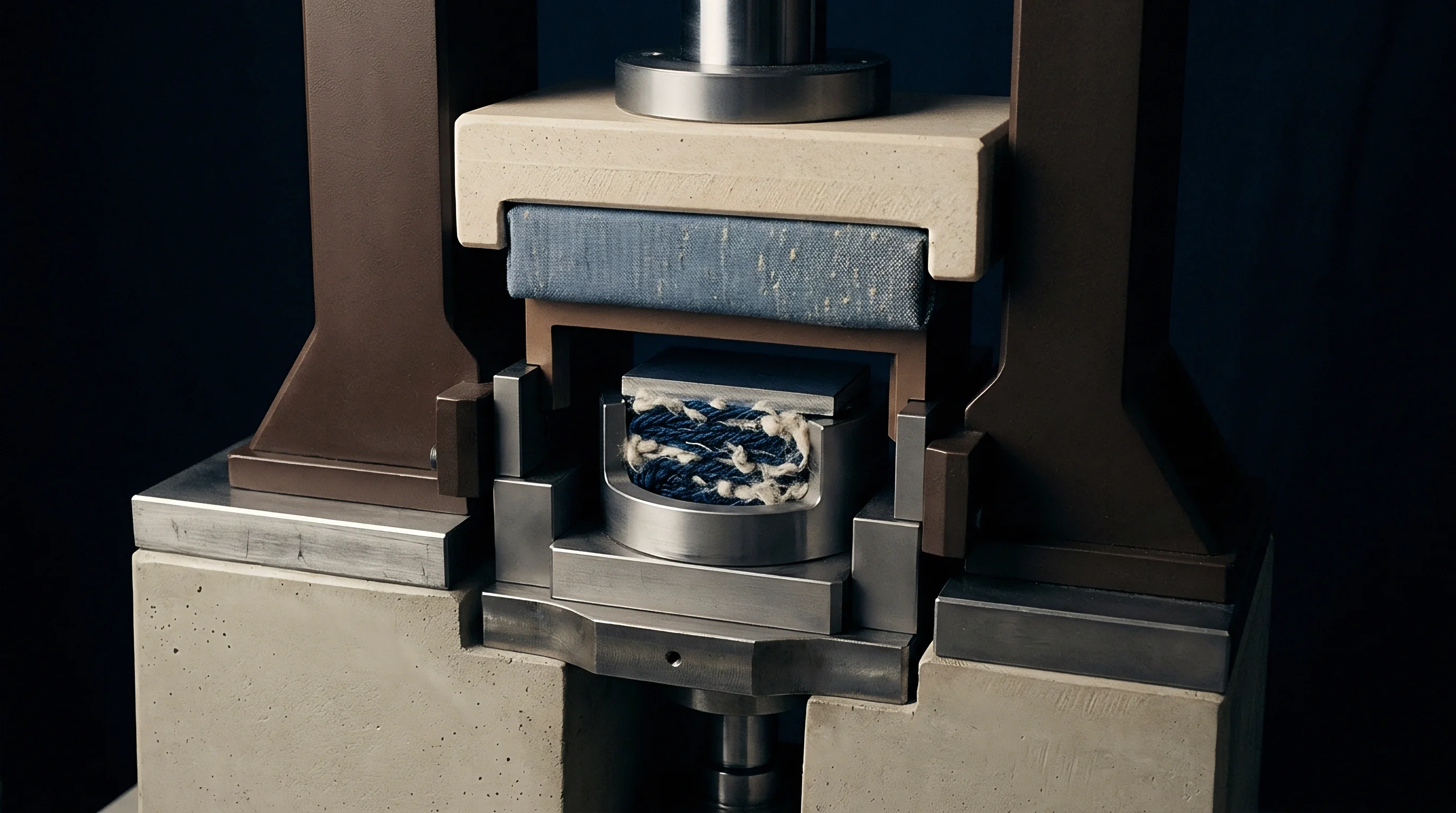
Jaw slippage and clamp breaks represent the primary modes of measurement distortion on the laboratory bench. High-strength filaments, flat microfibers, and silicone-softened finishes slip through standard smooth metallic surfaces prior to full yarn rupture. To counteract this movement, test engineers install modified jaw faces selected specifically for individual fabric groups.
- Rubber coated faces distribute compressive forces evenly across lightweight plain weaves, preventing surface filament cutting during initial clamp tightening.
- Serrated steel surfaces bite mechanically into coarse denier twills, corduroys, and industrial canvas weights to eliminate specimen creeping under extreme forces exceeding 800 Newtons.
- Pneumatic parallel actuators maintain uninterrupted lateral clamping pressure during yarn elongation, compensating for transverse specimen thinning as tensile stress climbs.
- Manual screw clamps require calibrated torque wrenches to prevent over-tightening, which shears fragile silk or viscose yarns at the contact boundary before the test begins.
When rupture occurs within 5 millimeters of the clamp edge, technicians classify the run as a jaw break under ASTM D5034 and ISO 13934 criteria. If the ultimate force falls below the minimum performance limit set in the buyer manual, the result is excluded from calculation and a replacement swatch is cut. However, if a jaw break delivers a breaking force exceeding the buyer contract requirement, the data point is recorded as a valid pass.
An excess of jaw breaks across consecutive trials indicates improper clamping pressure or mismatched jaw surface selection rather than genuine fabric failure.
A jaw break measuring above the contract minimum passes the lot, while a sub-threshold jaw break discards the pull and requires a replacement cut.
A supplier will state that machine grip slippage is an unavoidable property of silky microfibers whenever test records indicate failing values.

Rupture
Stress-Strain Profiles and Energy Absorption
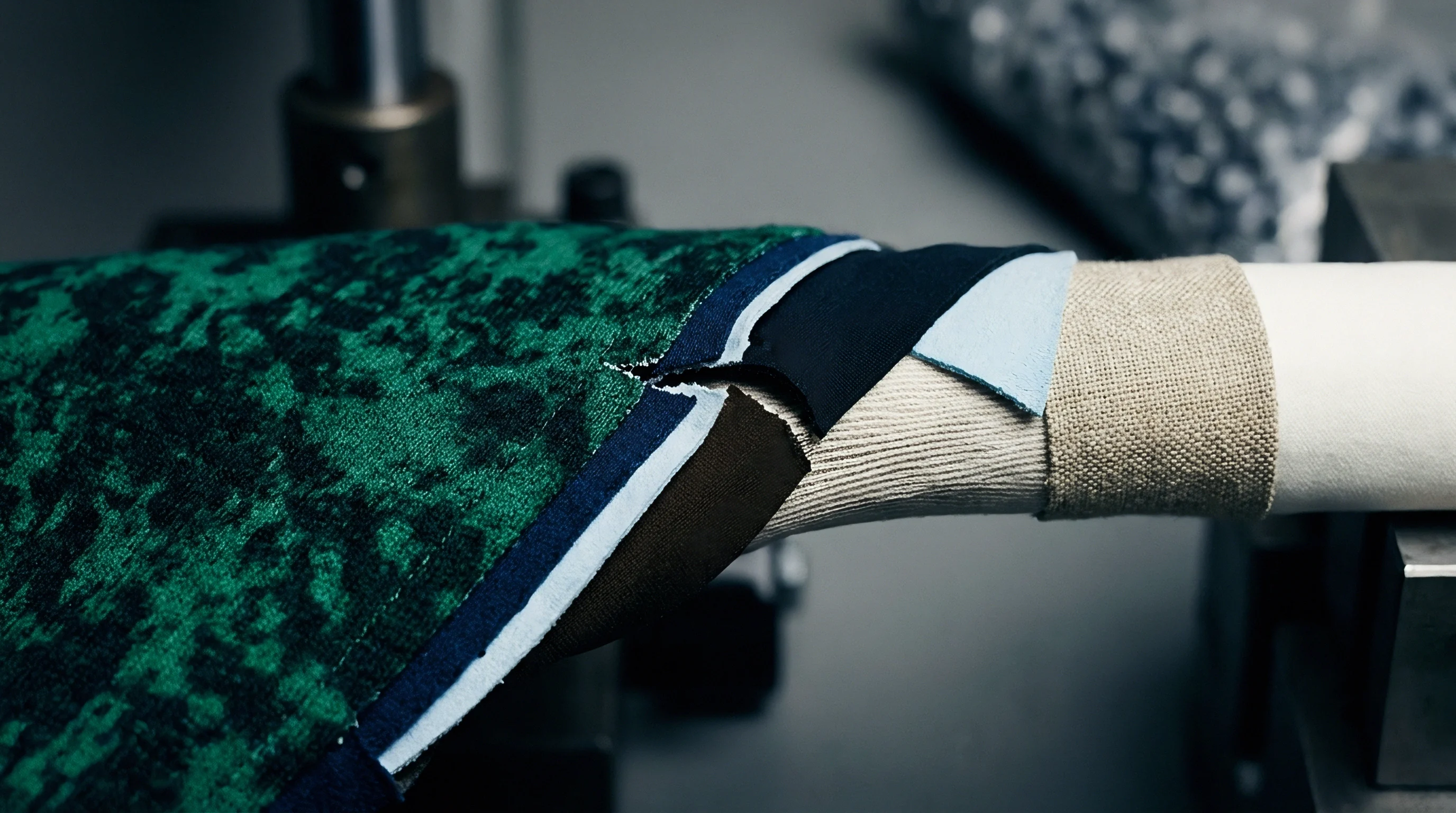
The progression of woven cloth under monotonic uniaxial tension follows three discrete mechanical phases: initial crimp removal, viscoelastic yarn extension, and structural failure. In the primary phase, the crimp interchange mechanism operates as warp threads straighten under axial load, forcing filling threads into increased out-of-plane curvature. This phase generates an elongated foot on the stress-strain curve with low load resistance per unit of elongation.
Once yarns achieve axial alignment, the tensile load shifts directly into the longitudinal fiber bundles. Elastic deformation of crystalline zones dominates until individual yarn elements exceed their yield points, culminating in progressive fiber slippage or simultaneous molecular chain scission.
Apparel specifications prioritize breaking force over ultimate elongation, yet strain values predict tailoring and seam performance. Low-elongation fabrics containing high-twist combed cotton frequently fail tear and seam-fatigue standards despite exhibiting superior tensile rupture thresholds. High yarn twist limits structural mobility, concentrating external loads onto isolated cross-sections without stress sharing.
- The operator zeroes the crosshead position and applies a specified pre-tension load, typically 2 Newtons for lightweight fabrics below 150 grams per square meter or 5 Newtons for heavier weights, eliminating loose slack across the gauge span.
- The drive system initiates steady crosshead descent at the standard displacement rate, while the load cell captures tensile forces at a sampling frequency of at least 50 Hertz to register load drops.
- The recorded curve passes the yield limit, marking the boundary where internal polymer chain bonds permanently stretch and prevent elastic recovery to original dimensions.
- Peak load marks the tensile strength of the woven construction, followed by rapid rupture of individual warp or weft yarn components across the failure plane.
- The digital acquisition system calculates tensile energy absorption by integrating the complete mathematical area bounded under the force-displacement curve from zero to maximum rupture force.
Textile failure behaves mechanically like composite delamination, sharing load distribution equations found in aeronautical laminates. When yarns rupture, energy dissipates instantaneously through transverse acoustic waves and thermal micro-discharges along fractured fiber ends. A dense weave retains broken fiber ends through surrounding interfiber friction, causing the recorded force to drop in stair-stepped increments rather than falling in a single clean vertical fracture.
Can finish formulations alter tensile performance without modifying the underlying structural yarn counts?
Resin finishing with dimethyloldihydroxyethyleneurea crosslinkers for non-iron shirts reduces cellulosic tensile strength by 20 to 40 percent through acid-catalyzed chain degradation and severe embrittlement. Reactive dye baths, mercerization routines, and mechanical sanforizing schedules also move baseline tensile readings by altering yarn packing fractions and thread density. Mill documentation must record finish details alongside standard yarn numbers to substantiate why two identical grey goods lots demonstrate incompatible finished tensile properties.
Over-curing resin chemistries converts high-grade staple cotton into brittle structural networks that fail brand pull tests at commercial distribution centers.
Sampling
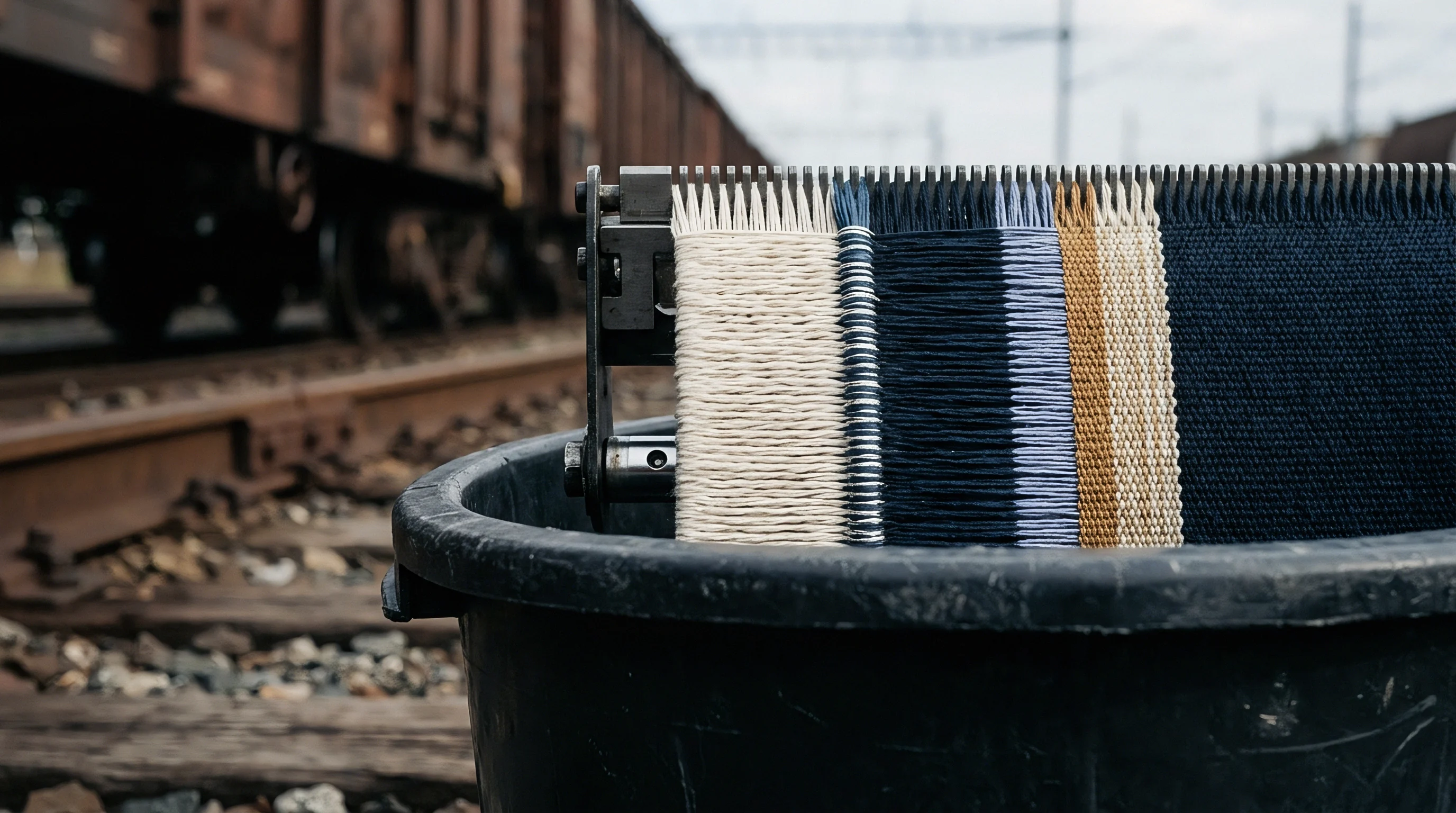
Batch Evidence and Inspection Frameworks
Tensile values derived from laboratory tests become legally binding through structured acceptance sampling frameworks. Sourcing compliance desks employ ANSI/ASQ Z1.4, which aligns with ISO 2859-1, to determine inspection sample sizes across full container deliveries. A single test on a cutting from the outer lap of the first roll does not constitute evidence of compliance for a 50,000-meter production order.
Fabric mills exhibit significant cross-loom variance driven by differences in yarn lot origins, sizing distribution on the slasher, tension balances across individual weaving machines, and thermal variations inside the stenter chamber.
Consider a commercial shipment comprising 800 rolls of woven worsted wool suiting fabric, representing 40,000 linear meters at an agreed commercial price of $14.50 per meter. The purchase order stipulates General Inspection Level II, Single Sampling, Normal Inspection, with an Acceptable Quality Limit of 2.5 for physical testing performance.
Sampling calculations proceed across defined regulatory tiers:
The lot size of 800 rolls establishes Code Letter J under ANSI/ASQ Z1.4 tables.
Code Letter J mandates a physical sample size of 80 rolls drawn at random intervals across all dye lots and loom sets.
Destructive tensile testing on every selected roll from a 40,000-meter lot introduces prohibitive cost and waste. The compliance framework therefore transitions to Special Inspection Level S-3 for destructive physical evaluations.
Under Level S-3, a lot size of 800 units shifts the evaluation to Code Letter E.
Code Letter E specifies a sample size of exactly 8 rolls for destructive tensile testing.
Under an Acceptable Quality Limit of 2.5, Normal Inspection, the acceptance number is zero failures, and the rejection number is one failure.
If one laboratory swatch fails the buyer threshold of 280 Newtons in the warp direction, the whole lot of 800 rolls fails initial conformity assessment.
The cost exposure in this scenario involves significant capital allocation. With a total lot value of $580,000, a rejection triggers immediate quarantine protocols. The mill often contests the finding, citing localized yarn defects or lab clamp slippage.
Standard commercial terms allocate testing costs based on outcome: the buyer funds passing compliance checks, while the mill absorbs retesting invoices and secondary third-party laboratory audits when values drop below contract parameters. Retesting requires pulling double the original sample size (16 rolls under Code Letter F for Level S-3 tightened inspection) from untouched rolls across the quarantined lot.
A contract clause mandating Special Inspection Level S-3 binds both buyer and mill to an eight-roll destructive test threshold for multi-thousand-meter production lots.
The financial liability extends beyond laboratory retest fees of roughly $120 to $180 per sample. Port demurrage charges accumulate at rates between $150 and $350 per container per day while textile containers sit in bonded holding zones awaiting retest certificates from an ISO/IEC 17025 accredited laboratory. Missing a seasonal retail shipping window by three weeks can trigger contract liquidated damages of 15 percent of total goods value, wiping out vendor operational margins.
A rejection notice issued under ANSI/ASQ Z1.4 Level S-3 halts trade finance letters of credit until independent laboratory testing validates lot conformity.
Apparel
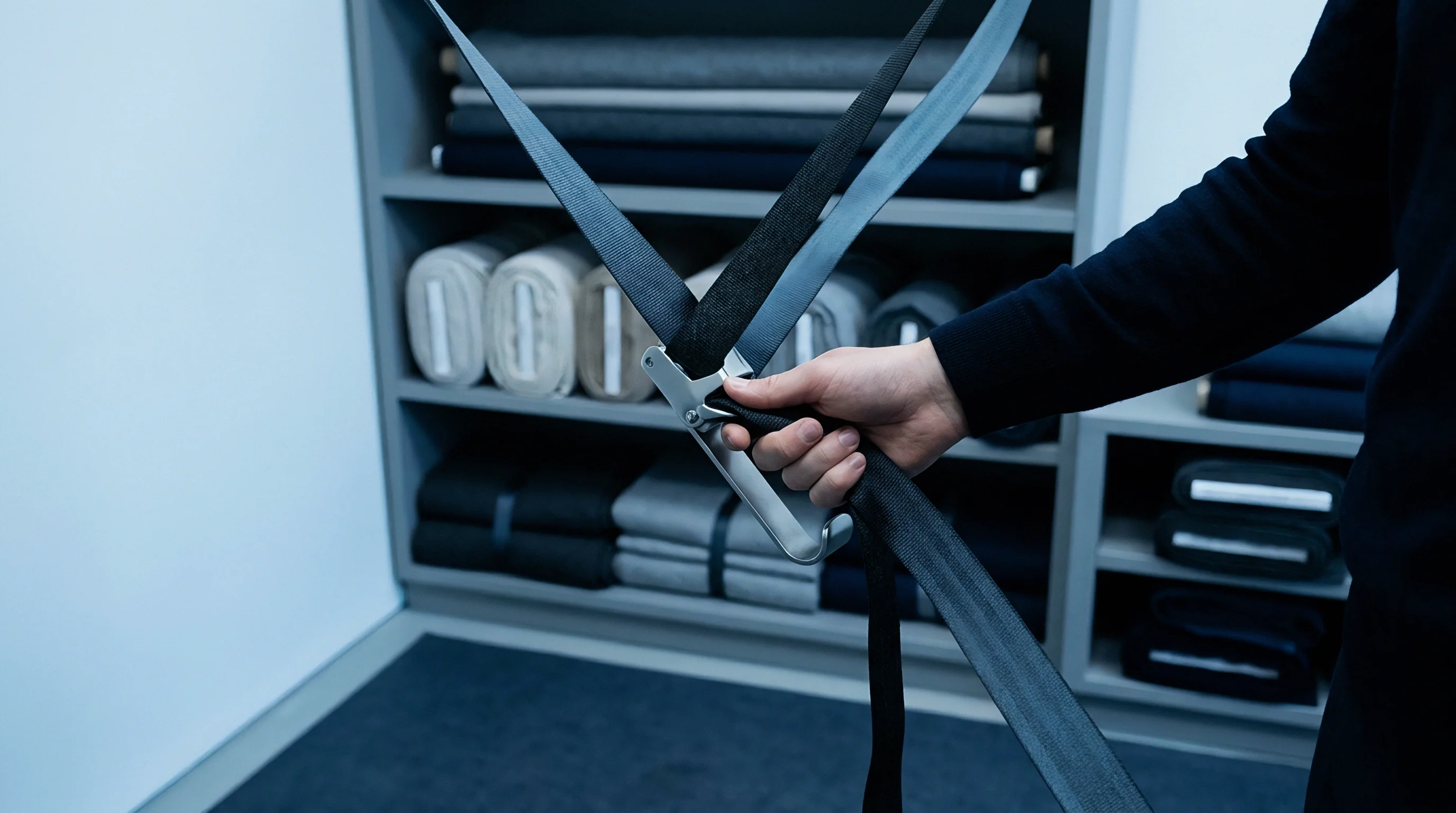
End-Use Specifications and Quality Thresholds
Standard performance parameters for woven apparel depend on the garment category, stress exposure, and expected wear patterns. Menswear bottoms, tailored workwear, and denim require elevated tensile strength to withstand physical stress at structural seams, pocket attachments, and knee regions. Light blouses, dress linings, and sleepwear trade mechanical load thresholds for hand feel, lightweight draping, and vapor permeability.
Brand compliance matrices dictate minimum tensile limits across diverse categories, tying fabric weights directly to laboratory performance goals.
| End-Use Category | Dominant Fabric Types | Areal Weight Range | ASTM D5034 Warp Min | ASTM D5034 Weft Min | ISO 13934-1 Strip Min |
|---|---|---|---|---|---|
| Workwear / Outerwear | Cotton/Poly Canvas, Heavy Twill | 240 to 380 g/m² | 650 N | 500 N | 550 N |
| Men’s Denim Bottoms | Indigo Ring-Spun Cotton Twill | 340 to 480 g/m² | 700 N | 450 N | 600 N |
| Tailored Suiting | Worsted Wool, Wool/Polyester Blends | 180 to 280 g/m² | 350 N | 280 N | 280 N |
| Men’s Dress Shirting | Combed Cotton Poplin, Oxford Weave | 100 to 150 g/m² | 220 N | 180 N | 180 N |
| Womenswear Blouses | Silk Crepe, Viscose Plain Weave | 60 to 110 g/m² | 130 N | 100 N | 90 N |
| Coat Linings | Viscose, Acetate, Polyester Taffeta | 50 to 90 g/m² | 150 N | 120 N | 110 N |
The relationship between tensile strength and seam slippage under ASTM D434 or ISO 13936-1 demands careful management in apparel production. A fabric can surpass the tensile breaking strength requirement of 300 Newtons while failing commercial acceptability due to yarn shifting at a low load of 60 Newtons. Smooth, continuous filament yarns such as cupro, acetate, and polyester organza exhibit high tensile strength along individual yarn paths.
However, their low coefficient of surface friction causes individual yarns to displace sideways under localized seam loading, exposing unsightly internal stitch lines or raw edge margins. Tensile protocols do not catch this failure mode, confirming the necessity of pairing tensile methods with seam slippage and tear resistance testing in compliance programs.
A purchase order that omits the testing standard number allows the supplier to validate the lot using the grab method, yielding passing results while masking strip failures.
Dispute
Standard Harmonization and Commercial Settlements
Cross-border commercial disputes arise when an international textile order ships under specifications that fail to harmonize testing methods across jurisdictions. European quality assurance platforms favor ISO 13934-1 strip procedures, whereas United States brands routinely formulate vendor manuals around ASTM D5034 grab testing. A mill supplying an American retailer through an Asian sourcing agent frequently tests fabric on local testing rigs set to Chinese National Standards, primarily GB/T 3923.1, which serves as the national equivalent to the ISO 13934-1 strip method.
When an American buyer receives cloth tested under GB/T 3923.1 strip protocols, the mill test report presents lower numerical breaking forces than would appear on an ASTM D5034 grab report. If the buyer compliance desk is unaware of the underlying mechanical difference, it may erroneously issue a debit memo or reject the delivery. Conversely, a fabric engineered to achieve 250 Newtons under ASTM D5034 grab testing can fail when audited by a European brand whose vendor agreement mandates a 250-Newton threshold measured under ISO 13934-1 strip methods.
The grab test includes lateral yarns that inflate the measured strength by 15 to 35 percent depending on yarn count, weave float structure, and thread density.
A contract specification must cite the standard identifier, the year of issue, the gauge length, and the test speed to establish an enforceable breaking load metric.
Retest protocols represent an operational necessity in resolving cross-border commercial claims. When a receiving warehouse records a failing tensile test, standard practice involves sending three identical swatches from the contested roll to separate accredited laboratories. The laboratories must follow identical conditioning parameters under ISO 139 or ASTM D1776, using matched jaw face materials and calibrated crosshead speeds.
If two of the three independent laboratories confirm results above the contract baseline, the buyer absorbs the laboratory fees and releases the container for cutting. If the independent tests confirm non-compliance, the mill faces financial remediation: discounting the lot via price renegotiation, underwriting a resin re-treatment program if structural recovery is feasible, or accepting complete cargo abandonment at the destination port.
The unresolved question remains whether standard writing bodies will ever establish a mathematically verified conversion factor between strip and grab results across varied weave architectures.