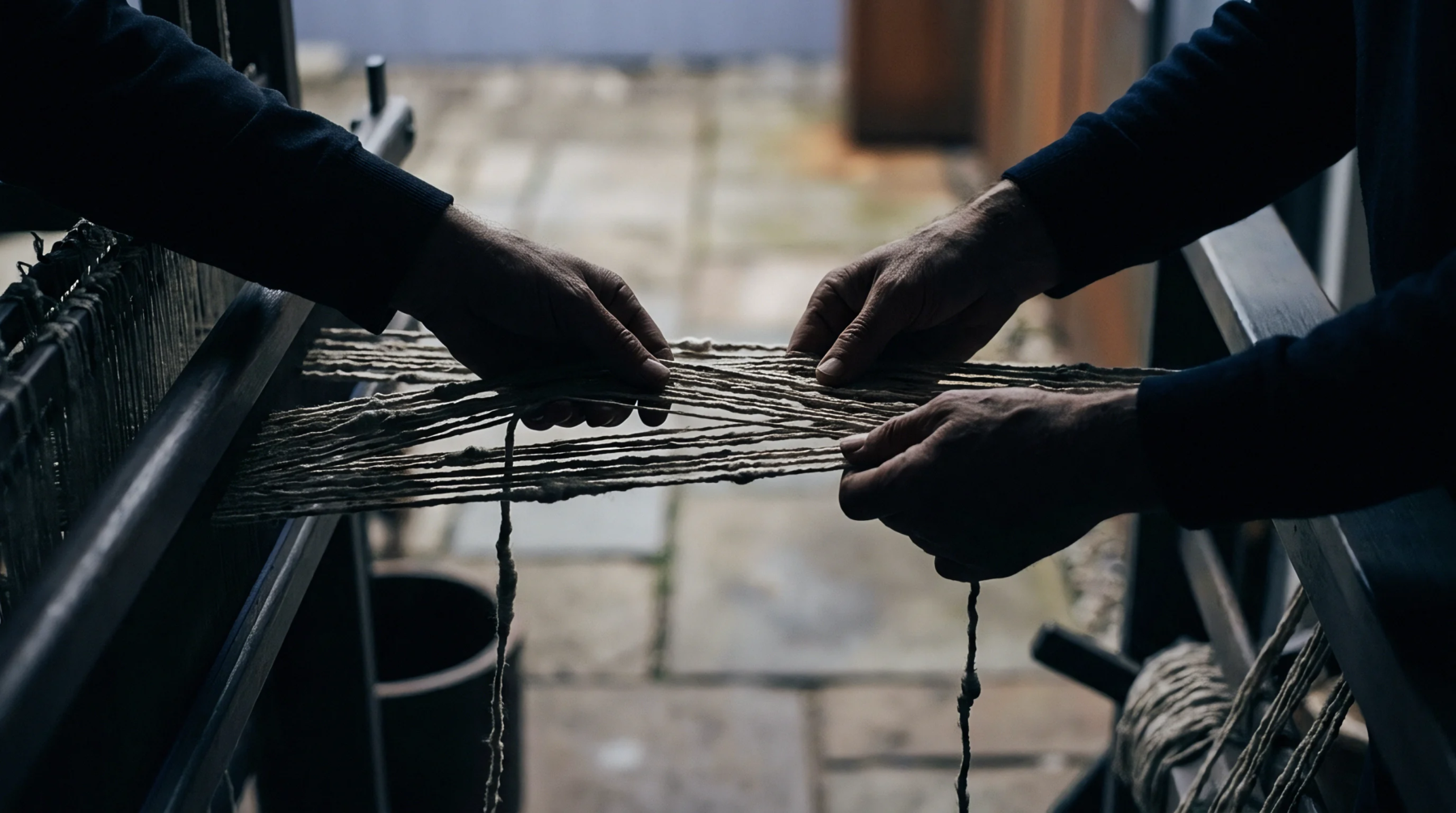
Tensile Measurement
Mechanical evaluation quantifies the force required to break a rectangular fabric specimen clamped across its width. The strip test isolates the load bearing capacity of yarns in a specific direction by immobilizing the side edges to prevent lateral contraction. This protocol provides data on maximum tenacity and elongation for woven materials intended for heavy duty industrial applications.
Equipment Setup
Calibrated tensile testers secure the fabric within parallel jaws separated by a standard gauge length. Proper alignment remains mandatory for obtaining consistent results across multiple samples taken from the same production lot. Operators must ensure the grip pressure holds the material firmly without inducing slippage or localized damage during the extension phase.
Sample Preparation
Specimens consist of strips cut precisely to a width that allows for the removal of a fixed number of yarns from each edge. Removing these border yarns ensures the remaining sample maintains a consistent count throughout the span of the test. Straightness of the cut influences the distribution of stress across the cross section as the tension increases.
Performance Expectation
Results from this procedure define the upper threshold of structural integrity for textile goods subjected to static or dynamic loading. Higher force values indicate greater resistance to rupture under tension. Differences between warp and weft direction metrics allow engineers to predict how specific styles of cloth will behave when positioned under load in finished assemblies.