Coating Weight and Peel Strength on a Laminated Outerwear Shell
Verify coating weight stability and crosslinker kinetics to ensure peel strength exceeds ten Newtons per fifty millimetres after repeated washing cycles.

Peel
Interfacial Bond Mechanics and Failure Spectra
In high-functionality outerwear, adhesive performance relies on the mechanical and chemical bond formed between the substrate fabric and the polymer backing layer. Mechanical adhesion occurs when liquid resin penetrates continuous synthetic filaments before crosslinking, creating physical anchor legs that lock the polymer matrix around individual fiber bundles. Chemical adhesion depends on polar interactions, dipole-dipole attraction, and covalent bonds formed between polymer functional groups and active surface sites on the yarn.
Total delamination resistance represents the energy required to break both mechanical locks and chemical linkages, measured per unit width of the composite interface during steady-state separation.
Delamination remains a primary point of failure in technical outerwear.
When a coated or laminated fabric experiences shear, flex, or peel stresses during garment movement or wet processing, mechanical forces concentrate along the bond plane. These stress concentrations peak where elastic modulus disparities are highest ~ specifically where a stiff, highly drawn nylon 6,6 filament meets an elastomeric polyurethane membrane. If the adhesive resin fails to wet the filaments completely during application, microscopic air pockets remain trapped inside the yarn bundles.
These micro-voids act as primary stress risers. Under cyclic flexing, cracks initiate at these void boundaries and travel along the interface at stress levels far below the tensile strength of the polymer film itself.
Failure modes in technical shell composites fall into distinct structural categories based on whether the weakest link sits inside the adhesive polymer, within the textile substrate, or right at the interface. Evaluating these failure profiles requires high-magnification optical or scanning electron microscopy of both peeled surfaces after mechanical testing.
- Adhesive Interfacial Separation occurs when the polymer film strips cleanly off the textile filaments without leaving measurable residue or adhesive fragments on the yarn. This points to insufficient surface wetting, incorrect adhesive curing temperatures, or low surface energy from pre-existing fluorocarbon or silicone finishes.
- Cohesive Polymer Fracture is a structural failure within the bulk adhesive layer itself. Continuous films of polymer remain attached to both the textile face and the membrane substrate, signaling inadequate cohesive strength in the polymer, under-crosslinking, or plasticizer migration.
- Textile Fiber Tear develops when the bond between the adhesive resin and the fiber surface is stronger than the mechanical pull-out force or tear strength of the fabric, causing individual filaments or entire yarn bundles to pluck out of the weave during testing.
- Membrane Cohesive Failure happens when the polyurethane or fluoropolymer membrane ruptures internally before the adhesive boundary or substrate interface fails. This confirms that the adhesive crosslinking density and interfacial adhesion exceed the tensile limit of the monolithic or microporous film.
Water inevitably takes the path of least resistance through the assembly.
Substrate construction directly governs the surface area available for mechanical keying. Plain weaves made with fine-denier continuous filaments create a flat, uniform surface, but the dense packing of low-dpf (denier per filament) yarns restricts liquid polyurethane penetration into the core of warp and weft bundles. Twill and satin weaves feature longer yarn floats, opening larger inter-yarn channels that allow deeper resin ingress under application pressure and producing higher mechanical peel values at the same coating weight.
However, excessive resin penetration stiffens fabric hand, drives weight off-spec, and lowers tear strength by locking filaments into rigid blocks that can no longer shift together to resist localized tearing.
High-speed peel rate testing reveals three distinct delamination profiles.

Standardized Test Protocols and Mechanical Variables
Evaluating adhesive performance demands strict adherence to standardized test parameters. Minor variations in specimen preparation, jaw separation speed, pull angle, or environmental conditioning create wide discrepancies in reported figures. ISO 2411 defines the reference standard for rubber- or plastics-coated fabrics, specifying strip test procedures on constant rate of traverse tensile machines.
ASTM D2724 serves as the baseline for drycleaned or laundered laminated apparel, while ASTM D751 outlines general coated fabric methods. Comparing figures across these frameworks without adjusting for method-specific variables introduces serious errors into technical fabric specs.
Specimen geometry and preparation heavily bias both peak and average peel values. ISO 2411 mandates a 60-millimetre specimen width, whereas ASTM D2724 specifies 25 millimetres. Edge effects ~ where cut filament ends fray or unpick during the test ~ exert a greater proportional influence on narrow 25-millimetre strips, often producing artificially low peel readings or tearing the specimen early.
Starting the peel manually requires controlled mechanical separation over 10 to 25 millimetres using hot platen pressing, solvent wetting, or localized shear, ensuring the separation begins cleanly along the target interface without damaging the underlying membrane or face weave.
| Standard Designation | Specimen Width (mm) | Traverse Speed (mm/min) | Evaluation Zone (mm) | Calculation Methodology | Typical Spec Minimum (N/50mm) |
|---|---|---|---|---|---|
| ISO 2411 (Type 1 Direct) | 60.0 | 100 ± 10 | 50 to 150 | Median of trace peaks and troughs | 12.0 to 15.0 |
| ISO 2411 (Type 2 Laminated) | 50.0 | 100 ± 10 | 50 to 150 | Autographic autointegration mean | 10.0 to 14.0 |
| ASTM D2724 (Bonded Apparel) | 25.4 | 305 ± 10 | 75 continuous | Average of 5 highest stress peaks | 7.0 to 9.0 (converted) |
| DIN 53530 (Coated Fabrics) | 50.0 | 100 ± 5 | 80 to 100 | Arithmetic mean of central 80 percent | 12.5 to 16.0 |
Changes in traverse speed significantly alter mechanical loads recorded during the separation of viscoelastic polymers. Polyurethane adhesives and thermoplastic polyurethane membranes exhibit pronounced strain-rate sensitivity. At high jaw separation rates, such as the 305 millimetres per minute required by ASTM D2724, polymer chains lack the time to relax, align, and yield plastically.
This artificial stiffening generates higher measured peel forces than tests run at 100 millimetres per minute under ISO 2411. Slower pull speeds allow localized polymer relaxation and micro-yielding, lowering peak force readings while providing a truer picture of long-term static delamination resistance in the field.
Conditioning specimens prior to testing stabilizes moisture levels in hygroscopic fibers like nylon 6 and nylon 6,6. Reaching atmospheric equilibrium at 20 degrees Celsius and 65 percent relative humidity for at least 24 hours prevents uncontrolled plasticization of polyamide filaments by ambient moisture. Excess moisture plasticizes the fiber surface, dropping its glass transition temperature and lowering interfacial friction, which artificially depresses peel values.
Conversely, dry conditioning in vacuum desiccators induces brittle polymer behavior, driving up force peaks artificially and triggering severe stick-slip traces during the pull.
Pull angle determines the vector forces acting directly on the bond line. In a standard 180-degree configuration ~ where the peeled coating strip is folded back parallel to the substrate ~ bending strain is forced into a tight radius right at the separation point. This concentrates tensile force on a narrow band of adhesive, producing lower overall peel figures.
A 90-degree setup, held with a floating roller jig or sliding sled fixture, eliminates most flexural stress in the backing layer and measures purely the normal tensile force needed to pull the adhesive from the textile structure.

Quantitative Load Profiles across Shell Assemblies
Force trace curves generated during continuous peel testing provide immediate diagnostic insight into lamination quality and uniformity. A smooth, flat trace with minimal variance between peaks and troughs indicates continuous, homogeneous adhesive coverage, consistent crosslinking, and uniform penetration. A jagged trace with high peak-to-trough fluctuations points to localized resin pooling, air entrapment, uneven nip roller pressure, or inconsistent web tension during lamination.
Pull speeds directly alter the observed force readings.
When evaluating autographic traces, the initial force peak must be discarded; that spike reflects static friction and edge clamping stress rather than steady-state bond strength. Modern electronic testing equipment uses autointegration algorithms to calculate the median or arithmetic mean force across the center 80 percent of the peel distance. Calculating strength purely from the average of the five highest peaks ~ a method allowed in older regional standards ~ inflates figures by up to 30 percent and masks localized zones of weak adhesion that cause premature failure in the field.
According to ISO 2411 section 8.2, testing carried out at a traverse speed exceeding 100 millimetres per minute invalidates commercial compliance claims for polyurethane-backed shell fabrics.
Lamination geometry changes baseline expectations across shell configurations. A 2-layer material ~ woven face fabric bonded to a continuous polyurethane or expanded polytetrafluoroethylene film ~ typically yields higher initial peel values, often 12 to 18 Newtons per 50 millimetres width, because the soft elastomeric membrane conforms easily to the peel angle without adding stiff bending resistance. A 3-layer construction adds a lightweight tricot or woven scrim backing to the inner membrane surface, introducing a second adhesive interface.
Testing 3-layer materials requires evaluating the face-to-membrane and membrane-to-scrim bonds independently, as stress distribution across two distinct adhesive layers frequently produces double-yield curves or inter-layer shear failures.
Interfacial shear strength degrades non-linearly under combined thermal and moisture stress. In ester-based polyurethane adhesives exposed to tropical chamber conditioning (70 degrees Celsius and 95 percent relative humidity), hydrolysis cleaves the polymer backbone. As long-chain molecules break into shorter segments, cohesive strength collapses, causing peel values to drop from an initial 15 Newtons per 50 millimetres down to less than 3 Newtons per 50 millimetres within 72 hours of exposure.
Ether-based polyurethanes demonstrate far better hydrolytic stability, retaining over 80 percent of their dry peel strength under the same test conditions.
Commercial acceptance limits set by outerwear brands define clear thresholds for unwashed, laundered, and drycleaned states. Typical high-performance specifications require an unwashed minimum peel strength of 10.0 Newtons per 50 millimetres width under ISO 2411. After five home laundering cycles at 40 degrees Celsius (ISO 6330 procedure 4N) followed by line drying, retained peel strength must stay above 8.0 Newtons per 50 millimetres.
For heavy-duty professional workwear, the post-wash requirement rises to 12.0 Newtons per 50 millimetres after 20 wash-dry cycles, with zero tolerance for visible bubbling, edge lifting, or blistering along seam lines or flex zones.
Including a purchase order clause specifying that peel strength be measured per ISO 2411 at a 100 millimetres per minute traverse rate on 50-millimetre wide, conditioned specimens forces the mill to guarantee uniform adhesion across the full width of every production roll ~ making localized spot-bonding defects grounds for full roll rejection.
Liquor
Rheological Profiles and Coating Head Dynamics
Liquid coating formulations for outerwear require tight control over viscosity and shear behavior. High-functionality polyurethane resins dispersed in organic solvents like dimethylformamide, methyl ethyl ketone, or toluene exhibit pronounced shear-thinning pseudoplastic behavior. Under the high shear of a doctor blade in a knife-over-roll coater, dynamic viscosity drops quickly, letting the resin flow smoothly across the moving textile web.
As soon as the fabric clears the blade and shear drops back to zero, viscosity must rebuild instantly to prevent the wet coating from sinking deep into the yarn bundles.
The geometry of the coating head determines the physical pressure applied to the wet polymer film. Direct knife-over-roll systems position a ground steel blade over a solid counter-roll, maintaining a fixed gap for the web and liquid polymer to pass through. This forces resin into the weave topography to establish strong mechanical anchor points.
Floating knife coaters position the blade over an unsupported span of fabric, relying solely on web tension to set coating thickness. Because floating blades exert less compaction force, they leave a surface film that preserves a softer fabric hand ~ though achieving strong adhesion then depends heavily on chemical promoters.
Excess coating mass compromises the natural drape of the garment.
Viscosity verification for direct coating relies on rotational viscometer measurements under set temperatures and shear rates. Brookfield viscometer readings taken at 20 degrees Celsius with Spindle 6 at 20 rpm typically aim for 18,000 to 25,000 millipascal-seconds for direct knife application. Drop below 15,000 millipascal-seconds and wet strike-through occurs: resin bleeds all the way to the fabric face, staining the weave, spoiling appearance, and severely lowering tear strength.
Go above 30,000 millipascal-seconds, and the thick compound fails to wet individual filament contours, trapping air micro-voids that trigger early delamination in wash tests.
Choice of solvent directly alters resin viscosity.
Direct gravure systems print micro-dots of polyurethane reactive hot-melt or solvent-borne adhesive onto the fabric, preserving the shell’s natural breathability and flex. Engraved gravure rollers with 20 to 60 lines per inch transfer discrete droplets of liquid polymer under pressure nip rollers. Cell volume, measured in cubic centimetres per square metre of roller surface, determines the wet film weight delivered.
Micro-dot printing achieves peel values up to 14 Newtons per 50 millimetres while leaving over 60 percent of the fabric surface uncoated, allowing water vapor to pass through the open areas between adhesive bridges.
A drop in dry coating weight below 18 grams per square metre reduces peel strength by 14 percent.
Crosslinking Kinetics in Polyurethane Formulations
Chemical bonding within high-performance coatings relies on polyfunctional crosslinkers added to the fluid resin just prior to application. Isocyanate-functional crosslinkers ~ mainly aliphatic polyisocyanates based on hexamethylene diisocyanate or isophorone diisocyanate ~ react with residual hydroxyl and carboxyl groups on the polyurethane chains. This forms dense three-dimensional polyurea and polyurethane networks within the dried film.
Crosslinking raises the glass transition temperature, improves thermal stability during seam sealing, and increases resistance to hydrolysis through repeated washings.
Adding the crosslinking agent starts a timer on batch pot life. Ambient room temperature drives the reaction, causing the mixture to undergo continuous, irreversible polymerization inside the feed tank. As crosslinking advances, viscosity rises steadily, altering dry coat weights over the run.
A batch used past its practical pot life ~ typically four to six hours at 22 degrees Celsius ~ forms large molecular aggregates that cannot penetrate filament bundles, causing peel strength to decline steadily from the start of the roll to the end.
Crosslinking agents require precise temperature windows for activation.
Thermal profiling across the stenter oven guarantees complete crosslinking without heat damage to synthetic fibers. In a multi-zone stenter, running Zone 1 and Zone 2 at 120 degrees Celsius evaporates carrier solvents like MEK and toluene well below their flashpoints. Raising Zone 3 and Zone 4 to 160 degrees Celsius activates the crosslinker, with dwell times kept between 45 and 60 seconds at peak temperature.
Under-curing leaves unreacted isocyanate groups, producing a tacky, soft film with poor wash fastness; over-curing scorches nylon filaments, causing thermal yellowing and tensile strength losses over 15 percent.
A dry coating weight reduction from 22 grams per square metre to 14 grams per square metre drops 72-hour tropical hydrolysis retention by 38 percent on 40-denier nylon 6,6.
Hydrolytic stability correlates directly with crosslink density and polymer backbone structure. Polyether polyurethanes resist moisture cleavage because their ether linkages (-C-O-C-) stay stable in humid environments. Polycarbonate polyurethanes represent the highest performance tier, pairing UV resistance with near-total immunity to hydrolysis ~ making them standard for expedition-grade alpine gear.
Polyester polyurethanes are less expensive and offer strong initial mechanical properties, but their ester linkages (-CO-O-) break down quickly into carboxylic acids and alcohols under heat and moisture, turning the film sticky, soft, and unbonded.
Dry Add-On Math and Film Thickness Trajectories
Determining the relationship between wet pick-up rates and final dry coating mass requires gravimetric laboratory analysis. Wet pick-up percentage measures the total mass of liquid compound applied per unit area, including both solid resin particles and volatile organic solvents. Converting wet application figures to dry coat weight requires applying the compound solid content percentage, determined by oven-drying liquid samples at 105 degrees Celsius until mass reaches equilibrium under ISO 3801 standards.
| Target Dry Coat Weight (g/m²) | Theoretical Film Thickness (µm) | Hydrostatic Head Initial (mm H₂O) | Initial Peel Strength (N/50mm) | Retained Peel Strength After 5 Washes (N/50mm) | Bending Rigidity Stiffness (mg·cm) |
|---|---|---|---|---|---|
| 12.0 ± 1.0 | 10.0 | 8,000 | 6.2 | 3.1 | 180 |
| 16.0 ± 1.0 | 13.3 | 12,000 | 9.8 | 7.4 | 240 |
| 20.0 ± 1.0 | 16.7 | 18,000 | 13.5 | 11.2 | 320 |
| 25.0 ± 1.0 | 20.8 | 22,000 | 15.8 | 13.9 | 460 |
| 30.0 ± 1.5 | 25.0 | 25,000 | 16.4 | 14.8 | 680 |
Calculating continuous film thickness from dry coat weight follows standard density formulas. A polyurethane coating resin with a solid density of 1.20 grams per cubic centimetre applied at a target dry coat weight of 20 grams per square metre yields a theoretical continuous film thickness of 16.7 micrometres. If substrate surface roughness consumes 5 grams per square metre simply filling weave valleys and spaces between filaments, effective continuous film thickness above yarn crowns drops to 12.5 micrometres.
Pinholes form where film thickness drops below 10 micrometres over raised yarn intersections, opening pathways for water penetration even under low hydrostatic pressure.
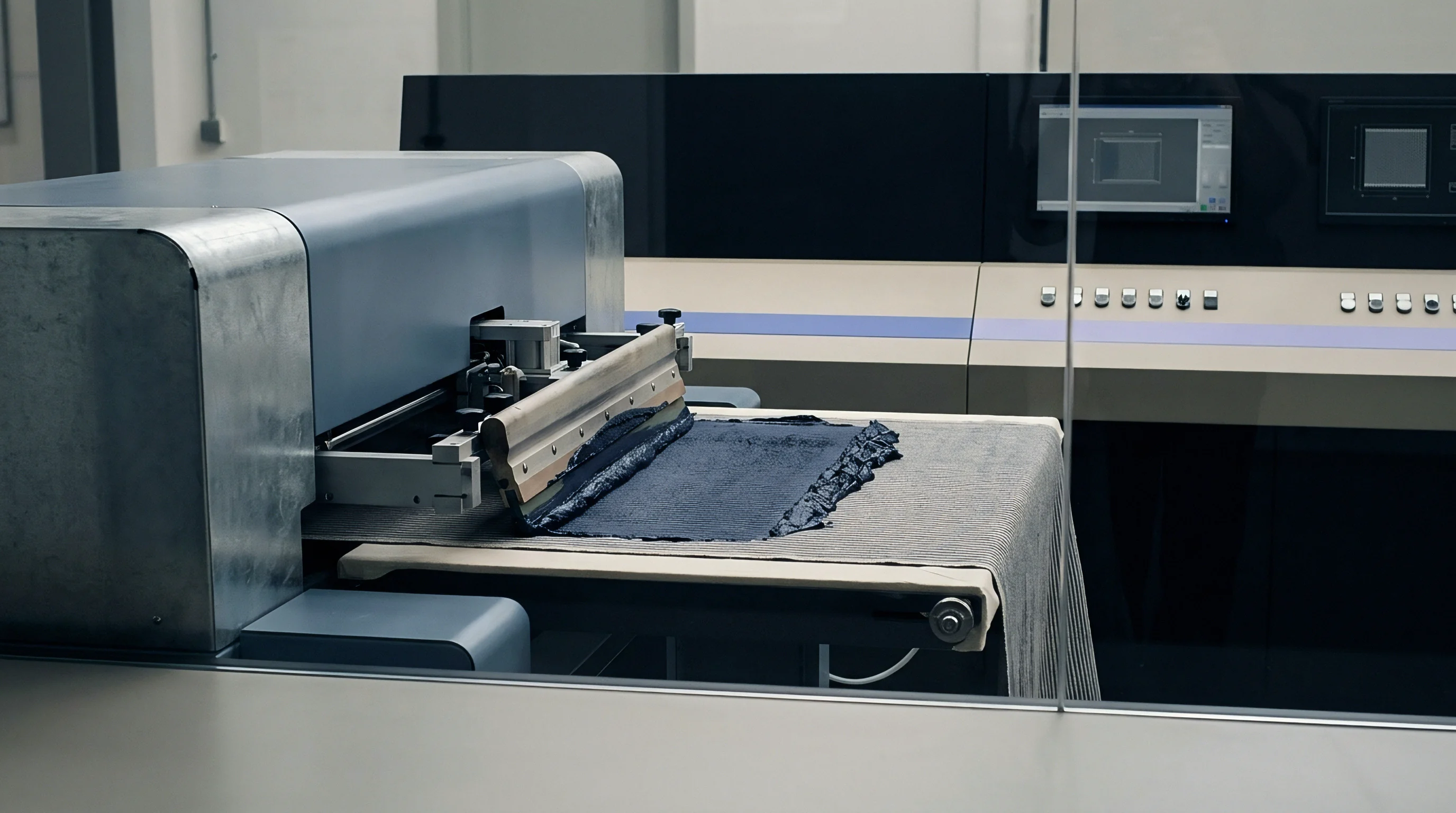
Maintaining accurate coating control on direct processing lines requires strict adherence to operating parameters during wet application and curing.
- Viscosity Range Calibration must be measured every 30 minutes using a rotational viscometer at 20 degrees Celsius, adding controlled solvent charges to compensate for evaporation in open feed pans.
- Gap Clearance Monitoring mandates checking doctor blade clearance across the left, center, and right web positions using feeler gauges prior to initiating web movement, keeping variation under 2 micrometres.
- Web Tension Equalization requires configuring load-cell tension rollers ahead of the coating head to maintain web strain between 1.5 and 2.0 percent, preventing center-to-edge fabric distortion.
- Thermal Profile Verification involves running wireless datalogger spiders through all stenter zones once per shift to confirm temperature accuracy within 1.5 degrees Celsius of setpoint targets.
- Gravimetric Cut-Swap Sampling demands taking 100-square-centimetre swatch punches from the left, middle, and right edges of every finished roll to verify dry coat weight mass against target specs.
Line tension directly influences how deeply adhesive penetrates the yarn.
When dry coat weight drops below 16 grams per square metre on standard 50-denier woven nylon, hydrostatic head resistance drops off sharply after flex abrasion. Thin films lack the volume needed to absorb repeated shear forces during movement. Under Martindale flex abrasion testing (ISO 12947), low coat-weight films rupture at raised filament crossover points, dropping hydrostatic head values from 15,000 millimetres down to under 2,000 millimetres within 5,000 cycles.
Increasing dry coat weight to 22 grams per square metre covers yarn crossovers smoothly, extending flex abrasion survival past 20,000 cycles while preserving waterproof performance.
While batch-to-batch variation in polyurethane solids content is often attributed to normal chemical tolerances, a 3-gram drop in dry coat weight causes widespread delamination during customer wash testing.
Grit
Substrate Topography and Filament Contact Area
Textile surface morphology sets the upper limit for mechanical bond strength in both film lamination and direct coating. High-density woven shells made from fine micro-denier yarns feature a tight surface topography with low crimp height and tightly packed filaments. While fine filaments increase potential contact points per unit area, dense packing inhibits liquid adhesive from reaching the yarn core.
Furthermore, synthetic continuous filaments produced without mechanical or air-jet texturing present smooth, glass-like surfaces with low friction, offering few physical attachment sites for cured resins.
Thorough surface cleaning removes residual spin finishes, knitting oils, and processing lubricants left from spinning and weaving. Polyglycol lubricants, ester-based antistatic agents, and paraffin oils applied during texturizing reduce surface energy on greige fabric. If these organic residues remain on filaments during lamination, they form a weak boundary layer that prevents adhesives from wetting the fiber.
Continuous scouring with aqueous alkaline surfactants at 80 degrees Celsius followed by hot water rinsing reduces residual oil below 0.1 percent by weight, raising surface energy and allowing resin to achieve microscopic wetting.
Thoroughly scoured substrates form stronger interfacial bonds.
Creating microscopic surface roughness through chemical etching or atmospheric plasma treatment improves mechanical anchoring in synthetic filaments. Plasma treatments using oxygen or helium streams create nanoscale surface roughness on nylon and polyester filaments without compromising bulk tensile strength. Plasma oxidation introduces polar functional groups ~ including hydroxyl (-OH), carboxyl (-COOH), and carbonyl (-C=O) species ~ onto filament surfaces.
These polar groups boost surface energy from 32 dynes per centimetre to over 54 dynes per centimetre, encouraging polyurethane adhesives to spread spontaneously and increasing initial peel strength by over 40 percent.
Upstream wet processing frequently leaves behind microscopic surface residues.
Applying durable water repellent (DWR) finishes before lamination creates direct processing conflicts. Fluorocarbon treatments (C6 chemistry) and non-fluorinated silicone or hydrocarbon repellents work specifically by lowering surface energy down to 18 to 24 dynes per centimetre, preventing liquid water from wetting the fabric. Applying DWR to face fabric before lamination contaminates the back surface, preventing polyurethane adhesives from forming chemical or mechanical bonds.
High-performance production requires single-sided DWR application via kiss-roll coaters, or applying DWR only after lamination or coating has fully cured.
During initial qualification trials, interfacial breakdown was traced back to residual silicone fluid on the face fabric.
Fluorocarbon surface treatments deposited prior to lamination reduce available surface energy below the threshold required for adhesive wetting.
When Does Hydrolysis Overcome Mechanical Anchorage?
Hydrolytic degradation of the adhesive layer is the primary cause of field delamination in technical outerwear. Water molecules permeate microporous and monolithic polyurethane films during normal wear, rain exposure, and laundering, settling along the polymer-filament interface. If the adhesive layer relies solely on physical surface contact rather than chemical covalent bonding or deep mechanical anchoring around individual filaments, water molecules disrupt hydrogen bonding between polymer and fiber, starting microscopic interface separation.
Thermal moisture stress accelerates chemical bond breakdown in ester-based polyurethane backings. Water molecules attack ester linkages in the polymer chain, splitting it into shorter acid and alcohol oligomers via acid-catalyzed hydrolysis. As molecular weight drops, the polymer degrades from a tough, elastic film into a soft, sticky gel with little cohesive strength.
Mechanical keying around filaments may temporarily hold the assembly together when dry, but flexural stress during wet laundering pulls the degraded resin completely out of the yarn structure.
Hydrolysis steadily destroys polyurethane backing layers over time.
High laundry dryer temperatures speed up hydrolytic breakdown in damaged polymer chains. Running home dryers above 70 degrees Celsius with damp garments forces water vapor through the membrane under pressure. This pressure builds inside trapped inter-filament micro-voids, forming expanding steam pockets.
The internal force tears the softened polymer matrix away from its filament anchors, producing visible blisters and delamination bubbles across the garment within a single cycle.
Polyether and polycarbonate polyurethanes resist moisture degradation much better over long-term field use. Polyether backings feature robust ether linkages that withstand ambient moisture, maintaining peel strength above 8.0 Newtons per 50 millimetres even after 50 wash cycles. Polycarbonate polyurethanes offer the highest durability tier, retaining initial adhesion through 14 days of tropical chamber testing at 70 degrees Celsius and 95 percent relative humidity ~ ensuring survival in mountaineering gear.
Substrate Washing Sequence for Coating Qualification
Validating substrate readiness and adhesive integrity requires a rigorous laboratory preparation and washing sequence to confirm that the raw material meets technical lamination standards.
- Cut representative full-width swatch samples measuring 100 centimetres by 150 centimetres from the head, middle, and tail of the candidate fabric roll.
- Extract a 10-gram yarn specimen and measure total residual oil and spin finish content via Soxhlet solvent extraction using petroleum ether for 4 hours under ISO 14419 protocols.
- Confirm that residual surface contaminant mass remains strictly below 0.10 percent of total substrate dry mass before approving the lot for adhesive application.
- Measure substrate surface energy on the back surface intended for bonding using standardized dyne test inks in accordance with ASTM D2578, verifying a surface energy threshold of at least 42 dynes per centimetre.
- Apply the target polyurethane adhesive formulation at the specified dry coat weight using a laboratory pilot coater, maintaining precision gap clearance and tension controls.
- Cure the coated sample in a forced-air oven at 160 degrees Celsius for 60 seconds to achieve full crosslinker chemical activation.
- Condition cured samples for 24 hours at 20 degrees Celsius and 65 percent relative humidity prior to initial baseline peel testing under ISO 2411.
- Subject paired test specimens to five continuous 40 degrees Celsius laundering cycles per ISO 6330 with tumble drying after the final cycle.
- Re-evaluate specimen peel strength and inspect under 40x optical magnification to verify zero interfacial separation, film cracking, or filament detachment.
An unresolved question is whether atmospheric plasma surface modification can fully substitute for chemical crosslinking agents in low-coat-weight waterborne polyurethane systems without sacrificing long-term tropical hydrolysis retention.

Audit
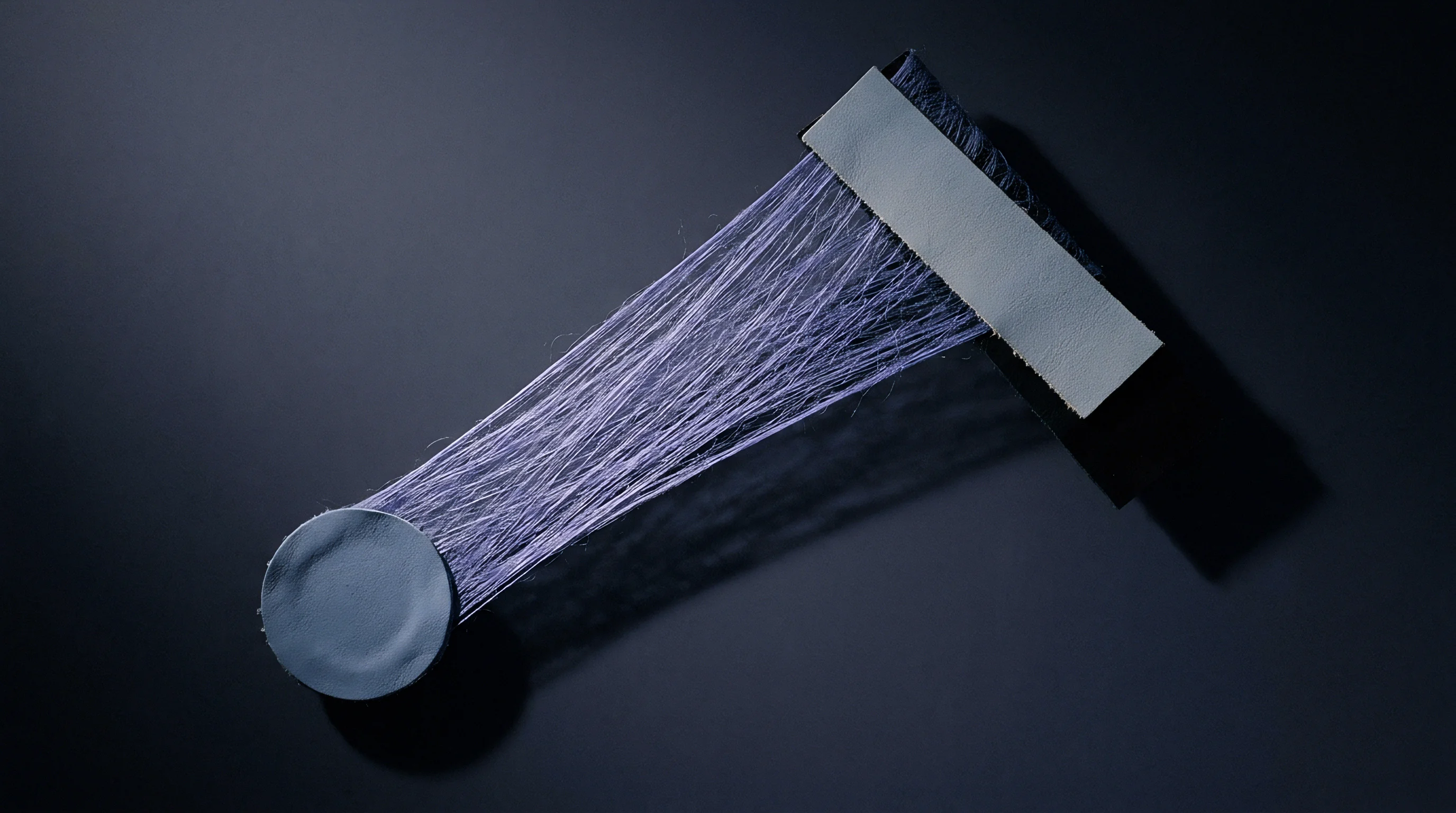
Lot Acceptance Sampling and Defect Classification
Verifying lamination quality and bond uniformity across production shipments requires structured lot acceptance sampling. Four-point inspection under ASTM D5430 covers visual defect point allocations based on defect length, but technical shell evaluation requires destructive testing of head and tail cuts from rolls. Relying only on visual inspection misses latent bond weaknesses, uneven crosslinker activation, or premature hydrolysis issues that show up only under mechanical peel testing.
Acceptance sampling for technical outerwear uses ISO 2859-1 single sampling plans for normal inspection at General Inspection Level II. A standard lot of 50 rolls (around 5,000 linear metres) requires sampling 8 rolls at random across the run. Destructive physical test swatches cut across the full width of selected rolls are tested immediately for dry coat weight, initial peel strength, hydrostatic head resistance, and post-wash delamination.
Increasing dry adhesive coat weight cannot compensate for an uncleaned greige substrate or poorly crosslinked polyurethane resin.
Defect categorization separates visual surface irregularities from functional structural failures. Visual flaws, like minor shade variations or small surface slubs, receive penalty points under the four-point system. Functional defects ~ such as pinholes, coat-weight variation beyond 10 percent off-spec, center-to-edge peel variance over 2.0 Newtons per 50 millimetres, or failing the 10.0 Newton minimum peel threshold ~ trigger immediate rejection of the entire roll regardless of visual points.
| Defect Category | Physical/Visual Parameter Boundary | Lot Acceptance Threshold (AQL) | Commercial Action & Financial Remedy |
|---|---|---|---|
| Critical Functional | Initial Peel Strength < 8.0 N/50mm or Hydrolysis Loss > 40% | 0.0 (Zero Tolerance) | 100% lot rejection; full material replacement plus air freight reorder compensation. |
| Major Performance | Dry Coat Weight drift > ±15% off-spec or Hydrostatic Head < 15,000 mm | 1.5 AQL | Roll credit deduction equal to affected yardage; mill re-curing at mill expense if viable. |
| Minor Structural | Center-to-Edge peel strength variance between 1.5 and 2.5 N/50mm | 4.0 AQL | Commercial price discount of 15% applied to affected shipment rolls. |
| Visual Non-Functional | Minor surface pin-dots, minor streakiness under four-point threshold | 28 points / 100 m² | Standard yardage allowance offset credited on commercial invoice. |
Technical supply contracts are best structured around dual-stage lot acceptance sampling.
Batch-to-batch variation across multi-lot orders comes from uncontrolled changes in greige substrate preparation, resin mixing, and stenter line speeds. A converter processing 50,000 metres of shell fabric across three shifts must maintain complete chemical traceability. Supply contracts should require logging the chemical resin batch number against every roll number produced, allowing targeted containment if a specific crosslinker batch suffers premature pot-life decay.

Commercial Specifications and Contractual Penalties
Clear, enforceable technical specifications serve as a brand’s primary protection against substandard fabric lots and costly product recalls. A vague specification requesting “waterproof 2-layer nylon shell fabric” leaves a brand unprotected if a mill delivers low coat weight or poor peel strength. The spec sheet functions as a binding technical contract, establishing clear physical thresholds, test methods, conditioning protocols, sampling rates, and financial chargeback structures.
Contractual rejection penalties directly impact supplier margins.
Purchase orders for high-performance laminated shell fabrics should contain explicit technical criteria to hold suppliers accountable to performance benchmarks.
- Substrate Material Definition specifies yarn denier, filament count, weave construction, density ends and picks per inch, chemical fiber type, and maximum allowable spin finish oil content below 0.10 percent.
- Adhesive Chemistry Specification defines the polymer class, crosslinking agent type, solid content percentage, target dry coat weight in grams per square metre, and minimum dry coat weight tolerance boundaries.
- Interfacial Adhesion Targets establish mandatory initial peel strength values under ISO 2411, post-wash retained peel strength after 5 home wash cycles, and tropical chamber hydrolysis retention percentages.
- Waterproofness Performance Thresholds mandate initial hydrostatic head ratings under ISO 811 alongside post-flex abrasion hydrostatic head retention values following 20,000 Martindale cycles.
- Financial Penalty Provisions detail precise chargeback structures, defining mill liabilities for garments ruined by post-assembly delamination caused by off-spec fabric supply.
Latent defect clauses protect buyers when lamination failures appear only after garments have been cut, sewn, seam-sealed, and shipped to retail. Standard mill terms usually try to limit supplier liability to the raw invoice value of uncut fabric. Apparel brands must reject those terms, substituting a latent defect clause: if fabric delamination or coat-weight failure occurs during or after garment manufacturing due to un-crosslinked resin or contaminated substrate, the mill covers the full landed cost of the finished garment, including trims, labor, freight, and paid duties.
Sourcing managers who enforce mandatory peel testing on head-cut swatches prior to fabric cutting routinely avoid costly garment failures, maintaining reliable bond performance across bulk production through disciplined quality control.