Textile Chemical Volatility Limits and Batch Verification Methods
Verify textile chemical volatility limits through lot-specific micro-chamber GC-MS testing and sealed foil sampling to prevent border detention losses.


Limits
Volatile Organic Compounds in Finished Textiles
In textile manufacturing, chemical volatility limits restrict how quickly residual solvents, unreacted monomers, and processing aids offgas from finished fabric into the air. Frameworks like REACH Annex XVII, the Consumer Product Safety Improvement Act, and private eco-certifications cap allowable concentrations for specific chemicals. Compliance audits focus mainly on formaldehyde emissions, aromatic hydrocarbon residues, and chlorinated solvents.
Testing methods measure these compounds in milligrams per kilogram of fabric or micrograms per cubic meter of air in sealed test chambers.
Under OEKO-TEX STANDARD 100 Class I for baby items, the limit for free and hydrolyzed formaldehyde is 16 mg/kg using ISO 14184-1 water extraction. Class II products for adult skin contact allow up to 75 mg/kg, while Class IV decorative materials permit up to 300 mg/kg. Carrier solvents from polyester dyeing ~ such as toluene and chlorobenzenes ~ are strictly capped because their high vapor pressure causes persistent offgassing during transit and storage.
Core limits and testing methods across major global standards are summarized below.
| Chemical Compound | OEKO-TEX Class I Limit | GOTS 7.0 Limit | REACH Annex XVII Max | Standardized Test Method |
|---|---|---|---|---|
| Free Formaldehyde | 16 mg/kg | 16 mg/kg | 75 mg/kg | EN ISO 14184-1 |
| Toluene Residues | 1.0 mg/kg | 1.0 mg/kg | 1000 mg/kg | EN ISO 20158 |
| Tetrachloroethylene | 0.5 mg/kg | 0.5 mg/kg | 0.1% by weight | ISO 16000-6 |
| Cyclosiloxanes D4/D5/D6 | 0.1% combined | 0.1% combined | 0.1% individual | GC-MS Headspace |
| Pentachlorophenol | 0.05 mg/kg | 0.05 mg/kg | 5.0 mg/kg | EN ISO 17070 |
Volatile compounds stem from various stages of mill production. Dye auxiliaries, softeners, waterproofing treatments, and cross-linking resins each leave distinct volatile signatures behind in the fabric matrix.
Formaldehyde release exceeding 16 mg/kg under ISO 14184-1 test conditions triggers immediate compliance failure for infant apparel categories.
- Resin Finishing Residues release formaldehyde gas when cross-linking polycarboxylic acids or dimethyloldihydroxyethyleneurea compounds thermally break down during stenter drying.
- Carriers and Fixatives leave volatile aromatic hydrocarbons trapped in synthetic yarn cores if high-pressure dye liquor isn’t thoroughly cleared during reduction cycles.
- Scouring Solvents remain trapped as chlorinated hydrocarbons in dense cotton weaves when open-width washing ranges run below target extraction temperatures.
- Elastane Lubricants vaporize silicone monomers and mineral oils during heat-setting, coating curing chambers and contaminating neighboring fabric rolls.
Dyehouses running open-loop scouring lines often leave solvent residues behind in heavy cotton knits. Heat setting only partially drives off these chemicals, leaving trapped compounds to evaporate slowly while garments sit in storage. To stay compliant, mills need to test both total extractable content and active offgassing potential before releasing a batch.
Mills operating with uncalibrated exhaust temperatures constantly risk non-compliant solvent retention, especially in dense fabrics.
Oven

Environmental Chamber Methods and Thermal Desorption
Measuring textile chemical emissions relies on micro-chamber sampling paired with thermal desorption gas chromatography-mass spectrometry. Standard laboratory protocols in ISO 16000-6 and EN ISO 20158 outline how to condition fabric samples, capture volatile compounds on sorbent tubes, and run chromatographic separation. Fabric specimens are placed in stainless steel or glass chambers with controlled temperature, humidity, and airflow rates.
Chamber air flows across Tenax TA or carboxen sorbents, trapping volatile organic compounds for extraction.
Thermal desorption units heat sorbent tubes to between 250 °C and 320 °C, releasing the trapped compounds into a cryogenic trap. That trap then flash-heats to inject concentrated vapors into the gas chromatograph column. EN ISO 20158 relies on headspace gas chromatography for solvent screening, detecting concentrations down to 0.1 mg/kg.
Chamber volume, sample loading, and air exchange rates feed directly into the emission factor calculations used for regulatory compliance. Standard test configurations vary in scale and parameters.
| Test Protocol | Chamber Volume | Temperature Range | Air Exchange Rate | Detection Limit |
|---|---|---|---|---|
| ISO 16000-9 Micro-Chamber | 44 mL to 1 L | 23 °C to 60 °C | 100 to 250 mL/min | 0.01 mg/m³ |
| EN ISO 20158 Headspace GC-MS | 20 mL Vial | 80 °C to 120 °C | Static Headspace | 0.1 mg/kg |
| ASTM D5116 Small Chamber | 50 L to 1 m³ | 23 °C | 0.5 to 1.5 h⁻¹ | 0.005 mg/m³ |
Test duration dictates compound recovery rates. Highly volatile species offgas quickly within the first six hours in the chamber, but semi-volatile organic compounds take forty-eight to seventy-two hours to reach equilibrium. Technicians have to adhere strictly to preparation timelines so analytes aren’t lost before testing even starts.
Standard ISO 16000-9 protocols dictate that test specimens undergo conditioning at 23 °C and 50% relative humidity for 24 hours prior to chamber insertion.
Polar compounds tend to cling to chamber walls, skewing readings lower. Phenolic compounds and fluorotelomer alcohols stick to interior surfaces, reducing detected levels unless warm-wall desorption protocols are run between tests. Automated cleaning cycles at 180 °C clear out residual compounds to prevent cross-contamination between batches.
Residual solvent vapor traces often stem from third-party shipping packaging rather than mill chemistry.


Cut
Batch Sampling Protocols on the Mill Floor
Getting a representative sample requires systematic selection across production lots rather than taking convenient swatches from roll ends. Mills frequently cut samples from the outer layers of a finished roll, introducing heavy sampling bias. Volatiles offgas faster from outer layers exposed to ambient air, producing artificially low readings.
Proper verification demands full-width swatches cut from deeper inside the roll.
- Select five rolls at random for every 10,000 meters of finished fabric production.
- Unwind and discard the outer three wraps from each chosen roll.
- Cut a full-width swatch 50 centimeters long in the warp direction from the underlying layer.
- Wrap the swatch immediately in air-tight, chemically neutral polyethylene-laminated aluminum foil.
- Place the foil pack in a heavy-duty vapor-barrier container and apply batch identification labels across the seal.
- Send sealed containers to an ISO 17025 accredited lab within twenty-four hours of sampling.
Maintaining a tight specimen seal stops volatiles from escaping during transport. Standard unlined polyethylene bags absorb aromatic hydrocarbon vapors, corrupting sample integrity before testing ever happens. Metal foil laminates keep compounds intact during multi-day transit to testing labs.
Sampling frequency depends on production volume and chemical risk. High-risk treatments, like flame retardants and oil repellents, require verification on every single dye lot. Lower-risk reactive dyes on pure cotton only need sampling every ten thousand meters.
Cutting corners on sample seals ruins testing accuracy, leading to false compliance passes that trigger failures at customs.
Failing to seal swatches in vapor-barrier packaging makes lab emission tests practically useless when defending against border checks.


Discrepancy
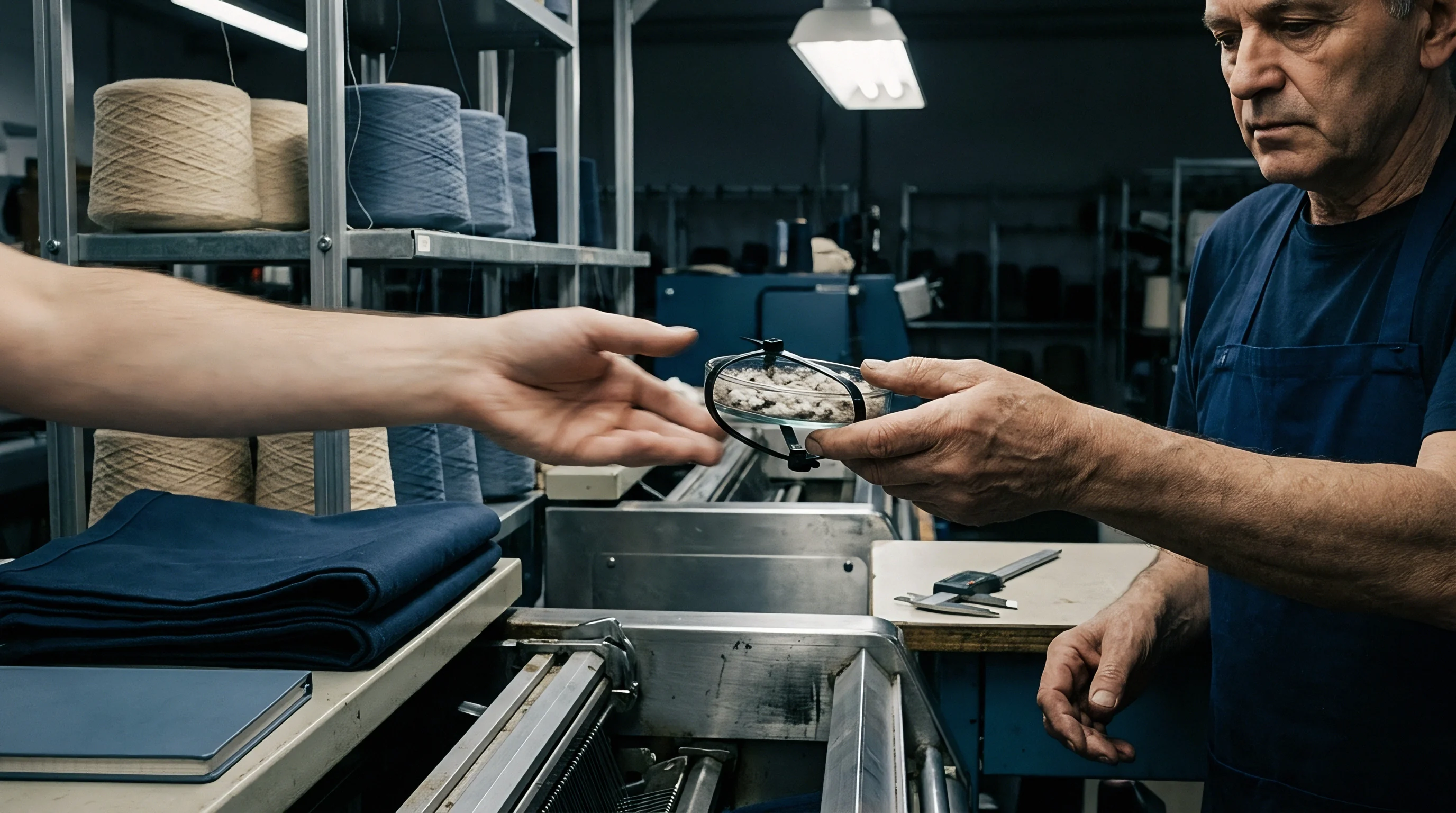
Can Environmental Chamber Tests Predict Freight Offgassing?
Gaps between laboratory lab reports and actual container emissions stem from the harsh microclimates created during ocean transit. Sealed containers undergo extreme daily temperature shifts, climbing past 60 °C on tropical shipping routes. Heat speeds up the release of trapped residual solvents into the container’s air, while high humidity can trigger hydrolysis in resin finishes, generating new formaldehyde gas inside the closed space.
Standard lab tests run at 23 °C miss this heat-driven spike in volatility. A roll that passes lab screening at 10 mg/kg formaldehyde can easily produce container air levels above regulatory limits by the time it reaches port. Moisture buildup inside the container shifts the chemical balance, causing steady formaldehyde offgassing over a four-week voyage.
Chemical breakdown during transit also changes the compound mix. High container heat causes volatile monomers to degrade into secondary oxidation products, producing unexpected volatile readings at destination ports. When port officials test the ambient air inside a container, they flag these accumulated breakdown products ~ leading to customs holds even if origin testing was completely clean.
Ambient container temperatures above 50 °C double the rate of formaldehyde hydrolysis inside sealed fabric shipments.
Importers offset these transit risks by building in safety margins. Setting factory release limits at 50% of official regulatory thresholds leaves room for offgassing increases caused by container heat. Using breathable packaging inserts and moisture-absorbing desiccants also helps control hydrolysis during sea freight transit.
Whether standard chamber testing can truly replicate weeks of thermal stress during transit remains a open debate among supply chain risk analysts.


Traceability
Scope Certificates and Transaction Certificate Audits
Paperwork links lab testing on a batch to the physical cargo crossing international borders. A Scope Certificate confirms that a mill has the operational capacity to make compliant goods under a given standard, but it doesn’t guarantee that any individual batch meets volatility limits. That takes a Transaction Certificate, which certifies that a specific weight and dye lot complies, establishing clear traceability from raw fiber to final delivery.
A complete traceability audit requires four matching documents: the mill Scope Certificate, the lot-specific Transaction Certificate, the ISO 17025 test report, and the commercial invoice packing list. Verification managers compare test report dates against production timestamps to catch outdated lab data. Reports dated more than twelve months before production carry no legal weight during audits.
- Scope Certificate Scope specifies accredited facilities, approved processing steps, and product categories covered under the main certification.
- Transaction Certificate Details ties invoice numbers, fabric weights, dye lot codes, and buyer identity directly to certified production runs.
- Laboratory Accreditation Limits confirms that the testing lab holds ISO 17025 accreditation specifically for the required volatile chemical methods.
- Batch Testing Chronology verifies that testing was performed on the actual dye lot rather than an old master roll.
Footnote exclusions in certificates can easily void compliance coverage for post-processing steps. If a subcontracted dyehouse adds functional finishes after primary certification, baseline chemical claims are invalidated unless the fabric is re-tested at the lot level. Auditors verify that every finishing mill in the supply chain holds active certification.
Scope certificates demonstrate facility capability, but only transaction certificates tie chemical test compliance directly to physical shipments.
Customs officials check transaction certificates against physical shipping marks on arrival. Any discrepancy between roll lot numbers and paperwork triggers immediate holds and mandatory sampling at the port.
Standard purchase order terms allow buyers to reject shipments at the seller’s expense if transaction certificates are missing or invalid.


Exposure
Financial Consequences and Commercial Risk Mitigation
Failing chemical volatility checks creates major financial risk for importers of record. When border authorities seize freight over restricted emissions, mandatory quarantine, bonded storage, or destruction protocols kick in. Quarantine fees accruing over weeks can quickly exceed the wholesale value of the shipment, and third-party re-testing costs during port disputes add even more financial strain.
Calculating financial exposure means factoring in detention penalties, laboratory re-testing fees, and the cost of broken contracts. Financial impact varies depending on the specific failure scenario.
| Failure Scenario | Customs Detention Fee | Laboratory Retest Cost | Air Freight Replacement | Total Financial Risk |
|---|---|---|---|---|
| Formaldehyde Offgassing Hold | $12,500 | $1,800 | $35,000 | $49,300 |
| Solvent Carrier Exceedance | $8,000 | $2,400 | $28,000 | $38,400 |
| Uncertified Finish Discovery | $15,000 | $3,200 | $45,000 | $63,200 |
Importers build chemical compliance indemnity clauses straight into master purchase agreements. These terms push financial liability for customs detention, demurrage, re-testing, and product recalls back onto the origin mill. Contracts also require mills to reimburse lost retail margins if chemical non-compliance causes missed product launches.
Strict batch verification protects commercial margins. Requiring lot-specific test reports from ISO 17025 accredited labs before paying invoices gives buyers necessary leverage over dyehouses. Enforcing rigorous cut-sampling and vapor-sealed packaging eliminates detention risks before cargo ever leaves the origin port.
Importers remain on the hook for re-test costs if sampling at the origin fails to follow proper packaging protocols. Freight forwarders will hold blocked containers in port warehouses while buyers negotiate settlements with mills, and recovering lost value through legal action requires clear documentation showing that mill-floor sampling was done correctly.