Isomeric Plasticizer Extraction Methods for Polymer Coated Fabric Testing
Polymer-coated substrate testing requires full matrix solvation to ensure complete extraction and accurate mass spectrometry quantification of isomeric plasticizers.
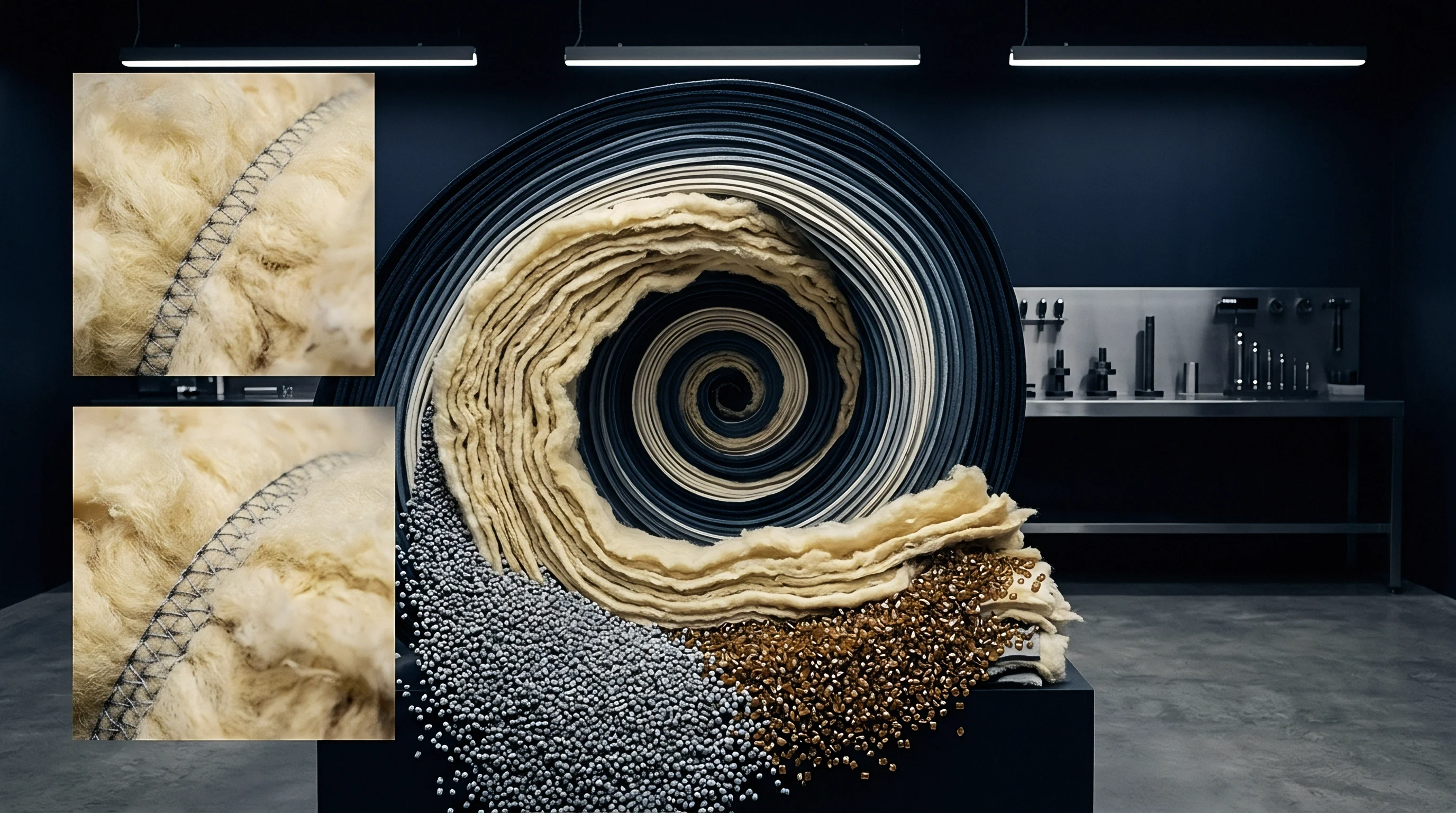
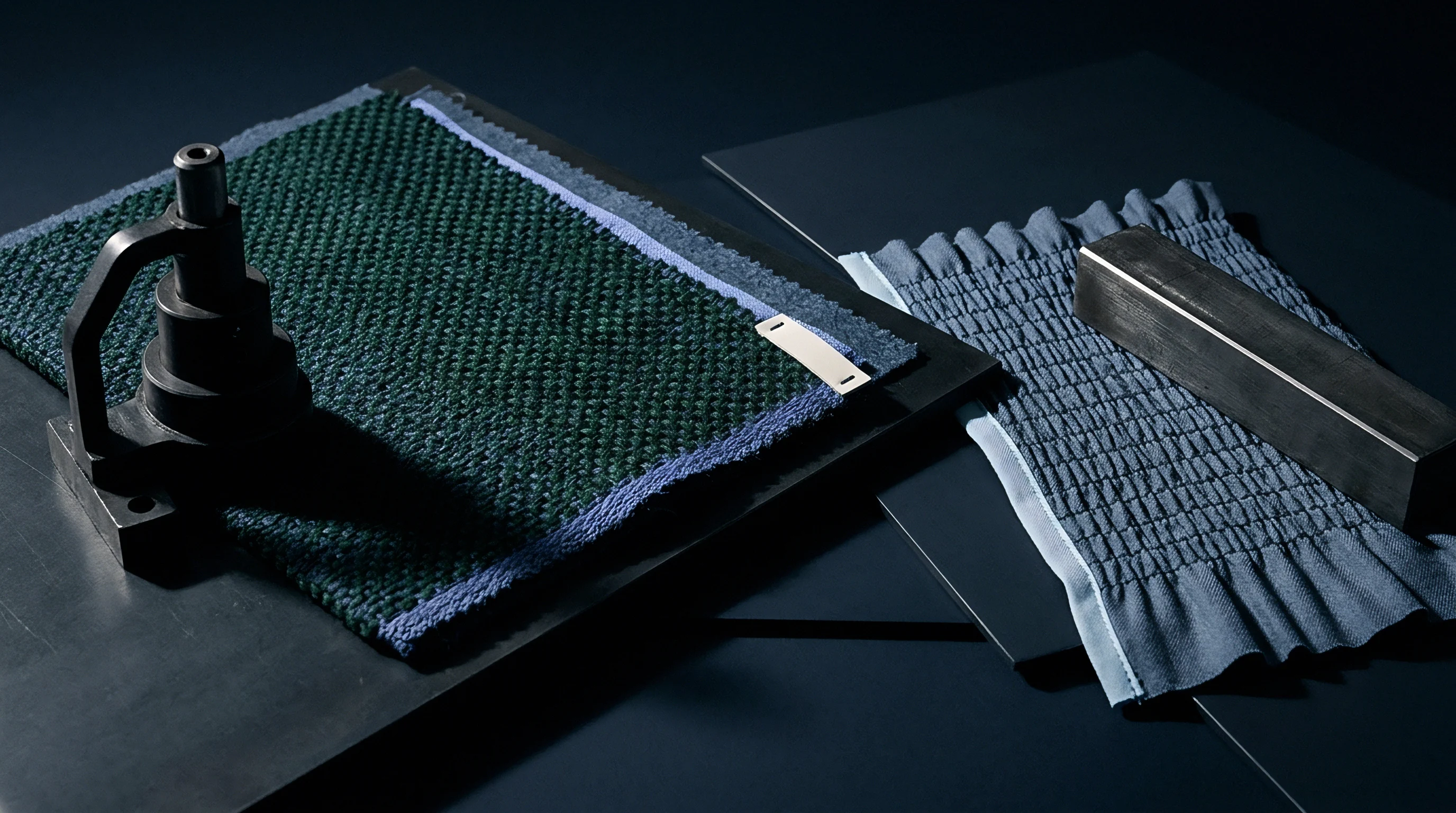
Swell
Tetrahydrofuran dissolves flexible polyvinyl chloride matrices by breaking intermolecular dipole interactions between polymer chains. When testing coated polymer sheets for restricted plasticizing additives, full solvation of the polymer network remains necessary to liberate entrapped ester compounds. Solvent selection balances matrix swelling against total polymer dissolution, as incomplete matrix softening locks high molecular weight plasticizers inside the inner core.
Testing laboratories select target organic liquids based on Hildebrand solubility parameters matching the specific coating formulation.
Polymer Network Expansion and Solvation Kinetics
Chlorinated rubber and polyolefin substrates exhibit variable cross-linking densities that dictate solvent diffusion rates. Matrix density governs diffusion speed. Standardized testing schemes rely on controlled swelling mechanics where organic molecules infiltrate polymer cross-links, expanding the intermolecular distance without completely liquidating the underlying textile backing.
Complete diffusion requires matching the dielectric constant of the solvent to the target polymer resin. Dichloromethane effectively penetrates flexible polyvinyl chloride, expanding the chain matrix to release branched and linear esters.
Chemical solubility depends on chain structure. When evaluating dense polyurethane topcoats, aromatic solvents such as toluene provide necessary lattice opening without destroying synthetic polyester backing fibers. Inadequate swelling yields artificially low concentration figures on testing reports, causing non-compliant shipments to pass initial screening.
Solvent polarity dictates extraction throughput.
Solvent Penetration across Polyvinyl Chloride and Polyurethane Coatings
Targeted plasticizers migrate through the skin layer into the liquid phase when thermodynamic compatibility favors dissolution over retention. Polyvinyl chloride coatings contain plasticizer concentrations ranging from fifteen percent to fifty percent by mass. Plasticizer molecules reside in non-covalent association with the vinyl backbone.
Extraction solvents must disrupt these weak electrostatic bonds without creating viscous polymer gels that clog analytical filtration systems. Tetrahydrofuran completely dissolves polyvinyl chloride, requiring secondary precipitation using methanol to drop the polymer resin out of solution while leaving target esters in the supernatant liquid.
Polyurethane layers rely on different chemical bonding profiles, often requiring mixture solvents such as acetone-hexane combinations to achieve effective mass transfer. Selecting solvent ratios dictates the boundary between surface washing and core extraction.
- Tetrahydrofuran Precipitation Protocol completes total matrix dissolution for polyvinyl chloride coatings, followed by selective polymer separation using methanol addition.
- Dichloromethane Direct Extraction swells flexible vinyl structures while preserving synthetic woven backings, allowing direct liquid decanting.
- Acetone Hexane Azeotropic Mixture penetrates polyurethane topcoats while minimizing structural fiber damage on technical backing textiles.
- Diethyl Ether Soxhlet Reflux extracts unbound low-molecular-weight esters through continuous low-temperature liquid percolation cycles.
Extracting plasticizers from thick polymer layers works best when solvent solubility match complete dissolution rather than surface washing.
Selecting an inappropriate liquid medium results in under-reporting restricted orthophthalate concentrations. Extracting plasticizers from thick polymer layers works best when solvent solubility match complete dissolution rather than surface washing.
Agitation
Soxhlet extraction remains the reference standard in ISO 14389 for total ester migration measurement. Mechanical energy application accelerates the mass transfer of target plasticizer isomers from the polymer coating into the liquid solvent phase. Standard Soxhlet extraction subjects samples to continuous thermal boiling and condensation over six to sixteen hours, ensuring exhaustive recovery of complex isomeric mixtures.
Alternative modern extraction techniques apply ultrasonic vibration, pressurized liquid heating, or microwave energy to drastically reduce processing time.
Thermal and Kinetic Transfer Parameters
Reflux cycles establish continuous liquid concentration gradients between the solid specimen and the boiling flask. Thermal energy input maintains solvent boiling, while the siphoning mechanism removes saturated liquid from the extraction thimble. Higher temperatures lower solvent viscosity and increase diffusion coefficients inside the polymer matrix.
Excessive thermal exposure risks thermal degradation of sensitive ester bonds, producing artifact peaks during subsequent chromatographic analysis.
Ultrasound agitation accelerates mass transfer. Ultrasonic bath systems operate at frequencies between thirty-five and forty-five kilohertz, creating localized cavitation bubbles that implode against the polymer surface. This micro-jet action fractures surface skins and drives solvent into microscopic pores, completing extraction within sixty minutes at moderate temperatures.
A 98.2 percent extraction recovery rate for di-isononyl phthalate rests on a 16-hour Soxhlet run using diethyl ether at 40 degrees Celsius. Increasing matrix thickness above 0.8 millimeters drops recovery to 89.4 percent unless the sample is cryogenically milled below 250 micrometers.

Comparative Extraction Efficiency across Standardized Techniques
Pressurized fluid instruments operate at elevated pressure to maintain liquid phase dynamics above standard boiling thresholds. Temperatures reaching one hundred to one hundred fifty degrees Celsius under pressures of ten to fifteen megapascals drive solvent into dense polymer lattices within fifteen minutes. Pressurized liquid extraction drastically reduces organic solvent consumption while achieving complete recovery of high-viscosity isomeric compounds such as di-isodecyl phthalate and di-isononyl phthalate.
| Extraction Method | Standard Designation | Solvent System | Temperature Range (C) | Processing Time | Isomer Recovery (%) |
|---|---|---|---|---|---|
| Soxhlet Extraction | ISO 14389 / EN 14372 | Diethyl Ether / DCM | 40 to 60 | 6 to 16 Hours | 98.5 to 99.8 |
| Ultrasonic Extraction | CPSC-CH-C1001-09.4 | Tetrahydrofuran / THF | 50 to 60 | 30 to 60 Mins | 95.0 to 98.2 |
| Pressurized Liquid (PLE) | EPA Method 3545A | DCM / Acetone | 100 to 150 | 12 to 20 Mins | 97.8 to 99.5 |
| Microwave Assisted (MAE) | ASTM D6042 Mod | Hexane / Acetone | 80 to 110 | 15 to 30 Mins | 94.2 to 97.5 |
Overheating degrades delicate ester bonds. Choosing the optimal extraction technique requires weighing processing speed against degradation risks for specific polymer matrices.
A sixteen hour Soxhlet reflux using diethyl ether achieves 98.5 percent recovery of di-isononyl phthalate from a one millimeter polyvinyl chloride coating.
Convertors frequently state that elevated process temperatures during coating drive off lower molecular weight isomers, rendering thorough analytical extraction unnecessary for finished goods.

Chromatography
Gas phase separation isolates volatile organic compounds based on differential partition coefficients between helium carrier gas and capillary stationary phases. High-resolution gas chromatography coupled to mass spectrometry serves as the primary instrument for quantifying plasticizers extracted from polymer coatings. Isomeric plasticizers such as di-isononyl phthalate and di-isodecyl phthalate present complex multi-peak chromatograms due to the presence of hundreds of structural alkyl chain isomers.
Achieving precise baseline separation requires specialized capillary columns engineered with mid-polar stationary phases.

Mass Spectrometry Fragment Separation for Structural Isomers
Electron ionization at seventy electron volts breaks ester linkages into characteristic diagnostic fragments. Ortho-phthalates yield a dominant fragment ion at mass-to-charge ratio m/z 149, corresponding to the protonated phthalic anhydride cation. Non-phthalate isomeric alternatives such as di-isobutyl terephthalate generate characteristic ion fragments at m/z 223 and m/z 261, preventing misidentification with restricted orthophthalates.
Mass fragment ratio confirms structural identity.
| Compound Class | Abbreviation | CAS Number | Quantification Ion (m/z) | Confirmation Ions (m/z) | Elution Pattern |
|---|---|---|---|---|---|
| Di-2-ethylhexyl Phthalate | DEHP | 117-81-7 | 149 | 167, 279 | Single Sharp Peak |
| Di-isononyl Phthalate | DINP | 28553-12-0 | 149 | 293, 127 | Broad Isomeric Cluster |
| Di-isodecyl Phthalate | DIDP | 26761-40-0 | 149 | 307, 141 | Broad Isomeric Cluster |
| Di-2-ethylhexyl Terephthalate | DOTP / DEHT | 6422-86-2 | 261 | 141, 223 | Single Sharp Peak |
| Di-isononyl Cyclohexane | DINCH | 166412-78-8 | 155 | 295, 113 | Multi-Peak Cluster |
Column temperature regulates peak separation. Co-eluting peaks obscure true concentrations. Precision spectral gating isolates overlapping isomer signals during continuous mass scans.

Column Stationary Phase Selection for Resolution of Branched Clusters
Non-polar dimethylpolysiloxane capillary tubes generate broad envelope elution profiles for multi-branched phthalate species. Phase chemistry modifications incorporating fifty percent phenyl groups improve structural resolution between linear and branched alkyl chains.
- Inject extract liquid into splitless inlet heated to two hundred eighty degrees Celsius.
- Ramp oven temperature from sixty degrees Celsius to three hundred degrees Celsius at twenty degrees per minute.
- Hold capillary column at maximum temperature for ten minutes to clear high boiling residues.
- Record mass spectral data across scan range from m/z 50 to m/z 500.
- Process total ion chromatogram using selective ion extraction for m/z 149 and compound-specific secondary ions.
The resulting mass spectra allow clear identification of individual phthalate ester isomers despite overlapping chromatographic elution bands.

Quantification
Deuterated internal standards compensate for signal suppression and volumetric variance during mass spectrometric analysis. Analytical software constructs multi-point linear regression calibration curves using target compound standards spanning concentrations from 0.5 milligrams per liter to 50 milligrams per liter. Accurate quantification of isomeric mixtures demands total envelope integration, summing the area under all branched sub-peaks across the designated retention window.
Peak overlap demands precise spectrum gating.
Isomeric Peak Integration and Hump Calibration Mechanics
Baseline assignment across unresolved isomer clusters determines whether calculated mass fractions meet statutory ceilings. Automated integration algorithms often misinterpret isomeric humps as shifting baseline noise, artificially reducing the calculated peak area. Laboratory analysts must manually define forced baseline boundaries starting from the initial rise of the isomer cluster to its complete return to true instrument baseline.
A target signal-to-noise ratio threshold of ten to one for di-isodecyl phthalate rests on a quadrupole detector dwell time of 50 milliseconds per ion. Reducing dwell time to 15 milliseconds elevates the limit of quantification from 50 milligrams per kilogram to 140 milligrams per kilogram.
Incorporating deuterated di-2-ethylhexyl phthalate internal standards corrects for volumetric solvent loss during evaporative concentration steps.
Baseline drift distorts total integration. Standard CPSC-CH-C1001-09.4 requires sum integration across specified retention time windows for di-isononyl phthalate to capture all structural alkyl isomers. Incorporating deuterated di-2-ethylhexyl phthalate internal standards corrects for volumetric solvent loss during evaporative concentration steps.

Are Branched Isomers Fully Separated by Single Stage Gas Chromatography?
Capillary columns with fifty percent phenyl-substituted phases resolve orthophthalates from terephthalate isomers under standard temperature programs. Single-stage gas chromatography struggle to separate complex overlapping isomers of di-isononyl phthalate from di-isodecyl phthalate because their boiling point distributions and structural fragmentation patterns overlap significantly. Comprehensive two-dimensional gas chromatography resolves this analytical overlap by directing primary column effluent into a secondary column with contrasting polar stationary characteristics.
Whether multi-dimensional gas chromatography coupled with high-resolution mass spectrometry will replace single-column methods for routine industrial compliance testing remains undetermined across accredited testing networks.

Exposure
Market surveillance programs across European entry ports analyze landed consumer goods for restricted plasticizing agents. Customs enforcement agencies utilize high-throughput screening combined with definitive laboratory testing to enforce restricted substance regulations. Non-compliant shipments face immediate border detention, compulsory return, or destruction at the importer expense under official regulatory mandates.

Regulatory Ceiling Compliance and Border Surveillance Scenarios
Annex XVII of REACH restricts six major phthalate species to a combined concentration threshold of one thousand milligrams per kilogram. This limit applies to the sum of di-2-ethylhexyl phthalate, dibutyl phthalate, benzyl butyl phthalate, di-isobutyl phthalate, di-isononyl phthalate, di-isodecyl phthalate, and di-n-octyl phthalate in plasticized substrates. California Proposition 65 enforces individual notification thresholds and exposure limits requiring clear product labeling for items containing specified orthophthalates.
| Jurisdiction / Standard | Restricted Compounds | Individual Limit (mg/kg) | Cumulative Limit (mg/kg) | Scope / Application |
|---|---|---|---|---|
| EU REACH Annex XVII (Entry 51) | DEHP, DBP, BBP, DIBP | N/A | 1000 (0.1% w/w) | All Plasticized Consumer Goods |
| EU REACH Annex XVII (Entry 52) | DINP, DIDP, DNOP | N/A | 1000 (0.1% w/w) | Toys and Childcare Articles |
| US CPSIA (16 CFR Part 1307) | 8 Major Phthalates | 1000 (0.1% w/w) | 1000 Individual Caps | Children’s Toys and Childcare Items |
| OEKO-TEX STANDARD 100 Class I | Total Ortho-Phthalates | N/A | 500 (0.05% w/w) | Infant Textiles and Substrates |
Port inspections target high-risk consumer items. Border detentions generate severe financial loss.

Worked Assessment of Retest Divergence in Commercial Shipments
Discrepancies between origin testing and destination verification stem primarily from sample extraction incomplete recovery. An estimated matrix dissolution bias factor of 1.15 to 1.35 across non-standardized polyurethane formulations cannot be universally validated due to proprietary polyol cross-linking variations across chemical suppliers. Under this uncertainty, a prudent buyer enforces a conservative internal action limit of 400 milligrams per kilogram when certifying polyurethane-coated items against a 1000 milligram per kilogram regulatory cap.
- Incomplete Matrix Solvation Failure produces false-pass results at origin through under-extraction, followed by import detention when destination authorities utilize total dissolution techniques.
- Baseline Integration Suppression miscalculates broad isomeric humps as background noise, under-reporting total DINP content by up to forty percent.
- Isomeric Co-Elution False Positive misidentifies non-restricted terephthalate esters as restricted orthophthalates due to uncalibrated retention windows.
- Contamination During Cutting introduces phthalate trace levels from plastic laboratory tools into non-phthalate polymer samples.
Entry 51 of REACH Annex XVII specifies that article shipments containing restricted orthophthalate concentration totals above 0.1 percent by weight cannot enter market distribution.
Obligation
Commercial purchase orders shift compliance risk through explicit testing warranties tied to accredited laboratory certificates. Importers and brand owners must construct technical compliance dossiers containing verifiable test data for every production batch. Relying on raw material chemical declarations without batch-specific analytical verification leaves buyers exposed to regulatory sanctions and commercial liabilities.
Laboratory Scope Verification and Audit Trail Defensibility
ISO 17025 accreditation certificates list specific analytical methods, matrix classifications, and target compound limits. Testing reports issued by laboratories lacking explicit accreditation scope for ISO 14389 or CPSC-CH-C1001-09.4 fail to satisfy border authority documentation audits. Certificate validity depends on laboratory scope.
Batch traceability secures border clearance.
Technical compliance dossiers must include ISO 17025 accredited laboratory test reports matching specific shipment batch numbers and manufacturing lot codes.
Verification files require explicit correlation between batch sample identifiers and landed commercial container numbers. Technical compliance dossiers must include ISO 17025 accredited laboratory test reports matching specific shipment batch numbers and manufacturing lot codes.
Commercial Indemnity and Technical File Architecture
A complete compliance dossier combines mill material disclosures with batch-specific analytical reports and transaction certificates. Contracting terms must assign full financial indemnity to textile converters when delivered goods fail regulatory verification testing at destination ports. Indemnity clauses should explicitly cover landed freight charges, customs storage fees, testing expenses, and inventory disposal costs incurred due to non-compliant plasticizer levels.
Failure to establish rigorous analytical verification chains leads directly to container detentions, mandatory inventory destructions, and severe contractual penalty claims.