Standard Chemical Dissolution Methods for Quantitative Fibre Identification
Quantitative dissolution isolates fiber components through selective solvent digestion, gravimetric residue measurement, and official moisture regain adjustments.
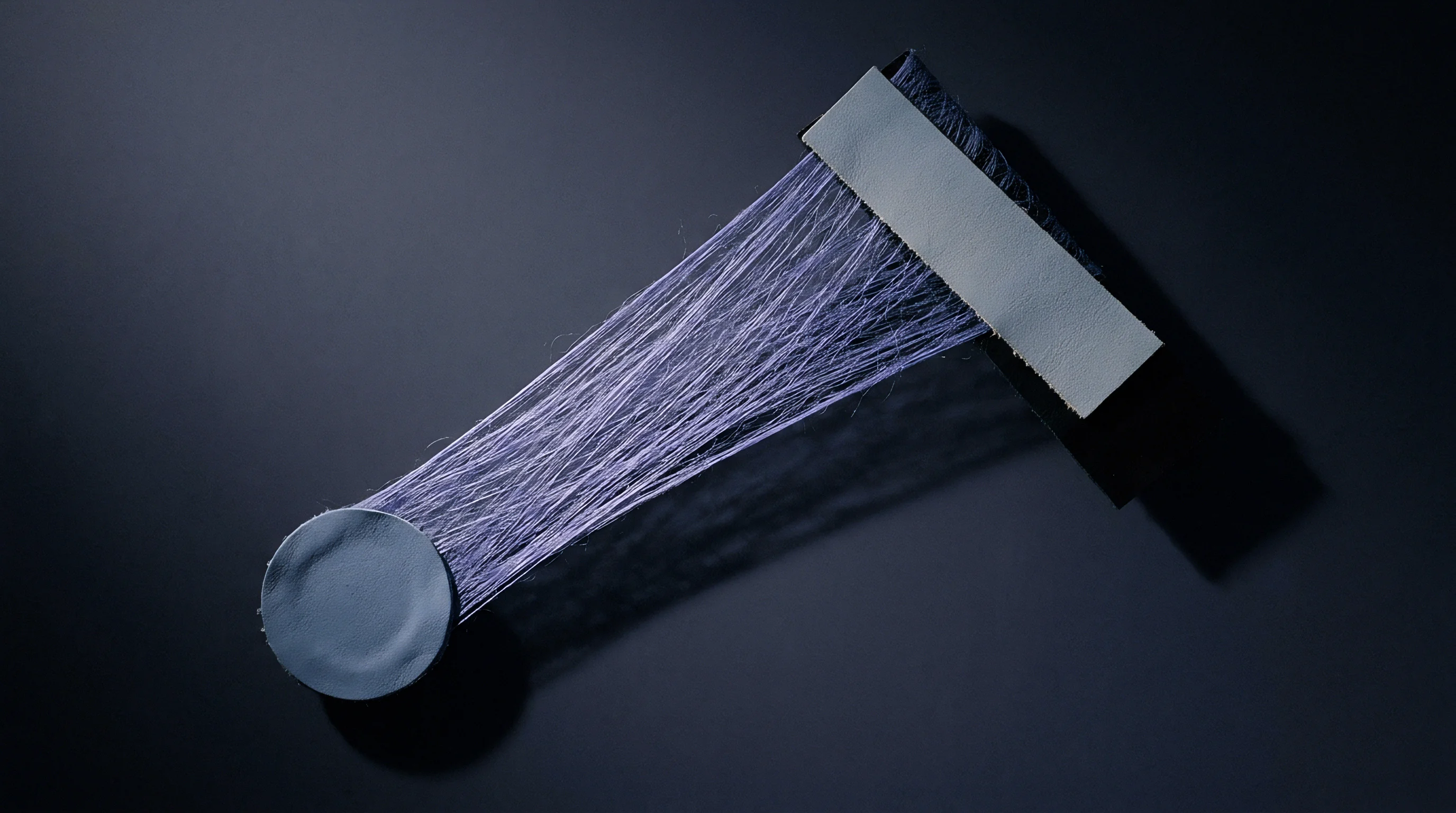

Digestion
Laboratories quantify multi-component textile mixtures by dissolving one constituent in a selective chemical reagent and weighing the dried insoluble residue. Standardized test routines defined in ISO 1833, ASTM D629, and AATCC 20A govern this gravimetric separation. The technique isolates each fiber class through differential chemical resistance: while one polymer structure undergoes complete chain cleavage or solvation, the companion structure remains insoluble in the filter crucible.
Precision depends on strict adherence to reagent concentration, bath temperature, contact duration, and liquor ratio. Slight deviations in chemical purity or thermal stability induce partial dissolution of the intended residue or leave unreacted target polymers in the specimen.
Cellulosic materials combined with synthetic polymers present the most frequent commercial separation challenge. Sulfuric acid at an exact concentration of 75.0 percent by mass dissolves cellulose, viscose, modal, lyocell, and cupro within thirty minutes at 50 degrees Celsius, leaving polyester, acrylic, and polypropylene undamaged. Acetone at room temperature extracts secondary acetate within ten minutes while leaving triacetate, polyamide, and natural fibers inert.
Glacial acetic acid or dichloromethane separates triacetate when secondary acetate has already been removed or is absent. Wool and silk dissolve rapidly in cold alkaline sodium hypochlorite solutions containing 35 grams of active chlorine per litre, permitting gravimetric isolation of companion polyester, cotton, or acrylic components.
Seventy-five percent sulfuric acid at 50 degrees Celsius dissolves regenerated and natural cellulosics completely while polyester mass loss stays below one percent.
Polyamide separations require concentrated formic acid at 80.0 percent mass concentration. The reagent digests polyamide 6 and polyamide 66 within fifteen minutes at room temperature, but leaves cotton, polyester, and wool intact. Zinc chloride dissolved in anhydrous formic acid strips regenerated cellulose away from natural cotton fibres, exploiting differences in degree of polymerization and crystalline orientation.
When processing acrylic components, warm dimethylformamide at 60 degrees Celsius dissolves polyacrylonitrile while companion wool or cellulosic fibres remain unattacked.
Each dissolution system exhibits a distinct mass-loss signature on the insoluble component. Chemical reagents extract minor oligomers, natural waxes, or surface finishes from the insoluble residue even when the primary polymer backbone resists solvation. Analysts account for this minor attack by determining the dissolution recovery factor, designated as the d-factor in ISO 1833.
This numerical constant corrects for involuntary mass loss of the non-dissolving component. Polyester exposed to 75 percent sulfuric acid exhibits a d-factor between 1.00 and 1.01, representing near-zero degradation. Cotton subjected to alkaline sodium hypochlorite displays a d-factor between 1.01 and 1.03 depending on scour levels and past bleaching history.
Acid attacks cellulose chains. Reagents demand precise concentration. A deviation of two percent in sulfuric acid concentration alters the dissolution kinetics significantly: acid concentrations below 73 percent fail to dissolve mature cotton crystallites within the prescribed window, whereas concentrations exceeding 77 percent char and hydrolyze companion polyester filaments.
Automated titrators verify chemical concentrations prior to every test cycle. Laboratories running non-standardized chemical cocktails risk false residue readings, producing skewed blend certificates that distort commercial customs declarations.
| Soluble Component | Insoluble Residue | Reagent System | Bath Temperature | Contact Time | Nominal d-Factor |
|---|---|---|---|---|---|
| Acetate | Polyamide, Polyester, Cotton | Acetone (reagent grade) | 20 °C | 15 min | 1.00 |
| Wool, Silk | Polyester, Acrylic, Cotton | Sodium hypochlorite (1.0 M) | 20 °C | 35 min | 1.01 |
| Polyamide 6, 66 | Polyester, Acrylic, Wool | Formic acid (80% m/m) | 20 °C | 15 min | 1.00 |
| Cotton, Viscose | Polyester, Polypropylene | Sulfuric acid (75% m/m) | 50 °C | 30 min | 1.01 |
| Viscose, Lyocell | Cotton (unmercerized) | Sodium zincate (cold solution) | 15 °C | 20 min | 1.02 |
| Acrylic | Wool, Cotton, Polyester | Dimethylformamide (DMF) | 60 °C | 10 min | 1.01 |
A misapplied dissolution route yields invalid quantitative ratios, shifts the customs declaration into higher tariff brackets, and triggers administrative penalties during post-clearance cargo audits.

Extraction
Non-fibrous impurities distort baseline gravimetric balances if they remain on the test specimen during solvent treatment. Sizing starches, wax coatings, spin finishes, knitting oils, and processing lubricants contribute measurable mass to raw yarns and finished piece goods. ISO 1833-1 mandates thorough solvent pre-treatment to strip these surface additives prior to selective chemical dissolution.
Failure to remove non-fibrous matter introduces systematic bias: if a finishing oil dissolves in the primary reagent alongside the soluble fibre, the analyst records that oil mass as part of the dissolved component, falsifying the yarn blend ratio.
Specimens undergo Soxhlet extraction with light petroleum ether boiling between 40 and 60 degrees Celsius for a minimum of sixteen siphon cycles. This continuous washing strips fatty acids, paraffin lubricants, and synthetic spin finishes. Specimens intended for water-soluble size removal move directly from petroleum extraction into a secondary Soxhlet cycle using 96 percent ethanol, or undergo immersion in warm distilled water at 50 degrees Celsius for two hours.
Desizing enzymes such as bacterial alpha-amylase digest stubborn cornstarch or potato starches at 60 degrees Celsius, followed by extensive demineralized water flushes to eliminate degraded sugars.
- Petroleum Ether Wash removes lubricating waxes and silicone knitting oils from synthetic and natural filaments.
- Ethanol Soxhlet Flush dissolves phenolic sizing residues, natural resins, and synthetic plasticizers without swelling primary structural polymers.
- Enzymatic Amylase Bath hydrolyzes starch-based warp sizes on cotton yarns, preventing artificial mass retention in subsequent acid digestion.
- Boiling Water Cleansing strips remaining polyvinyl alcohol sizes and water-soluble finishing auxiliaries.
Petroleum ether strips processing oils. Water extraction removes sizing agents. The pre-treatment extraction sequence requires dry-mass verification before and after solvent washing.
The loss in mass during pre-treatment constitutes the non-fibrous matter percentage, which ranges from 0.8 percent on scoured synthetic knits to 8.5 percent on starched loom-state woven structures. Contractual delivery specifications determine whether final fiber ratios are declared on clean-fiber mass alone or calculated relative to total uncleaned cloth weight. Commercial import valuations penalize ambiguity on this point, as customs authorities enforce declared compositions on clean, de-sized dry substrates.
Thorough petroleum ether washing removes spin finishes before any selective reagent touches the yarn.

Bath
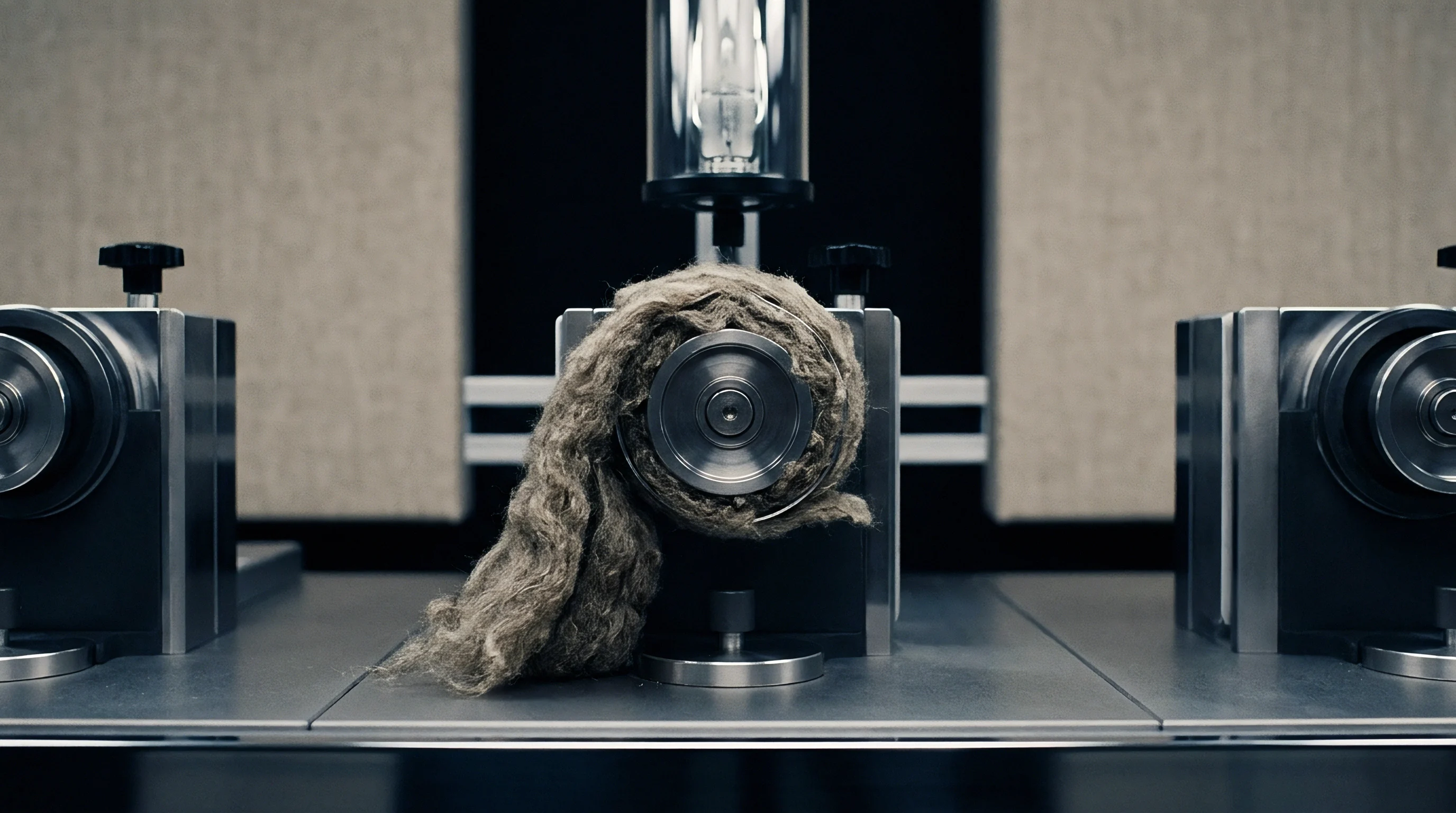
Laboratory technicians execute wet separations in temperature-controlled glass conical flasks connected to calibrated reflux condensers or water-bath shakers. Liquor ratios must be maintained at exactly 100 millilitres of reagent per gram of conditioned dry textile. This wide liquid-to-solid ratio ensures complete reagent excess, preventing local saturation effects that decelerate polymer solvation.
High-density knits require continuous mechanical oscillation at 120 cycles per minute to displace boundary layers and force fresh solvent through tightly twisted yarn plies.
Does Temperature Drift Degrade Insoluble Residues?
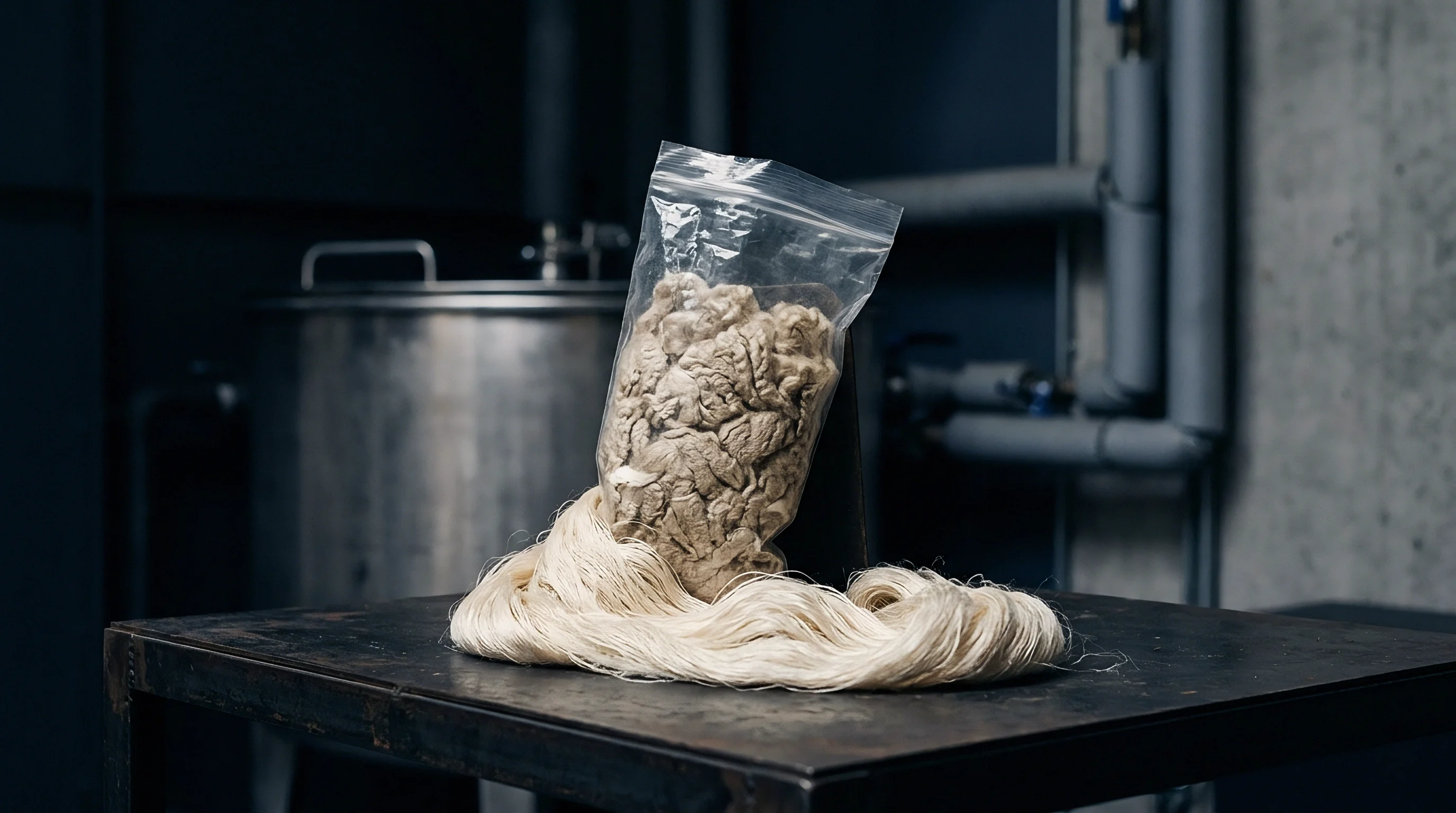
Thermal regulation directly governs the selectivity of aggressive acid and alkaline separations. Sulfuric acid at 75 percent mass concentration exhibits high sensitivity to thermal fluctuations: at 48 degrees Celsius, the dissolution of high-twist combed cotton slows down, leaving crystalline fibrils trapped on the filter pad. At 53 degrees Celsius, the same reagent begins acid hydrolysis of polybutylene terephthalate and polyethylene terephthalate backbones, cleaving ester links and dissolving up to 3.5 percent of the polyester component.
Water circulators with an accuracy of plus or minus 0.5 degrees Celsius maintain thermal equilibrium throughout the reaction duration.
Polyester chains undergo severe hydrolytic cleavage when sulfuric acid digestion temperatures exceed fifty-three degrees Celsius.
Filtration transfers the digestion liquor across pre-weighed sintered glass crucibles with porosity ratings between grade 2 and grade 3, corresponding to pore diameters between 16 and 40 micrometres. Vacuum aspiration draws the hot acidic or alkaline liquor into a collection flask. The remaining insoluble cake must be rinsed repeatedly with fresh portions of the primary reagent, followed by copious volumes of room-temperature distilled water until litmus paper confirms complete neutrality.
Basic hypochlorite baths require a neutralizing wash with dilute acetic acid at five percent concentration, followed by water washing, to stop oxidative embrittlement of residual acrylic or polyester filaments.
Crucibles require constant suction. Rinsing removes residual solvent. A final acetone wash displaces capillary water trapped within the fibrous mass, accelerating drying inside the ventilated oven.
Sintered crucibles transfer into a laboratory oven maintained at 105 degrees Celsius plus or minus 3 degrees. Forced-air convection dries the glass crucible and fiber cake to constant mass, verified when two consecutive weighings spaced sixty minutes apart differ by less than 0.001 grams. Technicians transfer the hot crucibles directly into a desiccator filled with freshly activated silica gel, permitting the vessel to cool for exactly forty minutes before recording the final mass on an analytical balance reading to four decimal places.
Spinning mills often claim that minor solvent attack on residual polyester reflects normal testing variation rather than improper temperature calibration in the laboratory bath.


Correction
Raw residue weights straight from the drying oven do not equal commercial fiber composition percentages. Every dry mass must be adjusted for two distinct systematic factors: the analytical d-factor compensating for chemical solvent attack during dissolution, and the official commercial moisture regain allowance defined in national customs schedules and trade rules. Omitting either correction produces misdeclarations that exceed statutory two percent commercial tolerances.
Do Formic Acid Ratios Dissolve Polyamide Microfibres?
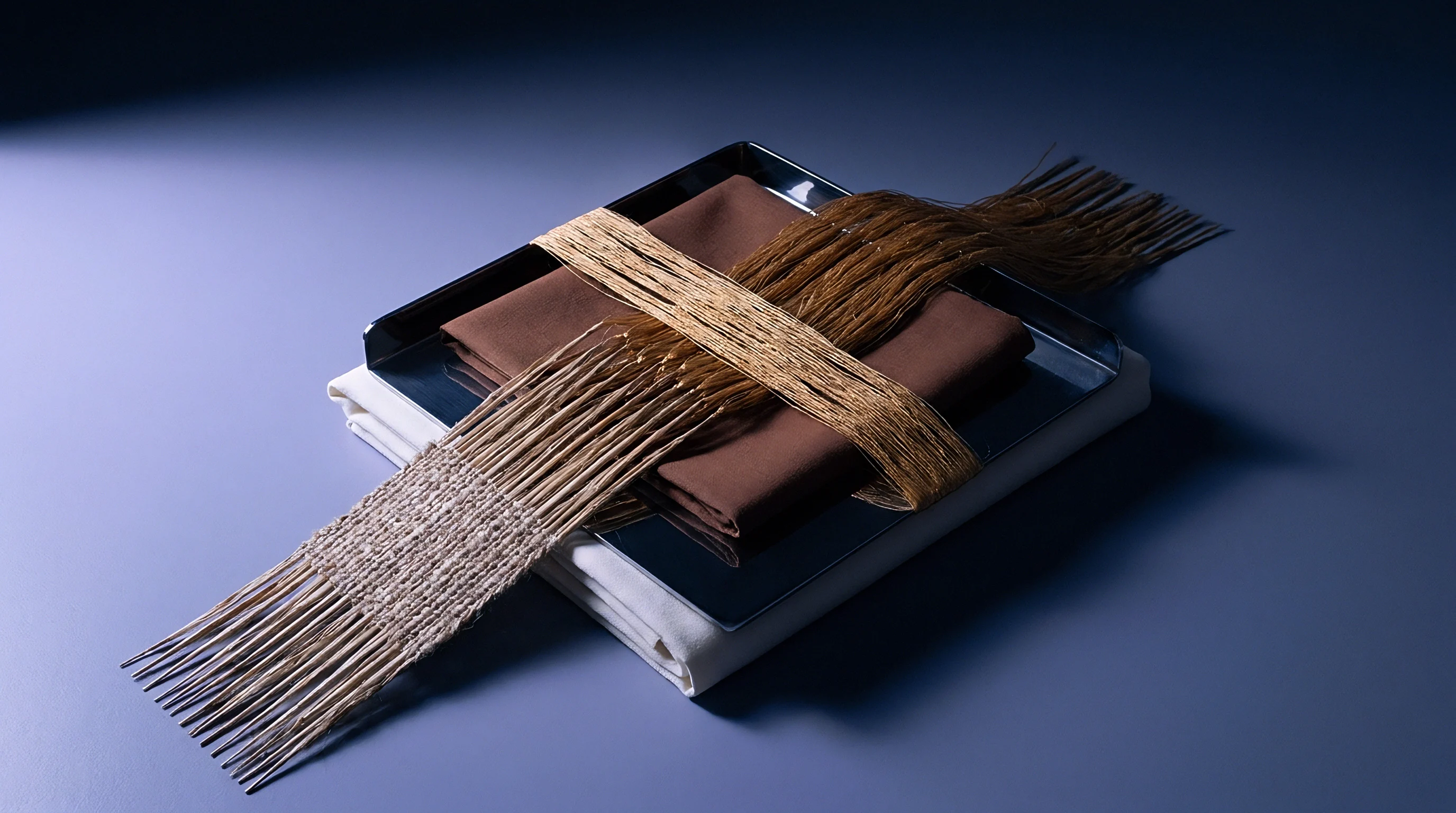
Finely spun microfibres with linear densities below 1.0 dtex present immense surface areas that amplify incidental mass loss during solvent exposure. While coarse 3.3 dtex polyamide filaments resist secondary solvents, 0.8 dtex micro-denier polyamides experience edge attack even in mild reagents. Standard d-factor tables derived from conventional spun yarns fail to represent microfilament behavior accurately.
Testing houses must calibrate substrate-specific correction factors through blank runs on pure unblended reference yarns of identical count and spinning geometry before signing off on commercial test dossiers.
Mathematical conversion follows the canonical equations of ISO 1833-1. The corrected dry mass of the insoluble component, designated as m1, incorporates the measured dry residue mass r multiplied by the specific d-factor:
m1 = r d
The dry mass of the dissolved component, designated as m2, equals the initial clean dry specimen mass m0 minus the corrected insoluble residue mass:
m2 = m0 – m1
Commercial percentage calculations then apply official commercial moisture regain values, designated as a1 and a2, to convert oven-dry masses into commercial masses for legal yarn labeling:
Percentage Component 1 = (m1 (1 + a1 / 100)) / (m1 (1 + a1 / 100) + m2 (1 + a2 / 100)) 100
Dry mass determines final percentages. Moisture regain alters commercial weight. Official allowances differ significantly across fiber types: cotton carries an official moisture regain of 8.5 percent under European Union regulations, whereas polyester carries an allowance of only 1.5 percent, and conventional viscose commands 13.0 percent.
Because cotton absorbs more ambient humidity than polyester, calculating composition on dry mass alone understates the commercial cotton content by nearly two full percentage points.
Applying dry mass percentages without commercial moisture allowances distorts declared cotton ratios by roughly two percentage points.
Take an operational worked construction: a 5,000-kilogram lot of intimate-mix ring-spun yarn purchased under contract as 60 percent combed cotton and 40 percent polyester. An analytical sample of clean dry mass weighing exactly 2.0500 grams undergoes dissolution in 75 percent sulfuric acid according to ISO 1833-11. The dried crucible residue yields an oven-dry polyester mass of 0.8350 grams.
Polyester carries an established d-factor of 1.01 in this reagent system. Applying the d-factor yields a corrected dry polyester mass of 0.84335 grams. Subtracting this from the initial dry mass leaves a dry cotton mass of 1.20665 grams.
On an unadjusted dry basis, cotton represents 58.86 percent and polyester represents 41.14 percent.
| Fiber Component | Oven-Dry Mass (g) | Corrected Dry Mass (g) | Official Moisture Regain (%) | Commercial Mass Factor | Final Commercial Share (%) |
|---|---|---|---|---|---|
| Combed Cotton | 1.2150 | 1.20665 | 8.50 | 1.30922 | 60.48 |
| Polyester (PET) | 0.8350 | 0.84335 | 1.50 | 0.85600 | 39.52 |
Applying the 8.5 percent cotton moisture allowance and the 1.5 percent polyester allowance recalculates commercial masses to 1.30922 grams of cotton and 0.85600 grams of polyester. The final commercial blend calculates to 60.48 percent cotton and 39.52 percent polyester. The uncorrected dry figure indicates an out-of-spec lot failing the contractual 60 percent cotton threshold, whereas the legally mandated regain calculation confirms compliance within statutory tolerances.
The difference decides between cargo acceptance and immediate commercial invoice dispute.
Commercial purchase contracts stipulating settlement under ISO 1833 Annex B enforce commercial moisture allowances directly against oven-dry masses, invalidating raw laboratory weight certificates that omit moisture adjustment factors.

Dispute
Discrepancies between seller test declarations and port-of-entry laboratory reports originate in blind spots inherent to chemical dissolution techniques. The most severe technical conflict centers on mixtures combining natural cotton with man-made regenerated cellulosics such as lyocell, modal, and viscose. Standard 75 percent sulfuric acid dissolves both cotton and regenerated cellulose simultaneously, precluding direct separation.
Laboratories must deploy differential dissolution routes utilizing cold sodium zincate solutions or alkaline iron sodium tartrate complex (EWNN) to dissolve regenerated cellulose while leaving native cotton unattacked.
Lyocell resists cold chemical separation. High molecular weight and dense fibrillar crystallinity make lyocell dissolve incompletely in sodium zincate solutions that readily solubilize standard viscose. Residues of partially swollen lyocell remain trapped in the glass crucible, falsely inflating the recorded cotton percentage.
Mercerized cotton presents the inverse error: commercial scouring and sodium hydroxide swelling weaken native cotton crystalline walls, causing up to eight percent of the cotton mass to dissolve alongside modal in alkaline zincate reagents. When testing recycled cotton blended with mechanically shredded viscose, fiber degradation caused by past mechanical tearing invalidates standard d-factors entirely.
Ternary combinations containing three distinct fiber classes compound gravimetric errors through sequential multi-stage digestions. A mixture composed of wool, polyamide, and polyester requires two consecutive dissolutions: first, alkaline sodium hypochlorite strips wool mass, leaving a mixed polyamide and polyester residue; second, 80 percent formic acid dissolves the polyamide. Experimental uncertainty multiplies across these serial steps.
In a three-component analysis, gravimetric weighing variances, filter cake transfer losses, and compound d-factor assumptions accumulate, widening the testing confidence interval to plus or minus 3.5 percentage points.
Sequential double-bath dissolution runs on ternary mixtures compound residue transfer errors to widen measurement tolerance bands beyond three percent.
Harmonized System customs codes shift tariffs drastically across single percentage points. Chapter 55 of the tariff schedule imposes different rates depending on whether synthetic polymers or natural fibers predominate by weight. An erroneous 50.5 to 49.5 percent call generated by an uncorrected chemical test flips customs entry from natural cotton headings into man-made filament categories carrying elevated duties and anti-dumping surcharges.
Importers defending against classification audits must retain duplicate swatch cuttings and demand cross-validation using scanning electron microscopy or spectroscopic analysis before accepting punitive re-evaluations.
Whether selective enzymatic dissolution can achieve the precision of aggressive chemical reagents across lyocell and cotton mixtures without attacking structurally similar cellulose remains an unsettled question for commercial testing houses.