Applying Correction Factors in Ternary Cellulosic Synthetic Separation Methods Accurately
Accurate ternary cellulosic synthetic separation requires precise sequential dissolution factors and regain adjustments to prevent major trade classification errors.


Scheme

Sequential Chemical Extraction Pathways
Quantitative chemical analysis of a three-component blend containing natural cellulosic, regenerated cellulosic, and synthetic polymer components relies on successive selective dissolution procedures defined in standard ISO 1833 methods. A typical substrate configuration combines cotton, viscose, and polyester. Achieving accurate quantitative mass proportions requires an explicit dissolution sequence where solvent selection preserves the chemical structure of the insoluble components.
The standard protocol dissolves the regenerated cellulosic fraction first using a zinc chloride and formic acid mixture or a 75 percent mass fraction sulfuric acid reagent. Cotton and polyester remain as an insoluble residue during this primary reagent stage.
The secondary dissolution step isolates the natural cellulosic fraction from the synthetic residue using a cold 75 percent sulfuric acid solution or an ammoniacal copper oxide reagent under strict thermal limits. Polyester remains untouched in the final residue. Each chemical extraction changes the dry mass of the surviving fibres.
Uncorrected dissolution measurements generate compound mass errors exceeding three percent on final commercial declarations.
Standard test protocol ISO 1833-21 specifies a dissolution temperature of twenty degrees Celsius for zinc chloride reagent to prevent natural cellulosic polymer chain cleavage.
Chemical processing history alters the chemical resistance of both natural and regenerated cellulosics. Bleached modal and highly crystalline lyocell display different dissolution rates compared to raw carded cotton. Scouring removes protective surface waxes from virgin cotton, accelerating its susceptibility to reagent degradation during regenerated cellulosic extraction steps.
Analytical technicians calculate pre-treatment loss before applying selective dissolution steps to eliminate silicone, paraffin, or acrylic sizing interference.

Reagent Specificity and Temperature Regimes
Reagent temperature and contact duration dictate the selectivity boundary between cellulosics and synthetics. Formic acid combined with zinc chloride at forty degrees Celsius dissolves viscose while preserving pristine raw cotton. Deviations in reagent concentration alter this equilibrium rapidly.
A concentration drop of two percent in acid reagents permits incomplete dissolution of the target fibre, while a temperature excess of three degrees Celsius initiates partial dissolution of the non-target cellulosic component.
- Desize test specimens in petroleum ether for one hour, followed by continuous warm water extraction at fifty degrees Celsius to remove water-soluble surface treatments.
- Dry the pretreated specimen to constant mass in a ventilated drying oven held at one hundred five degrees Celsius.
- Expose the specimen to the primary solvent reagent in a stoppered conical flask for twenty minutes while agitators maintain fluid movement across the substrate.
- Filter the suspension through a weighed sintered glass crucible using vacuum assistance to isolate the insoluble secondary and tertiary residues.
- Rinse the collected residue with hot distilled water and neutralizing reagents until indicator paper confirms chemical neutrality.
- Dry the residue crucible at one hundred five degrees Celsius to a constant weight verified by consecutive weighings within zero point one milligram.
Synthetic fibres display varying chemical resistance based on draw ratios and heat-setting treatments. Fully drawn polyester filament resists concentrated acids longer than partially oriented yarn formulations. Polyamide 6,6 dissolves readily in cold 80 percent formic acid, whereas polyester remains completely insoluble under identical conditions.
Solvent purity dictates reaction kinetic consistency across serial testing runs.
Reagent storage conditions alter chemical dissolution effectiveness across batch testing cycles. Concentrated acid formulations absorb ambient atmospheric moisture during liquid transfer steps. Diluted acids cause incomplete extraction of regenerated cellulose, leaving target polymer residues on the sintered filter disc.
Laboratories verify solution density using precision hydrometers before every analytical run.
Suppliers frequently assert that standard off-the-shelf laboratory dissolution routines yield exact fibre percentages without requiring batch-specific correction factor calibrations.


Filter
Residual Mass Capture Mechanics
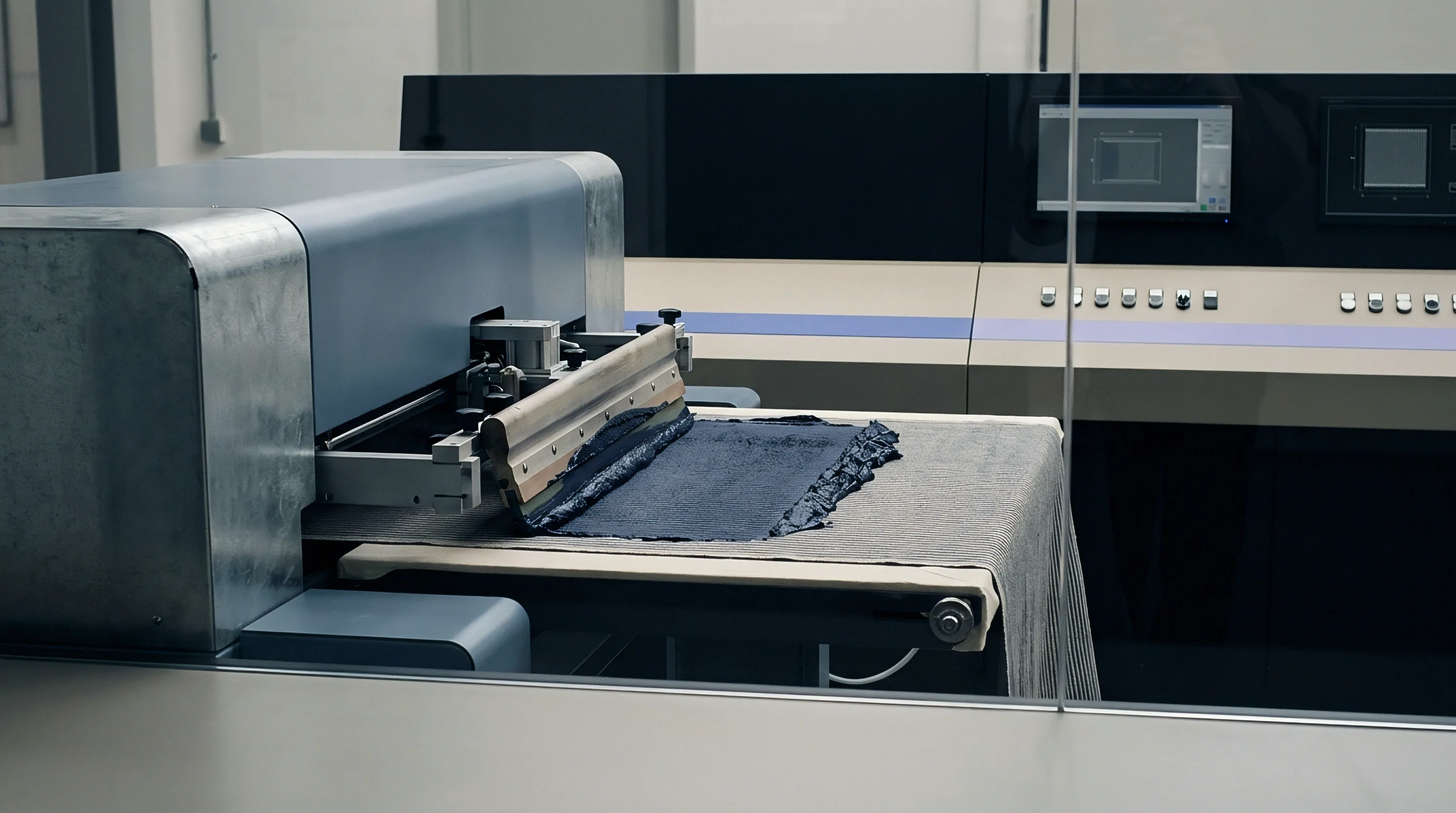
Sintered glass filtration crucibles provide the physical interface for isolating insoluble fibre fractions post-dissolution. Standard laboratory protocol specifies crucible porosity classifications between grade P16 and P40, corresponding to pore sizes from sixteen to forty micrometers. Finer porosity grades impede gravity drainage, requiring vacuum suction that pulls micro-fibres into the porous matrix.
Coarse porosity allows truncated short staple cellulosic fragments to pass through the filter disk, undercounting the remaining insoluble mass fraction.
Crucible preparation influences gravimetric reproducibility. Analytical filters require acid washing and thermal conditioning at one hundred five degrees Celsius prior to initial tare recording. Residual moisture trapped within the glass matrix adds false mass to the initial tare reading.
Cool crucibles in glass desiccators filled with freshly regenerated silica gel for forty-five minutes before taking precision weight measurements.

Chemical Attack on Insoluble Residues
Solvents targeting a specific cellulosic or synthetic component exert a minor degradation effect on the nominally insoluble companion fibres. The dissolution process removes short polymer chains, surface lubricants, and residual amorphous regions from the non-target substrate. This mechanical and chemical stripping generates a measurable mass loss in the residue.
The numerical expression of this survival fraction is the dissolution correction factor, designated as d.
A correction factor of one point zero two indicates that the insoluble fibre loses two percent of its dry mass when exposed to the selective solvent environment. Conversely, a factor of zero point nine nine indicates a mass gain caused by insoluble salt precipitation or incomplete solvent extraction. Applying an incorrect d factor shifts the declared percentage of every component in the ternary system.
| Fibre Type | Reagent System | Treatment Conditions | Standard Correction Factor (d) | Dissolution Target |
|---|---|---|---|---|
| Cotton (Scoured) | Formic Acid / Zinc Chloride | 40°C, 20 minutes agitation | 1.02 | Viscose / Modal |
| Polyester (PET) | 75% Sulfuric Acid | 50°C, 30 minutes agitation | 1.00 | Cotton / Viscose |
| Polyamide 6,6 | 75% Sulfuric Acid | 20°C, 15 minutes agitation | 1.01 | Cellulosic Content |
| Viscose (Standard) | 80% Formic Acid | 20°C, 15 minutes agitation | 1.00 | Polyamide Fraction |
| Lyocell | Zinc Chloride Reagent | 40°C, 20 minutes agitation | 1.03 | Modal / Viscose |
Mechanical loss occurs during agitation phase transfers. Stirring rods collect loose filament strands during liquid agitation. Wall adhesion within the glass reaction flask traps insoluble material before filtration finishes.
Rinsing reaction vessels with fresh solvent recovery washes transfers remaining micro-fibres into the filter funnel.
Failure to adjust gravimetric calculations for solvent-induced residue loss shifts declared fiber proportions past legal trade tolerances.
Cellulosic structural variations change the baseline d factor for natural fibers. Unbleached coarse cotton retains natural fats and waxes that resist mild acid attack, producing a d factor near one point zero zero. Scoured and bleached cotton exhibits exposed hydroxyl groups that react rapidly with acid solvents, elevating the d factor to one point zero three.
Standard laboratory values fail when applied to heavily processed or post-consumer mechanically recycled fibres.
Improper cleaning of filter crucibles causes cross-contamination between test runs. Alkaline pyrosulfate baths dissolve organic matter trapped inside the glass pores. Acid washing removes inorganic salt deposits.
Ignored crucible maintenance skews baseline mass recordings, ruining commercial composition calculations across entire shipping lots.
Skipping crucible drying steps introduces water weight that invalidates gravimetric results, triggering false non-compliance reports at port entry points.

Arithmetic

Gravimetric Mass Balance Formulations
Calculating the clean dry percentage of each component in a ternary cellulosic-synthetic blend demands sequential application of correction factors to raw laboratory mass measurements. The total initial dry mass of the pretreated specimen is designated as m. The clean dry mass of the residue after removing the first component is designated as r1.
The final dry residue mass after dissolving the second component is designated as r2.
The uncorrected dry mass of the first component equals m minus r1. The uncorrected dry mass of the second component equals r1 minus r2. The dry mass of the third insoluble component equals r2.
Applying correction factors d1 and d2 adjusts these values for partial dissolution losses during sequential solvent exposures.
The corrected dry mass of the second component, designated as m2, follows the mathematical expression:
m2 = (r1 / d1) – (r2 / d2)
The corrected dry mass of the third component, designated as m3, follows the mathematical expression:
m3 = r2 / d2
The corrected dry mass of the primary dissolved component, designated as m1, is calculated by subtracting the sum of m2 and m3 from the total initial dry mass m:
m1 = m – (m2 + m3)

Commercial Mass Integration and Regain Factors
Customs authorities and commercial yarn contracts prohibit mass comparisons based purely on oven-dry figures. Trade regulations require converting clean dry mass figures into commercial mass percentages by applying official moisture regain values. Official regain values represent agreed moisture absorption allowances under standard testing atmospheric conditions of twenty degrees Celsius and sixty-five percent relative humidity.
- Uncalibrated Factor Overlap occurs when applying a two-stage correction factor to a single-stage dissolution step, compounding mass adjustments artificially.
- Regain Allowance Mismatch arises from applying raw cotton moisture allowances to heavily mercerized cellulosic yarn structures.
- Solvent Residue Retention happens when non-volatile reagent components remain inside the synthetic residue matrix during insufficient rinsing cycles.
- Pretreatment Loss Exclusion develops when non-fibrous size removal losses are ignored, distorting the total baseline dry specimen weight.
Calculating the commercial mass percentage for each component requires scaling clean dry mass values by their respective standard regain percentages. The formula for the commercial mass percentage of component one, designated as P1, incorporates official regain rates a1, a2, and a3:
P1 = (m1 (1 + a1 / 100)) / ((m1 (1 + a1 / 100)) + (m2 (1 + a2 / 100)) + (m3 (1 + a3 / 100))) 100
Identical scaling calculations apply to components two and three, substituting m2, a2 and m3, a3 into the numerator positions respectively.
| Fibre Classification | Standard Regain Percentage (a) | Mercerized / Modified Regain (a) | Tariff Chapter Mapping |
|---|---|---|---|
| Cotton (Raw / Carded) | 8.50% | 10.00% | Chapter 52 |
| Viscose (Regenerated) | 13.00% | 13.00% | Chapter 55 |
| Lyocell / Modal | 13.00% | 13.00% | Chapter 55 |
| Polyester (PET) | 1.50% | 1.50% | Chapter 55 |
| Polyamide 6,6 | 6.25% | 6.25% | Chapter 54 |
| Elastane (Polyurethane) | 1.50% | 1.50% | Chapter 54 |
Mathematical rounding errors compound across three-component calculation steps. Laboratories record raw gravimetric balance outputs to four decimal places. Rounding intermediate corrected mass values before final commercial regain scaling shifts calculated percentages by up to zero point four percent.
Final percentage reports round to one decimal place only after complete arithmetic resolution.
A worked specimen weighing exactly 2.0000 grams dry initial mass yields a first residue r1 of 1.2000 grams and a second residue r2 of 0.6000 grams. Assuming correction factors d1 equal to 1.02 and d2 equal to 1.00, the corrected dry mass m3 equals 0.6000 grams. The corrected dry mass m2 equals (1.2000 / 1.02) minus 0.6000, yielding 0.5765 grams.
The first component m1 equals 2.0000 minus (0.5765 + 0.6000), yielding 0.8235 grams. Applying standard regain values of 13.0 percent for viscose, 8.5 percent for cotton, and 1.5 percent for polyester generates final commercial mass percentages of 44.5 percent viscose, 29.8 percent cotton, and 25.7 percent polyester.
Evaluating raw residue values without applying correction factor arithmetic systematically inflates the calculated percentage of the primary dissolved component while suppressing secondary component values on formal commercial dossiers.


Margin

Does Solvent Purity Drift Distort Dissolution Rates?
Solvent contamination alters mass transfer dynamics during chemical extraction steps. Reagent grade zinc chloride solutions absorb atmospheric carbon dioxide and moisture, shifting solution pH away from optimum dissolution windows. A pH reduction increases attack rates on non-target cellulosic components, forcing shifts in required d factor adjustments.
Reagent purity levels below ninety-nine percent contaminate residue masses with non-volatile chemical impurities.
Concentrated acid reagents undergo thermal decomposition when stored in direct sunlight or unconditioned environments. Sulfuric acid solutions lost to evaporation gain concentration, transforming a intended 75 percent selective solvent into an aggressive 80 percent non-selective dissolution medium. This concentration jump dissolves structural crystalline regions in cotton, elevating measured d factors beyond standard laboratory reference tables.
Reagent concentration shifts as small as one percent alter non-target fiber extraction rates, breaking standard tabular correction factors.
Agitation speeds inside reaction vessels control boundary layer replenishment around insoluble fibres. Insufficient fluid movement leaves concentrated reaction zones around fibre surfaces, causing local over-dissolution. Mechanical shakers maintaining a steady frequency of one hundred twenty oscillations per minute produce uniform mass transfer without shredding brittle cellulosic structural cores.

Variance Propagation across Sequential Steps
Gravimetric balance sensitivity bounds the ultimate precision of chemical separation methods. Standard analytical balances read to zero point milligram precision, carrying an intrinsic uncertainty of plus or minus zero point two milligrams. In a sequential two-stage dissolution scheme, balance weighing uncertainty strikes four separate mass steps: initial tare, dried specimen mass, first residue mass, and final residue mass.
Error propagation models prove that small measurement errors in early dissolution stages multiply across final regain calculations. An uncalibrated tare weight error of one milligram creates an escalating percentage error as remaining residue masses shrink.
Fibre cross-sectional geometry dictates solvent absorption speed during chemical processing. Fine denier micro-fibres expose significantly greater surface area per unit mass compared to coarse high-dtex carpet yarns. Highly exposed surface area speeds chemical attack on insoluble structures, elevating measured d values.
Tailoring correction factors to yarn linear density prevents systematic over-correction on fine-filament technical fabrics.
Blends containing intimate intimate rotor-spun fibres present higher extraction resistance compared to plied filament structures. Intimate mechanical locking traps dissolved cellulosic fragments inside the synthetic matrix. Secondary hot water rinse cycles remove trapped solute remnants before final gravimetric drying.
Recycled textile materials exhibit unpredictable chemical degradation profiles that render published static correction factors inaccurate for commercial blend testing.


Ledger
Customs Classification and Tariff Impact
International trade tariff schedules classify blended fabrics according to chief weight rules set under Harmonized System rules. A blend containing 50.5 percent cotton and 49.5 percent polyester enters duty schedules as a natural cotton fabric under Chapter 52. If laboratory testing omits the d correction factor, dissolving viscose might show an apparent cotton content of 49.0 percent.
This shifting fraction reclassifies the shipment into Chapter 55 as a synthetic fabric, raising import duty rates from 6.5 percent to 12.0 percent instantly.
Customs authorities take physical samples from landed ocean container shipments to run quantitative laboratory verifications. Official testing laboratories apply standardized correction factors defined in national regulation frameworks. Discrepancies between declared billing percentages and customs analysis reports initiate import holds, financial audit penalties, and potential cargo seizure.
Preferential trade agreements require precise origin verification backed by physical test reports. A fabric claiming duty-free entry under regional rules must prove specific yarn spinning or fibre content thresholds. Misapplying regain factors shifts calculated percentages across origin thresholds, invalidating compliance dossiers during customs audits.

Commercial Specification Clauses
Commercial purchase contracts establish acceptable composition tolerances between buyer specifications and seller bulk fabric deliveries. Standard international trade contracts accept a composition tolerance band of plus or minus two percentage points on declared single-component figures. In a three-component blend, a declared ratio of 40/30/30 allows individual components to float within tight operational limits.
Contract drafting demands explicit identification of the analytical testing method and correction factor matrix used for lot acceptance. Specifying ISO 1833-21 establishes legal clarity on reagent parameters, temperature controls, and mathematical adjustment methods. Silence regarding correction factor application leads to legal disputes when buyer and seller laboratories generate conflicting composition results on identical swatches.
- Confirm test standard specifications directly within the primary purchasing agreement before production yarn spinning begins.
- Mandate specific laboratory correction factor tables within the technical fabric specification document.
- Establish an accredited third-party arbitration laboratory named within the contract body for dispute resolution.
- Define exact commercial moisture regain allowances for every fibre component within the target blend specification.
- Require continuous desizing and finish extraction logs alongside final gravimetric composition test certificates.
Price adjustments for bulk yarn orders correlate directly with natural fibre percentages. High-grade long staple cotton commands a premium price per kilogram compared to polyester staple fibre. A systematic composition error of two percent across a fifty-tonne fabric order alters the true material cost by tens of thousands of dollars.
Laboratory precision protects commercial margins across global supply chains.
Standard sales contracts mandate that quantitative composition disputes be settled exclusively by testing representative swatches according to ISO 1833 procedures at an accredited independent laboratory, with test results bound to official regain adjustments.


Validation

Inter-Laboratory Proficiency Protocols
Ensuring analytical consistency across international production networks requires systematic inter-laboratory round-robin testing programs. Reference testing facilities distribute identical blind multi-component fabric swatches to multiple testing locations. Comparing laboratory results uncovers systematically biased balance calibration, improper reagent storage, or uncalibrated thermal drying equipment.
Statistical validation relies on calculating reproducibility limits across participating testing centers. The standard deviation of analytical results must remain within zero point five percentage points for simple binary blends and within zero point eight percentage points for complex ternary systems. Laboratories exceeding these variance limits must recalibrate pipette equipment, check oven airflow velocity, and restarize gravimetric balances.
Internal quality control protocols execute duplicate testing on every tenth production sample. Dual extraction runs isolate operator technique variations from true material composition shifts. Large variances between parallel test results indicate uneven sample desizing or incomplete fluid agitation during solvent extraction phases.

Blind Matrix Calibration Strategies
Creating synthetic control samples provides an accurate method for validating local laboratory correction factors. Laboratory technicians mix weighed proportions of pure virgin fibres, subject the mock matrix to standard dissolution reagents, and calculate actual recovery rates. This process defines customized d factors matching specific local mill processing chemicals.
Matrix calibration accounts for proprietary fabric finishes that survive standard petroleum ether desizing routines. Durable water repellent finishes, flame retardant chemistry, and cross-linking resin treatments shield cellulosic fibres from solvent extraction. Adjusting pretreatments or recalibrating d factors ensures analytical precision on technical functional textiles.
Continuous monitoring of solvent purity through spectrophotometric verification prevents hidden extraction drift. Measuring optical density in recovered acid solutions detects organic contaminants before reagents re-enter testing workflows. Controlled chemical procedures maintain the operational integrity of global fabric compliance declarations.
How far will emerging non-destructive spectroscopic analysis methods replace traditional chemical dissolution techniques in trade compliance laboratories?