Commercial Regain Allowances in Raw Cellulosic Fiber Invoicing
Commercial regain allowances convert variable net delivered fiber weight to an invariant billing mass calculated from laboratory oven-dry cellulose.
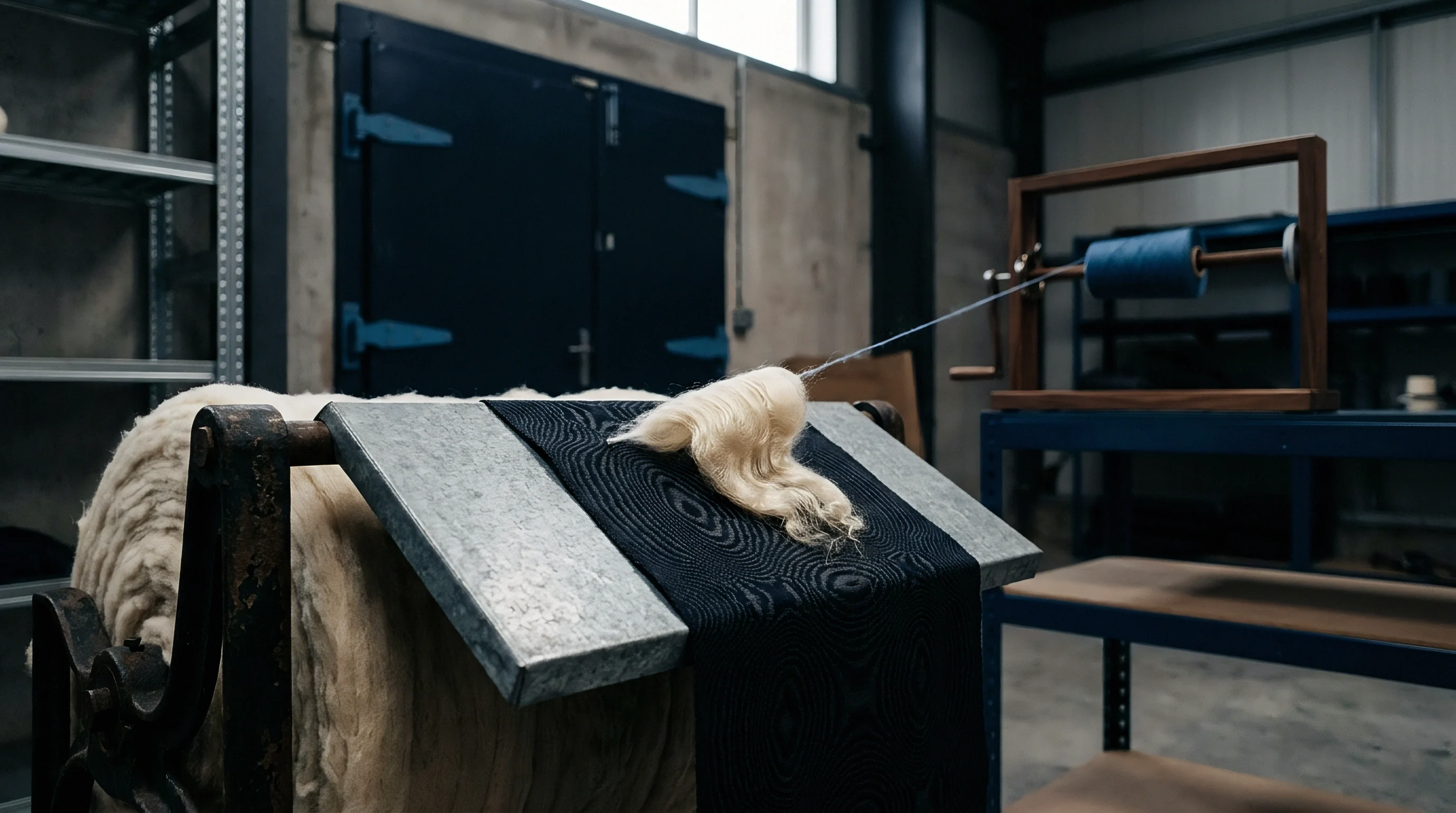
Tare
Bale moisture begins at the weighbridge. A shipping container packed with ninety-six cotton or viscose bales arrives at the spinning mill gate carrying two distinct weight declarations: the gross container mass on the bill of lading and the certified lot mass printed across the individual bale tags. Water evaporates through container vents during ocean transit or accumulates along the exterior layers under tropical dock humidity.
Invoicing disputes start when buyers pay fiber prices for liquid mass, or conversely, when ginners surrender dry matter without compensation.
The gross weight registered on certified truck scales includes steel strap banding, wooden runners, polymer wrapping film, and cardboard cap heads. Extracting these packaging constituents establishes the true delivered net weight of raw lint. Standard procedures require stripping and weighing the packaging components from a fixed five percent sample of every incoming delivery:
- Galvanized steel straps account for an average of eight-tenths of one percent of total bale mass across standard high-density packaging units.
- Polyethylene woven wraps contribute approximately six hundred grams per bale unit, varying slightly between multi-layer film enclosures and knitted polypropylene bagging.
- Corrugated fiberboard caps add up to one kilogram per bale when heavy transit protection protects the lot crown.
- Timber skid supports present significant mass discrepancies during bulk sea transit, absorbing ambient precipitation and skewing gross receiver weights.
Deducting these tare elements from gross scale mass leaves the net delivered weight. This delivered net weight remains unadjusted for moisture variation until laboratory desiccation isolates the bone-dry cellulose fraction. Paying a supplier on uncorrected net scale mass incentivizes the dispatch of damp raw stock.
Ambient air humidity directly shifts delivered raw fiber weight across ocean routes without adding spinnable cellulose.
Every commercial invoice for virgin or regenerated cellulosic fiber requires adjustment back to a legally codified moisture level. Moisture content reflects water mass as a percentage of total damp fiber mass, while moisture regain measures water mass as a percentage of completely bone-dry fiber mass. Commercial regain allowances exist as statutory conventions that equalize this transaction value, establishing a standardized invoiced commercial mass irrespective of the moisture readouts on arrival.
The contract line item establishes the delivered unit price on commercial mass rather than the scale readout at the unloading dock.


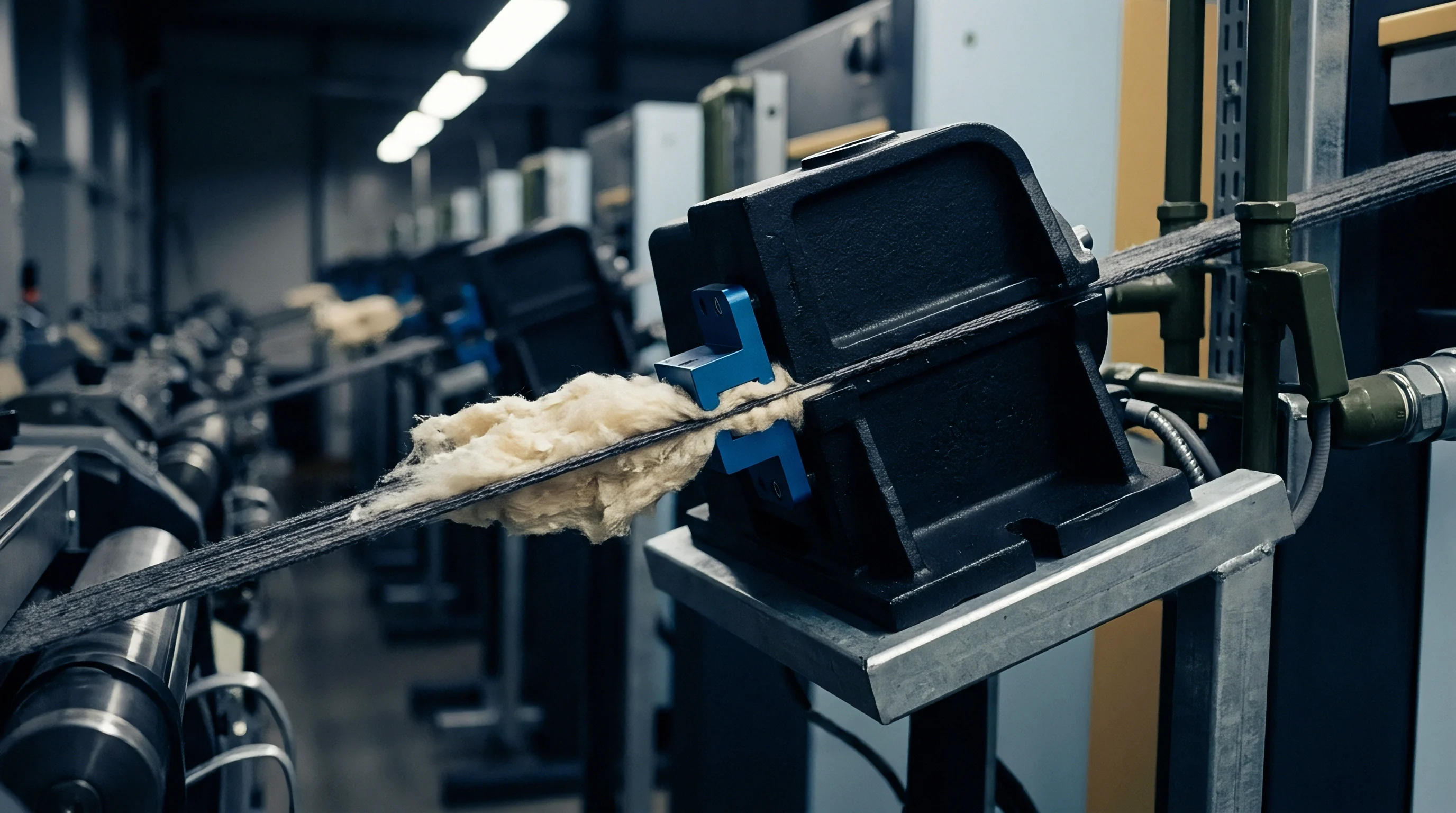
Oven
Isolating the dry mass of raw cellulose demands calibrated convection desiccation. Laboratory technicians draw core samples across the lot according to strict acceptance plans, sampling twenty percent of bales in primary lots and ten percent in secondary lots. Technicians take core plugs through bale centers using hollow pneumatic drills to avoid surface moisture gradients formed by shipping atmosphere exposure.
Fast sample handling prevents moisture exchange before the initial weight capture.

Can Raw Invoices Ignore Atmospheric Equilibrium?
Cellulosic macromolecules bind water molecules via hydrogen bonding at available hydroxyl groups along amorphous polymer domains. Relative humidity and temperature determine the exact quantity of moisture held in equilibrium within the fiber matrix. Because atmospheric shifts alter physical weight continuously, raw invoicing cannot rely on green or conditioned room weights without an oven-dry baseline.
Standard desiccation protocols, including ISO 6741-1 and ASTM D2495, mandate heating fiber samples at one hundred and five degrees Celsius until consecutive weighings show no further loss. The target temperature drives off free capillary moisture and adsorbed water without decomposing volatile finishing oils or charring organic material. Weighing bottles remain sealed during transfer to analytical balances to prevent rapid moisture uptake from laboratory air.
| Fiber Classification | Test Protocol | Desiccation Temperature | Cycle Duration | Acceptable Mass Drift |
|---|---|---|---|---|
| Upland Raw Cotton | ASTM D2495 | 105 to 110 °C | 120 minutes | 0.05 percent per 15 min |
| Long Staple Pima | ISO 6741-1 | 105 to 110 °C | 150 minutes | 0.05 percent per 15 min |
| Dew-Retted Scutched Flax | ISO 6741-2 | 103 to 107 °C | 180 minutes | 0.10 percent per 20 min |
| Viscose Staple | BISFA Rules | 105 to 107 °C | 90 minutes | 0.03 percent per 15 min |
| Lyocell Staple | BISFA Rules | 105 to 107 °C | 90 minutes | 0.03 percent per 15 min |
| Laboratory ambient conditions maintain standard atmosphere at twenty degrees Celsius and sixty-five percent relative humidity prior to drying chamber insertion. | ||||
The desiccated dry mass provides the base value for all billing conversions. Without this measured bone-dry figure, calculating legitimate commercial weight is mathematically impossible.
A supplier who disputes the desiccation curve often points to scorching or unevaporated natural waxes in non-delustered lots.


Allowance
Commercial regain allowances represent agreed-upon percentages added to the bone-dry fiber mass to calculate the invoiced commercial mass. The industry adopts standardized regain values published through global institutions including ASTM D1909, the International Cotton Advisory Committee, and the Bureau International pour la Standardisation des Fibres Artificielles. These percentages vary widely across cellulosic origins due to differences in amorphous polymer fractions and cellular structures.
A contract referencing commercial regain replaces real-world water weight with an agreed accounting percentage.
Natural seed fibers carry lower standard regain values than bast fibers or solvent-spun regenerated cellulosics. Cotton features a crystalline fibrillar layout, restricting internal hydrogen bonding sites, whereas regenerated fibers present extensive amorphous domains that trap moisture readily. The commercial allowance acts as a legal fiction: it does not claim that the fiber currently holds this exact moisture level, but rather fixes the mass of water for which the buyer pays raw fiber market prices.
| Cellulosic Fiber Variety | Commercial Regain Allowance | Governing Standard | Typical Ambient True Regain |
|---|---|---|---|
| Raw Seed Cotton Lint | 8.50 percent | ASTM D1909 | 6.50 to 7.50 percent |
| Scutched Linen Flax | 12.00 percent | ISO 6741-2 | 10.00 to 11.50 percent |
| True Industrial Hemp | 12.00 percent | ASTM D1909 | 9.50 to 11.00 percent |
| Water-Retted Jute | 13.75 percent | ISO 6741-2 | 12.00 to 13.00 percent |
| Viscose Rayon Staple | 13.00 percent | BISFA Rules | 11.00 to 12.50 percent |
| Modal Staple | 11.00 percent | BISFA Rules | 10.00 to 11.00 percent |
| Lyocell Staple | 10.50 percent | BISFA Rules | 9.00 to 10.50 percent |
| Cuprammonium Rayon | 11.00 percent | BISFA Rules | 10.50 to 11.50 percent |

Why Do Commercial Allowances Exceed True Regain?
Trading traditions explain the historical gap between commercial regain allowances and genuine physiological equilibrium regains. In raw cotton, true moisture equilibrium under standard atmospheric conditions of sixty-five percent relative humidity sits between seven and eight percent. The commercial allowance of eight and one-half percent grants the ginner an agreed commercial padding, acknowledging that natural cotton waxes and handling losses occur during ginning and baling.
Bast fibers such as flax and hemp carry higher allowances to accommodate pectin content, residual bark, and cellular woody matter that retain moisture tenaciously.
The regulatory and commercial consequences of misapplying these allowances extend across customs clearance boundaries. Customs tariffs class fibers under specific nomenclature chapters based on net mass. When invoicing documents compute commercial weight incorrectly, clearance values and tariff assessment thresholds shift:
- Tariff valuation shifts occur when customs officials levy ad valorem rates on uncorrected gross scale mass instead of certified commercial mass.
- Blend ratio declarations fall outside statutory tolerances when component weights omit differential regain conversions before spinning.
- Landed cost inflations erode spinning mill margins when invoicing water above published allowance percentages.
Failing to bind supplier invoices to published BISFA or ASTM regain schedules leaves the buyer vulnerable to paying premium raw material rates for transit water condensation.

Dispute
Discrepancies in fiber mass ignite formal billing claims when destination check weighings contradict dispatch invoices. A lot weighed in humid monsoon environments gains unbilled weight before entering air-conditioned export containers. When the receiving mill opens the container in an arid interior region, ambient water departs rapidly.
Destination weighbridges reveal a net mass deficit, sparking an immediate commercial claim against the supplier.
Resolving mass claims requires joint sampling agreements using third-party certified laboratories. Both buyer and seller submit to the findings of neutral core testing. The laboratory takes the wet delivered weight, dries the fiber sample to bone-dry condition, and applies the contractual commercial regain allowance to calculate invoiced commercial mass.
Calculated commercial mass remains completely invariant to transit evaporation because bone-dry cellulose never changes weight in transit.
Trading contracts codify specific tolerance boundaries within which no financial claim is permitted. In international raw cotton trading under the International Cotton Association rules, small variances between invoice weight and delivered weight fall within normal limits:
- The receiver weighs all delivered bales immediately upon unloading and logs individual container gross masses against tare masses.
- When delivered net mass deviates from invoiced weight by less than one-half of one percent, the mill absorbs the variance without financial adjustment.
- A discrepancy exceeding one-half of one percent initiates an official joint re-weighting protocol overseen by an accredited marine surveyor.
- Independent technicians extract core plugs from ten percent of the contested bales, immediately sealing the fibers inside airtight aluminum canisters.
- The testing house establishes the oven-dry mass and computes the true commercial weight according to contract terms.
Whether regional warehouse storage conditions modify extractable oil residues sufficiently to distort oven-dry measurements across long-term storage remains an open technical contention in cross-border settlements.
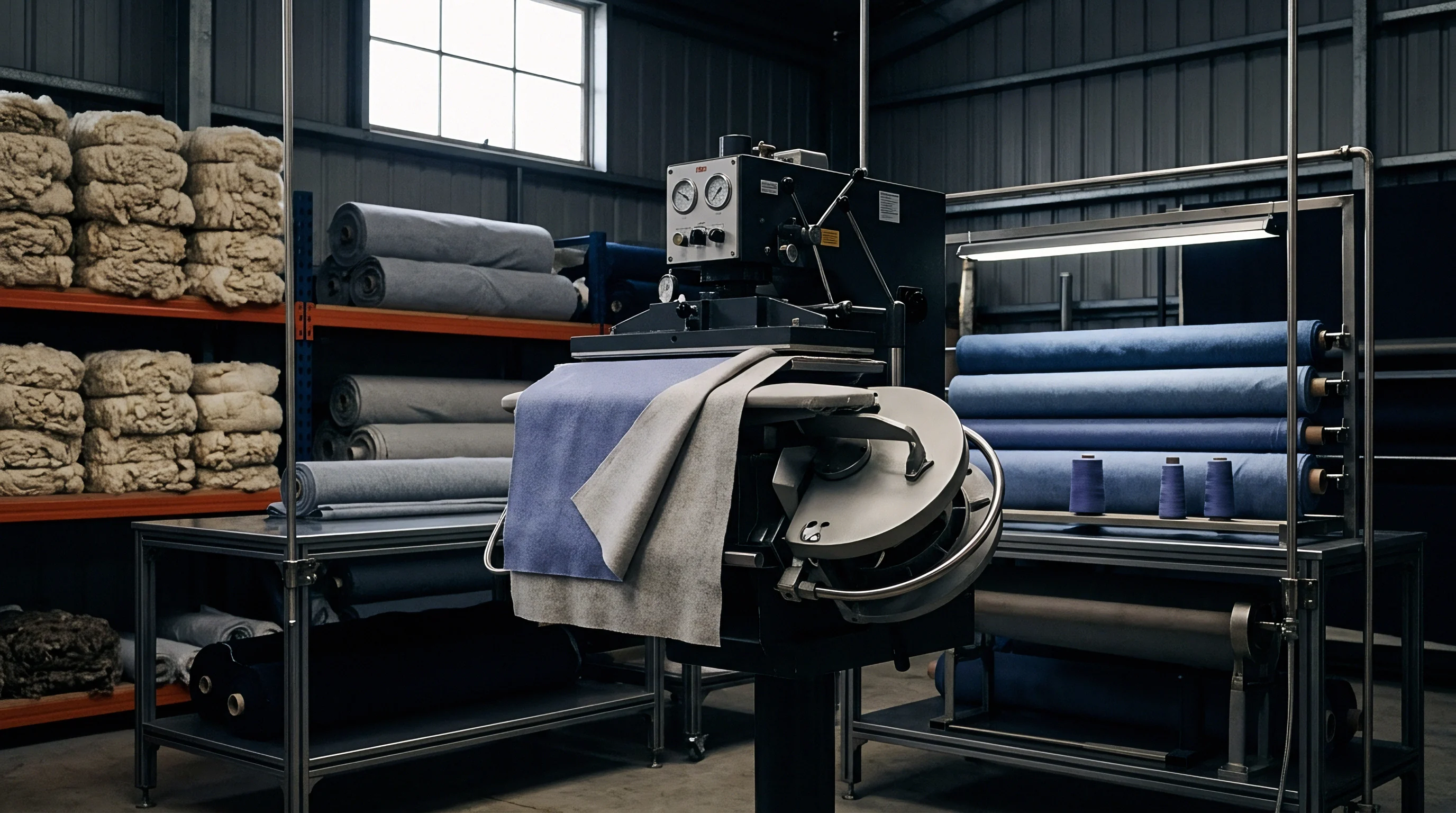
Draft
Financial execution of raw cellulosic purchases resolves on the invoice adjustment draft. Commercial banks settling letters of credit examine the relationship between the bill of lading mass, the inspection certificate, and the billed commercial mass. The calculation workflow converts gross physical arrivals into clear monetary figures.
Consider an operational construction involving a commercial delivery of viscose staple fiber from an overseas manufacturer to a ring spinning plant. Assume a contracted lot of two hundred metric tons of 1.33 dtex, thirty-eight millimeter bright viscose staple, priced at two dollars and twenty cents per commercial kilogram landed. The buyer receives shipping containers exhibiting a delivered gross mass of 203,450 kilograms.
Stripping packaging yields a total tare mass of 1,850 kilograms across the container load, leaving an actual delivered net mass of 201,600 kilograms. Core drilling samples sent to an independent testing facility establish an average delivered moisture content of eleven percent.
The mathematical pathway to establish commercial invoiced mass proceeds through bone-dry mass isolation:
| Stage of Settlement Workflow | Physical Quantity or Factor | Unit Valuation | Accounting Extension |
|---|---|---|---|
| Delivered Gross Scale Mass | 203,450.00 kg | Physical readout | Gross scale record |
| Deducted Packaging Tare | 1,850.00 kg | Five percent audit sample | Verified packaging deduction |
| Delivered Net Fiber Mass | 201,600.00 kg | Scale less tare | Base wet fiber delivery |
| Measured Moisture Content | 11.00 percent | Oven-drying test method | Water fraction of net mass |
| Absolute Bone-Dry Fiber Mass | 179,424.00 kg | Net mass x (1 – 0.11) | True anhydrous cellulose |
| BISFA Commercial Regain Allowance | 13.00 percent | Statutory standard | Allowed moisture factor (1.13) |
| Calculated Commercial Mass | 202,749.12 kg | Dry mass x 1.13 | Legally billable weight |
| Commercial Mass Variance vs Net | +1,149.12 kg | Under-moisture delivery | Fiber mass credit to ginner |
| Total Adjusted Invoiced Value | 202,749.12 kg | 2.20 USD per kg | 446,048.06 USD |
In this construction, the delivery arrived drier than the commercial regain allowance of thirteen percent. The fiber held eleven percent moisture content, which translates to a moisture regain of 12.36 percent on dry matter. Because the delivered fiber contained less water than permitted by the statutory allowance, the calculated commercial mass exceeded the delivered net scale weight.
The spinning mill pays for 202,749.12 kilograms of fiber rather than the delivered 201,600 kilograms. The buyer receives more dry spinnable cellulose molecules per ton than delivered scale mass suggests.
Conversely, when a shipment of raw cotton arrives waterlogged at eleven percent moisture content, the calculation moves in reverse. The contractual allowance of 8.5 percent moisture regain corresponds to an equivalent moisture content of 7.83 percent. A delivery registering eleven percent moisture content contains excess liquid.
The resulting bone-dry mass calculation reduces the billable commercial mass substantially below the delivered net weight, triggering an immediate invoice deduction credit.
The standard procurement agreement must specify: All invoices shall be settled strictly on commercial mass derived from oven-dry weight plus standard BISFA or ASTM commercial regain allowances, overriding physical scale mass on destination arrival.