Polyurethane Membrane Solvent Desorption in Textile Compliance Testing
Polyurethane membrane compliance requires ultrasonic methanol extraction under EN 17131 to liberate bound polar solvents trapped during wet coagulation.
Analyte
Dimethylformamide, dimethylacetamide, and N-methyl-2-pyrrolidone turn up constantly in lab reports at European ports of entry. As polar aprotic solvents, they dissolve polyurethane polymers effectively during wet spinning, transfer coating, and coagulation, owing to their low volatility and high dielectric constants. However, their severe reproductive toxicity has placed all three on the REACH Candidate List of Substances of Very High Concern.
Concentrations as low as ten parts per million carry severe toxicity risks.
Testing labs routinely find these residues embedded in microporous membranes, synthetic leather coatings, and waterproof breathable laminates. Brands that fail to test roll goods by the batch often learn about residual solvents only after customs seizes a shipment at destination terminals.
Regulatory Thresholds across International Standards
Entry 72 of REACH Annex XVII caps N,N-dimethylformamide at five hundred milligrams per kilogram for apparel, a limit introduced under Commission Regulation (EU) 2018/1513 to curb dermal exposure. Commercial restricted substance lists often set far lower thresholds than statutory minimums, particularly for infant wear and next-to-skin garments.
| Certification Scheme | Regulated Compound | Application Class | Maximum Allowable Limit | Official Test Norm |
|---|---|---|---|---|
| REACH Annex XVII Entry 72 | Dimethylformamide | Apparel and footwear | 500 mg/kg | EN 17131:2019 |
| REACH Annex XVII Entry 72 | Dimethylacetamide | Apparel and footwear | 3000 mg/kg | EN 17131:2019 |
| OEKO-TEX STANDARD 100 | Dimethylformamide | Product Class I Baby | 10 mg/kg | Methanol extraction GC-MS |
| OEKO-TEX STANDARD 100 | Dimethylformamide | Product Class II Skin Contact | 50 mg/kg | Methanol extraction GC-MS |
| AFIRM RSL | Dimethylformamide | Coated synthetic textiles | 50 mg/kg | EN 17131:2019 |
| ZDHC MRSL v3.1 | Dimethylacetamide | Formulation raw materials | 500 mg/kg | Direct GC-MS injection |
The gap between statutory import limits and brand specifications regularly causes commercial friction. A mill supplying breathable softshell fabric might pass the EU entry cap of five hundred milligrams per kilogram without trouble, only to fail an athletic brand’s internal limit of fifty milligrams per kilogram. The test report clears customs legally, but the buyer rejects the batch.

Scope Boundaries in Coated Textile Certificates
Transaction paperwork often lists plain woven polyester when the container actually holds a polyurethane-laminated three-layer softshell. That mismatch invalidates factory compliance certificates. Certification bodies issue scope documents for the parent fabric, but subsequent lamination and transfer coating add unrecorded chemical risks.
A transaction certificate referencing woven greige base fabrics leaves the laminated polyurethane membrane legally unprotected against Annex XVII chemical border seizures.
Converters apply liquid polyurethane skin layers and adhesive pastes long after greige fabric testing is complete. An OEKO-TEX certificate for a polyester face fabric tells you nothing about residual solvents trapped inside a cast polyurethane layer underneath. Verification audits must inspect the chemical bill of materials for the lamination line itself, because under REACH Annex XVII entry 72 paragraph 1, enforcement officers inspect finished consumer items ~ leaving the legal importer liable regardless of any supplier declaration of conformity.

Swell
Polyurethane membranes are formed by immersing polymer dopes in water baths that extract liquid carriers. As water diffuses into the cast film, the polar solvent leaches into the quench tank, creating the microporous network required for water-vapour permeability.
Polymer hard segments actively bind and trap polar solvent molecules within the structure.
Phase separation rarely achieves total solvent removal. Solvent molecules remain physically trapped within glassy polymer domains as the chains condense into rigid hard segments.

Can Polar Solvents Remain Trapped inside Cured Polyurethane?
Hydrogen bonding between urethane carbonyl oxygens and residual amide structures prevents complete evaporation under ambient processing. Strong dipole-dipole interactions between dimethylformamide and the polar hard segments of the polymer backbone create a stable equilibrium, allowing solvent molecules to act as plasticizers embedded within the crosslinked matrix.
Desorption accelerates above eighty degrees, though low temperatures leave residues bound.
Standard oven drying drives off mobile surface molecules but leaves the core saturated. A membrane that feels dry and tests clean at the surface can still hold concentrated solvent pockets deep within sub-surface domains.
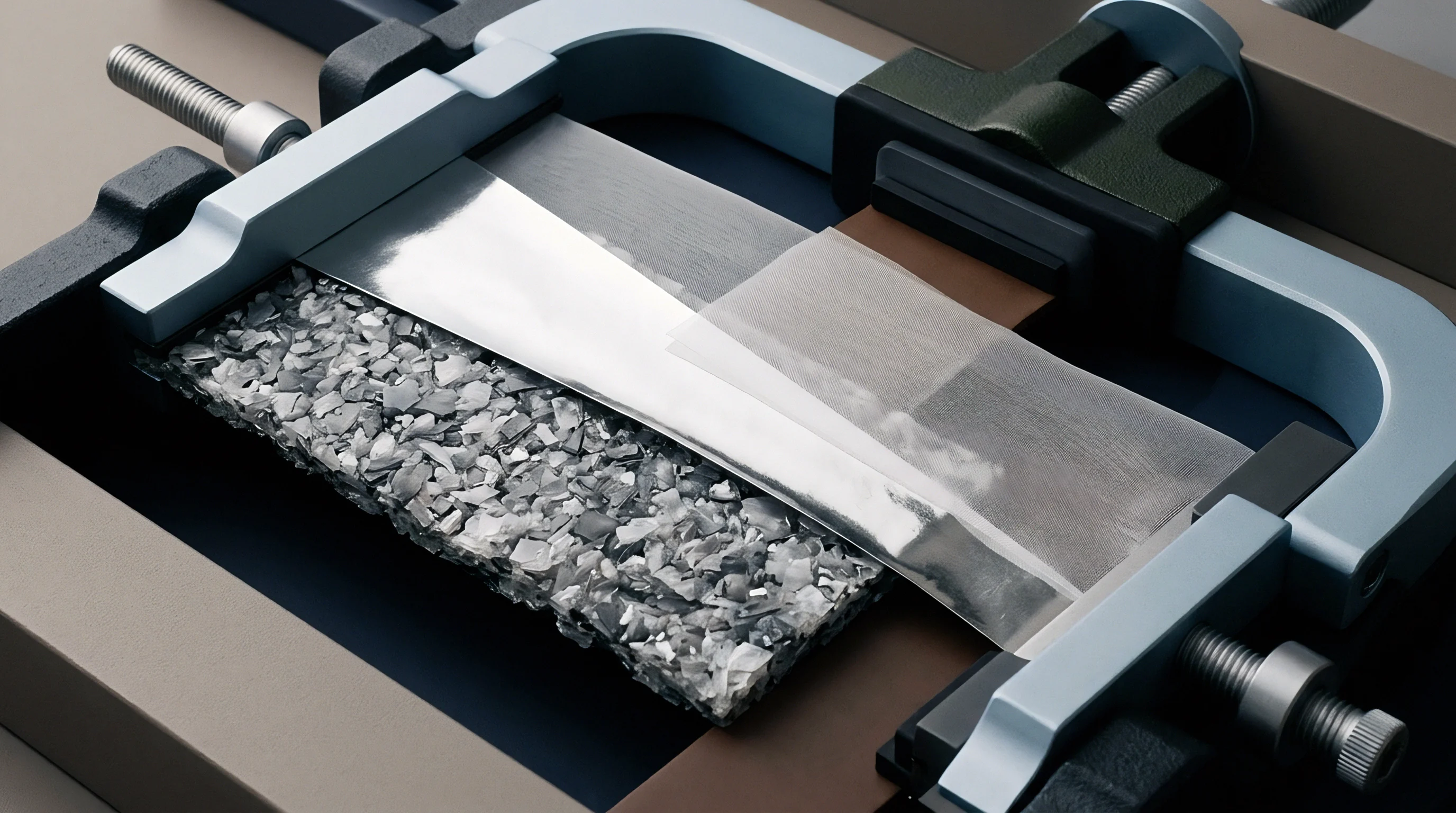
Thermodynamics of Wet Coagulation and Phase Inversion
Immersion precipitation triggers rapid spinodal decomposition, driving the system into polymer-rich and polymer-poor phases within fractions of a second. As the outer surface meets the water bath, fast liquid-liquid demixing forms a dense skin that acts as a semi-permeable barrier, slowing mass transport from the interior.
Polar extraction fluids like methanol swell the matrix to disrupt this barrier.
Solvent exchange kinetics shift from convective dilution to slow Fickian diffusion through a vitrified polymer network. Internal cellular voids shield residual processing solvents from washing spray bars.
- Vitrified skin formation rapidly seals the outer surface against subsequent mass transfer.
- Steric shielding within crystalline hard domains isolates residual molecules from evaporative gas streams.
- Enthalpic affinity between amide functional groups creates high activation energy barriers for desorption.
- Macrovoid cellular trapping sequesters solvent-water mixtures inside closed internal cells.
Membranes manufactured through rapid aqueous coagulation retain higher core solvent concentrations than membranes produced through slow thermal evaporation.
Residual carrier retention tracks the crystalline density of the polymer hard segment rather than the thickness of the overall coating.
Oven
Testing laboratories use either static headspace gas chromatography or liquid dissolution to free sequestered molecules from sample specimens. The choice of preparation method directly determines the measured solvent concentration ~ a swatch can pass easily under one protocol while failing completely under another.
Surface-focused testing leaves core solvent pockets unextracted.
Compliance managers frequently face stark discrepancies when comparing split-sample results from different accredited labs. These variations stem directly from how each method frees trapped solvents from the polymer matrix.

Why Do Headspace and Extraction Protocols Produce Divergent Results?
Static headspace gas chromatography heats an intact fabric specimen in a sealed vial, measuring the volatile compounds that partition into the surrounding air. The sample sits undisturbed at temperatures between one hundred and one hundred thirty degrees Celsius for forty-five minutes. Because the polymer structure remains solid, desorption depends entirely on volatile evaporation from the surface and shallow gas diffusion.
Static heating fails to reach solvents locked deep inside thick membranes.
Solvent molecules bound inside crystalline polyurethane domains stay trapped during static headspace heating cycles, yielding gas chromatography peaks that reflect only superficial volatile residues. By contrast, total solvent extraction uses liquid reagents to swell the polymer chains and release sequestered compounds.
Thermal Desorption Mechanics against Liquid Extraction
Extraction methods like EN 17131 submerge cut pieces directly into methanol, applying ultrasonic energy to expand the polymer network. Methanol infiltrates amorphous regions, breaking the secondary hydrogen bonds that hold trapped amide molecules to the polyurethane chains.
Solvent leaching expands the network to dissolve bound fractions.
Ultrasonic cavitation accelerates solvent exchange across the phase interface, transferring bound solvent into the methanol bath and yielding concentrations up to ten times higher than static thermal desorption measurements.
| Analytical Technique | Sample Preparation | Operational Mechanism | Recovery Efficiency | Regulatory Acceptance |
|---|---|---|---|---|
| Static Headspace GC-MS | Intact specimen heated to 120 °C | Vapour equilibrium partitioning | 15 to 40 percent | Screening tests only |
| Ultrasonic Solvent Extraction | Cut swatches in methanol at 60 °C | Polymeric swelling with solvent exchange | 85 to 98 percent | Official REACH and AFIRM compliance |
| Total Dissolution Precipitation | Complete dissolution in THF | Total polymer matrix dissociation | 99 to 100 percent | Forensic arbitration benchmark |
| Recovery efficiency reflects published interlaboratory validation data on dense microporous coatings. | ||||
Quality assurance programs that rely on headspace gas chromatography screening introduce massive financial exposure for importers. Customs audit laboratories routinely use total solvent extraction protocols specified under European Norms.
- Cut representative specimens into two-millimeter squares from three cross-web positions.
- Weigh precisely one gram of sample into a twenty-milliliter extraction vessel.
- Introduce ten milliliters of pesticide-grade methanol containing deuterated internal standards.
- Submerge the vessel in an ultrasonic bath held at sixty degrees Celsius for sixty minutes.
- Filter the liquor through a zero-point-forty-five-micron PTFE membrane directly into a chromatography vial.
Ultrasonic extraction in methanol at sixty degrees Celsius recovers ninety-two percent more dimethylformamide from thick microporous films than static headspace heating at one hundred twenty degrees.
It remains a point of debate whether non-destructive headspace measurements capture the true biological exposure of consumers handling intact garments in warm environments.

Audit
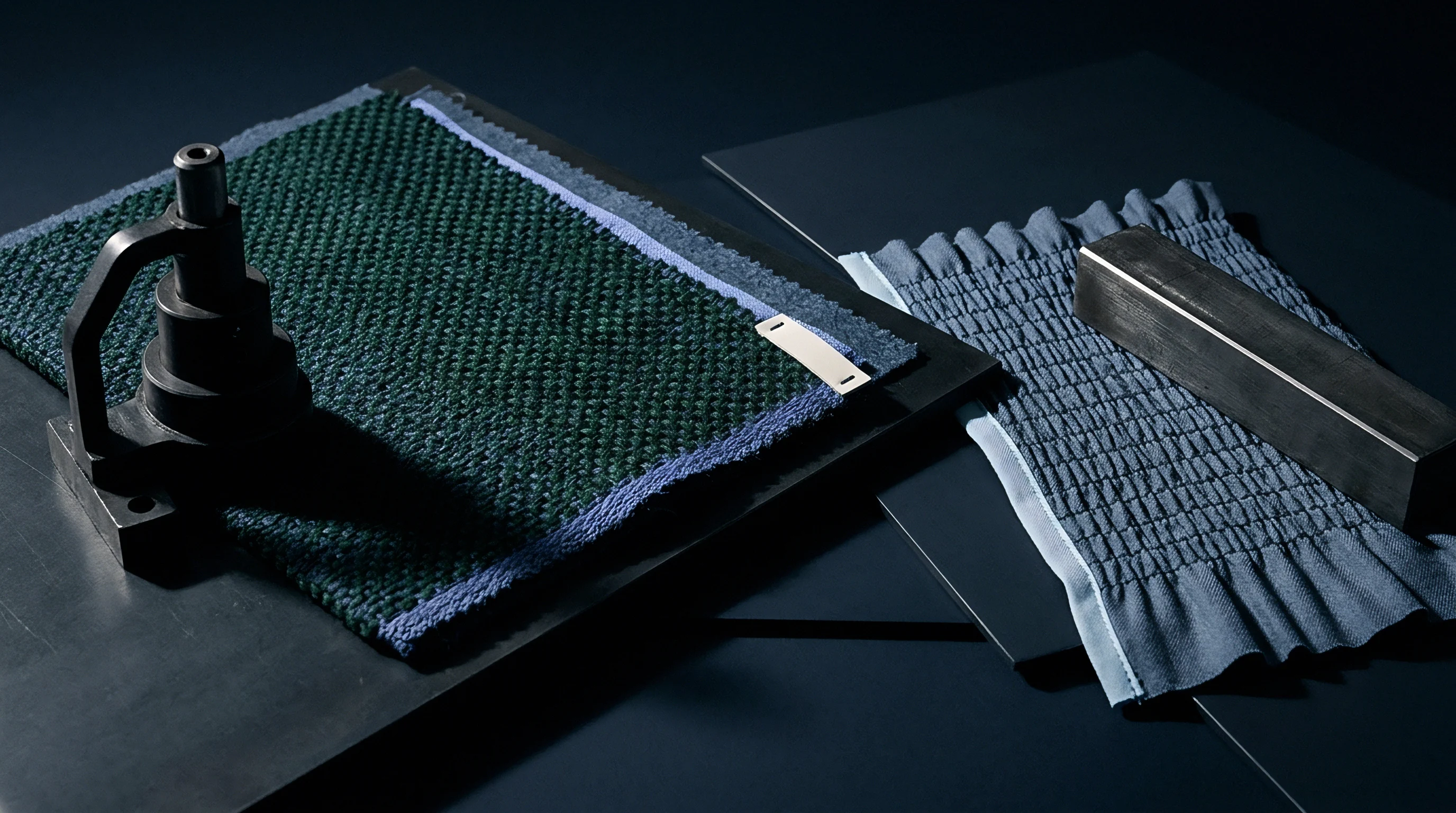
On-site inspections along the finishing range uncover the mechanical variables that dictate solvent removal. Laboratory certificates hold little weight if stenter temperatures and wash bath flow rates drift outside validated operational limits.
Inadequate oven drying cannot clear deeply trapped solvent.
Solvent recovery loops frequently stall when processing surges occur.
Auditors check technical settings directly on factory equipment rather than trusting office production logs. Operators sometimes lower extraction temperatures to preserve the soft hand feel of sensitive synthetic leathers, unintentionally leaving high solvent levels inside the product core.

Verification of Curing Profiles on Stenter Lines
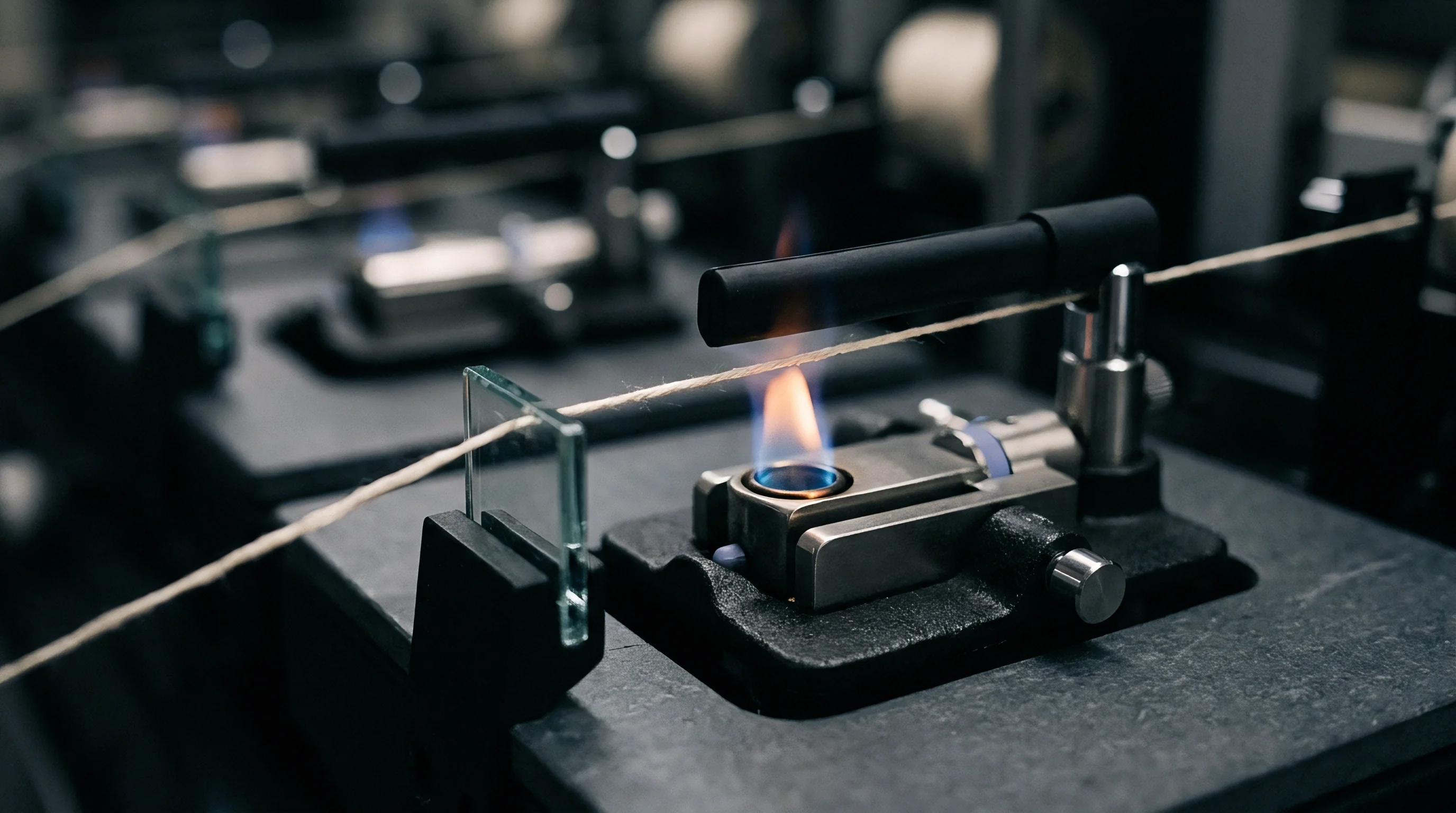
Exhaust airflow volume controls the concentration gradient between the moving fabric web and ambient air. If stenter chambers reach high solvent-vapour saturation levels, drying stalls regardless of temperature readouts. Air velocity across the fabric surface must break the stagnant boundary layer to maintain mass transfer.
Trapped volatile residues tend to collect beneath plastic packaging wraps.
Tension settings also impact solvent clearance. Excessive machine tension stretches the membrane while hot, collapsing micropores and sealing processing solvents inside core structural domains.
Roll Core to Selvage Solvent Gradient Verification
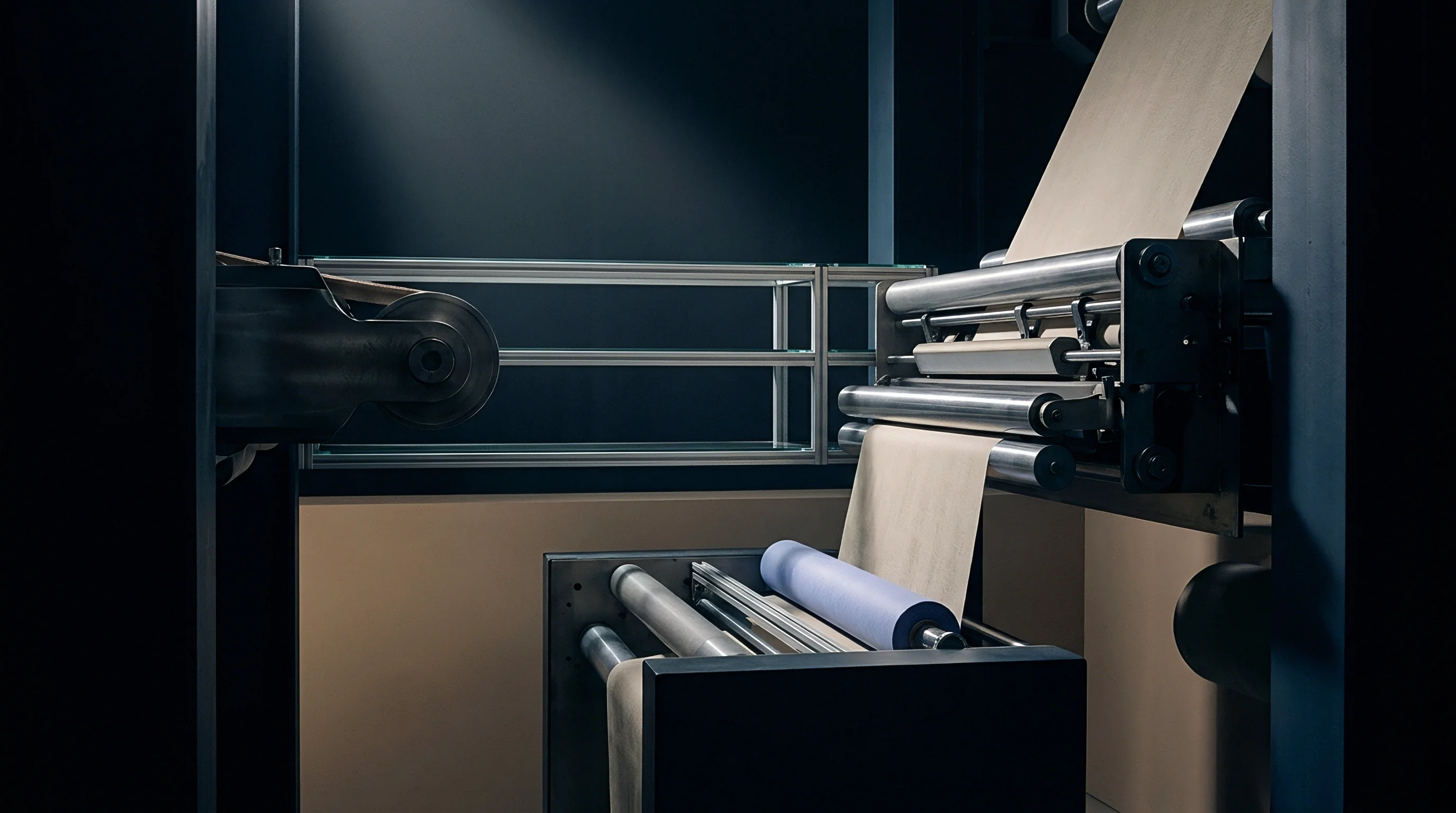
High winding tension on jumbo master rolls compresses internal fabric layers, blocking air circulation. Trapped heat pushes residual solvent outward toward the cooler roll edges, while core wrapping insulates the interior and preserves chemicals at the center.
Solvent migration alters chemical distribution across roll layers.
Verification protocols mandate taking test swatches from both the outer perimeter and the deep inner core of selected master rolls. Testing only the external tail gives a false impression of chemical cleanliness.
- Washing bath temperature series determines the initial concentration reduction prior to tentering.
- Exhaust air volume balance prevents re-deposition of volatilized compounds onto cooler downstream fabric.
- Web transport speed dictates dwell duration inside heated zones.
- Chilled roll surface cleanliness avoids transfer of condensed solvent condensates back onto the finished face.
Volatile chemistries diffuse only partially into container air during a four-week ocean transit, leaving core residues behind.

Exposure
Market surveillance agencies in Germany, Sweden, and France log Safety Gate alerts for solvent violations with increasing frequency. Customs authorities collect random swatches of coated jackets, synthetic shoes, and protective gloves during container inspection. Consignments containing unauthorized levels of restricted polar aprotic solvents face immediate administrative impoundment.
Customs inspectors pull random swatches without prior notice.
Border authorities routinely quarantine entire shipments upon detection.
Retesting expenses land on whichever party signed the import agreement.
Financial liability flows straight to the importer of record, while demurrage charges mount as lab disputes grind through official appeal channels.
Customs Interceptions and RAPEX Notification Economics
Seizure of an imported container at Rotterdam triggers storage and demurrage fees that rapidly surpass the commercial value of the underlying cargo. Daily storage charges, bonded warehouse transfers, and specialized hazardous material handling add tens of thousands of euros to landed costs within weeks.
| Cost Category | Financial Scope | Liable Party Under Incoterms DDP | Mitigation Control |
|---|---|---|---|
| Port Demurrage and Storage | 180 to 350 EUR per container daily | Importer of Record | Pre-shipment lot testing |
| Third-Party Retesting and Arbitration | 1200 to 2500 EUR per sample set | Buyer or mill per contract | Accredited ISO 17025 split testing |
| Cargo Destruction and Incineration | 0.85 to 1.60 EUR per gross kilogram | Importer of Record | Traceable chemical inventory audit |
| Brand Recalls and Consumer Notifications | 50000 to 250000 EUR per incident | Brand sourcing division | Mandatory batch verification |
When an entry alert appears on the European Safety Gate portal, authorities flag the brand’s entire supply chain for elevated surveillance. Subsequent shipments face mandatory physical inspections, extending lead times across future seasonal collections.
Contractual Defense and Re-Testing Arbitration Clauses
Purchase orders need explicit testing protocols to avoid legal stalemates over conflicting lab results. Standard contracts that merely mandate compliance with applicable law fail to shield buyers from drawn-out litigation. Contractual agreements must specify the exact analytical norm, extraction medium, and designated arbitration laboratory.
Demurrage fees at major European container hubs double after the fourteenth day of quarantine.
Commercial clauses should specify that split-sample retests use sealed swatches collected during the initial factory packaging audit. If destination port testing reveals non-compliant solvent residues, the contract must mandate immediate indemnification for container storage and hazardous waste disposal fees. Failing to define the analytical extraction method inside procurement agreements leaves buyers exposed to cargo destruction costs and commercial border forfeitures.