Quantifying Temperature Coefficient Shifts and Membrane Hysteresis in Subcontracted Laboratory Extract Compliance Dossiers
Subcontracted extract dossiers require temperature coefficient corrections and membrane sorption controls to prevent regulatory non-compliance.
Chamber
The ambient conditions of a testing room dictate the thermodynamic equilibrium of liquid samples undergoing export certification. When subcontracted labs test chemical extracts from finished textiles or technical substrates, room fluctuations shift analytical readings away from true baseline values. Standard protocols usually call for controlled environments held at 20°C or 25°C within tight tolerances.
In commercial subcontract facilities, however, room temperature routinely drifts by 3°C to 8°C across diurnal shifts, seasonal swings, or HVAC cycling. These unrecorded microclimatic shifts alter ion activity, solvent vapor pressure, and sensor calibration slopes, introducing systematic errors that slip into compliance dossiers unnoticed.
Restricted substance testing relies on stable physical chemistry parameters. Under ISO 3071, which governs pH testing in aqueous textile extracts, the extraction fluid must be grade 3 water or a 0.1 mol/L potassium chloride solution. At 20°C, a standard glass pH electrode has a theoretical Nernstian slope of -58.17 mV/pH unit.
If room temperatures climb to 28°C during unmonitored afternoon runs, that slope shifts to -59.76 mV/pH unit. Should an analyst calibrate at 20°C but test extracts at 28°C without automatic temperature compensation, the measured pH drifts by up to 0.18 pH units on unbuffered acidic finishes.
Thermal Drift in Aqueous Solute Measurement
When analyzing extracted metals by inductively coupled plasma optical emission spectrometry or mass spectrometry under EN 16711-2, thermal liquid volume changes skew concentration values. The expansion coefficients of aqueous extracts and organic solvents like iso-propanol or methanol lead to density shifts during pipetting and autosampler injections. A methanol extract prepared at 18°C expands by 0.84 percent if left in an autosampler tray at 26°C. Because autosampler volumetric loops measure volume rather than mass, an uncompensated 8°C temperature increase creates a negative concentration bias of nearly one percent before the sample is even analyzed.
Temperature changes also shift the dissociation constants of weak organic acids and processing residues in the extract matrix. Measuring residual formaldehyde under ISO 14184-1 depends on the acetylacetone colorimetric reaction, where both reaction rate and final chromophore absorbance at 412 nm respond strongly to heat. Standard protocols require heating the extract mixture at 40°C for 30 minutes in a water bath, then cooling it to room temperature before spectrophotometry.
If one batch cools to 27°C while another reaches 20°C, the molar absorptivity of the diacetyldihydrolutidine complex changes, shifting calculated formaldehyde results by up to 4.2 percent.
A 4°C drift in ambient laboratory temperature alters extract pH determinations by 0.14 pH units on unbuffered acidic finishes under ISO 3071 test conditions.
Subcontracted testing facilities often leave continuous ambient temperature logs out of their raw data packages. The compliance dossiers sent to brand assurance teams display final concentration numbers on official certificates without showing the bench-level environment during the run. As a result, a buyer gets a passing grade based on an unadjusted reading taken in a warm room, only for follow-up testing in a strictly controlled 20°C environment to produce a failure.
This mismatch between certified figures and audit results comes straight from unmeasured temperature shifts in the subcontracted lab.
Nernstian Temperature Dependence in Potentiometric Assays
An electrochemical sensor’s response follows basic thermodynamic principles. In potentiometric assays, electrode potential scales directly with absolute temperature in Kelvin. As shown by the governing equation E = E0 + left(frac2.303 R Tn Fright) log(ai), any change in T directly adjusts the potential response for every decade change in analyte activity ai.
When subcontracted labs measure extractable fluoride or chloride with ion-selective electrodes without tight thermal controls, temperature gradients across the reference junction cause liquid junction potential to drift. Calibration curves tilt during warm runs.
Temperature swings also alter the dissociation equilibrium of water, shifting the neutral point pKw from 14.17 at 15°C down to 13.83 at 30°C. In unbuffered or weakly buffered textile extracts, this changes the apparent acid-base equilibrium of residual finishes. For instance, a wet-processing mill applying polycarboxylic acid press finishes depends on extract pH to confirm proper neutralization. An uncorrected 6°C rise in room temperature alters the fractional ionization of residual carboxylic groups, producing an artificially low acidity value that passes OEKO-TEX Standard 100 Class I limits even though the product exceeds acidity thresholds at standard temperatures.
| Test Standard | Target Analyte | Extract Matrix | Sensitivity Coefficient (%/°C) | Shift per 5°C Delta |
|---|---|---|---|---|
| ISO 3071 | Hydronium Ion (pH) | Aqueous extract (0.1M KCl) | +1.2% (as H+ activity) | +0.14 pH units |
| EN 16711-2 | Extractable Heavy Metals | 0.07M HCl artificial acid sweat | -0.11% (volumetric density) | -0.55% concentration |
| ISO 14184-1 | Free Formaldehyde | Water extract / Hantzsch reaction | +0.85% (absorbance units) | +4.25% apparent yield |
| ISO 18218-1 | Alkylphenol Ethoxylates | Methanol / Acetonitrile extract | -0.16% (solvent expansion) | -0.80% peak area |
| EN ISO 23702-1 | Perfluoroalkyl Substances | Ethanol ultrasonic extract | +1.40% (desorption kinetic shift) | +7.00% extractable recovery |
Liquid chromatography separations on extracts are similarly vulnerable to thermal shifts in column pressure and mobile phase viscosity. Under ISO 14362-1, reverse-phase HPLC methods for restricted aromatic amines from azo dyes call for column temperatures regulated at 40°C. Lower-tier subcontract labs that lack controlled column compartments leave the stationary phase exposed to ambient room conditions. A 5°C drop in room temperature thickens the mobile phase, raises column backpressure, and extends retention times by 3 to 6 percent.
These retention shifts can cause integration software to misidentify target aromatic amines or miss restricted dye markers altogether.
Uncontrolled heat distorts extraction yields. When compliance managers review subcontracted extract dossiers, they have to look past the final numbers and inspect raw signal data for evidence of thermal drift. Leaving temperature corrections out of liquid extract calculations bakes systemic error into entire qualification files, exposing landed shipments to sudden rejection when customs authorities re-test them in climate-controlled labs.
Hysteresis
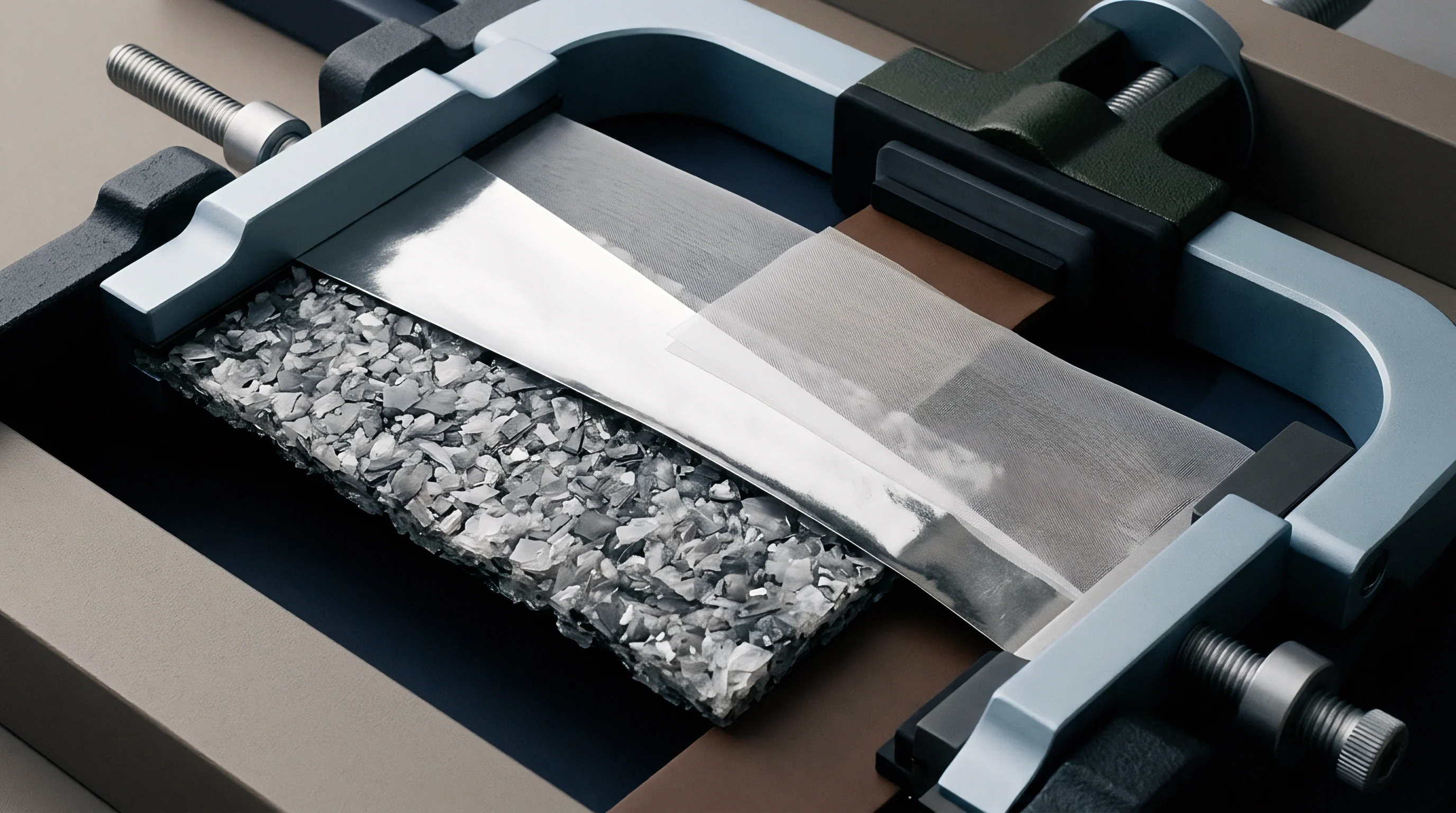
Syringe membranes made of synthetic hydrophobic polymers shift dimensionally during thermal cycles. Standard compliance testing relies on microfiltration to clarify textile extracts before instrument injection, using PTFE, PVDF, or polyethersulfone (PES) membranes to remove particulates and insoluble oligomers. When room temperatures fluctuate or solvent compositions shift during sample handling, these polymers exhibit mechanical and sorption hysteresis.
This hysteresis leads to non-linear analyte loss or sudden release, making compliance reports erratic across different test runs.
Sorption hysteresis in porous membranes stems from thermodynamic path-dependence as analytes absorb and desorb. As extracts pass through, polymer pores adsorb non-polar analytes like per- and polyfluoroalkyl substances (PFAS) or alkylphenol ethoxylates (APEOs). Rising room temperatures increase polymer chain mobility, widening micro-cavities inside the membrane wall and exposing more internal adsorption sites.
When the system cools, the polymer contracts unevenly, locking adsorbed solute molecules inside closed pore structures or dumping previously trapped compounds into subsequent sample aliquots. Matrix effects worsen under thermal shifts.
Polymeric Filter Media Sorption Dynamics
Filter membrane conditioning dictates target compound recovery. When testing for extractable organotin compounds or chlorophenols, analysts pass extracts through 0.45-micron syringe filters. Filter pores shrink as they cool.
If a cold extract hits a syringe filter kept in a warm lab, thermal transfer creates sharp temperature gradients across the membrane wall. This differential shifts the solute’s partition coefficient Kow between solvent and polymer. As a result, analyte retention spikes in the first portion of filtrate, followed by unpredictable breakthrough as local thermodynamic equilibrium takes over.
Compliance teams evaluate extract dossiers against certified laboratory thermal logs to spot filter-induced distortion. Poly PVDF membranes tested with 50 percent aqueous methanol exhibit pronounced hysteresis loops when cycled between 18°C and 32°C. At higher temperatures, the membrane holds 14 percent more nonylphenol ethoxylate (NPEO) surfactant than it does at standard room temperature. When the room drops back to 20°C, only 4 percent of that retained surfactant desorbs into solution.
The other 10 percent remains trapped in the polymer matrix, producing a false-pass compliance report for a fabric batch that actually exceeds restricted substance limits.
Clause 6.3 of ISO 17025 dictates documented evaluation of environmental control effects on measurement uncertainty, converting uncorrected thermal membrane drift into a non-conformity during brand accreditation audits.
Membrane hysteresis also creates real cross-contamination risks when laboratories use reusable filtration manifolds or multi-use sample units. In automated solid-phase extraction (SPE) systems, polymeric sorbent beds swell and shrink as solvents switch. Changing from pure methanol to an aqueous wash phase imposes osmotic and thermal stress on the polymer beads.
Hysteresis in bead swelling traps residual aromatic amines inside internal micropores, which then leach into subsequent clean samples.

Solvent Matrix Interaction in Syringe Filters
Organic elution fluids modify surface tension and channel geometry within microfiltration units during isolation steps. Filter housing materials like polypropylene or high-density polyethylene expand at different rates than the internal membrane disc. Thermal cycling warps the edge seal where the membrane meets the housing.
When warm organic extracts pass through a colder filter assembly, micro-channeling along the perimeter lets unfiltered fluid ~ complete with suspended micro-fibers or insoluble dye particles ~ bypass the membrane entirely before thermal equilibrium is reached, which can take up to two hours.
| Membrane Polymer Type | Target Compound Class | Adsorption Loss at 30°C (%) | Desorption Recovery at 20°C (%) | Hysteresis Lag Time (min) |
|---|---|---|---|---|
| PTFE (Hydrophobic) | PFOS / PFOA (PFAS) | 18.4% | 3.2% | 45 |
| PVDF (Hydrophilic) | Alkylphenol Ethoxylates | 14.1% | 4.0% | 32 |
| PES (Polyethersulfone) | Extractable Heavy Metals | 2.8% | 0.5% | 12 |
| Nylon 6,6 | Aromatic Amines (Azo) | 22.6% | 8.1% | 68 |
| Regenerated Cellulose | Free Formaldehyde | 1.2% | 0.9% | 5 |
Subcontracted laboratories frequently run into systemic filtration failures caused by poor membrane selection and unstable room temperatures. The structural failure modes listed below represent common physical breakdown patterns observed during sample preparation.
- Hydrophobic pore collapse occurs when temperature spikes drive liquid out of microporous channels, permanently reducing effective membrane surface area and altering sample flow rates during pressure filtration.
- Polymer swelling entrapment locks high molecular weight solutes inside the internal matrix when warm organic solvents cause polymer chain expansion followed by rapid ambient cooling during filtration.
- Edge-seal perimeter bypass develops when differential thermal expansion between the housing plastic and the filter disc creates micro-fissures along the outer perimeter ring.
- Irreversible adsorption hysteresis permanently alters analyte recovery metrics when hydrophobic target compounds form strong secondary bonds with heat-activated polymer surface sites.
Irreproducible test results across different laboratory batches are frequently attributed to standard operational variation, under the assumption that minor shifts in filtration speed and room temperature remain within accepted industry tolerances.
Extraction
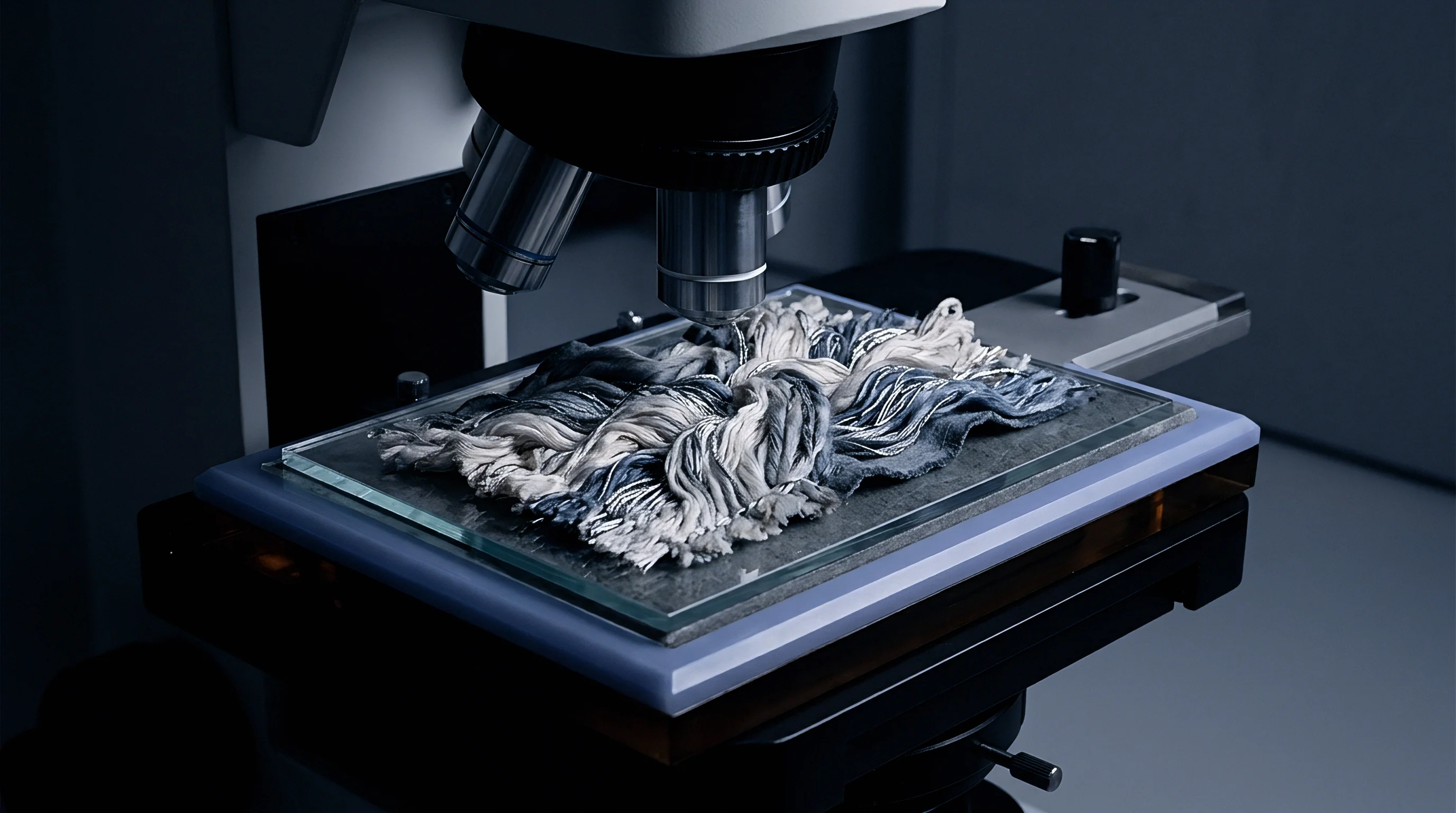
Chemical analytes migrate out of solid substrates at rates determined by local kinetic energy. ISO 14362-1 and EN ISO 17234-1 define reductive cleavage and extraction procedures for restricted aromatic amines from azo colorants in textiles and leather. These standards demand exact thermal control during citrate buffer leaching at 70°C, followed by hydrosulfite reduction.
High-throughput commercial labs, however, often rush water bath cycles or stack extraction flasks into crowded heating blocks, creating temperature gradients across a single batch.
Leaching kinetics obey Fickian diffusion, where the diffusion coefficient D scales exponentially with absolute temperature according to the Arrhenius equation D = D0 expleft(-fracEaR Tright). Here, Ea is the activation energy for analyte migration out of the polymer matrix, R is the universal gas constant, and T is the temperature in Kelvin. For disperse dyes and finishes bound within dense synthetic fibers like polyester or polyamide, activation energies run between 40 and 80 kJ/mol.
A drop of just 3°C in extraction bath temperature lowers the effective diffusion coefficient by 15 to 28 percent, leaving target compounds significantly under-extracted.
Thermodynamic Leaching Kinetics in Aqueous Media
Solid-liquid extraction efficiency relies heavily on boundary layer dynamics in the liquid phase. In ultrasonic bath extractions for heavy metals under EN 16711-1 or phthalates under ISO 14389, dissipated sound waves generate considerable heat. An unregulated ultrasonic bath can heat up from room temperature to over 45°C during a standard 30-minute run.
Without active cooling loops, temperature shifts inside the bath continuously alter solvent extraction power throughout the test.
Elevated extraction temperatures also shift the solubility and phase distribution of chemical markers. When testing leather trims for hexavalent chromium under EN ISO 17075-1, the extraction buffer must stay between pH 7.5 and 8.0 at room temperature to avoid chemical conversion. Hexavalent chromium can reduce to trivalent chromium in warm or acidic conditions, while trivalent chromium oxidizes to hexavalent chromium under heat in alkaline media.
If a lab lets extraction solutions drift to 32°C during shaking cycles, artificial reduction occurs, producing a false pass for high-risk leather items.
Sample filtration through thermally unconditioned hydrophobic membranes leads to irreproducible retention of long-chain surfactant residues.
Pressurized liquid extraction (PLE) and microwave-assisted extraction (MAE) systems require accurate internal temperature calibration. When testing technical apparel for banned perfluorinated alkylated substances (PFAS) under EN ISO 23702-1, vessels run at 120°C under pressure. External infrared sensors often misread internal fluid temperatures because of vessel wall thermal resistance and drift in sensor calibration.
An internal temperature deficit of 10°C reduces recovery yields of long-chain carboxylates (PFOA, PFDA) by up to 35 percent compared to reference standards, letting hazardous residues slip through undetected.

Diffusion Constants across Variable Laboratory Temperatures
Arrhenius calculations confirm that mass transport coefficients increase exponentially with thermal energy in liquid analytical systems. Solute movement out of synthetic substrates depends on solvent viscosity and polymer swelling. In testing cotton or cellulosic blends for residual formaldehyde under ISO 14184-2 (vapor-phase absorption), keeping the reaction flask at 40°C is critical to total aldehyde vapor pressure.
A flask operating at 38.5°C releases noticeably less formaldehyde gas into the absorption trap than one held at standard temperature, resulting in systematic under-reporting of volatile emissions.
- Verify that the subcontracted laboratory maintains calibrated temperature logging sensors inside every extraction vessel, bath, and analytical instrument compartment throughout the test cycle.
- Audit raw chromatographic signal integrations to detect retention time drift indicative of uncompensated ambient or column thermal variation.
- Require continuous solvent blank runs through syringe filters at alternating temperature steps to establish membrane adsorption-desorption hysteresis profiles.
- Cross-check calculated concentration figures against solvent density correction tables appropriate for the specific laboratory bench ambient temperature recorded during pipetting.
- Reject compliance dossiers that report extract analysis without presenting verified continuous environmental sensor records covering the entire sample processing timeframe.
- Perform statistical equivalence testing between subcontracted laboratory extract datasets and internal reference control values to confirm measurement reproducibility.
Auditors examine calibration records for sensor drift across subcontracted lab partners. Setting firm operational temperature bounds stops unverified extraction data from entering brand qualification systems.
Standard compliance protocols mandate strict laboratory environmental controls during certification testing. Under Clause 5.3 of the OEKO-TEX Standard 100 General Conditions, reports from subcontracted labs become null and void if environmental logs fail to confirm compliance with standardized temperatures throughout sample extraction and analysis.
Equivalence
Analytical results from external testing partners must be screened through dispersion tests before inclusion in technical dossiers. Compliance managers face serious exposure when accepting third-party reports that look sound on the cover page but hide internal analytical drift. Equivalence testing offers the mathematical framework needed to tell whether a subcontracted extract dossier aligns with reference standards or carries hidden bias from thermal shifts and membrane hysteresis.
Simple pass-fail limits are not enough to ensure regulatory clearance at international borders.
Evaluating equivalence requires calculating confidence intervals around the mean concentration differences between initial test data and secondary verification runs. When analyzing extractable heavy metals under EN 16711-2, a primary report might list lead at 0.18 mg/kg against a limit of 0.20 mg/kg. If the testing was done at an ambient 27°C, volumetric expansion and altered leaching kinetics likely under-reported actual lead levels.
Two-one-sided t-tests (TOST) calculated at a 95 percent confidence level show whether the lab dataset sits within an acceptable equivalence margin δ relative to reference data collected under controlled 20°C conditions.
Statistical Outlier Identification in Audit Datasets
Dispersion metrics highlight analytical instability hidden inside compliance files. Relative standard deviation (RSD) calculations across replicate extractions offer an immediate check for thermal drift or membrane hysteresis. A standard HPLC assay for restricted aromatic amines under ISO 14362-1 typically yields replicate RSD values below 5 percent.
When membrane hysteresis or oven temperature drift takes place, replicate RSDs jump to 15 or 20 percent. High sample variance is a clear sign that the analytical run operated outside thermodynamic control.
Grubbs’ test and Dixon’s Q-test allow compliance engineers to identify statistical outliers in multi-sample extraction series. If a lab runs a ten-sample batch of extractable phthalates under ISO 14389, a sudden change in room temperature or filter behavior causes later samples to diverge from earlier ones. Spotting these sequential trends confirms that instrument calibration drifted during the run, invalidating the final compliance certificate.
Subcontracted laboratory reports frequently list standard room temperature without recording continuous ambient chamber data during overnight extraction sequences.
Interlaboratory comparisons demonstrate that facility-to-facility bias regularly exceeds nominal instrument error limits. In one round involving identical polyester swatches, testing revealed a 0.23 pH unit spread across three subcontracted reports. The root cause was uncalibrated thermal compensation circuits in glass electrodes combined with ambient lab temperatures ranging from 19°C to 28°C across facilities.
Interlaboratory Deviation Thresholds in Technical Files
Cross-validation between primary labs and reference compliance desks establishes baseline analytical variance. Enforcing strict acceptance thresholds prevents skewed technical dossiers from entering supply chain records, giving compliance teams a solid basis for approving or holding shipment releases.
- Thermal coefficient shift threshold limits permissible analytical concentration drift to less than 2.0 percent per 3°C deviation from standard testing room temperature.
- Membrane hysteresis variance margin mandates that pre-filtration and post-filtration spike recovery values for hydrophobic target analytes must fall within a strict 95 to 105 percent recovery window.
- Intra-batch slope stability metric requires potentiometric sensor calibration slope updates every 20 samples to limit temperature-induced calibration tilt to less than 0.5 mV.
- Volumetric solvent density correction factor applies mandatory mathematical adjustment factors to all organic solvent extractions executed at temperatures exceeding 22°C.
- Replicate precision limit sets the maximum allowable relative standard deviation across triplicate extract injections at 4.5 percent for trace organic contaminants.
The matrix below outlines the commercial risk exposure and technical failure mechanisms associated with unquantified thermal shift and membrane hysteresis parameters in export compliance testing.
| Failure Mechanism | Affected Analytical Standard | Physical Root Cause | Regulatory Impact | Commercial Financial Exposure |
|---|---|---|---|---|
| Uncorrected pH Thermal Drift | ISO 3071 / AATCC 81 | Nernstian slope change in glass electrode at elevated ambient lab temperature. | OEKO-TEX Class I failure; custom border rejection for extreme acidity/alkalinity. | $15,000 to $45,000 per delayed container clearance. |
| Membrane PFAS Sorption Loss | EN ISO 23702-1 | Irreversible hydrophobic adsorption onto PTFE syringe filters during ambient heating. | False pass report for banned fluorinated stain-repellent residues. | Up to $250,000 market recall fine under EU POP Regulation. |
| Formaldehyde Colorimetric Shift | ISO 14184-1 | Molar absorptivity variance in Hantzsch reaction complex from improper sample cooling. | CPSC nursery product non-compliance for excess formaldehyde. | Complete inventory seizure and mandatory destruction orders. |
| Heavy Metal Extraction Deficit | EN 16711-1 | Temperature deficit in ultrasonic bath reducing acid sweat leaching kinetics. | REACH Annex XVII violation for extractable nickel/lead limits. | Loss of brand supplier qualification status and vendor penalty claims. |
How can brand compliance desks systematically audit external extract reports to identify thermodynamic drift before regulatory authorities seize non-compliant retail merchandise at import terminals?

Discrepancy
Purchase order terms explicitly assign financial responsibility when regulatory border testing contradicts vendor compliance files. Discrepancies between subcontracted laboratory dossiers and official market surveillance create major financial risks for importers, retailers, and mills. When import authorities hold a shipment over a failed verification test, the brand must present a defensible technical audit trail showing that the original dossier reflected true batch conditions rather than laboratory measurement artifacts.
Risk allocation protocols must account for testing failures caused by environmental instability. Generic indemnification clauses in traditional supply contracts often fail during arbitration because they omit technical testing conditions. Explicitly requiring temperature coefficient corrections, continuous chamber monitoring, and membrane hysteresis validation shifts financial liability for failed re-tests back onto the laboratory or vendor mill.
Commercial Risk Allocation in Sourcing Contracts
Subcontracted testing agreements require concrete performance metrics rather than generic quality promises. When drafting procurement terms for high-risk technical apparel, compliance teams insert dedicated chemical testing provisions. These clauses state that if the gap between initial qualification dossiers and border verification testing exceeds a set statistical threshold, mandatory joint re-testing is triggered at an independent accredited facility at the subcontracted lab’s expense.
Brand compliance teams enforce thermal stability clauses in third-party laboratory agreements to protect supply chains from unmeasured analytical drift. Indemnification provisions need to link dossier invalidity directly to analytical failure modes like uncorrected temperature shifts or poor membrane filter choices. If a lab delivers a test report produced on uncalibrated or thermally drifting equipment, it forfeits its fee and assumes full financial responsibility for demurrage, storage fees, and re-sampling costs resulting from customs detentions.
Retest Liability Clauses in Procurement Agreements
Formal supply contracts should explicitly state which party absorbs secondary testing expenses when initial extract values are challenged. Standard terms must incorporate detailed re-test protocols with precise thermodynamic controls. A well-drafted re-test clause mandates that secondary verification testing use continuous temperature monitoring, validated non-sorptive regenerated cellulose membranes, and certified reference standards to eliminate the analytical biases that corrupted the initial dossier.
Financial liability models indicate that unquantified laboratory drift costs importers millions each year in delays, scrap, and emergency reprocessing. Adding explicit temperature coefficient and membrane conditioning mandates to raw material specifications protects compliance integrity across supply chains. Sourcing programs that implement rigorous dossier auditing insulate their procurement pipelines from hidden laboratory errors, helping ensure landed products satisfy regulatory standards at every border.
A reliable operational rule of thumb dictates that any extract compliance dossier lacking documented continuous environmental room logs should be treated as an unverified screening estimate rather than a final regulatory guarantee.