Dynamic Headspace Desorption Kinematics and Extractable Solvent Gradient Mapping across Coated Textile Batches
Dynamic headspace desorption mapping reveals center-roll aprotic solvent concentrations up to 80 percent higher than selvedges, risking REACH border detentions.


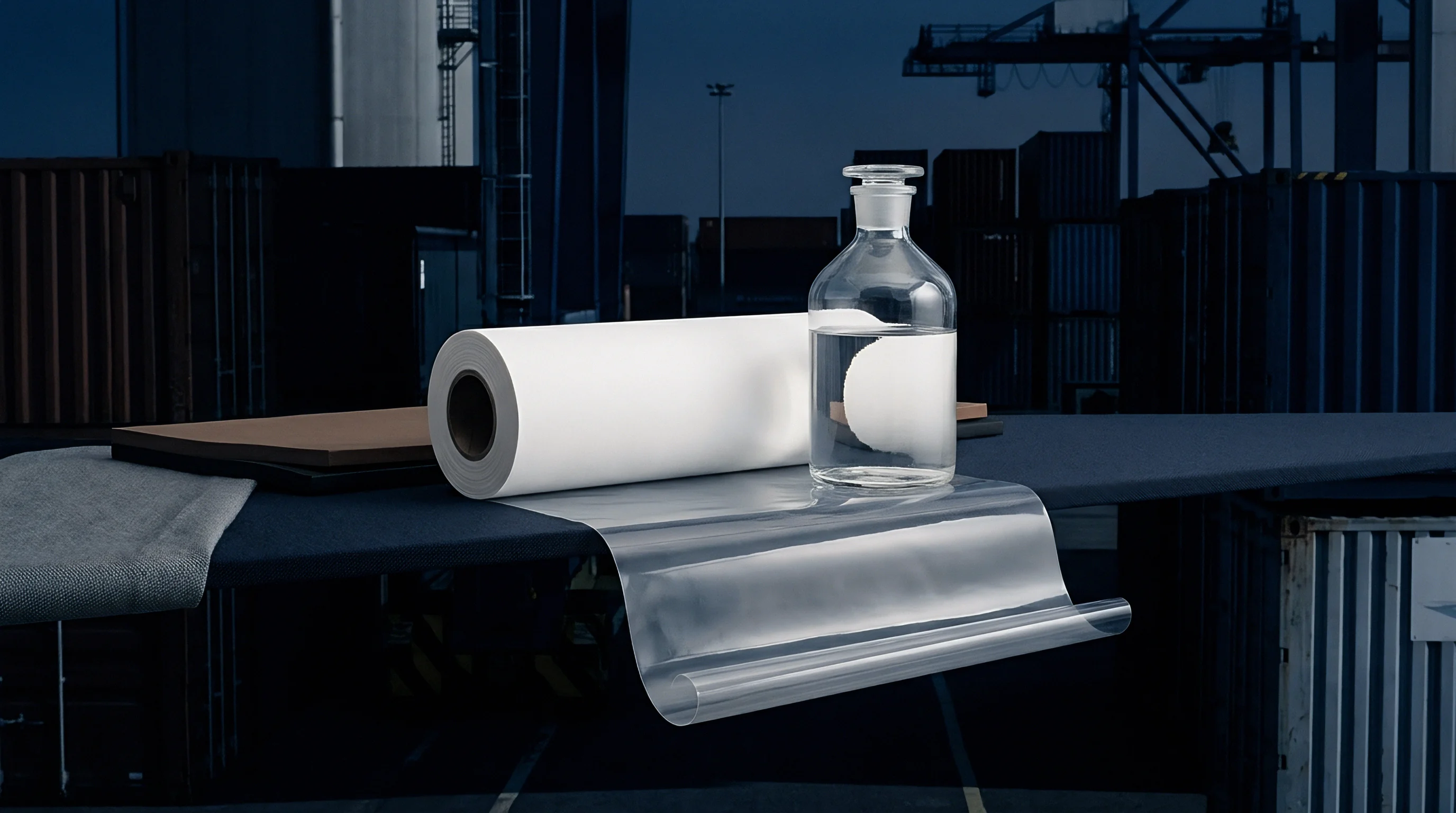
Film
Polyurethane and polyvinyl chloride coatings applied to technical textiles rely on polar aprotic solvents during polymer solvation, wet-coagulation bath phase inversion, and knife-over-roll crosslinking. Residual quantities of N-methyl-2-pyrrolidone, N,N-dimethylformamide, and N,N-dimethylacetamide remain entrapped within the solid polymer matrix after passing through the tenter frame stenter zones. These solvents have elevated boiling points ranging from 153 °C for dimethylformamide up to 202 °C for N-methyl-2-pyrrolidone.
Complete volatilization during standard commercial line speeds of 15 to 35 meters per minute requires thermal conditions that risk degrading heat-sensitive synthetic base fibers like elastane or polyamide 6,6.
Entrapped solvent does not sit uniformly across the depth of the synthetic coating layer. During rapid surface drying, skinning occurs on the exterior surface of the elastomeric barrier. A high-density polymer skin forms instantly at the air-coating interface, creating a diffusion barrier that drastically throttles subsequent solvent evaporation from the interior core.
Liquid solvent molecules remain locked within the bulk polymer structure, establishing a concentration gradient from the outer barrier face down to the textile boundary layer.

Residual Aprotic Solvents in Coated Polymer Coatings
Analytical quantification of volatile organic compounds in barrier textiles relies on distinguishing surface-adsorbed solvent molecules from bulk-entrapped species. Liquid extraction using methanol or dichloromethane dissolves the polymer coating completely or swells the matrix to force total solvent liberation. Static headspace analysis measures only the vapor phase concentration equilibrated in a sealed vial at moderate temperatures, frequently underreporting bulk entrapped solvents with high barrier diffusion resistance.
| Solvent Name | CAS Number | Boiling Point (°C) | REACH Annex XVII Limit | OEKO-TEX Class I Limit | Primary Desorption Peak (°C) |
|---|---|---|---|---|---|
| N-Methyl-2-pyrrolidone (NMP) | 872-50-4 | 202 | 300 mg/kg | 10 mg/kg | 140 to 160 |
| N,N-Dimethylformamide (DMF) | 68-12-2 | 153 | 300 mg/kg | 10 mg/kg | 110 to 130 |
| N,N-Dimethylacetamide (DMAc) | 127-19-5 | 165 | 300 mg/kg | 10 mg/kg | 120 to 140 |
| Toluene | 108-88-3 | 110 | 1000 mg/kg | 50 mg/kg | 80 to 100 |
| Cyclohexanone | 108-94-1 | 155 | Not Restricted | 100 mg/kg | 115 to 135 |
Static equilibrium models assume that solvent vapor pressure inside a sealed vial directly reflects total concentration within the solid specimen. High molecular weight polyurethane coatings violate this thermodynamic assumption. The diffusion of N,N-dimethylformamide through a dense thermoplastic polyurethane film with a glass transition temperature below ambient room temperature obeys viscoelastic relaxation mechanics rather than classic Fickian behavior.
A static headspace vial heated to 80 °C for 45 minutes extracts less than 20 percent of the total dimethylformamide mass bound inside a 100-micrometer thick crosslinked coating layer.
Elevated stenter oven temperatures are often assumed to eliminate all residual processing solvents down to non-detectable levels, yet bound fractions routinely persist.

Kinematics
Mass transport of polar aprotic compounds through solid polymer barriers follows non-steady-state diffusion laws governed by temperature, matrix swelling, and localized concentration energy barriers. Dynamic headspace sampling passes a continuous carrier gas stream over the specimen inside a temperature-controlled chamber. This sweeping gas maintains a near-zero vapor concentration above the sample, maximizing the concentration gradient between the polymer surface and the surrounding gas phase.
The desorption kinetic rate depends directly on the internal diffusion coefficient of the solvent species inside the specific resin formulation.
Desorption kinetics move through three distinct phases during continuous thermal sweeping. The initial phase involves instantaneous flash vaporization of surface-adsorbed solvent molecules, generating a steep initial chromatographic signal peak. The second phase represents transient Fickian diffusion from the sub-surface polymer layers, where the extraction rate scales proportional to the square root of time.
The third phase enters a relaxation-controlled regime where polymer chain segment mobility dictates the release rate of deeply entrapped solvent molecules.
Dynamic headspace sampling under continuous inert gas flow prevents vapor-phase re-adsorption onto outer elastomeric layers during thermal testing.

Standard Operating Sampling Sequence for Textile Roll Auditing
Accurate mapping of solvent distributions requires structured swatch collection that accounts for thermal and mechanical variations across the production line.
- Cut full-width cross-roll strip swatches measuring 300 millimeters in length at 500-meter intervals along the production batch roll, discarding the first 5 meters of outer protective wrapping.
- Punch duplicate circular test specimens with a diameter of 15 millimeters precisely from the left selvedge, center line, and right selvedge of each cross-roll strip.
- Seal each punched disk immediately into an airtight glass vial equipped with a PTFE-lined septum to halt volatile solvent losses prior to thermal desorption analysis.
- Record the exact weight of each disk to the nearest 0.1 milligram using an analytical balance before transferring the specimen into the dynamic headspace chamber.
- Purge the dynamic headspace chamber with high-purity helium at 50 milliliters per minute for 3 minutes at 25 °C to purge ambient atmospheric contaminants.
- Ramp the thermal desorption chamber temperature at 20 °C per minute to the target desorption extraction thermal point while collecting volatilized effluents on a Tenax TA sorbent trap.
A specimen tested at 100 °C under static conditions reaches apparent equilibrium while leaving substantial solvent masses bound within the resin matrix. Dynamic sweeping at 130 °C continuously strips the boundary vapor, forcing the deep core solvent to migrate outward along the steep partial pressure gradient. Dynamic headspace kinetics yield accurate total concentration numbers within 30 minutes, whereas static methods plateau prematurely.
Static headspace testing systematically underestimates high-boiling solvent retention in dense synthetic coatings.


Thermal
Thermal desorptive extraction temperatures alter the structural conformation of coated polymer networks during gas chromatography analysis. Heating a thermoplastic polyurethane coating above its soft-segment glass transition point increases free volume within the molecular network. Polymer chain mobility rises exponentially, dropping the energy barrier required for entrapped solvent molecules to jump between interstitial voids.
Dynamic thermal desorption profile analysis relies on selecting an analytical temperature high enough to maximize diffusion kinetics without inducing thermal degradation of the polyurethane or polyvinyl chloride resin.

Which Analytical Temperature Accelerates Dynamic Headspace Desorption?
Analytical temperature selection requires matching the boiling point of target analytes with the thermal degradation threshold of the coating base resin. Extraction performed at 120 °C successfully desorbs N,N-dimethylformamide and toluene within 20 minutes without breaking urethane linkages. Raising the chamber temperature to 180 °C accelerates N-methyl-2-pyrrolidone release.
High thermal exposure causes partial depolymerization of low-grade acrylic additives, generating interfering breakdown products like alkyl acrylates that mask solvent signal peaks on GC-MS chromatograms.
| Parameter | Low-Temperature Protocol | Standard Industrial Protocol | High-Temperature Protocol |
|---|---|---|---|
| Chamber Temperature | 90 °C | 130 °C | 160 °C |
| Purge Flow Rate | 30 mL/min Helium | 50 mL/min Helium | 80 mL/min Helium |
| Desorption Duration | 45 Minutes | 20 Minutes | 15 Minutes |
| Focus Trap Temperature | -30 °C | -20 °C | 0 °C |
| Trap Flash Heat | 280 °C | 300 °C | 320 °C |
| Target Analytes | Toluene, THF, MEK | DMF, DMAc, Cyclohexanone | NMP, High-Boiling Esters |
Trap selection governs analyte retention efficiency during thermal extraction. Tenax TA sorbent traps efficiently capture polar solvents including N,N-dimethylformamide and N-methyl-2-pyrrolidone at sub-zero focal temperatures. Low focal temperatures down to -30 °C focus volatilized solvent streams into narrow chromatographic bands prior to splitless injection into the gas chromatography column.
Inadequate cryo-focusing leads to broad, asymmetric peak tailing that prevents precise integration of low-concentration solvent signals.
OEKO-TEX Standard 100 Annex 6 mandates that total extractable polar aprotic solvents in Class I infant textiles shall not exceed 10 milligrams per kilogram under quantitative chromatographic testing.
Testing under standard ISO 17881-2 requires complete thermal desorption calibration against certified liquid solvent standards spiked directly onto inert glass wool matrices inside standard desorption tubes. Matrix-matched calibration curves correct for signal suppression or enhancement caused by volatile co-extractives released from synthetic dye formulations. Standard addition protocols verify linear response ranges between 1 milligram per kilogram and 500 milligrams per kilogram.
Standard purchase terms referencing ISO 17025 accredited testing require laboratories to report specific thermal desorption extraction temperatures alongside final concentration values.


Gradient
Distribution profiles of residual solvent across a finished textile roll show pronounced physical variations along both the transverse width and longitudinal length. Air velocity boundary layers inside industrial drying stenters vary between the center of the web and the outer edges near the pin-tenter transport chains. Hot air nozzles deliver higher impinging volumetric airflow directly over the central span.
Edge zones experience localized air stagnation and structural heat loss through heavy mechanical metal frame components, slowing solvent evaporation along roll margins.
Coating weight variations exacerbate thermal drying disparities across the textile web. Fluid coating formulation applied via floating knife coaters sags slightly toward the center under gravitational forces prior to oven entry. A coating thickness measuring 45 micrometers at the left and right selvedges increases to 62 micrometers at the center line.
Solvent loss rate scales inversely with the square of film thickness. The thicker central coating section retains a higher concentration of residual solvent per unit mass after exiting the final cooling zone.

Worked Example of Spatial Solvent Retention and Retest Risk Arithmetic
Consider a 10,000-meter production batch of 200-gram-per-square-meter polyurethane-coated polyester rainwear fabric. The finishing line operates at a target N,N-dimethylformamide concentration limit of 300 milligrams per kilogram to comply with EU REACH Annex XVII Entry 72. Quality assurance sampling selects three swatches across a single cross-roll section taken at the 5,000-meter mark.
Assumed thickness and analytical parameters across the roll profile:
- Left Selvedge Zone features a coating thickness of 42 micrometers and yields a measured DMF concentration of 180 milligrams per kilogram.
- Center Web Zone features a coating thickness of 64 micrometers and yields a measured DMF concentration of 340 milligrams per kilogram.
- Right Selvedge Zone features a coating thickness of 44 micrometers and yields a measured DMF concentration of 195 milligrams per kilogram.
A single composite sample prepared by blending equal weight portions of the left, center, and right swatches produces a calculated mean concentration:
Mean Concentration = (180 + 340 + 195) / 3 = 238.3 milligrams per kilogram
The composite sample easily passes the 300 milligram per kilogram regulatory threshold. Customs market surveillance authorities, however, do not test composite samples. Regulatory inspection enforcement protocols cut isolated single swatches directly from the center line of individual rolls stored inside imported shipping containers.
Calculating the failure probability when an enforcement authority audits the central web zone:
Center Zone DMF Concentration = 340 milligrams per kilogram
Regulatory Limit = 300 milligrams per kilogram
Excess Solvent Mass = 340 – 300 = 40 milligrams per kilogram (13.3 percent above legal limit)
The batch clears internal factory quality checks using averaged composite testing but fails regulatory border compliance screening. The entire 10,000-meter batch faces immediate detention, commercial rejection, and mandatory destruction at the port of entry.
Transverse solvent distribution gradients cause composite testing protocols to disguise localized regulatory non-compliance in central roll zones.
Longitudinal variations run parallel to transverse cross-roll gradients. Stenter oven heating zones experience temperature fluctuations of plus or minus 8 °C as burner control valves cycle during continuous line operation. Line speed fluctuations during roll changeovers cause temporary residence time drops inside drying chambers.
The head and tail ends of individual coating rolls frequently contain solvent concentrations up to 80 percent higher than steady-state middle roll sections.
Localized solvent buildup during stenter speed drops directly sharpens the severity of these cross-roll gradients.
Longitudinal migration during extended roll storage further alters solvent spatial distribution maps. Residual solvent molecules diffuse toward dry interior paper cores or migrate into porous backing textiles under high winding roll pressure. Storage inside non-climate-controlled warehouses at temperatures exceeding 35 °C drives secondary solvent vapor migration inside sealed polyethylene outer packaging.
Solvent vapors re-condense on roll edges, creating elevated solvent concentrations along outer edges weeks after primary manufacturing completes.
Thermodynamic Drivers of Spatial Solvent Variability
Understanding the thermodynamic mechanisms driving solvent retention ensures better process control during industrial coating operations.
- Boundary Layer Stagnation reduces local mass transfer coefficients along roll margins due to altered air knife geometry near tentering mechanical guides.
- Coating Mass Variations increase internal diffusion path lengths in heavy center-web coating zones, forcing exponential increases in required thermal drying time.
- Substrate Moisture Interference blocks polar solvent removal when hydrophobic synthetic yarns compete with absorbed water molecules for thermal energy inside stenter drying zones.
- Temperature Depression Belts emerge near cold oven entrance zones where fresh coating wet-out absorbs evaporative thermal energy faster than heating elements supply heat.


Disparity
Analytical measurements produced by static solvent extraction techniques diverge significantly from dynamic headspace results on identical fabric swatches. Solvent extraction methods using methanol liquid bath extraction dissolve the polymer matrix completely. Complete matrix dissolution releases 100 percent of residual solvent molecules regardless of their physical depth or binding state.
Dynamic headspace desorbs only the mobile, volatile solvent fraction capable of migrating out of the solid polymer structure under controlled thermal conditions.
Solvent extraction yields a total chemical inventory metric, whereas dynamic headspace yields a volatile emission exposure metric. A coated fabric containing 250 milligrams per kilogram of total N-methyl-2-pyrrolidone under complete methanol extraction may yield only 35 milligrams per kilogram under dynamic headspace desorption at 90 °C. Regulatory frameworks like REACH Annex XVII Entry 72 specify maximum concentration limits based on total solvent content, requiring full extraction analytical techniques. Brand chemical management standards often incorporate dynamic headspace testing to assess off-gassing, odor, and consumer inhalation risk during garment wearing.
Methodological discrepancies generate commercial friction between mill laboratories and third-party testing facilities. Mill laboratories running static headspace GC-MS for internal quality control record passing figures below 50 milligrams per kilogram for dimethylformamide. Independent accredited laboratories testing the same roll swatches using solvent extraction ISO 17881-2 record failing values of 380 milligrams per kilogram.
The mill assumes testing error, while the buyer rejects the shipment based on total chemical extraction scope requirements.
Testing protocols that fail to specify extraction solvent type, temperature profiles, and sample preparation methods produce irreconcilable laboratory data variations.

Commercial RFQ Compliance and Verification Checklist
Ensuring compliance across global textile supply chains requires clear technical specifications embedded within purchase documentation.
- Method Specification Line explicitly identifies whether limits govern total chemical extraction under ISO 17881-2 or dynamic headspace emissions under VDA 278 testing standards.
- Sampling Location Mandatory Protocol stipulates that swatches must be cut from center-web locations rather than outer roll selvedges to capture maximum residual solvent concentration.
- Matrix Calibration Requirement obligates laboratories to calibrate testing instruments using polymer-matched matrix standards to prevent signal suppression errors.
- Roll End Elimination Rule mandates discarding the outer 5 meters of roll fabric prior to sampling to avoid reporting false elevated solvent figures caused by edge packaging re-condensation.
Selecting the wrong analytical methodology leads directly to contract disputes, unexpected import detentions, and unrecoverable testing fees.

Enforcement
Border authorities, market surveillance agencies, and brand compliance desks audit incoming technical textiles against strict restricted substance lists. The European Chemicals Agency actively monitors N-methyl-2-pyrrolidone, N,N-dimethylformamide, and N,N-dimethylacetamide under REACH regulations due to their toxic for reproduction category 1B classification. Customs inspectors pull swatches directly from imported goods entering port warehouses.
Non-compliant shipments face immediate quarantine, mandatory public recall notifications through Safety Gate platforms, and total destruction obligations funded entirely by the importer of record.
Sourcing practices must align mill production controls with border enforcement reality. A supplier scope certificate covering a single coated polyurethane article does not protect adjacent article variations produced on the same coating line using alternative binder resins. Verification requires lot-specific transaction test reports matching the precise batch identification, roll numbers, and production dates printed on shipping manifests.
Traceability documentation links the physical container swatches directly to accredited laboratory analytical files generated within 90 days of shipment.
Commercial contracts protect buyers by linking final invoice settlement to passing analytical test reports generated from destination port arrival sampling. Purchase orders incorporate specific chargeback clauses transferring border detention costs, storage fees, re-testing expenses, and customer non-delivery penalties back to the manufacturing mill when solvent limits fail regulatory checks. Supply chain transparency relies on verifiable dynamic headspace and extraction mapping data collected across every production lot.
Detailed chemical mapping across coated textile rolls provides the objective technical evidence required to survive rigorous regulatory scrutiny, clear international customs borders smoothly, and verify product safety for end consumers.