Executing Solvent Extraction and Quantitative Chemical Separation for Binary Blends
Accurate solvent dissolution pairs Soxhlet pre-treatment with calibrated mass correction factors to settle legal customs declarations on binary fibre mixtures.


Reagents
Chemical gravimetric separation isolates specific polymers by dissolving them in targeted organic or inorganic solvents. When testing facilities encounter intimate yarn blends or complex multi-component weaves, physical dissection under a stereomicroscope is useless because the individual filaments are intertwined down to the single strand. Selective chemical extraction solves this by dissolving one polymer component into a liquid phase while leaving the companion fibre behind as a weighable solid residue.
Standards like ISO 1833 and AATCC 20A govern these procedures, setting precise chemical concentrations, bath temperatures, liquor ratios, and contact times down to the minute. Straying from these parameters shifts the reaction from selective dissolution to unchecked degradation, invalidating the test report.
Solvent purity directly impacts measurement accuracy. Technical-grade reagents often contain water, heavy alcohols, or acid traces that attack nominally insoluble fibres during digestion. Glacial acetic acid, acetone, formic acid, zinc chloride, sodium hypochlorite, and concentrated sulphuric acid are the primary reagents used in quantitative textile separation.
Each targets distinct intermolecular bonds: acetone cleaves ester linkages in secondary cellulose acetate without touching triacetate or natural cotton; eighty percent formic acid breaks hydrogen bonds in polyamide 6 and polyamide 6,6 while leaving polyester untouched; seventy-five percent sulphuric acid hydrolyzes cellulosic chains into soluble glucose units while leaving aromatic polyester rings intact.
Glacial acetic acid at twenty degrees Celsius isolates secondary cellulose acetate while preserving pure triacetate filaments intact.
Maintaining strict temperature control during dissolution prevents cross-solubilization of the secondary fibre. Digesting cotton from a polyester and cotton blend with concentrated sulphuric acid generates significant heat upon dilution, requiring cooling baths to keep the local temperature below the twenty-five degree ceiling where polyester starts to degrade. For acrylic mixtures, dimethylformamide must be heated to ninety degrees Celsius, softening synthetic residues and requiring fast transfer to filtering crucibles before the solution cools and precipitates dissolved polymer back onto the filter cake.
| Mixture Type | Solvent Chemistry | Concentration and Ratio | Bath Temperature | Agitation Time | Dissolution Factor (d) |
|---|---|---|---|---|---|
| Acetate and Protein | Acetone | 100 ml per gram | 20 degrees C | 30 minutes | 1.00 |
| Polyamide and Polyester | Formic Acid | 80 percent mass fraction | 20 degrees C | 15 minutes | 1.00 |
| Cotton and Polyester | Sulphuric Acid | 75 percent mass fraction | 50 degrees C | 60 minutes | 1.01 |
| Wool and Acrylic | Sodium Hypochlorite | 1 molar with NaOH | 20 degrees C | 40 minutes | 0.98 |
| Viscose and Cotton | Zinc Chloride and Formic Acid | 20 g ZnCl2 in 80 g acid | 40 degrees C | 15 minutes | 1.02 |
| Elastane and Polyamide | Dimethylacetamide | 100 ml per gram | 80 degrees C | 45 minutes | 1.00 |
Choosing the wrong solvent sequence creates severe mass errors on the analytical balance. Testing laboratories follow specific operational matrices that determine which fibre to dissolve first based on relative chemical vulnerability.
- Acid hydrolysis depolymerizes cellulosic chains into water-soluble carbohydrates through concentrated proton donation while synthetic aromatic backbones withstand the exposure.
- Alkaline cleavage ruptures cystine disulfide cross-links within wool and animal hair proteins, rendering the keratins fully soluble in sodium hypochlorite solutions.
- Polar aprotic dissolution breaks interchain dipolar attraction within acrylic and polyurethane polymers, stripping these synthetics away from cellulosics without altering plant wall matrices.
Commercial supply agreements referencing ISO 1833-1 Clause 8 bind trading partners to calculated dry mass percentages, adjusted strictly by standardized commercial moisture regains.
Scour
Non-fibrous materials applied during spinning and textile processing corrupt gravimetric results unless completely stripped before selective dissolution. Raw grey yarn and finished fabric carry varying amounts of spinning lubricants, coning oils, paraffin waxes, starch sizes, polyvinyl alcohol coatings, and finishing silicones. These additives can make up two to nine percent of the total specimen mass arriving at the cutting table.
Digesting an unscoured sample causes these non-fibrous residues to bleed into the reagent bath or embed inside the filter cake, throwing off either the initial dry weight or the final residue mass.
Establishing a clean baseline requires thorough pre-treatment in a Soxhlet extraction apparatus before any selective separation reagent touches the material. Extraction runs in two stages: non-polar petroleum ether removes neutral lipids and paraffin waxes, followed by methanol, warm distilled water, or alcohol washes to strip water-soluble starches, synthetic sizes, and inorganic finishing salts. Technicians handle specimens strictly with analytical tongs after this cleaning cycle to avoid transferring skin oils.
Incomplete removal of spinning lubricants inflates the perceived mass of insoluble residue.
Because excessive heat can degrade fragile wool keratins, heating mantles are adjusted to maintain an extraction rate of three to five solvent cycles per hour. Samples containing water-soluble polyvinyl alcohol size require an extra eighty-degree aqueous wash for thirty minutes, plus enzyme treatment if stubborn starches remain. Skipping this step risks counting size as insoluble polymer, skewing the calculated natural-to-synthetic ratio toward whatever stays in the filter vessel.
- Specimen cutting creates small yarn segments measuring ten to fifteen millimetres in length to accelerate solvent circulation through the dense yarn structure.
- Petroleum ether reflux strips hydrophobic coning oils and paraffin waxes during a minimum of twenty solvent siphoning cycles over four hours inside the Soxhlet extractor.
- Aqueous desizing washes away water-soluble synthetic sizes and natural starch additives in hot distilled water agitated under mechanical oscillation.
- Oven drying establishes the clean dry weight of the prepared specimen at one hundred and five degrees Celsius until successive weighings match within one milligram.
Unremoved lubricants and synthetic sizes end up recorded as insoluble fibre mass in later gravimetric steps, artificially lowering the soluble fibre percentage and driving costly re-testing disputes at port facilities.


Crucible
Sintered glass filtration units create the physical barrier separating dissolved polymers from intact insoluble filaments. Once digestion finishes in the Erlenmeyer flask, the slurry is poured across a fritted glass disc inside a borosilicate filter vessel. Selecting the correct porosity determines whether short filament fragments are retained.
Grade three sintered discs, with nominal pore diameters from sixteen to forty micrometres, trap minute fibrils without clogging under vacuum. Grade two discs have larger pores that let micro-fibrils from mechanically scoured cotton or fibrillated lyocell pass into the vacuum flask, causing false mass losses in the final residue tally.
Every vessel undergoes cleaning in concentrated hydrochloric acid, followed by thorough deionized water rinses, four hours of dry annealing at one hundred and five degrees Celsius, and precisely forty minutes of cooling prior to tare recording. Operators record tare weights on calibrated four-decimal analytical balances accurate to 0.0001 grams. Because ambient humidity contaminates open crucibles within seconds, they must be moved quickly from glass desiccators to the balance chamber using platinum-tipped tongs.
Will Solvent Degradation Compromise Insoluble Residue Accuracy?
Filtering harsh chemical solutions carries a risk of surface attack on the secondary structural filaments. When seventy-five percent sulphuric acid digests cotton out of a polyester blend, the viscous cellulosic slurry drains slowly through the sintered disc. Extended contact under vacuum exposes the polyester filaments to ester cleavage at their outer skin, stripping away measurable surface mass.
Technicians offset this with immediate, sequential quenching washes: first applying seventy-five percent acid at room temperature to flush out the viscous solute, then abundant cold deionized water, followed by dilute ammonia neutralization, and finally continuous gravity flushes of boiling water until litmus paper shows a neutral filtrate.
- Porosity selection verifies that fine staple fragments do not pass through the filter disc into the filtrate flask.
- Vacuum control prevents compaction of dense fibre mats against the fritted disc during rapid liquor evacuation.
- Sequential rinsing displaces lingering chemical solutes before oven drying can cause thermal charring.
- Constant mass verification confirms that successive weighings after desiccation differ by less than one milligram.
Aggressive acid treatment can attack non-target cellulose during laboratory filtration, altering off-spec synthetic ratios.
Correction
Quantitative mass balances rely on empirical factors to compensate for insoluble filament mass lost during solvent exposure. No chemical solvent is perfectly selective; reagents that dissolve the target polymer routinely strip a fraction of a percent from the companion material. Standardized methods use empirical mass-loss correction factors, known as d-factors, to adjust the measured clean residue back to its original pre-digestion dry weight.
A d-factor of 1.01 means the insoluble component lost one percent of its mass to secondary chemical attack, so the recorded residue mass must be multiplied by 1.01 before calculating blend proportions.
Chemical extraction yields the oven-dry mass of each component, but commercial trade transactions and customs classifications never operate on bone-dry figures. Natural and synthetic polymers absorb atmospheric moisture at vastly different rates, making commercial moisture regain essential to trade calculations. Under international conventions, cotton carries an official commercial regain of 8.50 percent, while polyester absorbs only 1.50 percent, wool takes 17.00 percent, and viscose accepts 13.00 percent.
A 50/50 bone-dry ratio translates into an unequal commercial composition once these statutory regain figures are applied to the dry mass fractions.
Applying ISO 1833-1 commercial moisture regain tables recalculates dry gravimetric proportions into legally binding commercial weights.
Is Gravimetric Correction Reliable for Degraded Fibres?
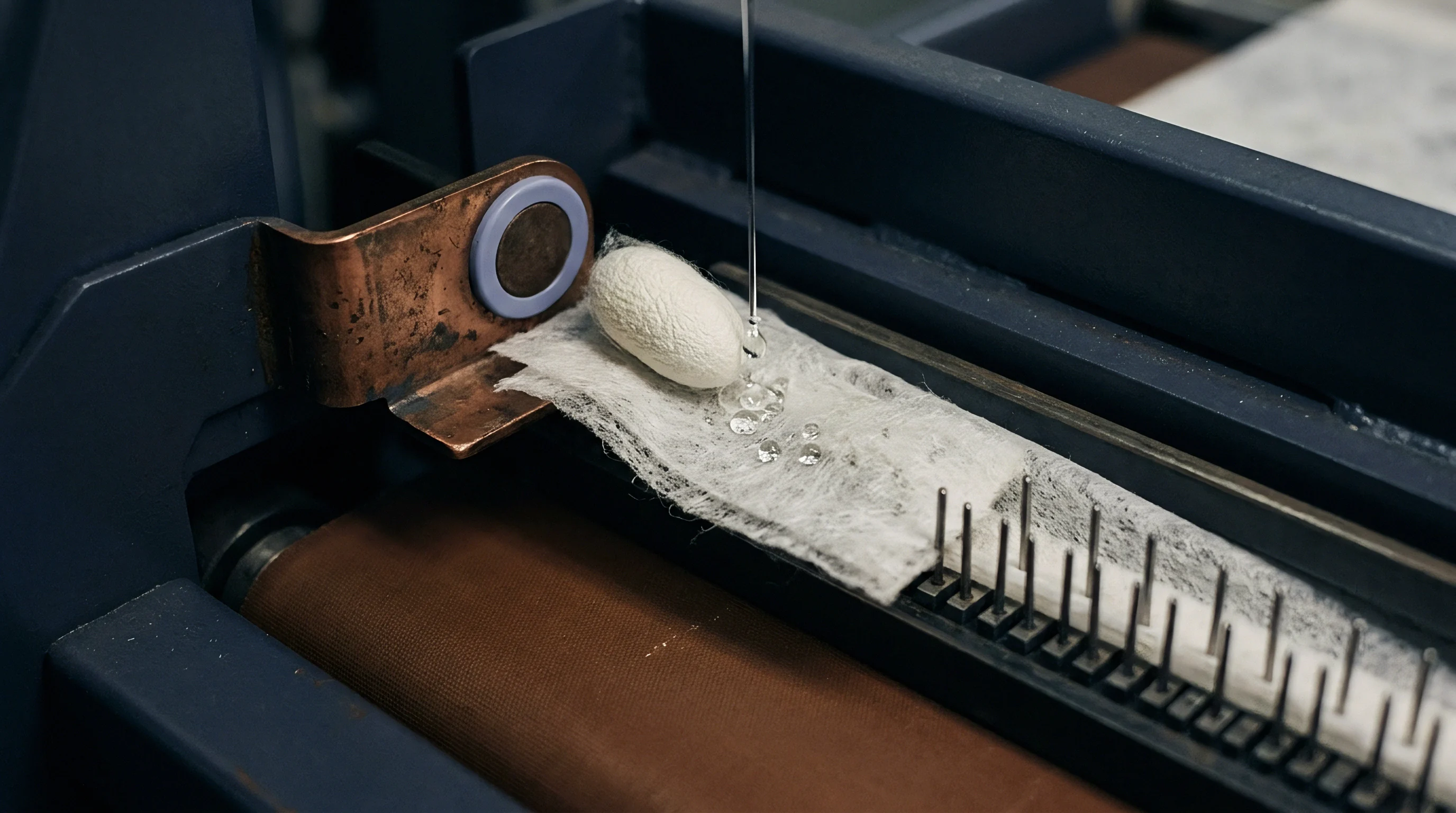
Recycled yarns feature altered molecular weight distributions that accelerate dissolution in standard solvent concentrations. Post-consumer cotton suffers cellulolytic chain scission during tearing and bleaching, dropping its average degree of polymerization from 2,500 down to 800. When exposed to zinc chloride or dilute acids, degraded cotton dissolves far faster than virgin fibre, pushing the baseline d-factor from 1.02 to over 1.06.
Recycled mechanically processed wool shows similar vulnerability in alkaline hypochlorite solutions, losing non-keratinous cortical cells that standard correction multipliers fail to account for properly.
Worked Mass Balance for Cellulosic Mixtures
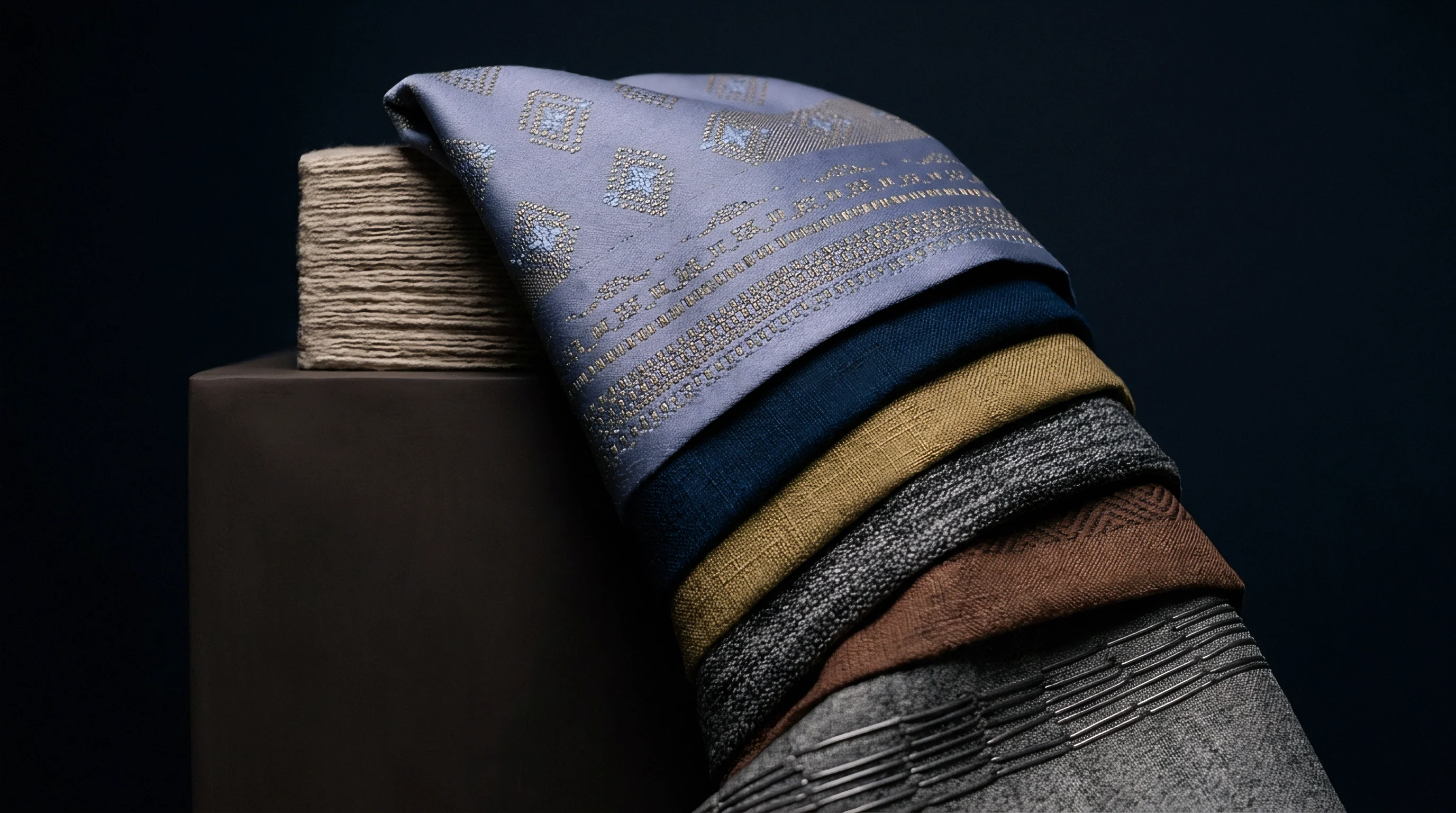
Consider a ten-tonne commercial yarn consignment ordered at 60 percent combed cotton and 40 percent polyester by commercial weight. A technician cuts five analytical specimens from three random cones, obtaining a combined clean dry specimen mass of exactly 2.0000 grams after Soxhlet extraction. Digestion is performed in an Erlenmeyer flask with seventy-five percent sulphuric acid at fifty degrees Celsius for sixty minutes to dissolve the cotton.
The clean, washed, and dried polyester residue inside the sintered crucible measures 0.8120 grams.
The standard d-factor for polyester in concentrated sulphuric acid is 1.00, as aromatic terephthalate chains resist dissolution under controlled temperatures. With the dry mass of polyester at 0.8120 grams, the dry mass of cotton calculated by subtraction is 1.1880 grams. Converting these oven-dry weights to commercial trade weights requires applying statutory commercial regains: 8.50 percent for cotton and 1.50 percent for polyester.
| Component Phase | Dry Mass (g) | d-Factor | Adjusted Dry (g) | Commercial Regain (%) | Commercial Mass (g) | Final Share (%) |
|---|---|---|---|---|---|---|
| Polyester Residue | 0.8120 | 1.00 | 0.8120 | 1.50 | 0.8242 | 38.98 |
| Dissolved Cotton | 1.1880 | 1.00 | 1.1880 | 8.50 | 1.2890 | 61.02 |
| Total Specimen | 2.0000 | N/A | 2.0000 | N/A | 2.1132 | 100.00 |
| Test data calculated per ISO 1833-11 using analytical balance precision 0.0001 g and standard commercial moisture allowances. | ||||||
The analytical calculation reveals a commercial yarn composition of 61.02 percent cotton and 38.98 percent polyester. Although the bone-dry mass returned 59.40 percent cotton, the statutory regain differential of seven percentage points lifts the commercial cotton proportion past the sixty percent mark. When contracts enforce a strict plus-or-minus two percent composition tolerance, this regain adjustment keeps the shipment compliant.
Whenever chemical extraction dissolves a minor fraction of the secondary fibre, the clean residue weighs less than the unattacked core.


Classification
Customs authorities determine import tariffs based on the predominant component by weight under the General Rules of Interpretation. Under the Harmonized Tariff Schedule, mixed textile shipments face steep tariff shifts depending on which fibre crosses the fifty percent mark. A woven cotton-polyester fabric enters under Chapter 52 if cotton predominates by weight, or under Chapter 55 if polyester makes up the chief mass.
A half-percent deviation in the laboratory can move an entire shipping container into a different tariff schedule, shifting tax liabilities by thousands of dollars.
Border inspection laboratories draw customs enforcement samples from arriving containers, subjecting swatches to chemical dissolution to audit declared invoices. When an importer declares a 52 percent cotton and 48 percent polyester composition, but customs lab tests find a dry residue showing a 49.6 percent cotton commercial share, customs officers reclassify the shipment under synthetic headings, assessing higher duties and misdeclaration penalties.
A half-percent analytical shift in chief weight alters the customs heading and the payable duty rate across global borders.
Commercial Risk at Customs Borders
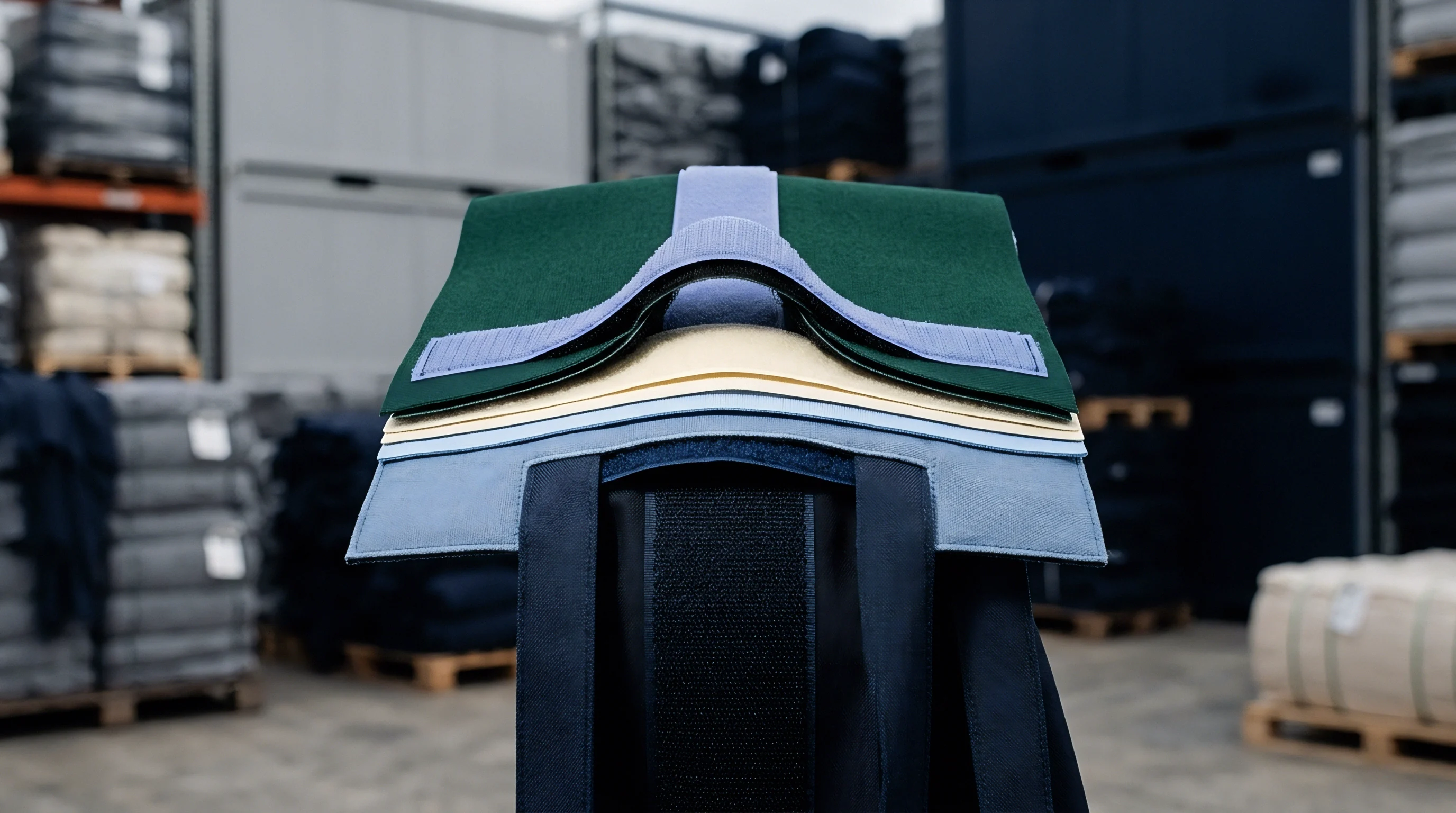
Trading partners run into commercial disputes when laboratories rely on different testing standards. European customs facilities use ISO 1833 with specific commercial moisture allowances, whereas United States border testing uses ASTM D629 or AATCC 20A, which apply slightly different moisture regain figures and pre-treatment solvents. Furthermore, commercial contracts often state nominal yarn counts and blend ratios without clarifying whether the numbers represent target spinning-room blend percentages or analytical commercial weights verified by solvent extraction.
Spinning mills combine raw cotton bales and polyester tow by bale weight, ignoring moisture differences between humidified raw cotton and dry synthetic bales. This oversight yields yarns that meet target proportions in the blowroom but fall outside technical specifications on an analytical balance.
| Declared Composition | Extracted Analysis | Harmonized Tariff Heading | Classification Basis | Applied Duty Rate | Commercial Exposure |
|---|---|---|---|---|---|
| 60% Cotton / 40% Polyester | 61.0% Cotton / 39.0% Poly | 5208.52 (Cotton Predominant) | Chief Weight Natural | 7.5% Ad Valorem | Cleared as Declared |
| 51% Cotton / 49% Polyester | 49.2% Cotton / 50.8% Poly | 5513.11 (Synthetic Predominant) | Chief Weight Man-Made | 14.9% Ad Valorem | Duty Surcharge + Penalty |
| 55% Wool / 45% Polyamide | 54.1% Wool / 45.9% Poly | 5112.11 (Wool Predominant) | Chief Weight Animal Hair | 8.0% Ad Valorem | Cleared as Declared |
| 50% Wool / 50% Acrylic | 48.5% Wool / 51.5% Acrylic | 5515.13 (Man-Made Staple) | Chief Weight Synthetic | 16.0% Ad Valorem | Classification Dispute |
| 70% Viscose / 30% Linen | 68.2% Viscose / 31.8% Linen | 5408.22 (Artificial Filament) | Chief Weight Cellulosic | 6.5% Ad Valorem | Audit Risk on Re-export |
Importers still face uncertainty over whether customs authorities will accept solvent dissolution mass balances when recycled polymer filaments contain unquantified post-consumer degradation.