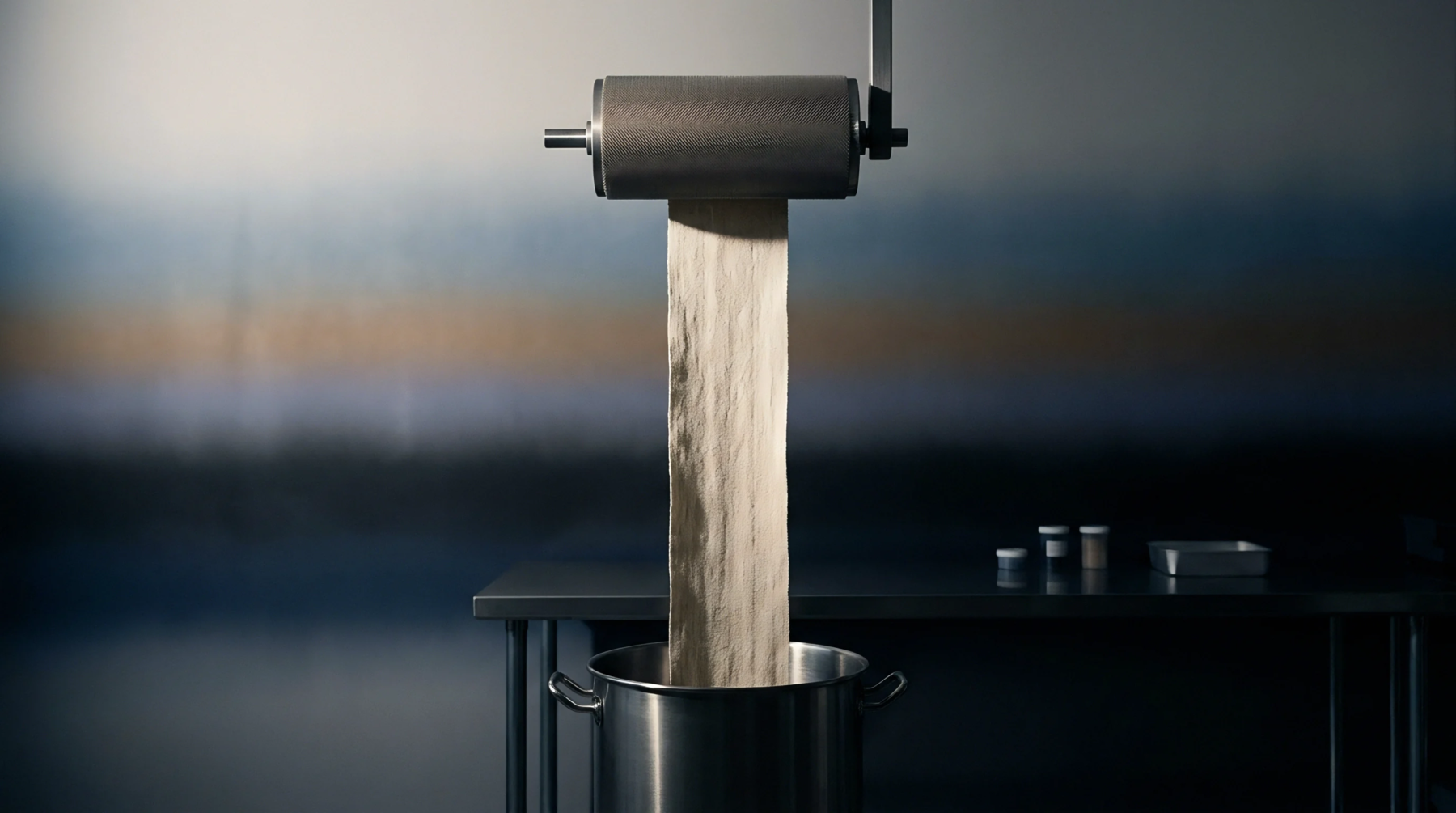
Chemical Measure
Volumetric ratio represents the quantity of active dye, auxiliary chemical, or finishing agent present per unit volume of treatment liquor. Precise bath concentration determines the physical quantity of treatment chemicals available to react with the moving fabric. Proper measurement ensures that the target chemicals are evenly distributed throughout the processing bath.
Process Control
Monitoring the liquor composition during continuous wet processing prevents shading variations along the length of a textile lot. The bath concentration of finishing resins must be kept stable to avoid variations in the final fabric weight and hand feel. Automated titration systems and spectrophotometric sensors track these values in real time to trigger automatic replenishment from supply tanks.
When these replenishment cycles fail, the resulting fabric exhibits lighter or heavier chemical applications.
Operational Constraint
Liquor ratio changes during the processing cycle alter the chemical behavior of the bath. When bath concentration rises due to evaporation, it accelerates chemical reactions and can cause spotty distribution on the fabric surface. Keeping the temperature stable preserves the intended chemical densities.
Finishing Effect
Ultimate fabric performance relies on uniform chemical uptake across the entire width of the piece. Incorrect bath concentration during the pad-dry-cure process can result in poor crease recovery or reduced flame retardancy. Mill inspections verify these effects by evaluating physical test samples taken from both ends of the finished roll.