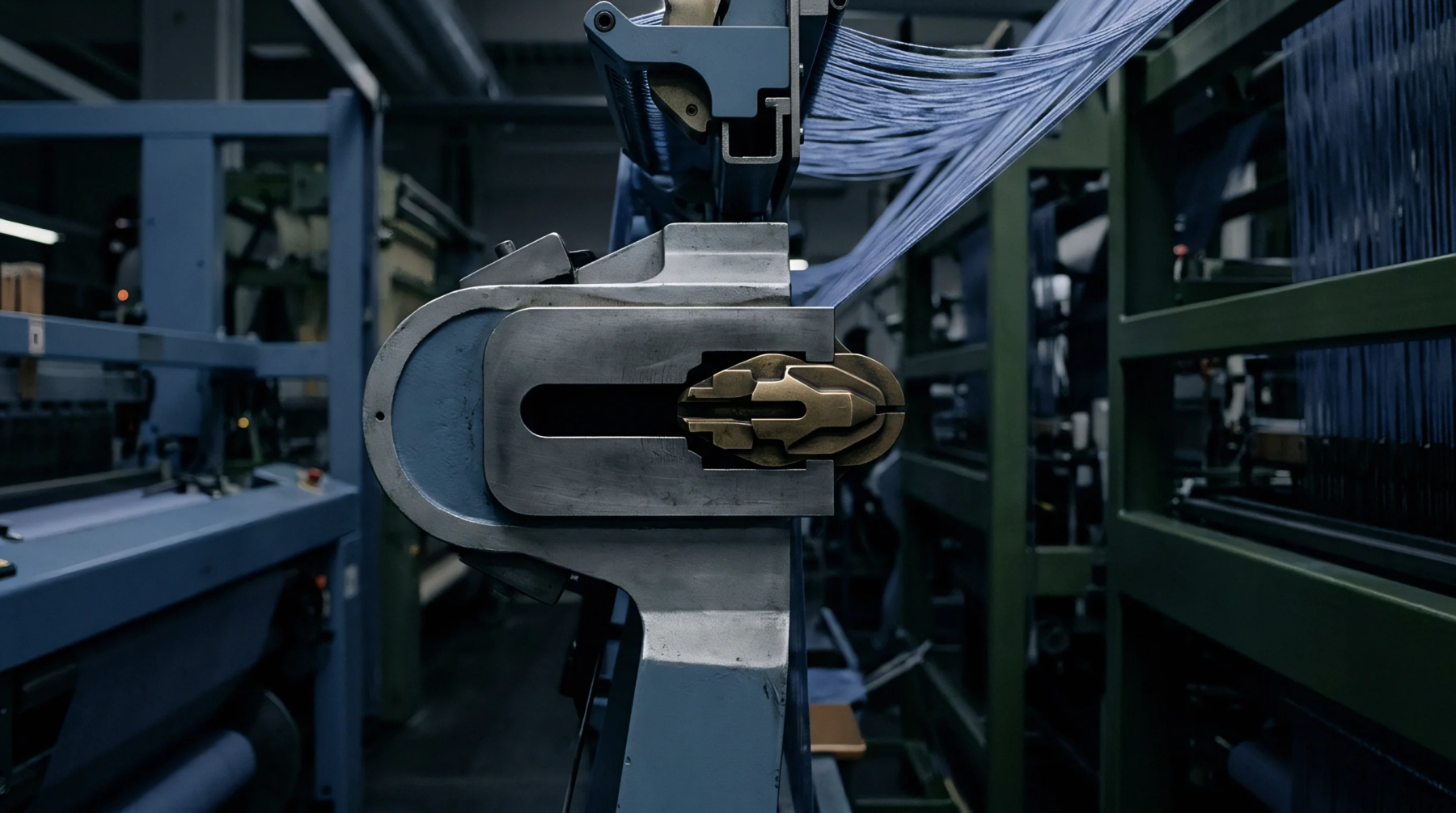
Needle Distance
Dimensional clearance governs how knitting machinery spaces adjacent loops across a cylinder, and machine gauge establishes the numeric denominator for linear needle density within circular frames. Mill operators translate this integer into linear resolutions per inch, which determines yarn weight capacity and subsequent fabric drape before any greige goods reach dyeing ranges. Finer counts demand higher needle counts per circumferential inch, restricting yarn thickness while increasing structural stability in lightweight jersey production.
Heavy woollens require coarser configurations to accommodate bulky spun yarns without jamming latch mechanisms during high speed operation. Fabric density limits emerge when yarn diameter exceeds inter needle space, forcing loop distortion and irregular surface appearance across finished knitted goods. Commercial testing laboratories verify these settings during pre production audits by counting wales per unit length on relaxed fabric samples.
Cylinder Diameter
Circumferential measurement dictates total active needles mounted on a circular knitting bed, and machine gauge multiplies this perimeter count to determine maximum stitch capacity per revolution. Production planners match cylinder sizes to target garment widths, eliminating side seams in tubular underwear and reducing cutting room waste prior to assembly. Operating tension distributes unevenly across oversized beds, requiring precise yarn feeder synchronization to prevent yarn breakage during high speed looping cycles.
Mechanical wear alters cylinder slot tolerances over decades of continuous mill deployment, demanding optical inspection checks before running high stretch elastomeric yarns. Technical knitters adjust take down pull forces continuously to compensate for dimensional variations caused by ambient humidity changes inside the factory floor.
Stitch Density
Loop formation mechanics rely on sinker depth adjustments working in tandem with machine gauge limits to control loop length and aerial mass per square metre. Fabric shrinkage rates correlate directly with course and wale counts established during knitting, dictating subsequent finishing parameters inside the tenter frame. Excessively tight settings restrict dye liquor penetration during jet dyeing processes, resulting in uneven shade distribution across heavy fleece constructions.
Laboratory technicians measure burst strength on conditioned swatches to confirm that physical strain distributes evenly across all intersecting yarn axes.
Greige Inspection
Raw fabric evaluation catches broken needle lines and missing sinker marks before wet processing transforms the unwashed tubular knit into finished apparel goods. Quality control inspectors examine illuminated tables for horizontal streaks caused by bent needles or worn dial teeth within the knitting head. Mills reject lots displaying persistent drop stitches because chemical finishing magnifies structural flaws rather than concealing them during heat setting routines.
Final grading establishes commercial value by quantifying surface defects against agreed buyer acceptance limits prior to shipment.