Correlating ASTM and ISO Tensile Strength Standards in Textile Sourcing
Correlating ASTM and ISO tensile strength requires converting across specimen geometry and strain rates, eliminating static multipliers in purchase contracts.

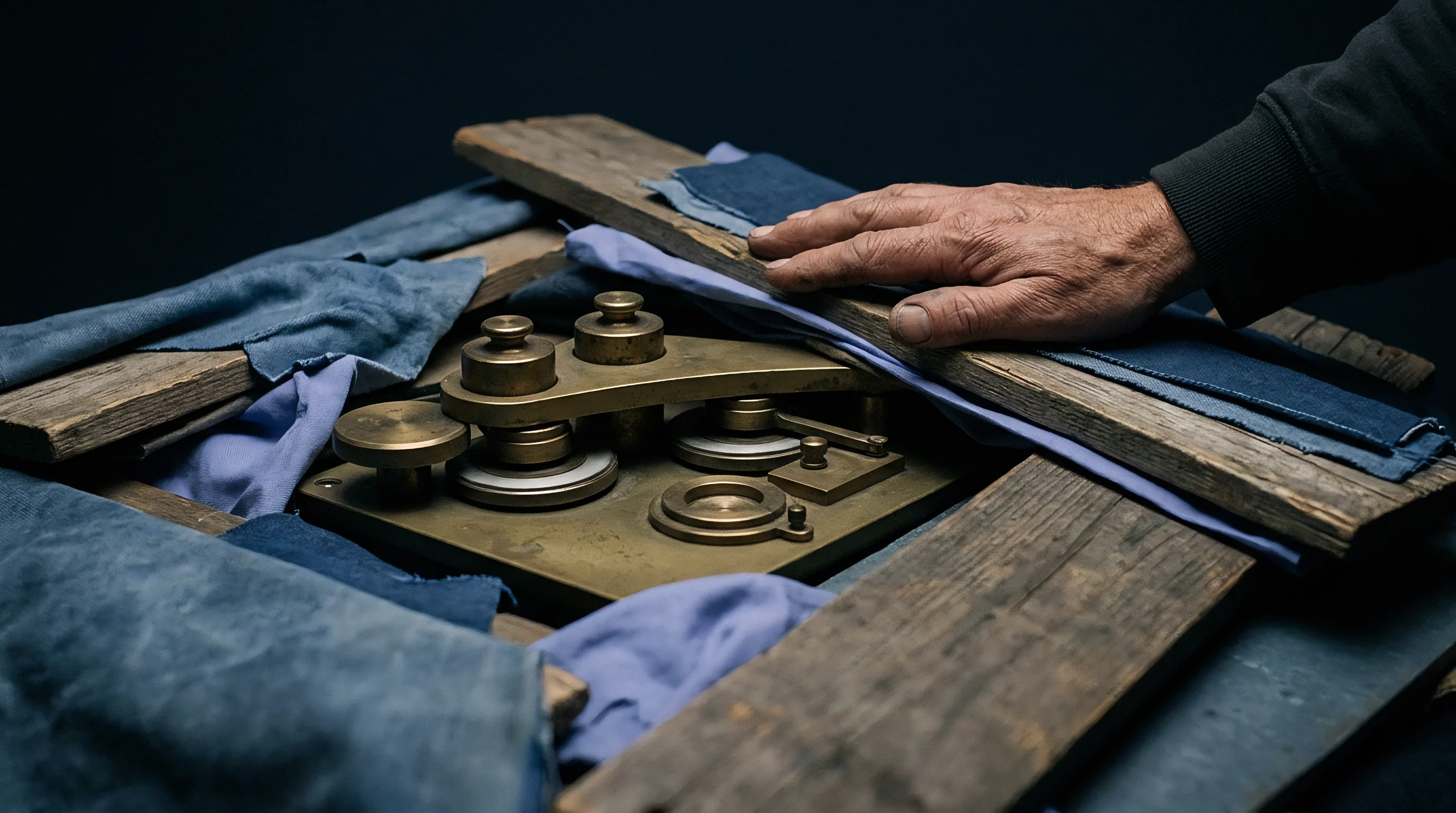
Grip
Tensile testing of industrial textiles exposes sharp discrepancies between American and European testing traditions. A laboratory running ASTM D5034 reports breaking forces that diverge by up to thirty percent from ISO 13934-2 values measured on the identical roll of goods. These discrepancies originate in jaw dimensions, clamping mechanics, and boundary constraint physics rather than production defects.
Mills and buyers routinely face rejected shipments when purchase contracts cross Atlantic regulatory zones without defining the testing apparatus.
Mechanical Divergence between Parallel Standards
ASTM and ISO testing bodies structure tensile evaluation around two distinct specimen geometries: the grab method and the strip method. The grab method clamps only the central zone of a wide strip, whereas the strip method clamps the full width of a ravelled or cut sample. In ASTM D5034, the technician centers a 100-millimeter by 150-millimeter sample between mechanical or pneumatic jaws, with the front jaw faces measuring 25 millimeters by 25 millimeters and the rear faces measuring at least 25 millimeters by 50 millimeters.
ISO 13934-2 adopts a specimen width of 100 millimeters and a gauge length of 100 millimeters, using matching 25-millimeter square faces on both front and rear jaw components.
Specimen stress distribution differs substantially across these configurations. When ASTM D5034 pulls a sample across a 75-millimeter initial jaw separation at 300 millimeters per minute, the unclamped yarns flanking the central 25-millimeter zone deliver lateral reinforcement. Friction transfer reinforces the central load-bearing column.
ISO 13934-2 pulls across a 100-millimeter separation at 50 millimeters per minute, reducing lateral yarn reinforcement and altering peak load measurements.
Unclamped edge yarns contribute tensile reinforcement in grab specimens through mechanical friction rather than direct terminal grip.
Jaw face friction dictates specimen slip. In testing smooth filament synthetic substrates, smooth steel faces permit intra-jaw slippage before yarn rupture occurs. Rubber-faced or wave-form serrated jaws prevent slippage, yet excessive clamping pressure induces premature jaw breaks.
Both standards reject jaw breaks occurring within 5 millimeters of the nip line when the recorded value falls below specification thresholds. Technicians balance jaw clamping pressure against surface abrasion to secure valid ruptures across the central gauge zone.
| Standard Designation | Method Geometry | Specimen Width (mm) | Gauge Separation (mm) | Crosshead Speed (mm/min) | Standard Pre-Tension |
|---|---|---|---|---|---|
| ASTM D5034 | Grab | 100 | 75 | 300 | None (Hand Tension) |
| ISO 13934-2 | Grab | 100 | 100 | 50 | Areal Weight Proportion |
| ASTM D5035 | Ravelled Strip | 50 (or 25) | 75 | 300 | Nominal Manual Slack |
| ISO 13934-1 | Ravelled Strip | 50 | 200 | 100 | Specified Load Class |
Jaw Configuration and Lateral Support
Pneumatic clamping systems maintain constant pressure during cross-sectional necking of the specimen. Hydraulic and manual screw clamps lose effective force as yarns compress, producing continuous micro-slippage that artificially flattens the recorded force-extension curve. ISO 13934-1 and ISO 13934-2 dictate specified initial pre-tensions based on mass per unit area.
Substrates below 200 grams per square meter receive 2 newtons of tension, goods between 200 and 500 grams receive 5 newtons, and materials exceeding 500 grams receive 10 newtons. ASTM testing protocols permit mounting under manual tension unless the buyer explicitly specifies a dead-weight pre-load.
Clamping distortions distort test outcomes across three persistent modes:
- Pinch-line rupture occurs when acute jaw edges crush outer yarns, causing premature material failure along the clamp periphery.
- Longitudinal slippage develops when insufficient clamping force lets yarns draw through the jaw faces during initial load take-up.
- Specimen skew arises when mounting angles deviate from the axial line, concentrating initial stress on single selvedge yarns.
When disputed test certificates arrive from overseas partners, the mill representative routinely explains that their bench technicians strictly adhered to the domestic grab method specified on the internal routing card.
Velocity
Crosshead displacement rates determine the strain rate experienced by individual polymeric chains. Constant Rate of Extension instruments operate under fixed motor speeds, yet the actual elongation rate of the specimen depends on initial gauge length. ASTM methods specify a rapid 300 millimeters per minute crosshead speed across a short 75-millimeter gauge separation.
This setting generates a nominal strain rate of 400 percent per minute. ISO methods mandate lower speeds and longer gauge spans, resulting in substantially slower molecular deformation.

Can Velocity Discrepancies Invert Batch Compliance?
Higher testing speeds produce elevated breaking loads in polymeric textiles. Synthetic yarns containing nylon or polyester exhibit pronounced viscoelastic behavior. Rapid deformation grants crystalline regions less opportunity to reorient and untangle.
High-speed pulling forces polymer chains to bear tensile stress directly along primary chemical bonds, yielding higher recorded peak breaking forces. Slower testing allows molecular relaxation, permitting inter-chain slippage that records lower ultimate rupture values.
Natural cellulosic fibers like cotton and flax behave differently. Moisture absorption creates hydrogen bonding networks that deform along distinct physical paths. Fast extension stiffens synthetic filaments, whereas slow extension allows cotton fibril consolidation under load.
A cotton twill tested at ASTM speeds yields peak forces approximately eight to twelve percent above its ISO equivalent. In continuous filament polyester yarn, that divergence expands beyond fifteen percent under identical ambient temperature and humidity.
A continuous filament polyester canvas tested at 300 millimeters per minute across a 75-millimeter span records seventeen percent higher breaking force than the identical sample pulled at 100 millimeters per minute across a 200-millimeter span.
Temperature and moisture conditioning further amplify speed-dependent testing variance. ISO 139 dictates an ambient testing environment of 20.0 degrees Celsius with 65.0 percent relative humidity, while ASTM D1776 specifies 21.0 degrees Celsius with 65.0 percent relative humidity. Sourcing teams overlook these subtle thermal tolerances.
Saturated viscose materials tested dry exhibit acute sensitivity to strain velocity.
Creep and Viscoelastic Resistance
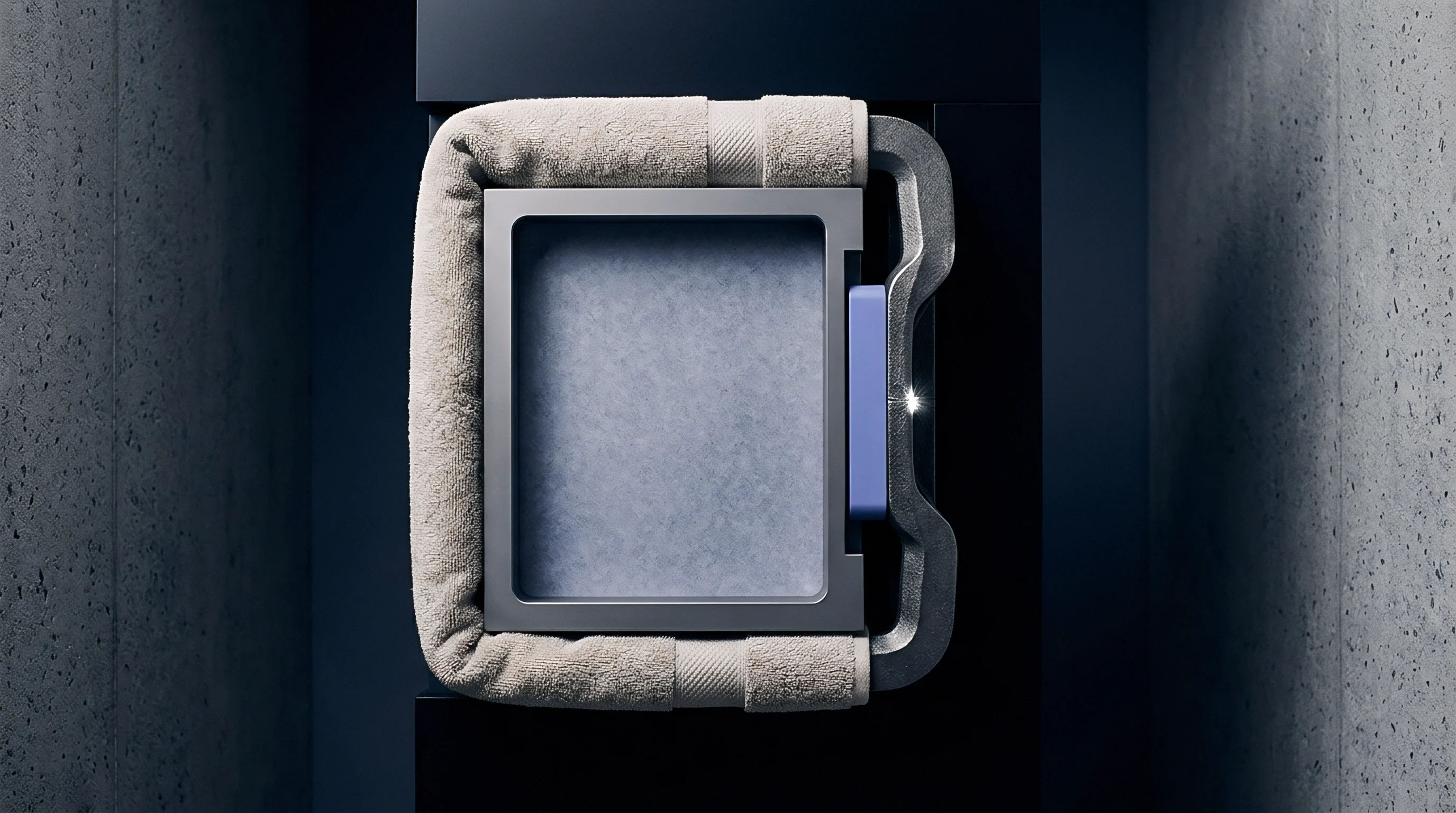
Tensile testing procedures enforce a sequential mechanical progression during machine operation:
- Pre-tension application eliminates structural slack and straightens crimp without elongating structural fibers.
- Crosshead translation engages the yarn interlacing system, shifting loads from macro-weave crimp into axial yarn tension.
- Viscoelastic deformation initiates inter-molecular slippage within the amorphous zones of individual filaments.
- Terminal yield produces catastrophic yarn breakage across the unconstrained gauge span.
Short specimens register elevated peaks. The weak-link theory in material mechanics explains why a 75-millimeter gauge length yields higher breaking forces than a 200-millimeter gauge length. As specimen length increases, the statistical probability of encountering an internal yarn flaw, slub, or weak point within the active tension zone rises correspondingly.
Tensile data from ISO 13934-1 reflects the weakest point across 200 millimeters of yarn, while ASTM D5035 reflects the weakest point across only 75 millimeters.
The unresolved question remains whether high-speed testing accurately reflects real-world loading conditions in consumer apparel or simply provides accelerated cycle times for high-volume commercial testing houses.
Conversion
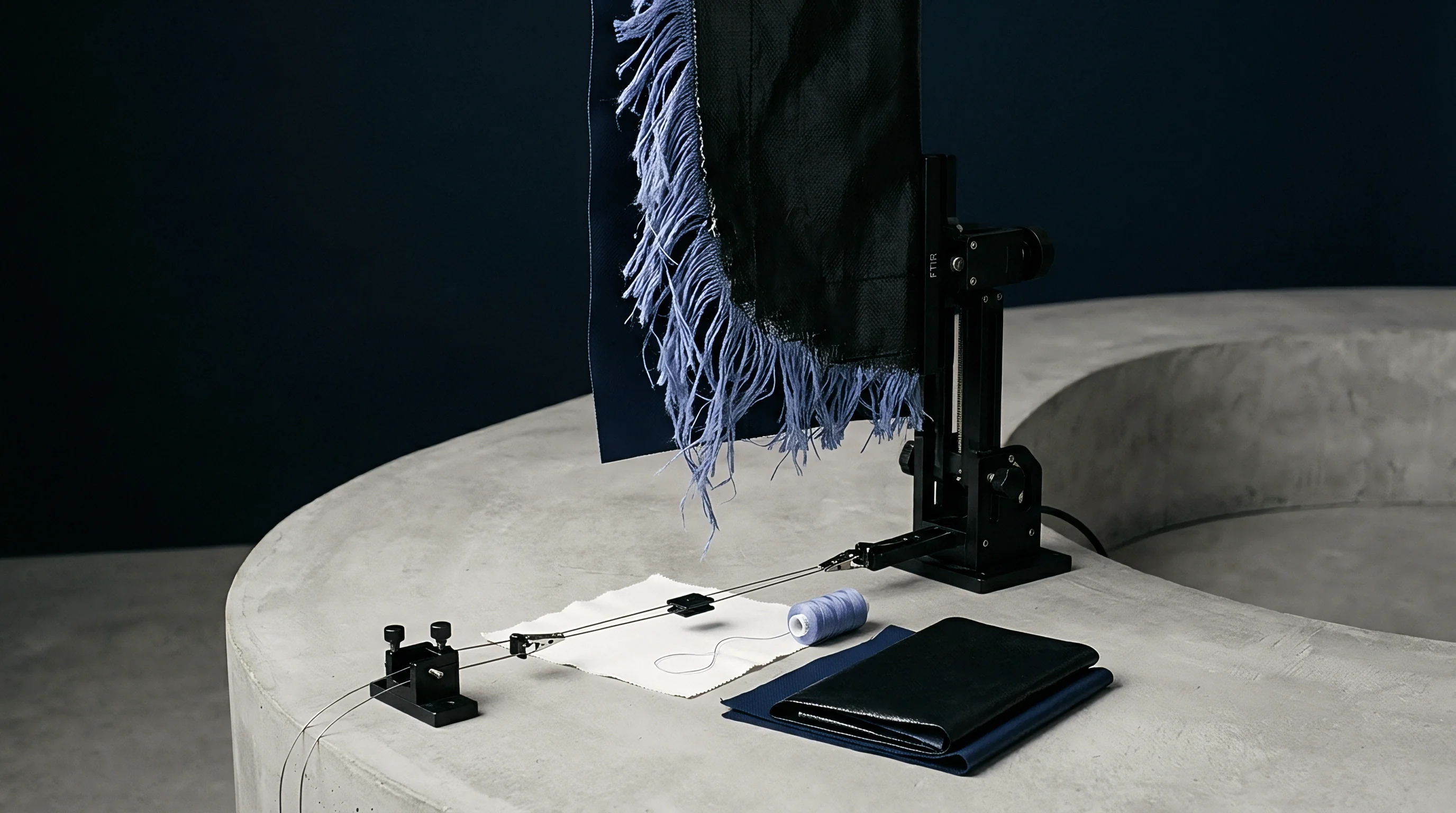
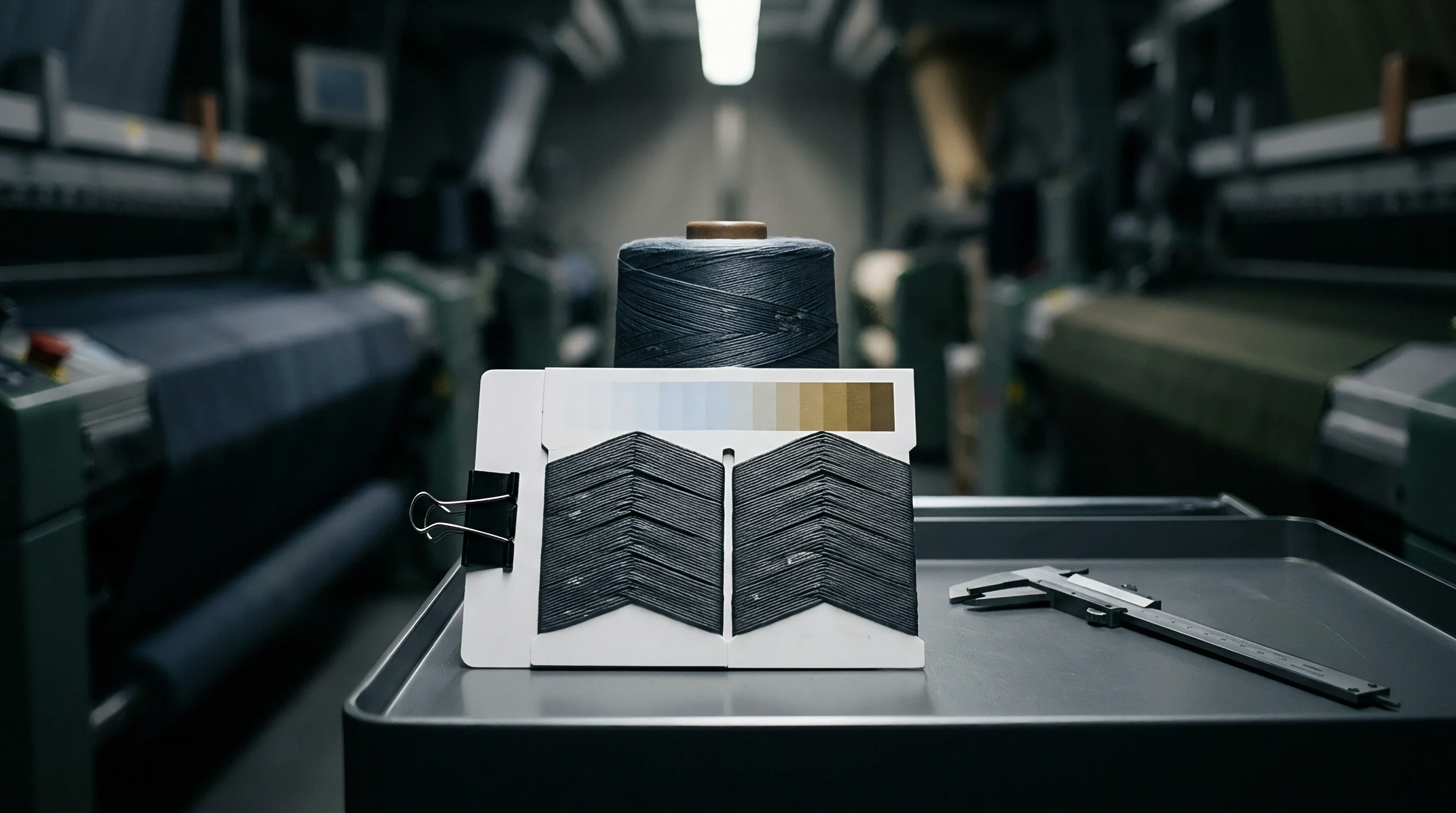
Direct mathematical formulas cannot reliably bridge ASTM and ISO tensile test results. Sourcing managers frequently attempt to apply a static multiplier, such as multiplying ISO 13934-1 strip results by 1.15 to calculate equivalent ASTM D5034 grab values. This mathematical substitution produces substantial commercial errors.
Grab values reflect both direct yarn strength and structural support from flanking yarns, creating a non-linear relationship governed by yarn density, crimp balance, and weave geometry.

Do Universal Mathematical Conversion Ratios Exist?
Cross-standard correlation factors fluctuate across individual textile constructions. A plain weave poplin exhibits high yarn interaction and lateral friction, generating an elevated grab-to-strip force ratio. A loose satin weave exhibits minimal yarn interlock, yielding an ASTM grab force only marginally higher than its ISO strip force.
Every batch responds differently. Weave architecture controls the transfer of transverse friction during tensile stress.
Woven textiles with unbalanced crimp distributions exhibit irregular lateral load sharing that defeats static numerical conversion multipliers.
Twist multipliers alter load distribution. Yarns with elevated twist factors maintain structural coherence under lateral friction, generating higher relative grab values under ASTM D5034. Low-twist yarns flatten during clamping, inducing early clamp-edge shear.
Empirical testing demonstrates that correlation ratios must be established individually for specific material constructions rather than applied across diverse product portfolios.
| Textile Construction | Areal Weight (g/m²) | ASTM D5034 Grab (N) | ISO 13934-2 Grab (N) | ISO 13934-1 Strip (N) | Observed ASTM / ISO Strip Ratio |
|---|---|---|---|---|---|
| Cotton Plain Weave Poplin | 120 | 410 | 375 | 295 | 1.39 |
| Cotton 3/1 Twill Chino | 245 | 860 | 780 | 610 | 1.41 |
| Polyester High-Tenacity Oxford | 310 | 1850 | 1610 | 1320 | 1.40 |
| Nylon 6,6 Ripstop Substrate | 70 | 520 | 460 | 380 | 1.37 |
| Wool Worsted Suiting Goods | 190 | 340 | 305 | 230 | 1.48 |
| Data represents mean breaking forces across warp directions for 10 conditioned lots under ISO 139 atmospheric controls. | |||||

Empirical Variance across Fiber Compositions
Yarn count uniformity influences how closely parallel test standards track one another. Combed ring-spun cotton yarns show consistent force-extension curves with minimal scatter between ASTM and ISO strip tests. Carded open-end yarns display broad statistical scatter due to uneven mass distribution along the yarn axis.
In open-end structures, the longer gauge length of ISO 13934-1 exposes low-twist thin spots, reducing the recorded breaking strength below the values anticipated from ASTM D5035 trials.
Take a commercial scenario involving a 10,000-meter lot of 245-gram cotton twill. The purchase specification demands a minimum warp tensile strength of 800 newtons under ASTM D5034. The overseas supplier submits a test report from an accredited domestic laboratory certifying an ISO 13934-1 strip value of 590 newtons.
Assuming a common 1.35 grab-to-strip multiplier, the buyer calculates an equivalent grab strength of 796.5 newtons, rejecting the shipment for falling below contractual limits. When physical swatches undergo actual ASTM D5034 testing, the true grab value measures 860 newtons, passing contractual thresholds with ease. The uncalibrated conversion formula created a false rejection of compliant material.
Calibrating Specimen Dimensions across Strip Trials
Specimen width adjustments alter edge-yarn behavior. ASTM D5035 allows 25-millimeter or 50-millimeter strip widths, whereas ISO 13934-1 standardizes strictly on a 50-millimeter ravelled width. In a 25-millimeter strip, edge fraying degrades a larger percentage of the load-bearing cross section than in a 50-millimeter strip.
A buyer cannot double the breaking load of a 25-millimeter sample to predict the strength of a 50-millimeter sample. Edge effects diminish proportionally as specimen width expands.
Direct mathematical conversion fails repeatedly. Empirical calibration graphs built from specific mill production lots provide the only reliable estimate when converting between Atlantic tensile metrics.

Specification
Technical data sheets must explicitly define test methods down to the sub-clause, jaw surface, and crosshead rate. Stating that a material exhibits a tensile strength of 500 newtons conveys zero commercial certainty. Without naming the underlying standard, that 500-newton claim could indicate an ASTM D5034 grab pull, an ISO 13934-1 50-millimeter strip rupture, or a modified ASTM D5035 cut-strip pull.
Ambiguous strength statements invite regulatory rejections and vendor disputes.

Purchase Contracts and Technical Data Sheets
Sourcing agreements establish compliance criteria through clear technical schedules. Legal and procurement teams avoid disputes by stating the exact target standard, specimen preparation method, gauge length, pull velocity, and acceptable jaw break thresholds. A contract that mandates ASTM D5034 must also specify whether rubber-coated or diamond-knurled jaw faces govern testing for high-slip synthetic fabrics.
| Contract Clause Parameter | Incomplete Specification | Defensible Technical Clause |
|---|---|---|
| Method Citation | Tensile > 600 N | ISO 13934-1:2013 Ravelled Strip Method |
| Specimen Dimensions | Standard Strip | 50 mm width ± 0.5 mm, 200 mm gauge length |
| Testing Speed | Standard Rate | 100 mm/min Constant Rate of Extension |
| Atmospheric Control | Ambient Lab Temp | ISO 139 Conditioning, 20°C ± 2°C, 65% ± 4% RH |
| Pre-Tension Metric | Slack Mounted | 5 N positive pre-load applied via load cell |
Accredited laboratories demand unambiguous text. A purchase contract contains enforceable technical provisions when structured with defined procedural parameters:
- Target test standard references the current year revision of ASTM D5034, ASTM D5035, ISO 13934-1, or ISO 13934-2.
- Specimen preparation protocol clarifies whether samples undergo unravelling from an oversized cut or direct mechanical slicing.
- Directional thresholds assign separate minimum breaking forces to warp and weft yarn orientations.
- Arbitration lab designation names a pre-approved ISO/IEC 17025 accredited facility to adjudicate cross-border testing discrepancies.
Laboratory Accreditation and Method Scope
An ISO/IEC 17025 accreditation certificate does not cover every textile test. Accreditation bodies grant competence for specific test standards listed on the laboratory scope annex. A sourcing manager must review the laboratory schedule of accreditation to confirm whether competence covers ASTM D5034, ISO 13934-1, or both.
Third-party testing houses frequently possess accreditation for ISO methods while running ASTM tests outside their accredited management scope, invalidating brand compliance dossiers.
A testing certificate issued by an accredited laboratory remains legally invalid when the specific tensile test standard sits outside the facility published scope annex.
Brand compliance audits identify unaccredited test results during technical reviews. Retesting creates immediate shipping delays and financial liabilities. Purchase order terms that explicitly state, “All compliance certificates must reference ISO 13934-1 under current ISO/IEC 17025 scope documentation,” protect buyers from unaccredited laboratory subcontracts.

Recourse
Cross-border material rejections trigger substantial commercial friction between converters, garment factories, and retail brands. When imported roll goods arrive at a destination port, customs inspection or commercial quality checks may re-test incoming lots using local national standards. If goods contracted under ASTM standards fail domestic ISO testing at destination, customs authorities can refuse clearance for safety-critical textile articles like protective workwear, marine covers, or personal restraint webbing.

Border Inspection and Commercial Rejection
Regulatory detention halts factory sewing lines. Garment manufacturing programs operate under tight production calendars. A delayed container incurred at customs generates demurrage charges, port storage fees, and downstream retail cancelations.
If a container of coated protective canvas fails destination ISO 13934-1 requirements because the original mill certified the material under ASTM D5034 grab testing, the importer bears direct liability for the clearance failure.
Rejection arrives after cut operations. When factories cut goods into apparel components before conducting incoming tensile confirmation, mills routinely refuse material returns. Converters argue that mechanical cutting relieves residual stress and invalidates roll-level mill warranties.
Without pre-shipment correlation data matching ASTM to ISO criteria, the brand absorbs the entire finished goods loss.
Allocation of Testing and Storage Expenses
Retest protocols demand rapid resolution. When tensile results conflict, secondary sampling protocols require pulling specimens from the center of ten randomly selected rolls, avoiding roll ends where finishing chemicals accumulate unevenly. Secondary testing at an independent accredited facility costs between four hundred and eight hundred dollars per construction, not including expedited air freight charges for physical yardage swatches.
Container demurrage mounts daily. Failure to harmonize tensile standards in the initial supply agreement shifts testing fees, storage charges, and manufacturing dead-time directly onto the importer of record.