Calculating Commercial Mass from Oven Dry Mass in Textile Trading
Commercial mass scales anhydrous oven-dry textile mass by adding standardized official moisture and extractable allowances for accurate settlement and customs declarations.

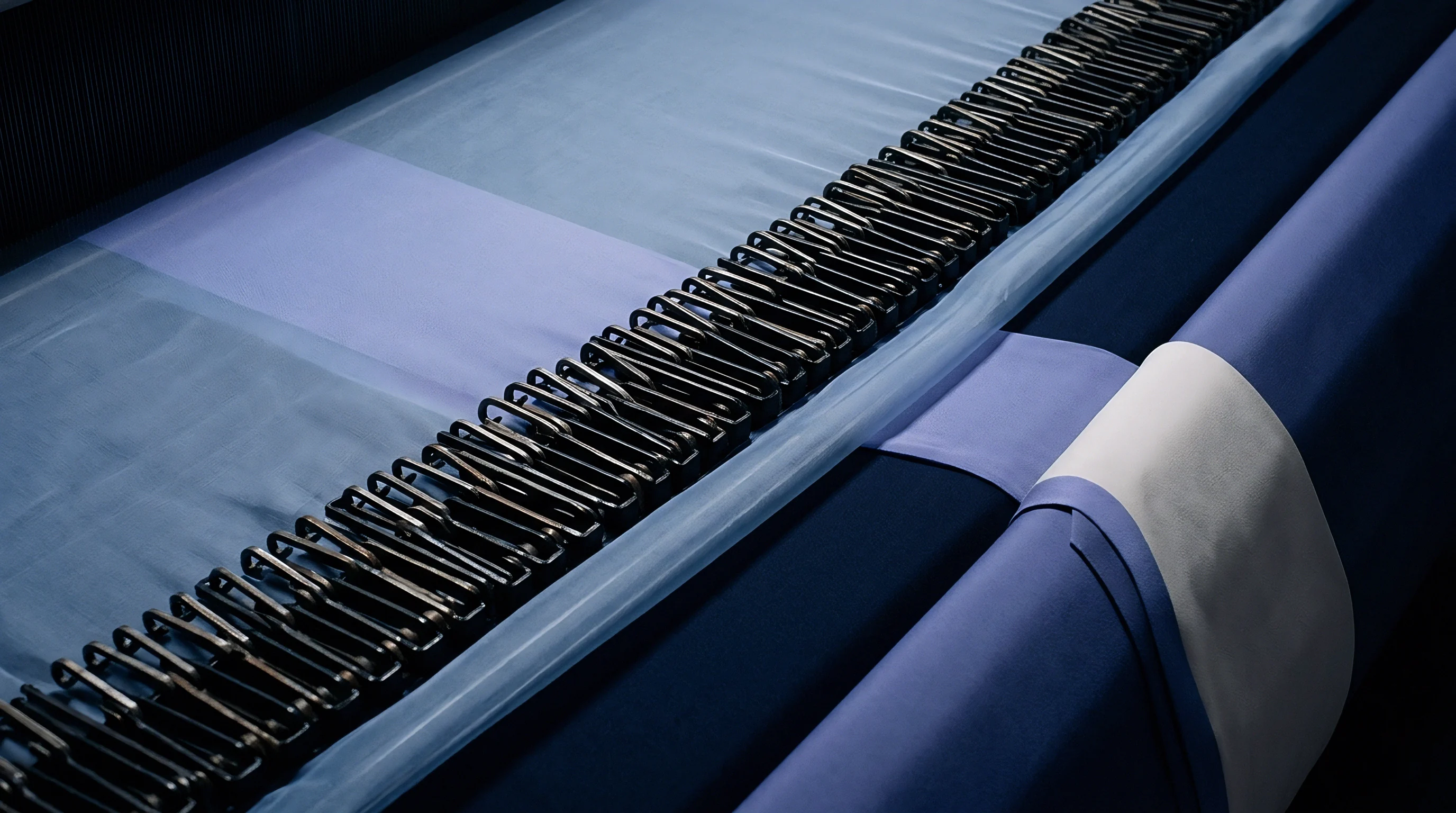
Drying
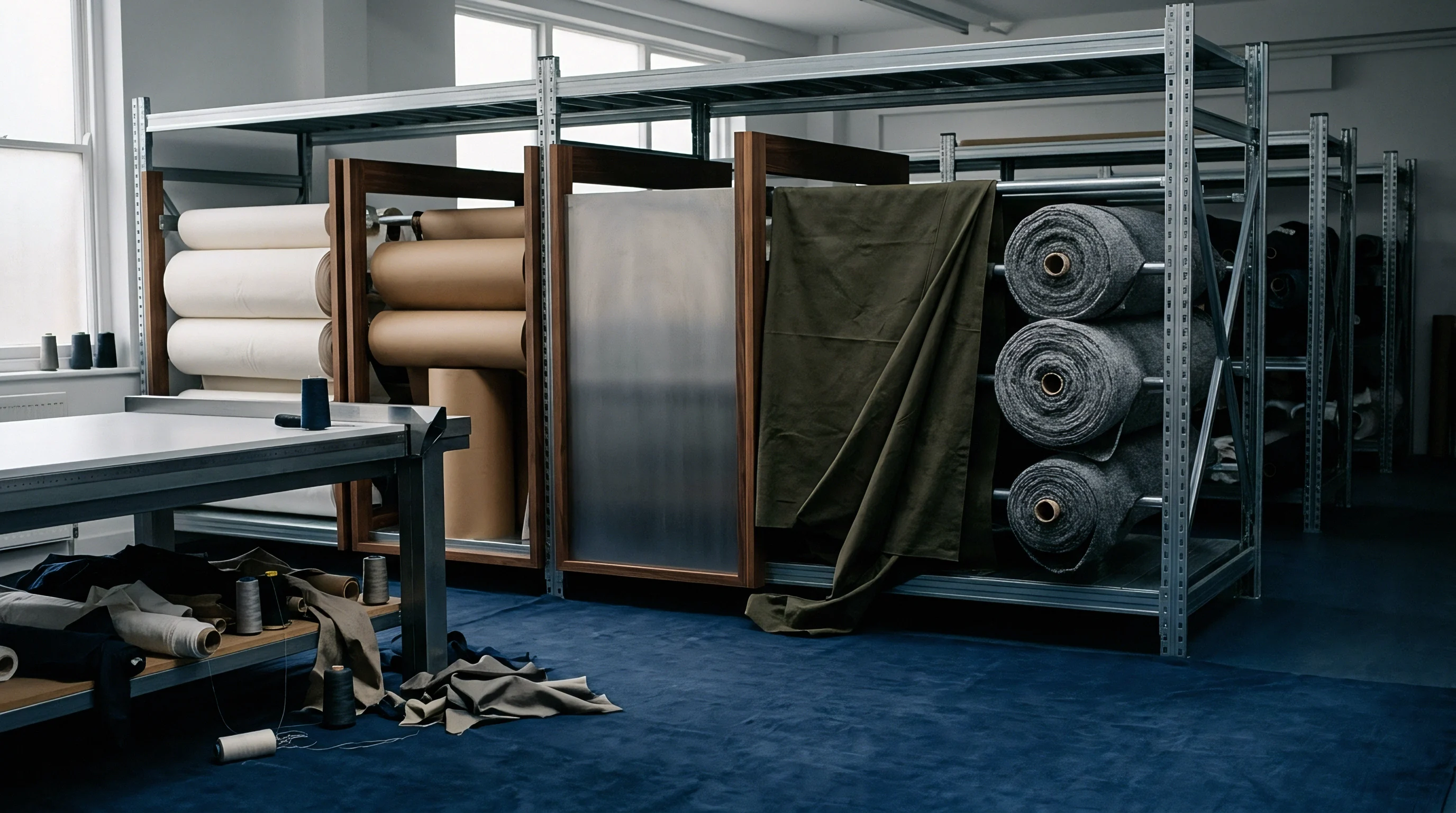
Desiccation Mechanics inside the Ventilated Oven
Gravimetric determination begins with weighing raw specimen containers before heat exposure. Laboratory technicians seal representative raw stock samples into airtight tared vessels directly at the sampling location. This step preserves the original moisture state against ambient laboratory humidity shifts.
The test chamber operates under strict ventilation parameters defined by standard ISO 6741-1. Electrically heated air circulates continuously through the chamber at velocities sufficient to renew the internal atmosphere at least thirty times every hour. The operational temperature holds steady at one hundred and five degrees Celsius, with an allowable tolerance of plus or minus two degrees.
Cotton retains bound cell-wall water. Circulating dry air strips this capillary and hygroscopic moisture systematically from the fibrous matrix.
Specimens rest inside perforated metal baskets suspended directly above the airflow path. The chamber design prevents dead zones where humid air might stagnate around dense packages. Air enters through intake filters, passes across heating elements, sweeps upward through the specimen beds, and discharges through exhaust vents.
Dry mass excludes all liquid weight.
Oven drying drives off unbound water while prolonged exposure to elevated temperatures risks decomposing volatile finishes.

Constant Mass Verification in Analytical Procedures
Successive weighing operations separated by twenty-minute heating intervals reveal the precise endpoint of water expulsion. The technician records the mass without removing specimens from the thermal chamber when using ovens equipped with built-in analytical balances. External weighing balances require rapid transfer to desiccators lined with active silica gel or anhydrous calcium chloride to prevent immediate atmospheric re-absorption.
Constant mass arrives when two consecutive weighings, taken after an intervening drying interval of fifteen minutes for loose fibre or thirty minutes for yarn packages, show a variation of less than 0.05 percent of the specimen mass. The scale records successive weighings.
Calculations take the lowest recorded value as the official oven-dry mass. Erroneous mass readings emerge when technicians cut drying cycles short to save laboratory processing hours.
- Pre-weighing Containers establish the tare value of the drying basket to within one milligram accuracy.
- Specimen Loading distributes loose fibre tufts evenly across the basket volume without mechanical compression.
- Thermal Exposure subjects the loaded basket to continuous one hundred and five degree airflow for an initial two-hour period.
- Interval Measurement tracks mass changes every twenty minutes until two successive readings match within the 0.05 percent threshold.
- Desiccator Cooling safeguards external-balance specimens during the mandatory twenty-minute temperature stabilization phase.

Thermal Degradation Risks for Protein and Cellulosic Filaments
Excessive chamber temperatures above one hundred and ten degrees Celsius scorch delicate keratin chains in fleece materials. Wool fibres release volatile organic compounds and surface sulfur compounds under sustained heat, producing an artificial weight loss mistaken for water vaporization. Synthetic filaments absorb negligible water.
Technicians test scoured wool under reduced thermal conditions of one hundred degrees Celsius when discoloration or sulfur release threatens test repeatability. Cellulosic materials withstand standard heat but yellow if drying extends past four consecutive hours. Heat exposure degrades spin finishes.
Careful laboratories adjust dwell cycles to balance moisture elimination against chemical decomposition.
Lower drying temperatures paired with extended airflow preserve protein fibre integrity during laboratory desiccation.
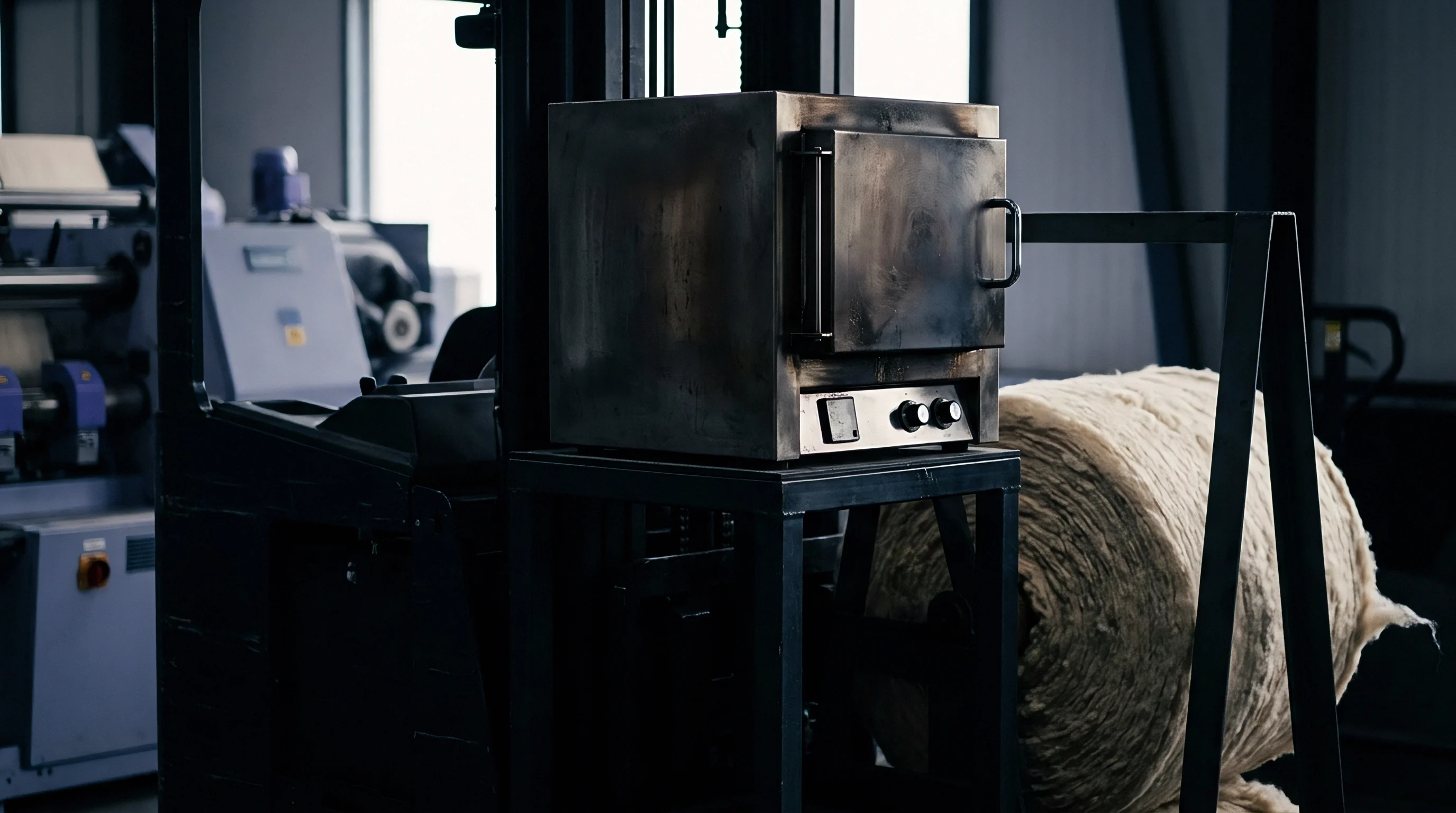
Regain

Commercial Allowances versus Physical Equilibrium Values
Statutory trading conventions assign fixed moisture percentages to commodities to establish uniform transaction baselines across international borders. Commercial regain represents an arbitrary commercial convention rather than the actual ambient water content of the fibre at twenty degrees Celsius and sixty-five percent relative humidity. Physiological equilibrium moisture regain reflects ambient atmospheric conditions, whereas commercial moisture allowance provides a contractual figure for invoice clearance.
Commercial regain alters invoiced tonnage directly. A shipment of raw cotton stored in high-humidity port warehouses may hold nine percent physical moisture, yet international settlement calculations adjust that weight to the standard agreed commercial allowance.
Combed wool tops accept an official commercial moisture regain of 18.25 percent when traded under International Wool Textile Organisation rules.
Fibre polymers exhibit distinct moisture absorption potentials based on their molecular structures. Amorphous regions inside hydrophilic cellulosic chains accept water readily through hydroxyl bonding. Crystalline synthetic polymers reject atmospheric water.
Trading associations establish official allowances to standardize these disparities across international customs ports.
| Fibre Classification | Standard Governing Body | Official Commercial Regain (%) | Natural Equilibrium Regain at Standard Atmosphere (%) |
|---|---|---|---|
| Raw Cotton Yarn | ASTM D1909 / ISO 6741-2 | 8.50 | 7.00 to 8.00 |
| Carded Wool Yarn | IWTO-33 / ISO 6741-2 | 17.00 | 14.00 to 16.00 |
| Combed Wool Tops | IWTO-33 | 18.25 | 15.00 to 17.00 |
| Viscose Rayon Staple | BISFA Rules | 13.00 | 11.50 to 12.50 |
| Nylon 6.6 Continuous Filament | BISFA Rules | 5.75 | 4.00 to 4.50 |
| Polyester Staple Fibre | ISO 6741-2 / BISFA | 1.50 | 0.40 to 0.60 |
| Acrylic Filament | BISFA Rules | 2.00 | 1.50 to 2.00 |
| Pure Mulberry Silk | Customs Commercial Code | 11.00 | 9.50 to 10.50 |
What Discrepancy Arises from Non-Fibrous Material Removal?
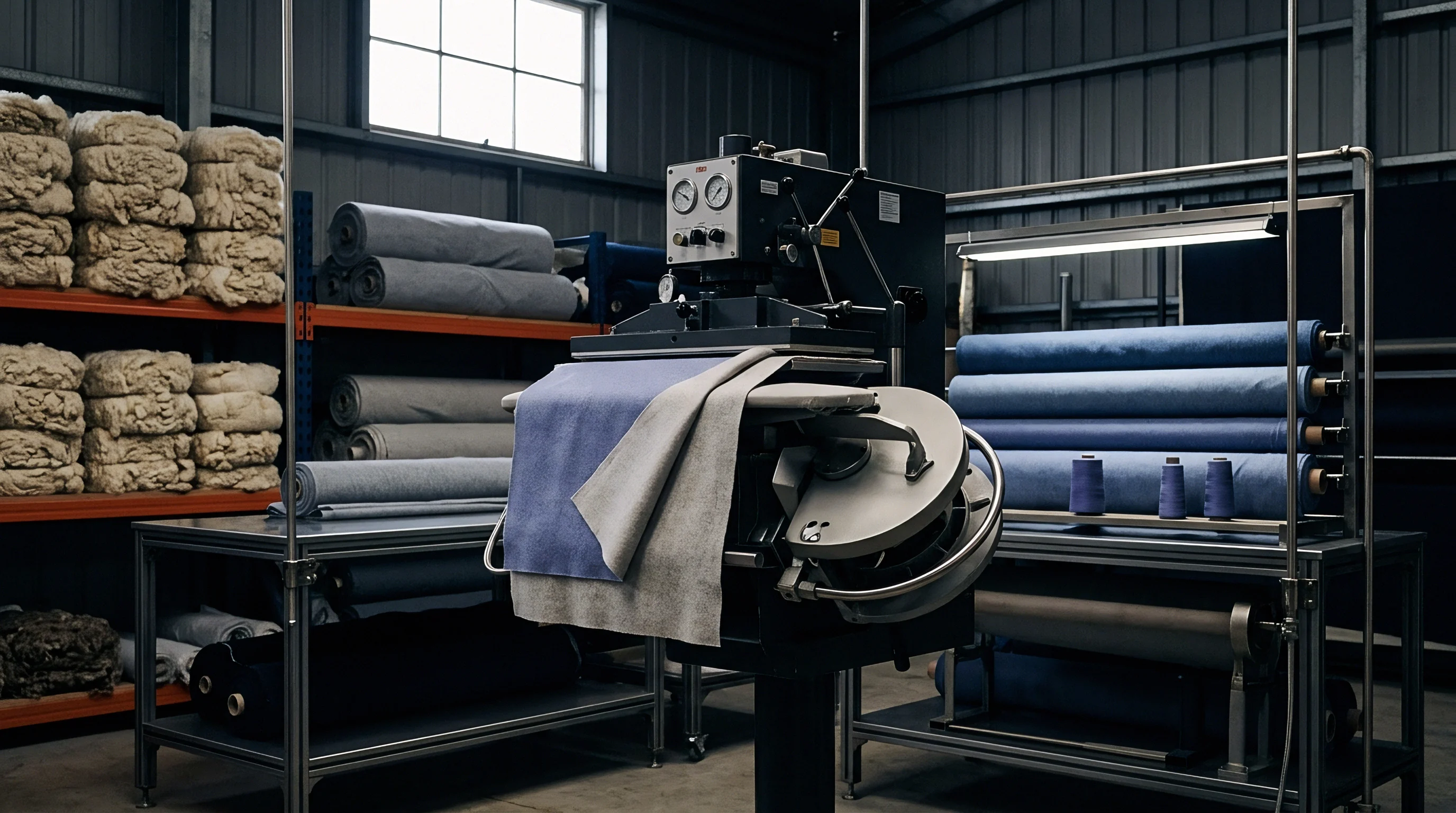
Solvent extraction strips commercial spinning oils, sizing chemicals, and paraffin lubricants from grey yarn samples. Testing laboratories separate commercial moisture calculation into clean oven-dry mass determinations and grease-free mass determinations under ISO 6741-3. Clean wool yield demands grease extraction.
The natural wax on raw cotton and process spin finishes on synthetic yarn contribute to delivered mass without qualifying as clean dry fibre. Contractual agreements specify whether commercial mass calculations incorporate an official allowance for non-fibrous materials alongside moisture allowances. When trading raw combed wool, buyers settle on an anhydrous scoured clean basis where dirt, grease, and vegetable matter disappear entirely from the settlement weight.
Dichloromethane washes extract added processing waxes rapidly without degrading underlying polymers. Petroleum ether serves as an alternative solvent for greasy residues on fleece lots. Technicians dry the extracted specimen back to constant mass to establish the oven-dry scoured mass.
Standard agreements specify non-fibrous allowances ranging between zero and 1.5 percent depending upon yarn processing stages. Official tables fix allowable percentages.
Standard incorporation of BISFA Booklet 2017 rules into synthetic yarn purchase orders binds both parties to specific commercial allowances regardless of factory atmospheric humidity.

Factor
Mathematical Equations for Homogeneous Textile Shipments
Single-component lots calculate invoice weights by scaling the anhydrous clean weight by the agreed percentage markup. The foundational mathematical expression calculates commercial mass by multiplying the oven-dry mass by one hundred plus the commercial moisture regain percentage, then dividing that total by one hundred. Let commercial mass be denoted as CM, oven-dry mass as ODM, and commercial moisture regain as CR.
The standard formula states:
CM = ODM (1 + (CR / 100))
When the contract permits a specific commercial allowance for non-fibrous extractable material alongside the moisture allowance, the formula expands to incorporate the additive factor. Let non-fibrous allowance be denoted as NA. The calculation takes the following form:
CM = ODM (1 + ((CR + NA) / 100))
In transactions where laboratory clean scoured procedures determine the dry mass, the oven-dry scoured mass replaces gross dry mass. Solvent wash dissolves added processing lubricants. Consider an invoice line representing twenty thousand kilograms of delivered raw cotton yarn.
Physical weighing at arrival yields nineteen thousand eight hundred kilograms gross weight. Laboratory analysis of core samples returns an oven-dry mass percentage of 91.20 percent relative to received sample weight. Oven-dry mass across the twenty thousand kilogram delivery equals eighteen thousand two hundred and forty kilograms.
Cotton carries an official commercial regain of 8.50 percent.
CM = 18240 (1 + (8.50 / 100)) = 18240 1.085 = 19790.40 kilograms
The buyer pays for nineteen thousand seven hundred ninety point four kilograms instead of the initial twenty thousand kilogram packing slip statement.
Hydrophobic synthetics pull calculated commercial mass downward when substituted for natural cellulosics in mixed yarn contracts.
Calculating Commercial Mass in Binary Component Lots
Blended strands containing wool and polyester distribute allowable moisture absorption according to oven-dry scoured constituent ratios. Chemical quantitative dissolution under ISO 1833 establishes the oven-dry mass proportion of each fibre type in the mixture. Wool dissolves in cold alkaline sodium hypochlorite solutions, leaving insoluble polyester residues behind.
Technicians weigh the clean dry polyester component, subtract that mass from the total oven-dry mixture mass, and calculate individual dry percentages. Each component then receives its unique contractual commercial regain factor.
Let m1 represent the dry mass proportion of the first fibre, CR1 its commercial regain, m2 the dry mass proportion of the second fibre, and CR2 its commercial regain. The weighted composite commercial regain calculates as:
Composite CR = (m1 CR1) + (m2 CR2)
Commercial mass for the binary yarn shipment then follows standard multiplication against total oven-dry scoured mass:
CM = Total ODM (1 + (Composite CR / 100))
| Parameter | Analytical Value | Commercial Regain Applied | Calculated Contribution |
|---|---|---|---|
| Gross Delivered Lot Mass | 10,000.00 kg | Not applicable | Base received parcel mass |
| Measured Moisture Content on Arrival | 10.50% | Not applicable | Direct loss upon oven desiccation |
| Total Oven Dry Lot Mass (ODM) | 8,950.00 kg | Not applicable | Net solid substrate weight |
| Wool Constituent Ratio (Dry Basis) | 55.00% (4,922.50 kg) | 17.00% (Carded) | 5,759.33 kg commercial wool mass |
| Polyester Constituent Ratio (Dry Basis) | 45.00% (4,027.50 kg) | 1.50% | 4,087.91 kg commercial polyester mass |
| Composite Regain Factor | (0.55 17.0) + (0.45 1.5) = 10.025% | Weighted blend rate | Factor equals 1.10025 |
| Certified Final Commercial Mass | 8,950.00 1.10025 | Combined calculation | 9,847.24 kg invoiced mass |
A sixty-forty nominal blend on a commercial spec sheet frequently wanders upon quantitative laboratory analysis. Should the dry wool content drop to fifty-two percent while polyester climbs to forty-eight percent, the composite commercial regain factor shrinks accordingly. The resulting commercial mass forms the numerical anchor for the final customs declaration and raw material consumption accounting.


Bale

Core Extraction Patterns across Dense Consignments
Rotary penetration devices penetrate deep into compressed packaging units to withdraw representative fibre plugs. Bale classers sample compressed cotton or wool consignments following stratified random selection tables under ISO 1130. Burlap wrappers let vapour escape.
External layers exchange humidity with ambient air during sea transit, creating substantial moisture gradients between the bale shell and the dense interior core. Surface swatches yield misleading oven-dry percentages. Technicians bore stainless steel coring tubes horizontally through the center of selected units, immediately ejecting the extracted cores into hermetic jars.
Arbitration under International Cotton Association rules disallows moisture claims when core extraction occurs later than forty-eight hours after container destuffing.
Container condensation robs valuable seller weight. High ocean temperatures evaporate moisture from outermost bales, which condenses on container ceiling panels and drips back onto cardboard packaging. Core borings sample dense bales.
- Lot Size Stratification determines that consignments between fifty and one hundred bales require ten distinct core samples.
- Penetration Depth drives the coring tube at least forty centimeters past outer packaging layers to access unexposed packing centers.
- Immediate Encapsulation seals extracted plugs within double-walled glass jars equipped with greased ground-glass stoppers.
- Environmental Isolation avoids sample handling in direct sunlight or within high-velocity air drafts near loading dock doors.

Whose Allowance Dictates Settlement Weight?
Contract jurisdiction decides whether European BISFA terms or American ASTM provisions arbitrate border invoice disputes. Discrepancies appear when synthetic filament yarn contracts fail to specify the governing trade association document. ASTM D1909 allocates a commercial moisture regain of 4.50 percent to conventional nylon filament, whereas European BISFA rules prescribe 5.75 percent for the identical polymer grade.
On a two-hundred-tonne procurement run of industrial nylon yarn, that 1.25 percent discrepancy represents twenty-five hundred kilograms of disputed billable material. Sourcing contracts eliminate friction by citing the governing analytical standard explicitly in purchase order preambles.
Overseas spinners routinely assert that ocean container humidity accounts for all moisture discrepancies observed during destination port discharge.
Ledger
Financial Reconciliations in High-Volume Sourcing Operations
Discrepancies between billed net weights and certified moisture masses translate directly into cash adjustments on mill accounts. Sourcing managers process yarn invoices by comparing the gross container mass against the certified commercial mass returned by testing facilities. When shipping fifteen million denier polyester filament lots across borders, water weight discrepancies generate massive invoice variances.
Excess moisture delivered inside yarn packages represents water billed at yarn prices. A two percent moisture surplus on high-tenacity aramid or combed wool represents substantial capital waste across high-volume supply contracts.
| Invoiced Condition | Delivered Mass (kg) | Tested Dry Mass (%) | Settlement Mass (kg) | Financial Outcome at $18.00/kg |
|---|---|---|---|---|
| Supplier Stated Net Weight | 10,000.00 | Not reported | 10,000.00 | $180,000.00 billed baseline |
| High Moisture Delivery (21% Water) | 10,000.00 | 79.00% (7,900 kg) | 9,341.75 | $168,151.50 adjusted ($11,848.50 refund) |
| Nominal Regain Delivery (18.25% Water) | 10,000.00 | 84.57% (8,457 kg) | 10,000.40 | $180,007.20 neutral reconciliation |
| Desiccated Dry Delivery (12% Water) | 10,000.00 | 88.00% (8,800 kg) | 10,406.00 | $187,308.00 debit ($7,308.00 paid to mill) |

Harmonized Tariff Classifications and Dry Basis Declarations
Customs authorities assess import duties based upon pure fibre constituents rather than absorbed moisture weight. Border agents evaluate fibre composition percentages on an anhydrous clean scoured basis when classifying mixed textile goods under Chapter 51 and Chapter 55 of the Harmonized System. A mixed yarn containing fifty-one percent wool and forty-nine percent polyester on an invoice packing list might invert under oven drying.
If the wool component held twenty percent physical water while polyester carried zero point five percent, drying shifts the dry weight balance in favor of polyester. The shipment then faces reclassification into synthetic filament headings carrying higher customs tariff rates.
Disputes with customs authorities require full oven-dry test dossiers detailing specimen mass, solvent extractable rates, and standardized commercial allowances. Mill accountants reconcile raw material intake ledgers against verified commercial mass figures to maintain accurate inventory valuation models. Uncorrected moisture calculations inflate raw material asset valuations on mill balance sheets and generate cash losses at spinning changeover.