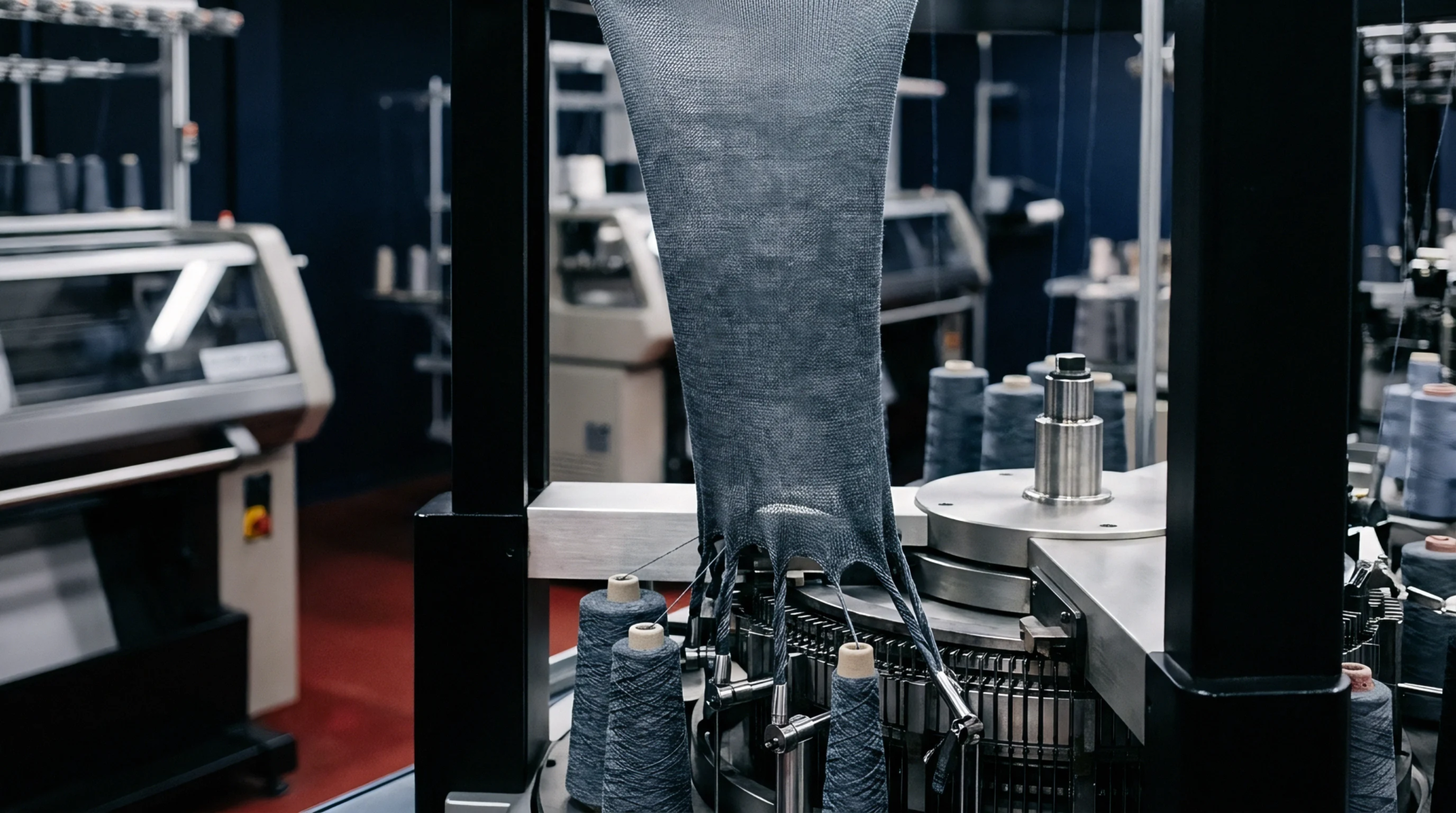
Physical Compression
Compressive shrinkage treatment stabilizes knitted and woven textiles by forcing structural reduction before garment construction. Mechanical compaction counters the natural tendency of yarns to relax and distort during laundering. Heavy rubber belts press the damp fabric against a heated drying cylinder, forcing loops and floats into closer alignment.
Excessive tension during wet processing leaves internal stresses stored within the cellular structure. Reversing this tension shrinkage requires controlled lengthwise pressure to achieve dimensional equilibrium.
Dimensional Stability
Shrinkage rates drop below established commercial tolerances once the compressive treatment sets the geometry. Specifiers measure residual shrinkage in warp and filling directions using standard laundering cycles. Finished goods maintain precise cut dimensions during garment assembly because the fabric already absorbed the primary distortion.
Uncontrolled relaxation distorts patterned prints and misaligns side seams after the first consumer wash.
Finishing Mechanics
Feed rollers transfer wet cloth into the nip point where a thick rubber sleeve decelerates abruptly against a polished steel roller. Friction forces the individual yarns closer together as the surface speed differential crowds the structure. Operators adjust the retarder bar pressure to regulate the degree of compaction applied to specific fabric constructions.
Heavier GSM fleece requires higher pressure parameters than lightweight shirting to overcome greater inherent resistance.
Thermal Setting
Heated drums evaporate remaining moisture while the compressed state locks permanently into the fibre matrix. Residual heat fixes the mechanical rearrangement before the fabric exits the finishing range. Subsequent exposure to steam presses and home laundry cycles produces negligible further area loss.
Finished bolts undergo final auditing to confirm that the compaction level satisfies the declared specification limits.