Loom State Greige Specification Verification Mechanics
Verify loom state greige by measuring conditioned sett, sizing add-on, crimp ratios, and defect points to ensure structural stability before wet processing.


Sett
Datasheets quote nominal ends and picks straight from loom gearing registers, but incoming inspection routinely catches differences between theoretical insertion counts and actual fabric structure on cold rolls. Vibration, let-off variations, and shed humidity shifts all alter warp spacing before cloth reaches the take-up roll. Verification starts on unwashed, untreated pieces conditioned under an ISO 139 atmosphere at 20 degrees Celsius and 65 percent relative humidity for at least 24 hours.
For a reed holding 120 ends, inspectors check yarn distribution across five distinct locations with a counting glass or optical traversing thread counter, staying clear of the outer ten percent of cloth width where selvage tension distorts geometry.

Reed Density and Insertion Count
Loom setup sheets record reed width, total drawn ends, and speed in picks per minute. Converting those machine settings into physical cloth sett depends on width contraction as warp yarns lift from the reed fell and take on crimp under beating tension. A 1/1 plain weave contracts more in width than a 2/2 twill, drawing edge ends tighter together while relaxing central lanes.
ASTM D3775 specifies counting across a continuous ten-centimeter field using whole counts rather than extrapolated half-centimeter tallies, which multiply small local variances over full roll lengths. Because greige picks shift under tension, verifiers record warp ends per centimeter and weft picks per centimeter separately, checking empirical counts against master specs that allow plus or minus three percent on warp and plus or minus five percent on weft.
A measured variance exceeding four percent in greige weft density alters finished dyeing yield and drives wet processing shrinkage beyond allowable garment cutting thresholds.

Averaging Methods across Full Bolt Widths
Physical yarn distribution across loom width creates structural differences between the left edge, center, and right edge. Calibrated optical traversing counters running on a rigid mechanical rail produce continuous sett profiles free from the optical distortion of handheld lenses. Technical audit teams follow a five-point transverse inspection protocol across the bolt:
- Selvage adjacent lane shows whether excessive temple tension stretched the outer edge, pulling pick counts below lower contract margins.
- Quarter width station checks yarn alignment where warp sheet tension stabilizes between harness frames and take-up roll.
- True center lane measures maximum reed beat-up force, where warp crimp reaches its highest physical density.
- Three quarter station serves as the comparative baseline to spot asymmetrical harness lift or uneven whip roll leveling across the beam.
- Opposite selvage lane confirms whether warp draw-in through the drop wires introduced edge-to-edge sett bias.
Even when the average across these five points hits nominal specifications, edge-to-center counts that differ by more than six percent cause uneven liquor penetration during wet preparation. High-density zones restrict flow during desizing, leaving variable size residues across the piece width that produce streaky shade bands in jet dyeing machines.
| Construction Type | Nominal Warp Count (tex) | Nominal Weft Count (tex) | Target Greige Sett (ends/picks per cm) | Permissible Warp Sett Spread | Permissible Weft Sett Spread |
|---|---|---|---|---|---|
| Plain Sheeting (1/1) | 20 open end | 20 open end | 24 x 24 | 23.3 to 24.7 | 22.8 to 25.2 |
| Twill Bottomweight (3/1) | 30 ring spun | 30 ring spun | 42 x 22 | 40.7 to 43.3 | 20.9 to 23.1 |
| Sateen Lining (4/1) | 15 combed | 15 combed | 48 x 30 | 46.5 to 49.5 | 28.5 to 31.5 |
| Ripstop Poplin (Plain plus cord) | 25 ring spun | 25 ring spun | 36 x 28 | 34.9 to 37.1 | 26.6 to 29.4 |
Contracts with standard greige tolerance annexes permit converters to reject entire loom batches if warp density falls more than two percent below contract specification over three consecutive rolls.

Sizing
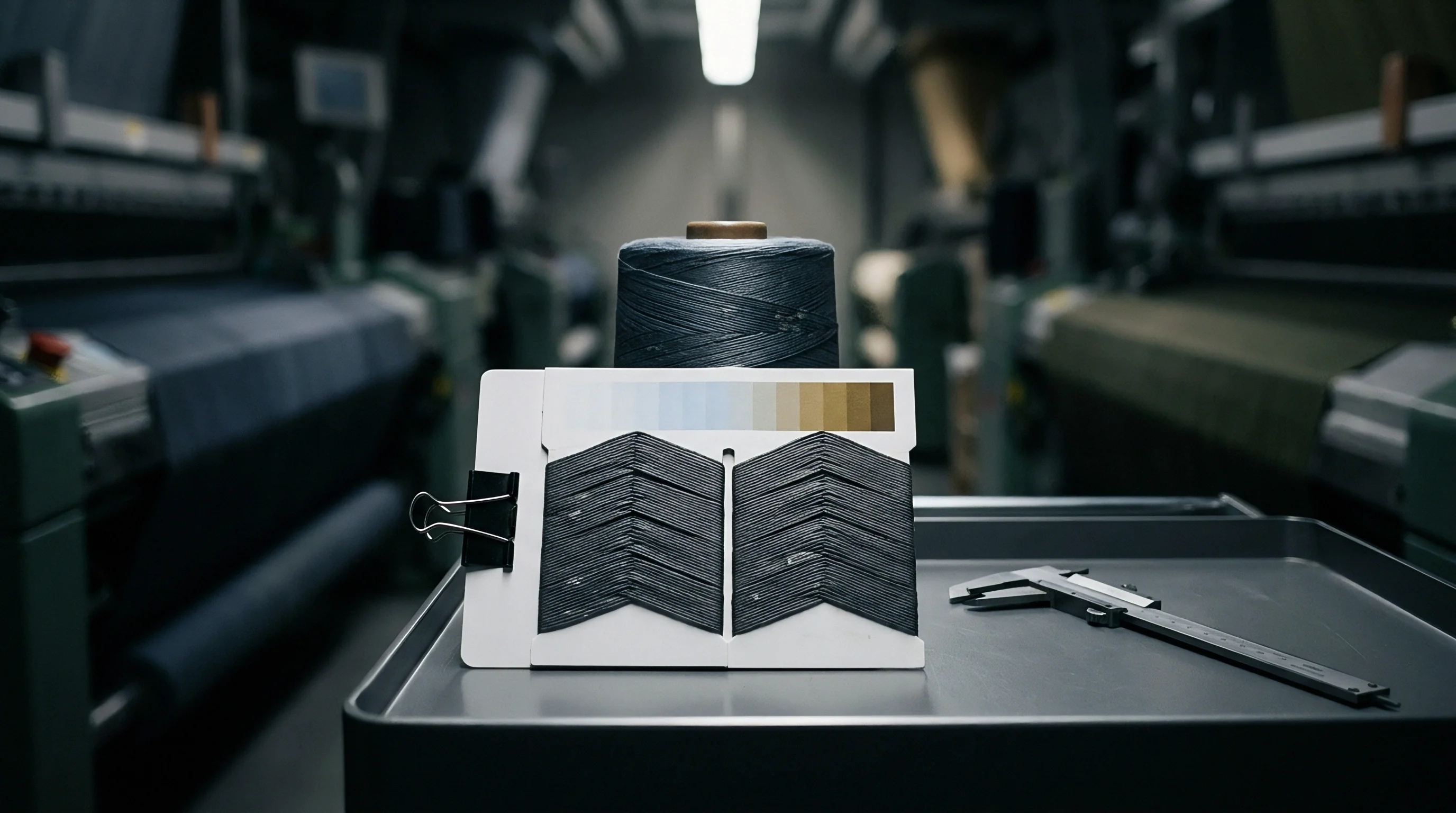
Chemical testing on unwashed loom-state pieces quantifies the starch, polyvinyl alcohol, carboxymethyl cellulose, or polyacrylic lubricants applied before weaving. Sizing prevents yarn breakage during high-speed shedding, but size volume can alter dry roll weight by eight to eighteen percent compared to pure yarn mass. Testing sizing content keeps buyers from paying fiber prices for agricultural starches and synthetic binders.
To measure this, lab teams run gravimetric desize washes under AATCC Test Method 97, separating water-soluble agents from enzymatic starches through controlled sequential bath extractions.

Refractometry and Desize Wash Extraction
Greige samples weighing exactly ten grams dry mass undergo Soxhlet extraction or warm enzymatic baths to strip chemical sizing. Technicians measure the boil-off liquor on a digital refractometer calibrated for sucrose-equivalent Brix indices, converting optical refraction to a dry solids percentage using compound-specific factors. These readings isolate water-soluble polyvinyl alcohol fractions from insoluble waxes that extract only with solvent.
Total desize loss percentage equals original dry conditioned weight minus post-wash dry conditioned weight, divided by original dry weight and multiplied by one hundred. Because size binds yarn structures, when desize mass loss reaches twelve percent on cloth specified at an eight percent maximum pickup, the buyer pays fiber prices for cheap starch.
A sizing add-on exceeding thirteen percent by weight stiffens greige goods, increases needle breakage during sampling, and exhausts desizing baths before completing scheduled run yardage.
Which Sizing Chemistry Mitigates Desizing Removal Loss?
Sizing formulations dictate how easily chemistry washes out during preparation and how stable greige stock remains in open storage. Unprotected starch degrades microbially during subtropical transit, producing blotchy spots that resist uniform dye fixation. Synthetics vary by wash temperature; cold baths leave polyvinyl alcohol behind.
Specific chemical classes present clear liabilities during qualification:
- Native tapioca starch requires aggressive high-temperature alpha-amylase enzyme baths at pH 6.5 to prevent insoluble retrograded starch gels from coating scouring equipment.
- Polyvinyl alcohol binder strips cleanly in alkaline hot water above 85 degrees Celsius, though insufficient wash temperatures redeposit synthetic films onto weft intersections.
- Carboxymethyl cellulose gum dissolves in cold washing baths without enzymatic treatment, lowering chemical oxygen demand loads in finishing effluent.
- Polyacrylic sizing polymer dissolves readily in soft warm water, but hard water with calcium ions precipitates insoluble calcium polyacrylate salts that speckle dark dyed goods.
- Tallow wax lubricant requires emulsified solvent scouring to extract hydrogenated triglycerides that would otherwise repel reactive dye liquors in pad-batch dyeing.
Elevated sizing percentage provides necessary protection for fine-count yarns running on air-jet looms at nine hundred picks per minute.

Crimp
Warp and weft strands do not lie flat in unwashed loom-state fabric; they weave over and under crossing yarns under physical tension. Yarn crimp percentage measures the geometric difference between a straightened yarn’s length and its length within the woven sheet. This waviness absorbs tensile stress, sets tear resistance, and governs width shrinkage during scouring and heat-setting.
ASTM D3883 calls for manual yarn extraction from unraveled rectangular samples cut fifty centimeters long by five centimeters wide. Technicians take ten individual warp yarns and ten weft yarns, mount them in a tension-controlled crimp tester, and apply standard decinewton loads calculated from linear density to pull out crimp without stretching the core filament or staple fiber.

Take up Measurement under ASTM D3883
Dividing straightened strand length by the distance between clamp jaws gives the exact crimp percentage. This ratio governs directional elongation. When warp yarns run under high loom beam tension, warp crimp drops toward five percent while beating force drives weft crimp up toward twelve or fourteen percent, which reduces cutting yield.
When these fabrics enter continuous preparation, wet relaxation releases built-in tension, narrowing weft dimensions while expanding warp length. That distortion can push finished widths outside cutting-table markers, turning planned garment yields into scrap.
Can off Loom Sett Predict Finished Width?
Loom-state width measurements rarely equal finished usable cloth width. Calculating final width requires factoring in weft crimp percentage, reed spread, and wet-processing consolidation. The ratio between greige width inside the selvages and dry finished width tracks the relaxation of weft take-up during desizing, boiling-off, and stenter drying, where structural balance dictates dimensional recovery.
Asymmetric crimp distribution creates internal shear angles, leading to skew or spirality that twists cut garment panels after laundering.
| Cloth Construction | Warp Yarn Count (tex) | Weft Yarn Count (tex) | Mean Warp Crimp (%) | Mean Weft Crimp (%) | Crimp Differential Ratio | Anticipated Width Shrinkage (%) |
|---|---|---|---|---|---|---|
| Plain Percale (1/1) | 15 combed | 15 combed | 9.2 | 13.8 | 0.67 | 6.5 |
| Twill Drill (2/1) | 35 carded | 35 carded | 6.4 | 10.1 | 0.63 | 4.8 |
| Heavy Denim (3/1) | 84 open end | 74 open end | 4.8 | 14.5 | 0.33 | 7.2 |
| Satin Duchesse (5/1) | 20 filament | 30 filament | 3.1 | 6.2 | 0.50 | 3.1 |
High weft crimp paired with low warp crimp yields wider relaxation margins during finishing, so balanced structures hold predictable square dimensions through downstream wet operations.

Defect
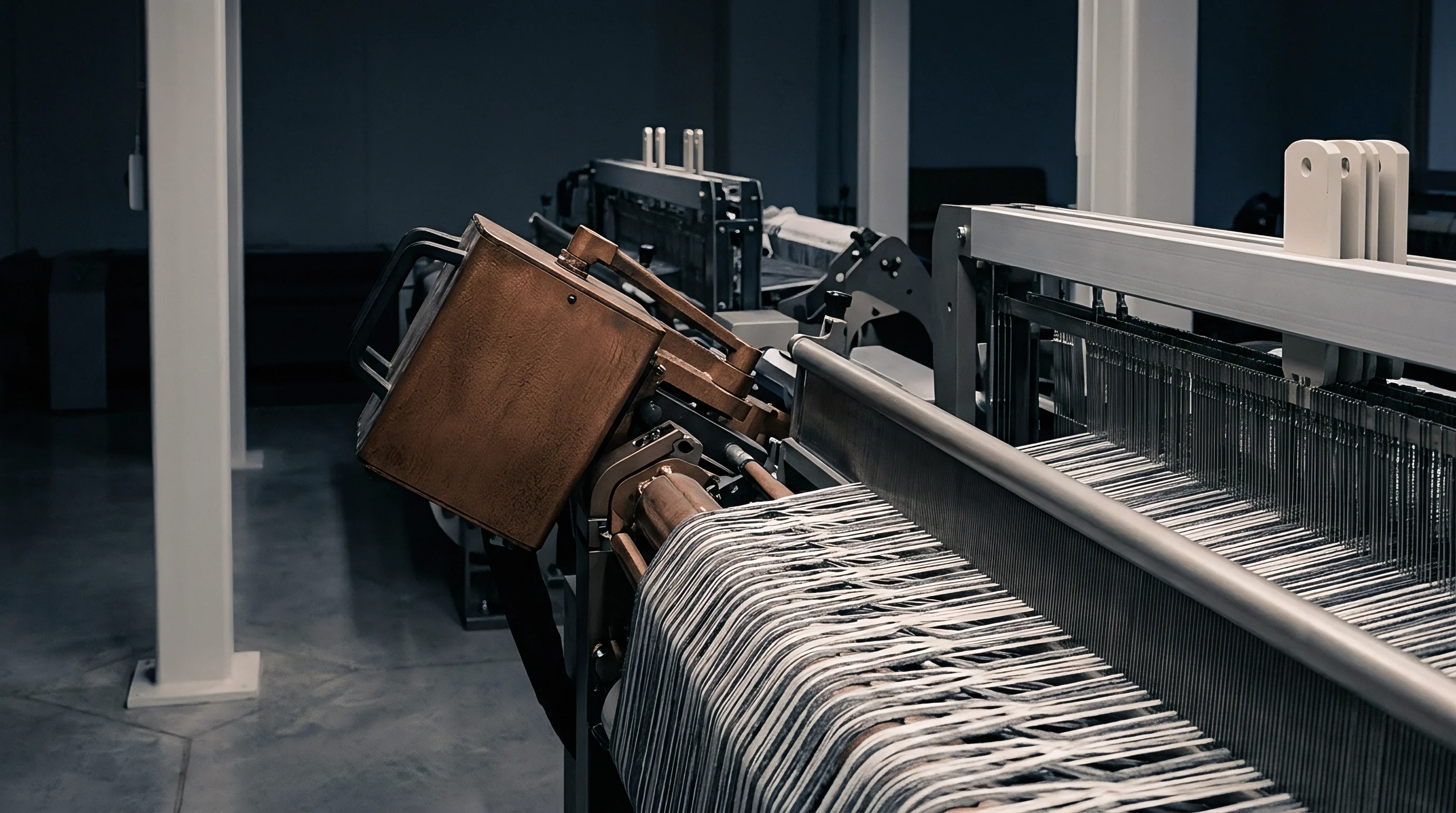
Visual grading of loom-state fabric separates structural weaving errors from removable surface marks. Inspecting greige goods catches yarn breaks, temple marks, misdraws, and oil spots before spending money on finishing freight and dye runs. ASTM D5430 sets standard four-point grading rules, establishing penalty thresholds per one hundred square meters.
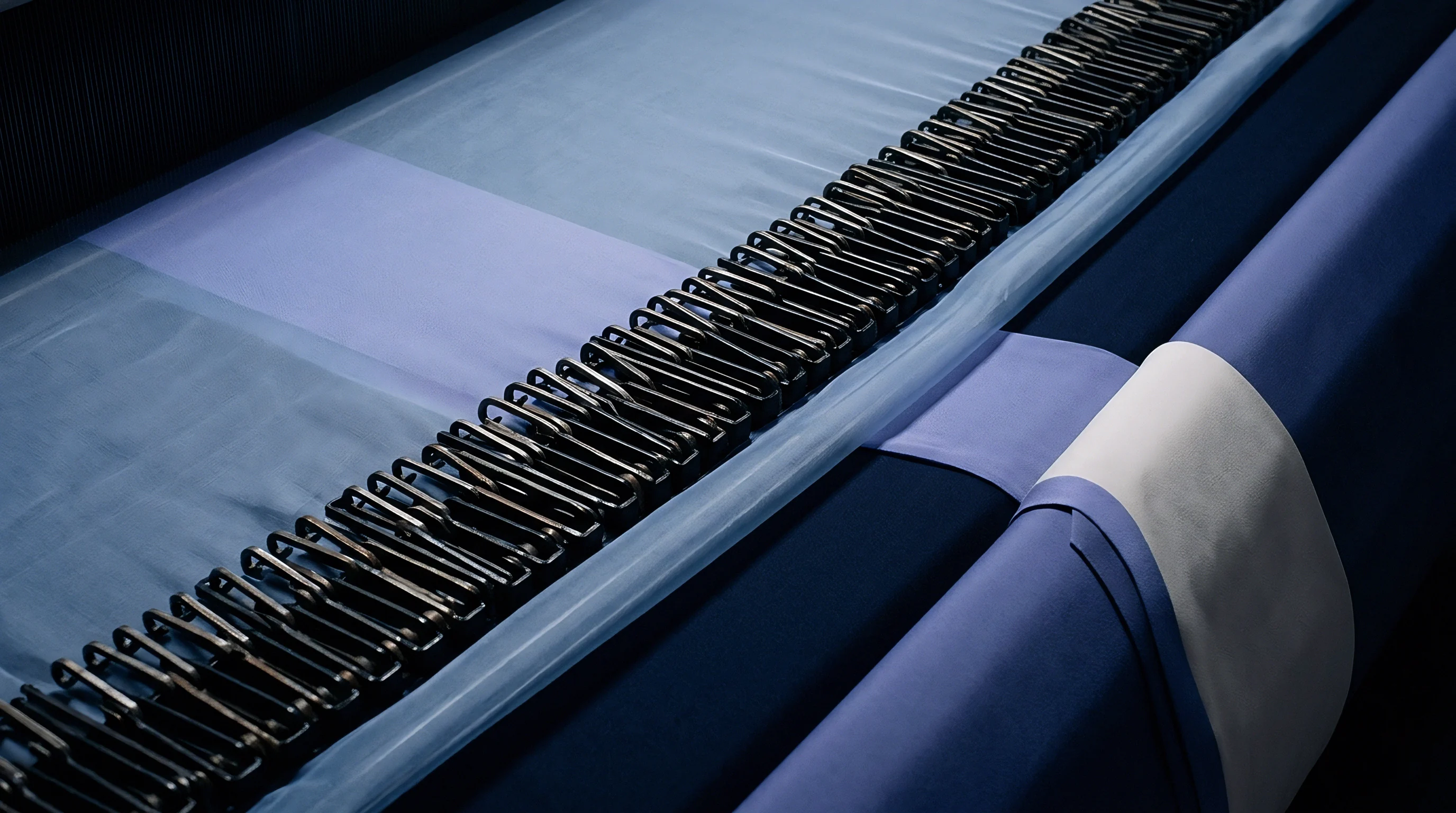
Inspectors run greige rolls over illuminated perches angled at 45 to 60 degrees under calibrated artificial daylight delivering at least 1075 lux. Surface defects under eight centimeters cost one point, while flaws over twenty-three centimeters or repeating across selvages take the maximum four-point penalty.
Point Allocation under ASTM D5430 Standards
Loom-state defects come from mechanical malfunctions, broken warp ends, or contaminated yarn supply packages. Inspectors score points across each roll and calculate total points per hundred square meters based on length, width, and accumulated penalty tallies. Inspection checklists set clear acceptance thresholds:
- Broken warp ends trigger immediate four-point penalties when unworked ends leave open structural gaps longer than twenty centimeters along the longitudinal axis.
- Filling bar bands indicate sudden pick density changes caused by loom take-up slip or let-off motor hesitation during shift changeovers.
- Temple hole tears occur along outer borders when metal pin temples pierce selvages under excessive transverse cloth tension.
- Loom oil spatter deposits mineral lubricant onto greige substrate, requiring focused solvent spot extraction before heat setting fixes petrochemical oils into polymer fibers.
- Starting marks appear as dense or open horizontal bars across the entire width where weavers restarted looms without aligning the reed fell.
A greige roll scoring above twenty-eight penalty points per one hundred square meters fails commercial first-tier specification under ASTM D5430 criteria.
Which Inspection Speed Detects Subtle Structural Irregularities?
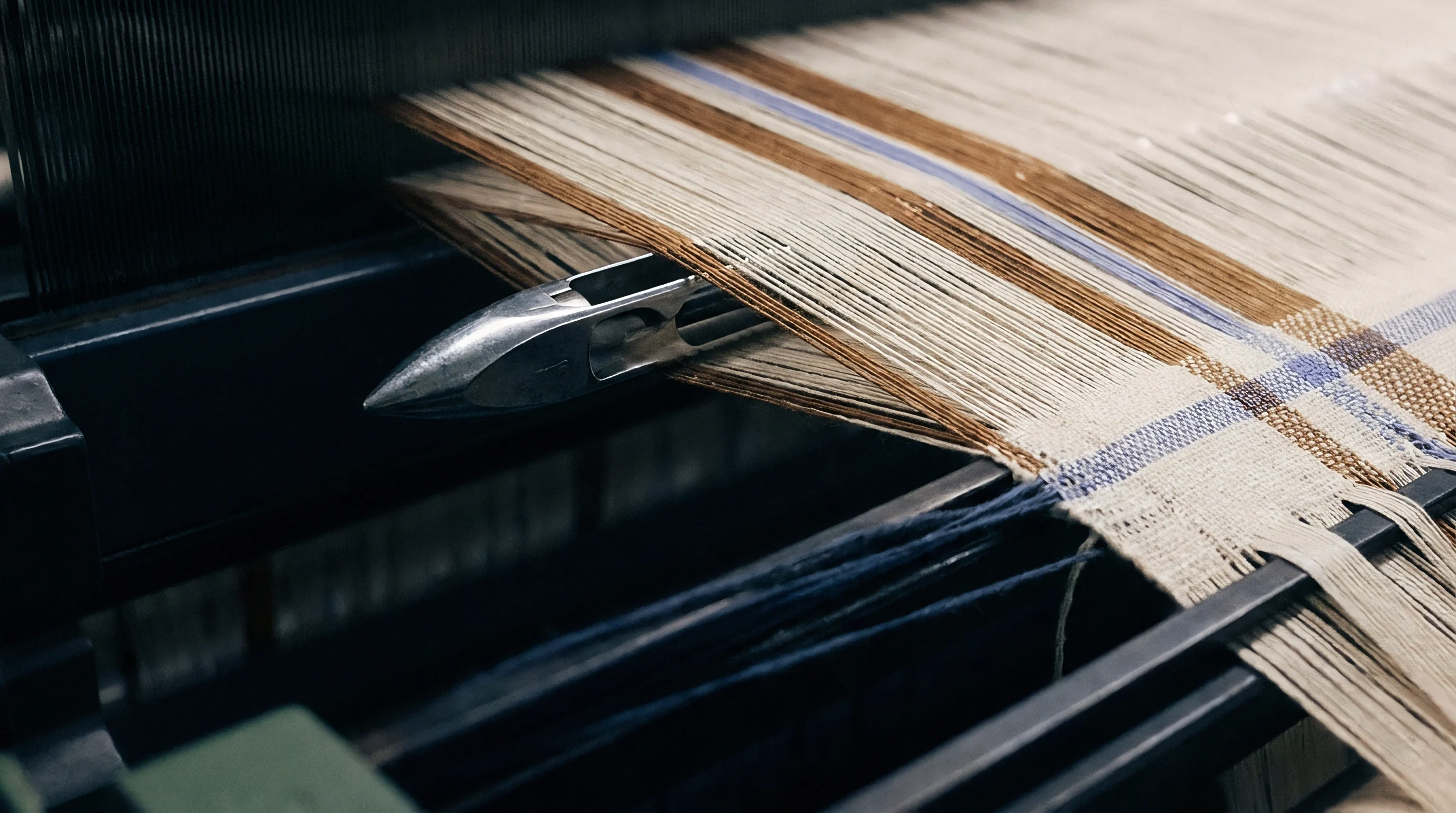
Perch speed directly affects defect detection. Running faster than fifteen meters per minute lowers capture rates for subtle flaws like double picks or faint misdraws, letting structural defects slip through until dyeing exposes them; heavy selvages also jam stenter pins. When high-penalty rolls reach continuous bleaching, localized yarn weaknesses snap under stenter tension ~ tearing running webs, halting finishing lines, and ruining production schedules.

Yield
Commercial settlement relies on converted greige weight, usable width, and clean conditioned length. Invoicing on gross scale weight forces buyers to pay for sizing solids, packing tubes, and moisture absorbed during dock storage. Greige fabrics carry standard moisture regain under ASTM D1909: eight and one half percent for cotton, thirteen percent for viscose, and zero point four percent for polyester.
Because linear meters do not equal mass, clean bone-dry testing strips out size content and volatile oils, adjusting parcel mass back to standard regain constants before invoices clear accounts payable.
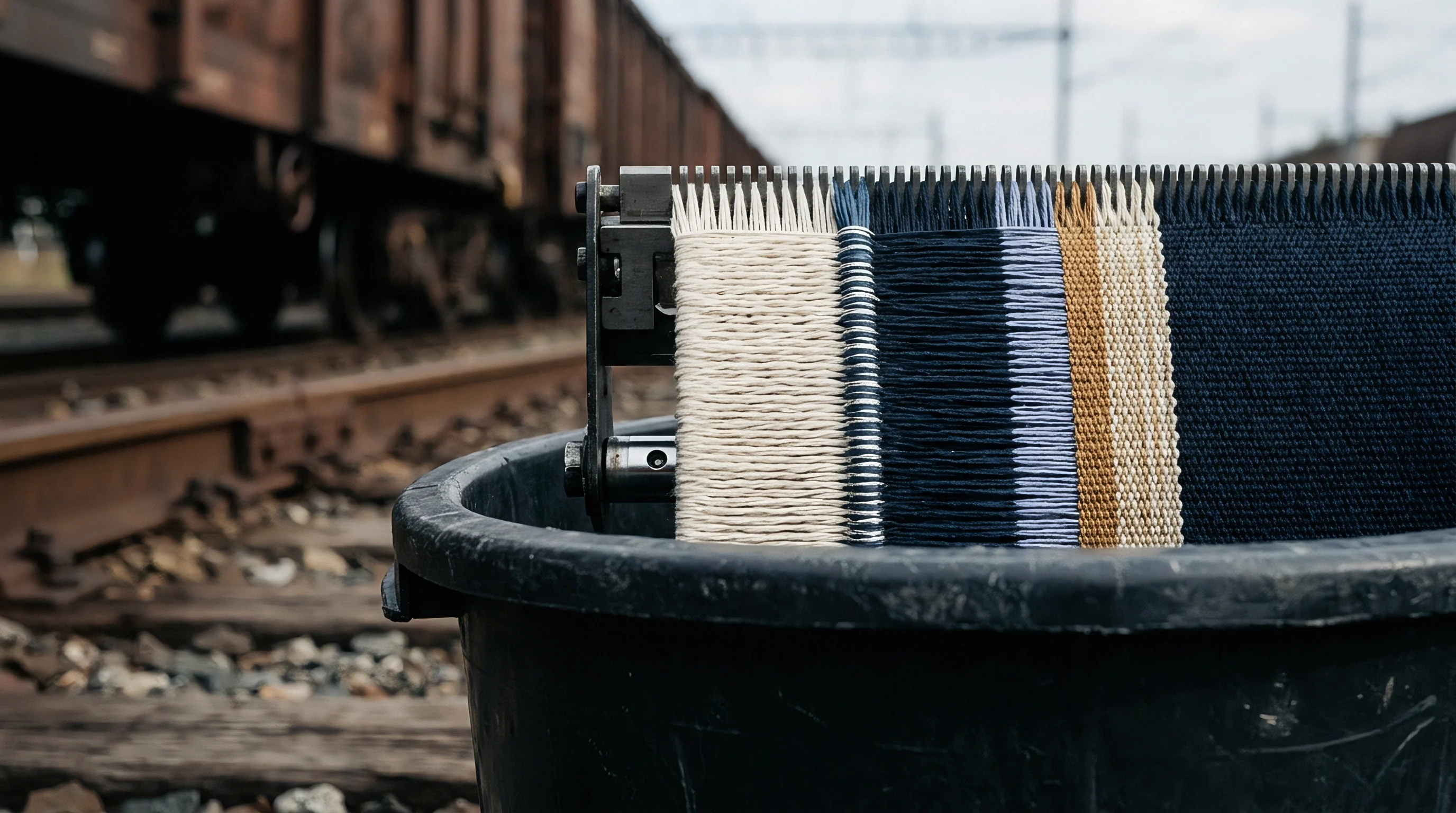
Commercial Weight Corrections under Standard Regain
Inspectors calculate commercial mass using oven drying methods under ASTM D2495. A ten-gram core sample is dried at 105 degrees Celsius until reaching constant weight across consecutive weighings. Scaling this dry mass across the shipment lot establishes the true fiber base.
Adding standard legal moisture regain percentages to the dry fiber weight gives the corrected invoice mass, eliminating billing inflation caused by damp container transits or humid warehouse storage. Because dry air skews package weights, when a gross ticket shows a two-ton parcel that drops to one point eight tons after extracting moisture and deducting sizing, landed cost figures shift across every finished linear meter.
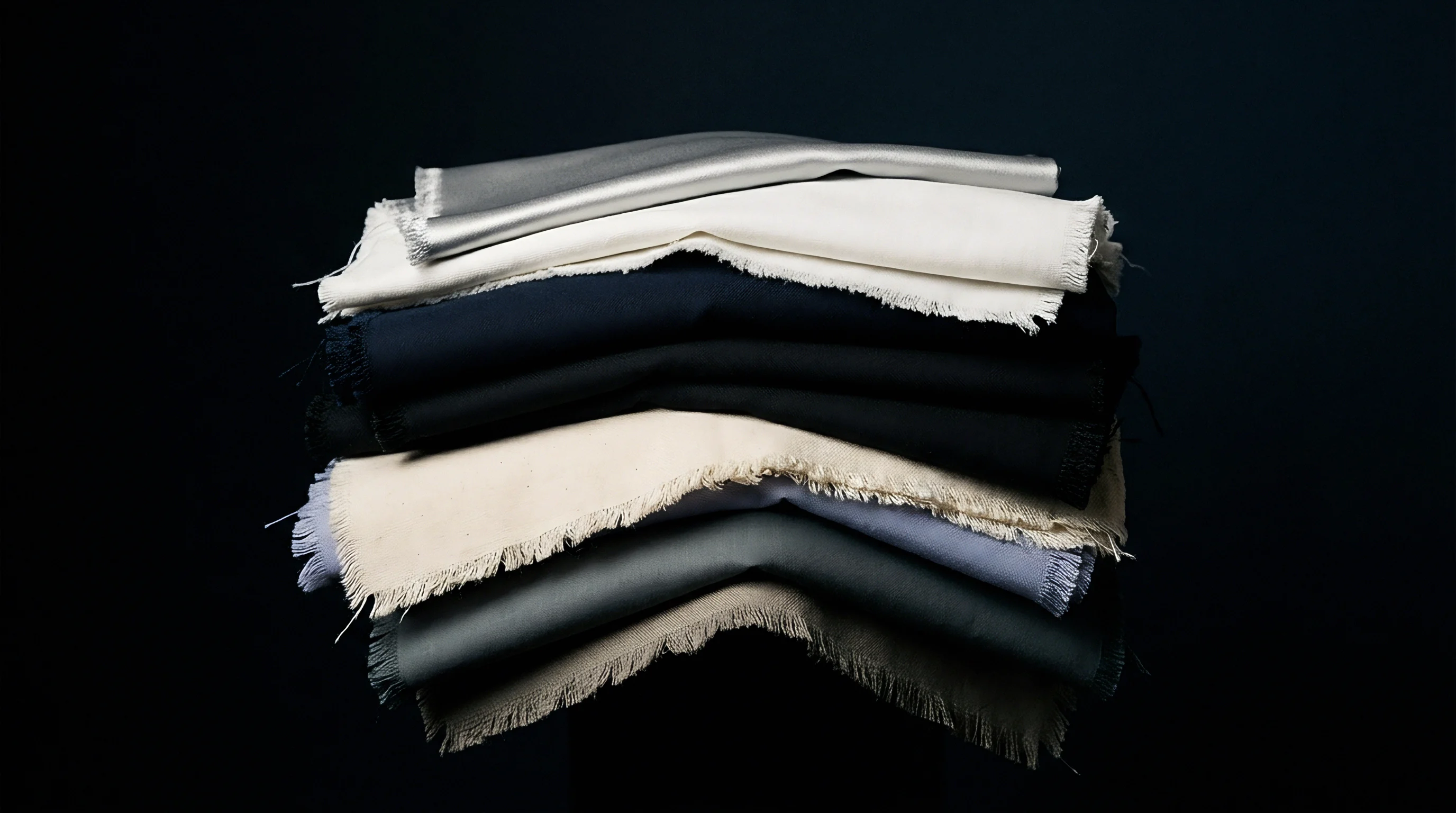
Invoiced Mass Reconciled against Nominal Meterage
Buyers reconciling shipments verify mass per unit area under ISO 3801 protocols. Circular swatches measuring exactly one hundred square centimeters, taken from five positions excluding roll tails, are weighed on analytical scales sensitive to zero point zero zero one grams. The resulting grams per square meter must match calculated density derived from nominal warp count, weft count, yarn crimp, and sett.
If weight drops below spec while width and pick count look correct, the mill has substituted finer yarn counts than quoted, compromising burst strength and seam slippage in finished garments.
The open operational question is whether ambient humidity shifts during ocean transit permanently alter yarn crimp geometry before finishing plants can load rolls onto their singeing ranges.