Integrating Slashing Stretch and Crimp in Warp Yarn Consignment Calculations
Consignment warp calculations offset sizing elongation against loom crimp to reconcile true yarn mass delivered against finished woven yardage.
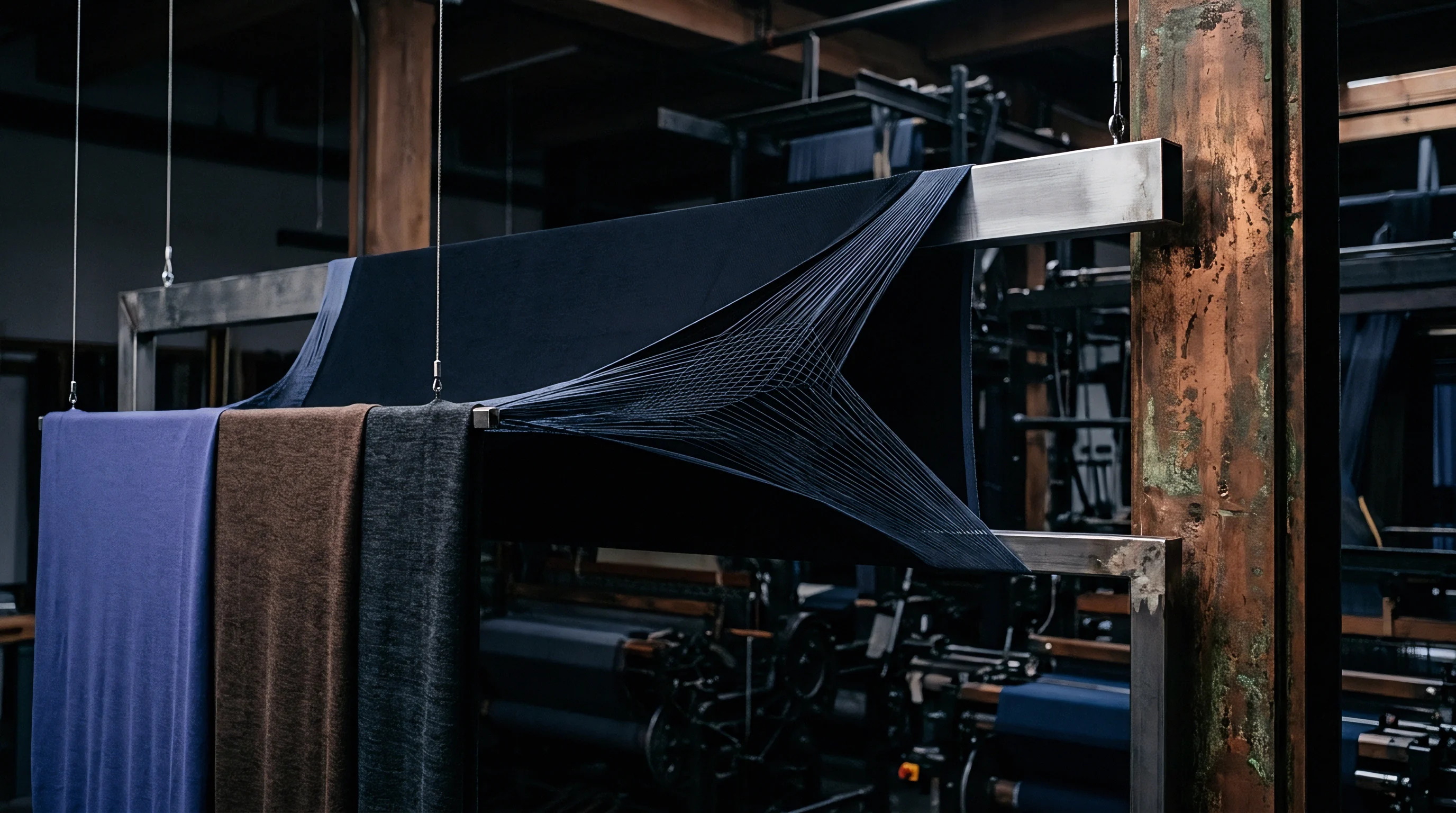

Creel
Direct tension readings taken between the beam brake bands and the dip roller reveal an immediate variance of 14 centinewtons across adjacent yarn ends. When ten warper beams mount in a sizing creel, mechanical drag across each beam axle compounds along the line. Yarn packages do not release linear mass at perfectly matching velocities.
Variations in beam diameter, flange alignment, and friction linings generate uneven unwinding tension before yarn ever enters the chemical box. The technical specification lists a nominal yarn count, but the physical mass passing over the guide rollers experiences differential strain that directly shifts yarn linear density.
Each sizing creel configuration alters the incoming yarn length delivered to the vat. Over-end unrolling creates an unavoidable drag gradient from the rear beam to the front beam closest to the size box. The greige mill tracks aggregate yarn mass entering the shed, yet differential delivery creates length discrepancies between individual beams.
A yarn end held under 30 centinewtons of drag enters the liquor with its twist structure tightened, resisting starch uptake while sustaining mechanical elongation. An adjacent end held under 15 centinewtons absorbs more sizing solids while stretching less. Uncontrolled creel braking introduces permanent length discrepancies that surface only after the weaver’s beam finishes running on the loom.
A 12 centinewton difference in braking force across adjacent section beams shifts raw yarn elongation by 0.6 percent before sizing immersion.
Mechanical tension controls at the creel govern mass delivery through specific mechanical failure points.
- Pneumatic brake caliper wear produces unequal braking torque across opposite beam journals, tilting the beam arbor and distorting yarn tension across the sheet edges.
- Grooved guide roll bearings seize under accumulated lint deposits, dragging perimeter ends and inducing premature fiber draft.
- Misaligned section beam arbors force yarn bands to scrub against flange edges, raising filamentation rates on ring spun cotton and abrading surface fibers.
- Dead weight lever slippage drops mechanical holdback pressure unpredictably as the beam diameter decreases from full pack down to the bare core.
Tension breaks fibers. When yarn tension spikes unevenly across the sizing creel, the warp sheet enters the size box pre-stretched in narrow longitudinal bands. Mill personnel discover this variance only when loose slack threads wrap the delivery cylinders, or when tight bands snap under warp shed opening on air-jet looms, idling multi-thousand-dollar machinery through cascading warp stop activations.


Draft
Mechanical elongation inside the sizing machine alters the fundamental relationship between yarn mass and yarn length. Once the warp sheet enters the size box, immersion liquor softens the natural fiber convolutions, dropping the yield point of cotton and viscose. Sizing machines apply tension through distinct drive zones to keep the yarn flat and prevent lappers on drying cylinders.
This driven tension pulls the softened yarn beyond its elastic recovery threshold, causing plastic deformation. Slashing stretch represents permanent mechanical elongation imparted during sizing, turning 1,000 meters of spun yarn on the warper beam into 1,015 or 1,025 meters of elongated yarn wound onto the loom beam.
Wet starch acts as lubrication. While amylose and modified starch granules penetrate the fiber bundle, nip rolls squeeze the yarn sheet at pressures between 10 and 40 kilonewtons. Drawing the wet sheet from the squeeze nip to the first drying cylinder introduces the primary elongation zone.
Mills monitor total machine stretch through digital encoder rolls positioned at the creel pull roll, the size box exit, the last cylinder, and the headstock delivery roll. Sizing stretch reduces yarn linear density. When 30 tex combed cotton stretches by 2.0 percent, the resulting bare fiber core drops to approximately 29.4 tex.
Sizing add-on masks this linear thinning by depositing solid dry mass on the exterior sheath.
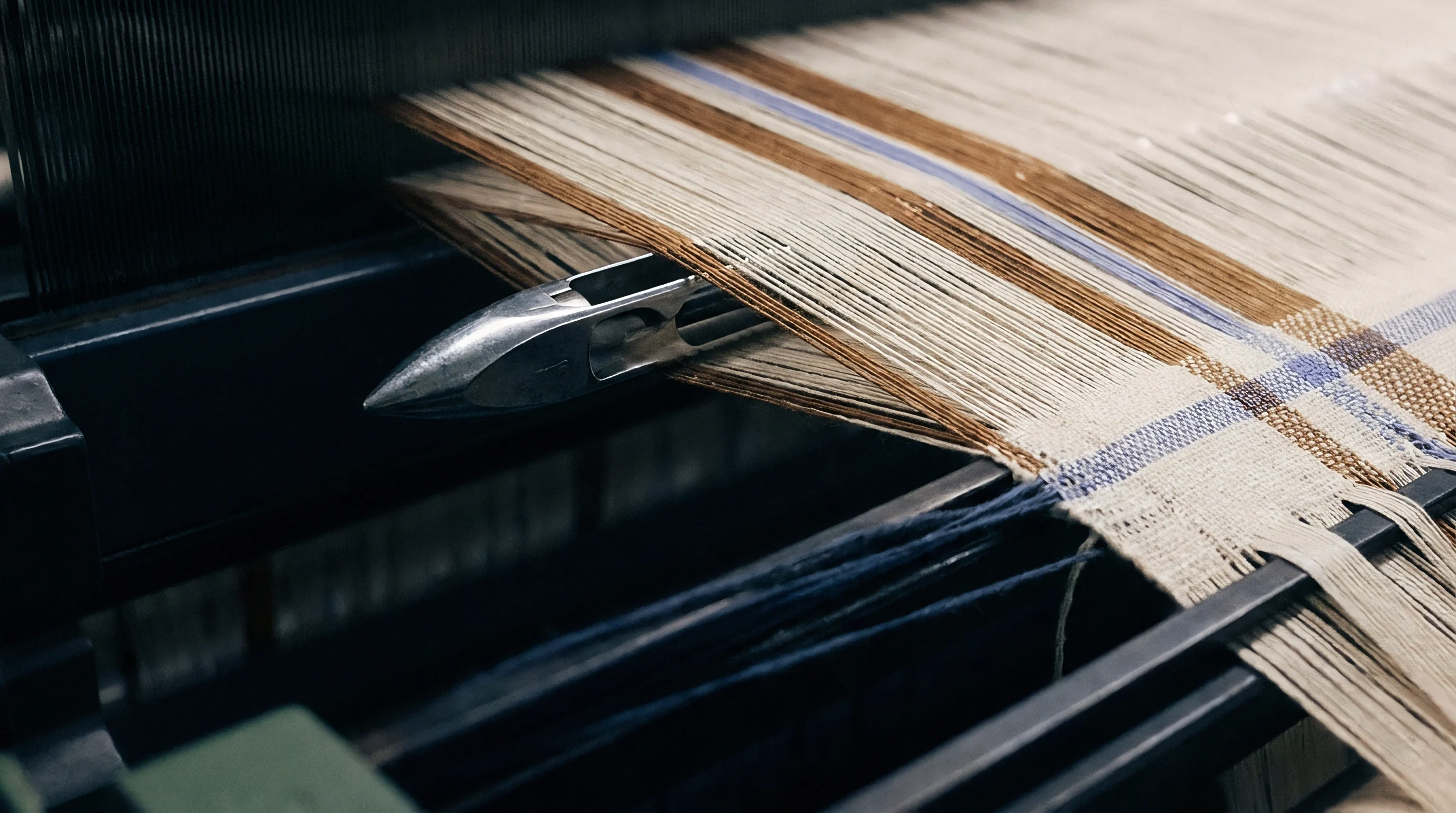
How Sizing Draft Modifies Yarn Mass and Linear Density?
Sizing add-on deposits solid chemistry onto the yarn exterior, yet the underlying yarn core remains permanently attenuated. A finisher running desizing baths washes away the protective film of polyacrylate, polyvinyl alcohol, or starch, uncovering the true drafted yarn substrate. If the consignment ledger calculates raw yarn consumption solely from delivered greige fabric weight, the buyer overpays for chemical mass while receiving attenuated fiber cores.
Slashing stretch must be separated from chemical dry pickup to verify how many kilograms of genuine fiber occupy the weave.
Draft during wet processing permanently thins the load-bearing fiber core beneath the starch coating.
Different fiber blends respond unequally to tension across the operational drying zones of modern slashing ranges.
| Yarn Structure | Wet Zone Draft (%) | Cylinder Zone Draft (%) | Dry Split Draft (%) | Cumulative Slashing Stretch (%) | Tensile Elongation Loss (%) |
|---|---|---|---|---|---|
| 100% Combed Cotton Ring Spun (20 tex) | 1.10 | 0.35 | 0.25 | 1.70 | 1.8 |
| 100% Carded Cotton Open End (30 tex) | 0.80 | 0.20 | 0.20 | 1.20 | 1.1 |
| 65/35 Poly-Cotton Ring Spun (15 tex) | 0.90 | 0.40 | 0.30 | 1.60 | 2.4 |
| 100% Viscose Vortex Spun (20 tex) | 1.60 | 0.50 | 0.40 | 2.50 | 3.6 |
Excess elongation destroys residual elasticity. Slashing stretch pulls out natural fiber crimp and aligns amorphous polymer zones, reducing the remaining elongation at break. Viscose exhibits acute sensitivity to wet draft, losing over three percent of its ultimate strain capacity when tension runs high in the size box.
Open-end cotton yarns tolerate less stretch than combed ring spun yarns before experiencing localized drafting faults. Thin spots create weak links that rupture under beat-up stresses during high-speed insertion.
Mill managers defend excessive sizing elongation by stating that higher delivery speeds make stretching unavoidable to keep ends separated across the dry split section.
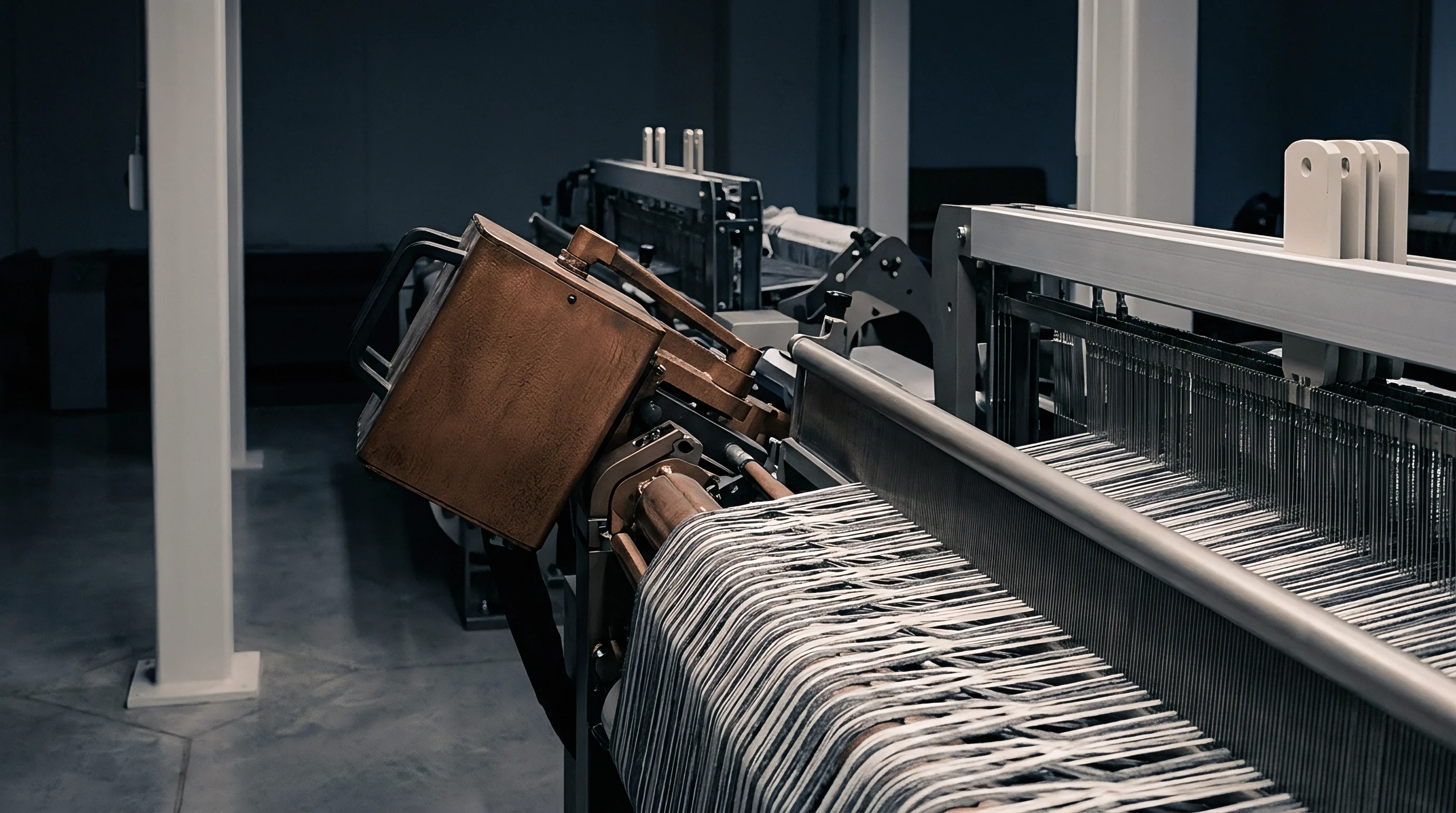
Curvature
Loom interlacing forces straight warp threads into undulating paths around perpendicular filling picks. Warp crimp defines the percentage increase in yarn length required to produce a given length of woven cloth, measured after yarn extraction from the finished or greige weave. If 100 meters of greige fabric contain 108 meters of extracted, straightened warp yarn, the warp crimp measures 8.0 percent.
While slashing stretch artificially lengthens the yarn during preparatory processing, crimp consumes yarn length inside the loom shed. Consignment calculations cannot treat nominal cloth length as yarn length without compounding these opposing geometric mechanisms.
High picks per inch increase warp crimp. As pick density climbs, warp yarns bend more sharply around each inserted weft thread. In balanced plain weaves, warp and filling crimp divide evenly based on yarn diameters and relative thread densities.
In heavy warp-faced twills or satins, warp ends float over multiple picks, lowering warp crimp while filling crimp escalates. When the reed beats the weft pick into the fabric fell, warp tension rises instantaneously to peak levels, fixing the geometric wave path of the warp ends. Let down motions control the supply of warp from the loom beam, while take-up rollers draw the formed cloth away, setting the base crimp geometry.
Weft tension alters warp geometry. Accurate determination of crimp demands verified physical testing under standard atmospheric conditions of 20 degrees Celsius and 65 percent relative humidity, conforming to ISO 7211-3 test procedures.
- Cut two representative fabric swatches measuring at least 500 millimeters in the warp direction, avoiding selvedges and damaged roll ends.
- Ravel ten individual warp ends from each swatch, marking a standardized baseline gauge length of 250 millimeters along the woven yarn path before full unraveling.
- Mount each unraveled yarn end in a tensioned yarn crimp tester, applying a standardized straightening load calculated precisely from the nominal yarn linear density, typically 0.5 centinewtons per tex for spun cotton.
- Record the extended length of the straightened yarn after all geometric undulations flatten without drawing fiber draft.
- Calculate crimp percentage by subtracting the original fabric marked distance from the straightened yarn length, dividing by the fabric marked distance, and multiplying by one hundred.
Testing ten specimen lots under ISO 7211-3 delivers a field average of 7.4 percent warp crimp for a 20 tex cotton plain weave constructed with 28 ends per centimeter and 24 picks per centimeter. This value rests on laboratory trials utilizing a 10 centinewton preload on a modern Shirley crimp tester. If the laboratory operator applies 15 centinewtons of preload, the reading falsely registers 8.1 percent crimp due to elastic fiber draft.
Laboratory technician training determines measurement accuracy.
A tight weave structure demands higher warp yarn length than visual fabric measurements reveal on the inspection table.

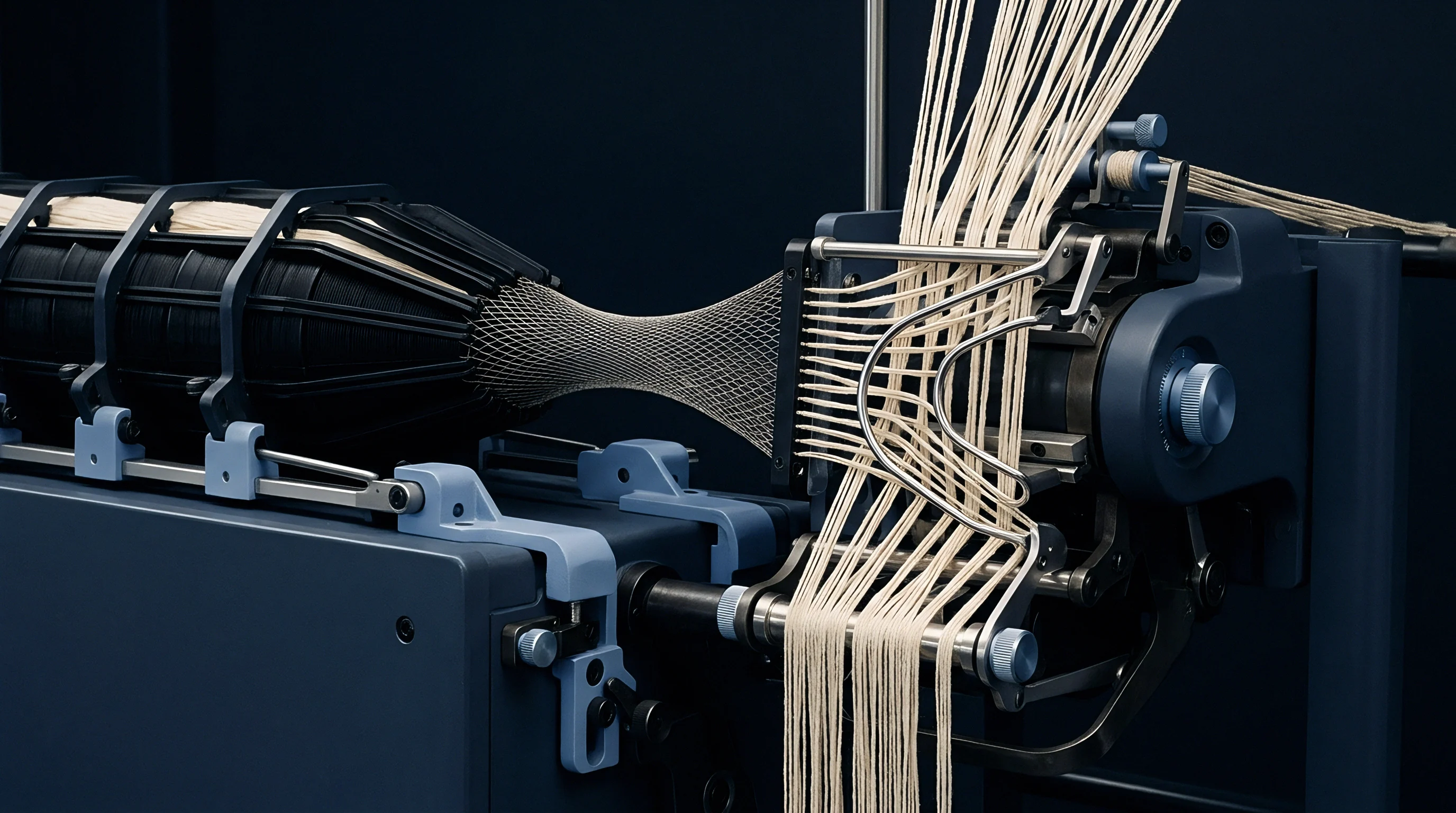
Balance
Synthesizing slashing stretch and weave crimp into consignment accounts requires a mass-balance calculation. Slashing stretch acts as a length gain, expanding the total meters delivered from a given mass of supply yarn. Conversely, warp crimp acts as a length consumer, requiring more meters of yarn than the linear meterage of woven goods produced.
Sizing dry add-on adds gross mass that does not represent usable spun fiber. When billing yarn against delivered greige cloth, sourcing managers reconcile these opposing variables or absorb systemic financial losses.
Crimp swallows real yarn length. Consider a baseline production order for 100,000 linear meters of 100% cotton plain weave fabric at a finished width of 160 centimeters. The specification establishes 3,600 total warp ends using 20 tex combed ring spun yarn.
Nominal bare yarn length without crimp or stretch equals 3,600 ends multiplied by 100,000 meters, totaling 360,000,000 linear meters of yarn. Converted to bare yarn mass at standard regain, this equals 7,200 kilograms of raw cotton yarn.

Which Parameters Settle Yarn Consignment Weight Variances?
Calculations that omit slashing stretch overstate the raw yarn required. If sizing machine draft delivers 1.8 percent stretch, 360,000,000 meters of raw yarn yield 366,480,000 meters of slashed yarn on loom beams. The mill achieves the required length using less starting yarn mass.
Concurrently, if loom take-up creates 7.5 percent warp crimp, weaving 100,000 meters of cloth requires 107,500 meters of slashed warp yarn per end. Total slashed length required across 3,600 ends equals 387,000,000 meters. Integrating the 1.8 percent sizing draft directly offsets the gross yarn consignment.
Integrating a 1.8 percent sizing draft against a 7.5 percent loom crimp shifts net warp yarn demand by hundreds of kilograms per production run.
The mathematical consignment balance determines the exact bare yarn mass the buyer consigns to the weaving mill.
| Calculation Stage | Mathematical Formulation | Derived Length (km) | Derived Yarn Mass (kg) | Net Variance Against Nominal (%) |
|---|---|---|---|---|
| 1. Nominal Flat Cloth Dimension | 3,600 ends × 100,000 m | 360,000 | 7,200.0 | Base Zero |
| 2. Loom Crimp Integration (7.5%) | Nominal Length × 1.075 | 387,000 | 7,740.0 | +7.50 |
| 3. Sizing Stretch Deduction (1.8%) | Crimp Length ÷ 1.018 | 380,157 | 7,603.1 | -1.77 |
| 4. Process Waste Inclusion (1.5%) | Net Yarn Mass × 1.015 | 385,859 | 7,717.1 | +1.50 |
| 5. Chemical Sizing Pickup (10.0%) | Net Slashed Mass × 1.10 | 387,000 | 8,473.4 | +10.00 (Chemistry) |
Stage three reveals the crucial reconciliation. Net yarn required to feed the loom drops from 7,740.0 kilograms down to 7,603.1 kilograms because sizing elongation created 6,843 kilometers of length without consuming additional fiber mass. Sizing draft saved the mill 136.9 kilograms of bare fiber.
If the converter bills yarn usage using only crimp, the buyer forfeits the value of that draft gain. In petroleum pipeline transport, volumetric flow meters reconcile thermal expansion against base fluid density to prevent custody transfer losses. Textile yarn consignment demands the same rigorous physical accounting.
Shedding strips sizing deposits. Sizing waste rates remain contested across the sector. Spinning mills argue that preparatory hard waste on creels and headstocks never exceeds 1.0 percent, whereas commission weaving mills regularly claim 2.5 percent waste allowances.
Sourcing desks rarely verify the actual discard bins behind sizing ranges. The desk accepts a standard 1.5 percent baseline waste allowance under prevailing commercial contracts, but cannot verify whether unrecovered waste arises from genuine beam transitions or unrecorded yarn diversions. Buyers protect their exposure by auditing physical waste weigh scales monthly.
Accurate verification requires strict documentation across the manufacturing sequence.
- Creel loading tallies verify tare weights, net yarn mass, and yarn moisture content at initial container receipt.
- Sizer digital log sheets export exact meterage delivered, average sizing bath temperature, squeeze roll pressure, and real-time stretch percentage per beam set.
- Loom beam delivery dockets record total cut lengths, number of warp knots, beam net mass, and calculated sizing add-on levels.
- Greige inspection cut reports match off-loom linear yardage against calculated theoretical production to detect unrecorded loom slippage.
Whether weaving mills possess the instrumentation to monitor dynamic tension fluctuations across shifting seasonal ambient humidities remains an ongoing inquiry across the trade.

Settlement
Commercial invoices for consigned yarn close on delivered mass adjusted for moisture content and process losses. Moisture content skews commercial invoices. Cotton fibers absorb up to 8.5 percent moisture under standard conditions, while synthetic polyesters absorb less than 0.5 percent.
Sizing chemistry adds hygroscopic starch and synthetic binders that hold water tenaciously. Commission sizing plants that bill customers on gross off-machine beam weight bill water and starch as pure fiber unless contracts mandate dry fiber base adjustments per ASTM D1909 commercial moisture regain standards.
Calibrated instruments prevent settlement disputes. Sourcing contracts must stipulate desized, oven-dry mass reconciliations. Fabric samples raveled at the delivery dock undergo desizing using alpha-amylase enzyme washes, followed by absolute drying in a conditioning oven according to ISO 6741-1.
This process strips chemical size and eliminates all water mass, establishing the oven-dry mass of bare fiber. Multiplying oven-dry mass by official commercial moisture regain factors yields commercial billing mass, exposing any artificial weight added by chemical over-sizing or atmospheric water spraying in greige warehouses.
A contract clause mandating ISO 6741 oven-dry extraction eliminates disputes over sizing compound mass billed as spun yarn.
Short deliveries stop apparel production. When yarn supply agreements fail to integrate slashing stretch deductions, the converter collects an unearned surplus of yarn. Over a 500,000-meter weaving contract, an unaccounted 1.5 percent sizing draft leaves 3,500 kilograms of raw yarn unaccounted for in the weaving mill warehouse.
Mill managers convert this hidden surplus into stock fabric or bill it as unrecoverable loom shed waste. The consignment reconciliation ledger balances warp consumption using: Consigned Mass equals Fabric Length multiplied by Ends, multiplied by Yarn Linear Density, multiplied by Crimp Factor, divided by Sizing Draft Factor, plus Contract Waste Allowance.
A standard consignment contract clause specifies that all yarn consumption claims are calculated using linear crimp derived under ISO 7211-3 divided by the slasher draft percentage logged via calibrated digital line encoders, obligating the converter to credit unconsumed bare yarn balances back to the sourcing entity within thirty days of contract completion.