Interface Reversal
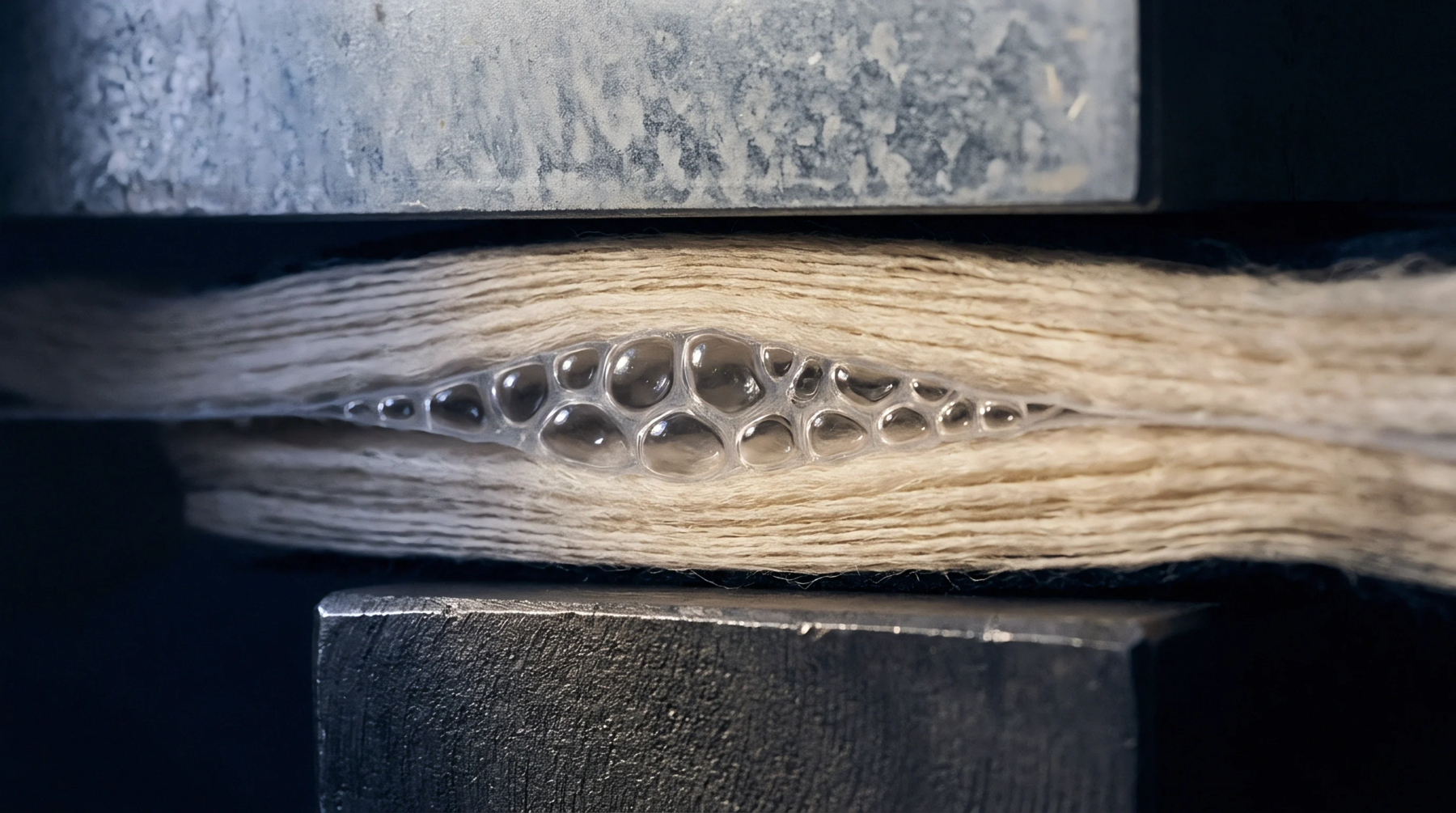
Geometric modification of the liquid boundary occurs when a textile yarn or filament is drawn through a liquid bath at high velocities. Under these conditions, meniscus inversion occurs, changing the liquid interface from a stable concave shape to a dragged, convex profile that allows air to enter the liquid bath.
Air Entrapment
Viscous drag pulls the liquid down the moving filament and away from the static fluid body. This pull creates a localized pocket of air that can destabilize the process.
Coating Instability
Fluid viscosity and yarn surface roughness are the primary physical factors that control when this change takes place. Smoother yarns allow for higher run speeds before the liquid boundary is pulled downward into the bath. High-viscosity sizing agents promote this disruption at lower speeds, which requires the operator to reduce the line velocity or use low-viscosity alternatives.
The resulting air bubbles cling to the yarn surface as it exits the bath, which causes thin spots and weak regions in the dried size film.
Operational Control
Continuous camera monitoring of the fiber entry point provides early detection of the onset of boundary deformation. Preventing meniscus inversion is necessary to maintain a uniform sizing layer, which is necessary for reducing yarn breakages during subsequent weaving processes.