Determining Standard Moisture Regain Values for Synthetic Filament Yarns
Commercial mass of synthetic filament yarns is determined by adding standard commercial moisture allowances to solvent-extracted oven-dry mass.
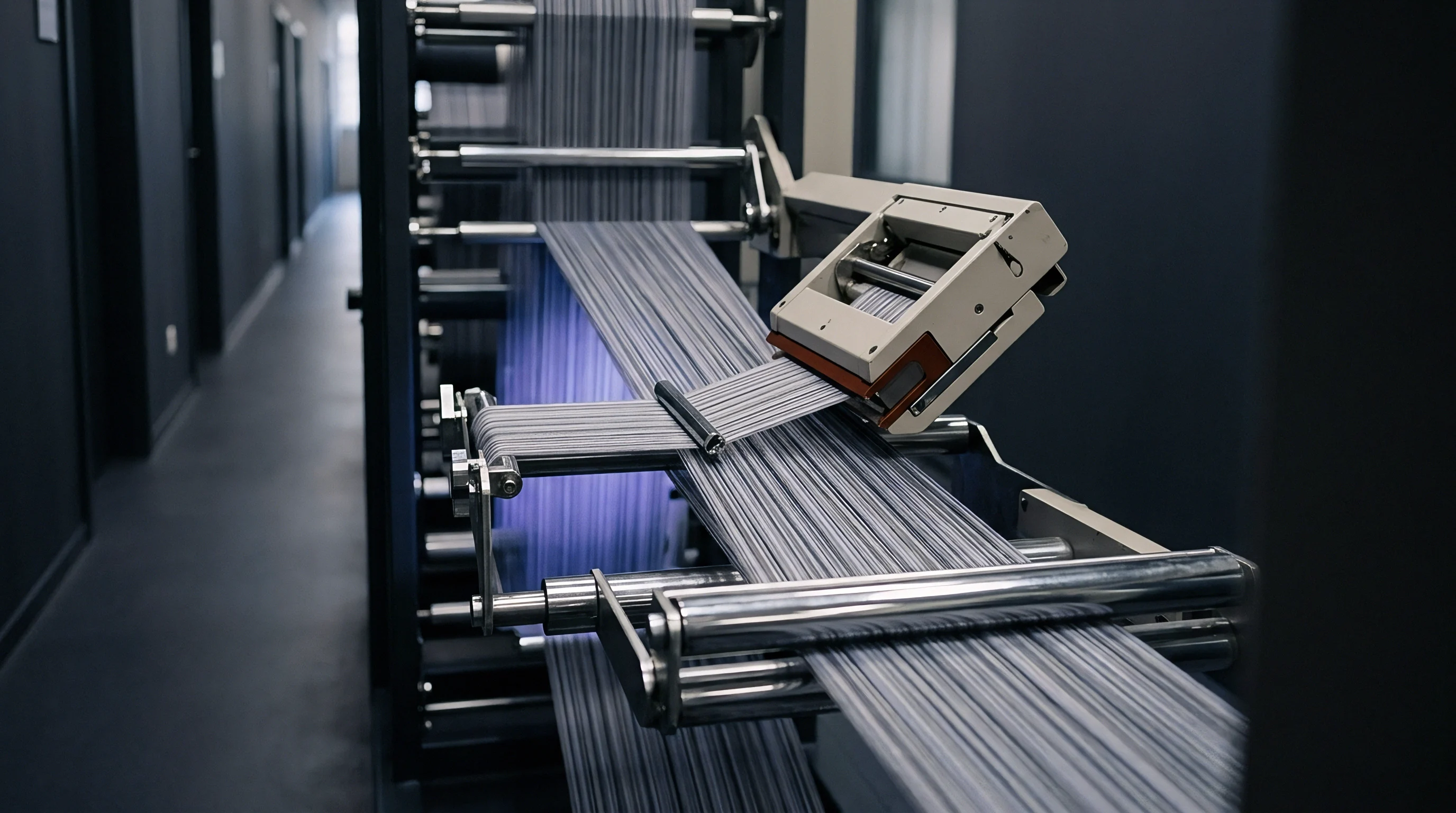

Oven
A calibrated analytical balance linked to an enclosed heating cell reads dried skein weight to four decimal places. Water alters synthetic filament pricing. When high-tenacity yarns trade at multi-ton volumes, unmeasured water weight inflates the landed invoice without contributing polymer mass.
Desiccated mass establishes baseline valuation. Synthetic filaments contain minimal internal moisture compared to cellulosic fibres, yet their surface energy and molecular composition attract atmospheric water molecules that accumulate during winding, storage, and transit. Determining the true commercial weight of continuous filament synthetic yarn starts with the precise removal of all moisture through controlled thermal desiccation.
Drying procedures follow ASTM D1576 and ISO 6741 standards. The test specimen hangs inside an insulated chamber ventilated by positive-pressure dry air. Laboratory technicians maintain testing cells at 105 degrees Celsius with forced air exchange.
The heating chamber exchanges its complete air volume twenty to thirty times every hour to prevent localized vapor saturation around the yarn skeins. Weighing occurs while the yarn remains suspended inside the heated chamber, preventing airborne moisture from re-entering the specimen during measurement. Clean desiccation stops when mass stabilizes.
- Tare Calibration Zeroing the suspension basket inside the heated chamber at 105 degrees Celsius eliminates scale drift caused by convective thermal currents.
- Skein Reeling Winding continuous filament yarn into skeins of one hundred to two hundred grams across a precision perimeter reel ensures uniform air exposure.
- Thermal Desiccation Circulating heated air at 105 degrees Celsius across the yarn drives off volatile surface water until successive weighings match within 0.05 percent.
- In-Chamber Weighing Recording the dried sample mass while still within the heated cell prevents airborne moisture adsorption that alters laboratory figures within twenty seconds of door exposure.
- Tare Subtraction Deducting the heated basket container mass isolates the absolute dry polymer weight used in commercial mass calculations.
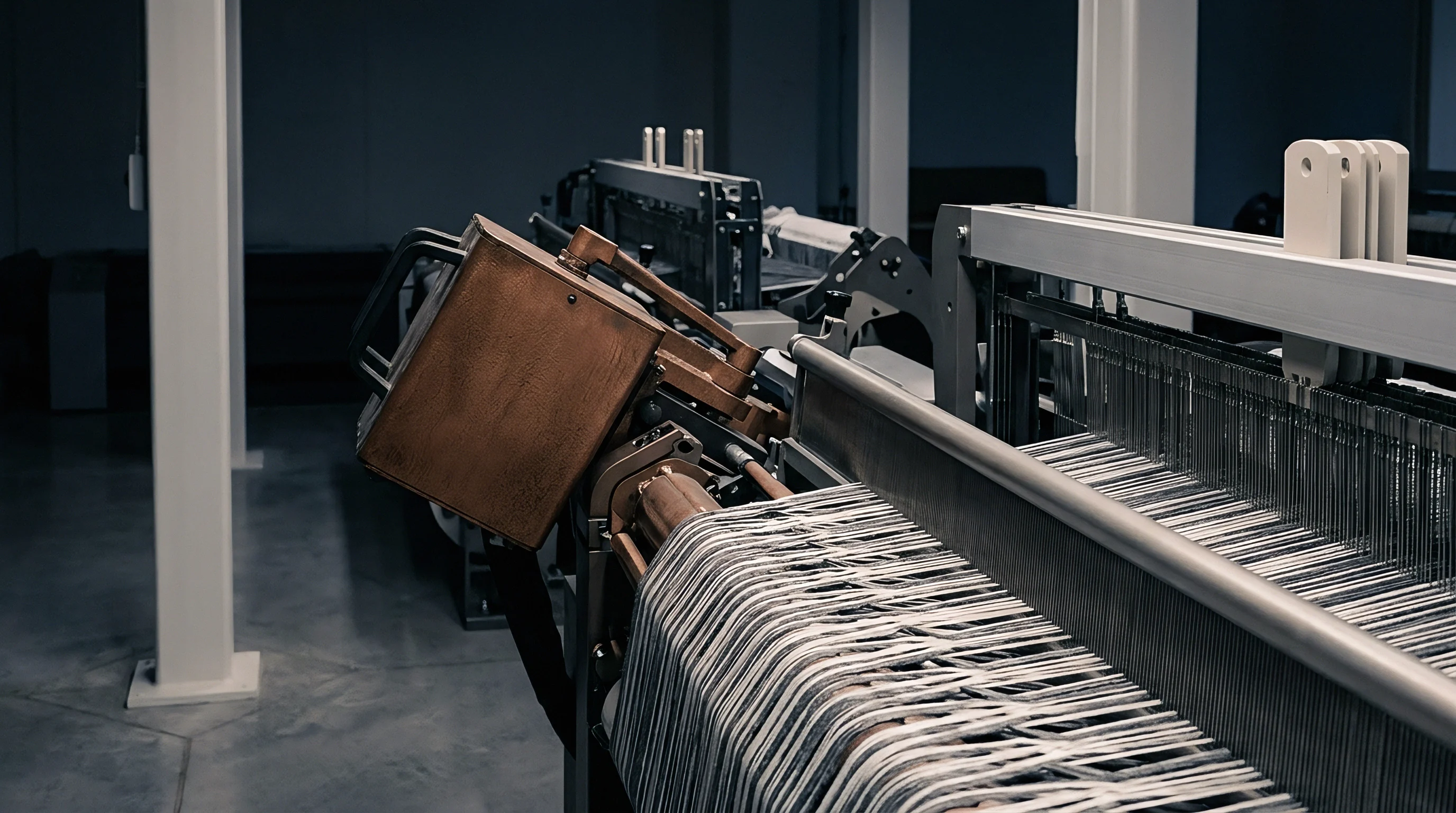
Extraction of Organic Spin Finishes
Synthetic filament manufacturing applies lubricating oils to protect continuous strands from high-speed friction. Surface finishes skew weight measurements. These spin finishes consist of mineral oils, fatty acid esters, and antistatic polyoxyethylene compounds applied at rates between 0.5 percent and 2.5 percent of total yarn mass.
Desiccation at 105 degrees Celsius volatilizes light organic fractions while leaving heavier lubricants bound to the filament surface. This unextracted lubricant reads as polymer weight during standard drying, corrupting moisture regain calculations.
A petroleum ether extraction step running for twenty extraction cycles removes non-aqueous lubricant residues to within 0.02 percent of true sample mass.
Solvent extraction isolates pure polymer mass prior to final desiccation. Technicians place yarn skeins inside a Soxhlet extraction apparatus, flushing the sample with hexane, petroleum ether, or an ethanol-benzene mixture according to ISO 6741 procedures. The solvent strips organic lubricating coats without degrading polyester, polyamide, or polypropylene backbones.
Once the solvent flushes clean, the stripped yarn enters the drying apparatus to determine the pure, finish-free, oven-dry mass. ISO 6741 Clause 4 explicitly dictates that where non-aqueous spin lubricants exceed 0.5 percent of sample mass, chemical extraction precedes thermal desiccation, altering baseline dry weights by up to 1.8 percent on textured yarns.
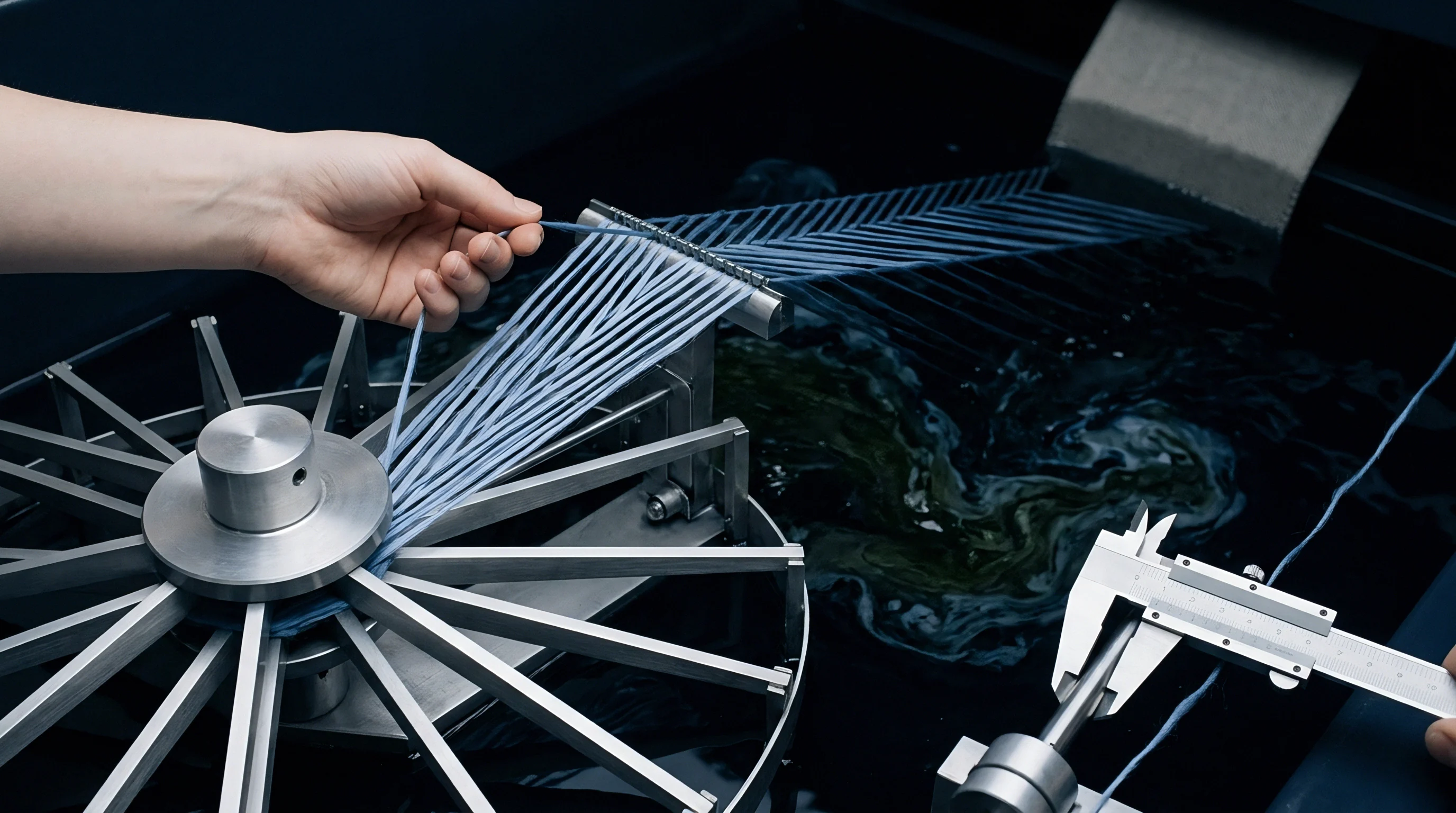

Allowance
Purchasing continuous synthetic yarns involves buying polymer weight rather than environmental water. Contractual weight differs from scale mass. The textile trade relies on standard moisture regain values, officially designated as commercial moisture regain or commercial allowance, to convert laboratory dry mass into invoiced commercial weight.
Moisture regain expresses the mass of water absorbed by a completely dry material relative to that material’s oven-dry mass, stated as a percentage. Moisture content, by contrast, calculates water mass relative to the moist specimen’s total mass. Confusing these two equations shifts financial calculations by dozens of basis points.
Commercial moisture regain serves as a trade convention rather than a constant physical property. Standard allowances incorporate both the natural equilibrium moisture content of the polymer under standard testing conditions and an agreed administrative margin that covers handling and processing additives. Polyester exhibits minimal moisture regain.
Polyamide absorbs atmospheric water rapidly. Polypropylene absorbs zero atmospheric water vapor. Trade organizations establish uniform commercial allowances so buyers and sellers clear transactions without debating ambient weather changes between spinning mills and delivery warehouses.
| Filament Polymer Type | BISFA Commercial Allowance (%) | ASTM D1909 Commercial Regain (%) | ISO 2060 Commercial Regain (%) | Equilibrium Regain at 20°C, 65% RH (%) |
|---|---|---|---|---|
| Polyester (PET Flat Filament) | 1.50 | 0.40 | 1.50 | 0.40 |
| Polyester (PET Textured DTY) | 1.50 | 0.40 | 1.50 | 0.45 |
| Polyamide 6 (Nylon 6 Filament) | 5.75 | 4.50 | 5.75 | 4.30 |
| Polyamide 6.6 (Nylon 6.6 Filament) | 5.75 | 4.50 | 5.75 | 4.10 |
| Polypropylene (PP Filament) | 2.00 | 0.10 | 2.00 | 0.05 |
| Polyacrylonitrile (Acrylic Filament) | 2.00 | 1.50 | 2.00 | 1.60 |
| Elastane (Polyurethane Filament) | 1.50 | 1.00 | 1.50 | 1.10 |
| Cellulose Acetate (Secondary Filament) | 9.00 | 6.50 | 9.00 | 6.20 |
| Cellulose Triacetate Filament | 4.50 | 3.50 | 4.50 | 3.20 |

Discrepancies between Global Standards Organizations
Official contract specifications rely on published tables from regulatory institutions to settle transaction weights. The Bureau International pour la Standardisation des Fibres Synthétiques, known as BISFA, publishes commercial allowances that diverge systematically from American Society for Testing and Materials standards. BISFA commercial allowances for polyester filament specify 1.50 percent, whereas ASTM D1909 establishes commercial moisture regain for polyester filament at 0.40 percent.
The ASTM figure reflects physical moisture equilibrium under twenty degrees Celsius and sixty-five percent relative humidity. The BISFA allowance bundles the 0.40 percent equilibrium moisture together with an agreed 1.10 percent administrative allowance accounting for commercial spin lubricants and processing oils.
Incorporating ASTM D1909 commercial regain values rather than BISFA allowances into synthetic purchase orders lowers invoiced weight on polyester shipments by over one percent.
Polyamide filaments display similar structural divergence between standard systems. BISFA sets the commercial allowance for Nylon 6 and Nylon 6.6 at 5.75 percent. ASTM D1909 establishes commercial moisture regain at 4.50 percent.
When a contract designates ISO 2060 as the governing testing standard, the laboratory calculates commercial mass according to the commercial allowance specified in the purchase contract, falling back to BISFA rules when contracts omit explicit numbers. True commercial mass governs final invoices.

Calculating Commercial Invoiced Mass
Converting scale readings into contract payment obligations utilizes defined algebraic formulas. The commercial mass represents the oven-dry mass of the yarn lot multiplied by one plus the agreed commercial moisture regain divided by one hundred. When spin finish extraction occurs, the formula expands to add the extracted finish allowance alongside the moisture allowance.
The primary commercial mass equation reads as commercial mass equals oven-dry mass multiplied by the sum of one hundred plus the commercial allowance, divided by one hundred.
A buyer purchasing draw-textured polyester yarn under BISFA terms pays for 1.015 kilograms of commercial mass for every 1.000 kilogram of verified oven-dry polymer. If that same buyer signs a supply contract governed strictly by ASTM D1909 without clarifying commercial finish allowances, the supplier bills 1.004 kilograms of commercial mass per kilogram of bone-dry polymer. This discrepancy of 1.10 percent equates to eleven metric tons of billed weight across a one-thousand-ton supply program.
Mismatched standards between the purchase contract and physical laboratory drying produce unaccounted losses exceeding eleven thousand dollars on every twenty-tonne procurement of high-tenacity industrial yarn.
Hysteresis
Water uptake in synthetic polymers follows distinct physical equilibrium paths depending on directional moisture exposure. Filament draw ratios shift amorphous accessibility. A bone-dry yarn absorbing moisture in a humid room reaches equilibrium at a lower moisture percentage than an identical wet yarn losing moisture in that same room.
Desorption curves sit above absorption paths. This sorption hysteresis gap originates from molecular rearrangement and hydrogen bonding dynamics within the polymer matrix.
Internal molecular arrangements govern how readily water vapor enters a continuous synthetic filament. Synthetic polymers exist as semi-crystalline materials containing ordered crystalline lamellae dispersed within random amorphous networks. Water molecules cannot penetrate tightly packed crystalline lattices.
Water sorption takes place exclusively inside amorphous regions and along crystal interfaces. Amorphous chains adjust their spatial conformations to accommodate polar water molecules. When drying occurs, hydrogen bonds between polymer chains reform slowly, trapping residual water molecules within micro-voids long after environmental humidity drops.
- Polymer Crystallinity Index Dense crystalline regions exclude water molecules completely, restricting water binding strictly to amorphous chains.
- Molecular Orientation Factor Drawing forces polymer backbones into parallel alignment, reducing free volume available for water cluster accumulation.
- Spin Finish Chemisorption Hydrophilic surfactant components in spin finishes draw ambient water directly to the filament exterior.
- Amide Functional Density Repeating amide groups along polyamide chains provide direct polar binding sites for single-molecule hydrogen bonding.

Thermomechanical History and Crystallinity
Drawing and heat-setting operations align molecular backbones while altering phase distributions. Tension aligns internal polymer chains. Fully drawn yarn, designated FDY, undergoes drawing under thermal tension, raising the crystalline fraction to fifty percent in polyester and forty-five percent in polyamide 6.6.
Partially oriented yarn, designated POY, bypasses this high-temperature drawing stage, exhibiting lower crystallinity near thirty-five percent. POY contains larger amorphous fractions that absorb greater volumes of ambient moisture than high-tenacity fully drawn yarn.
Desorption conditioning leaves synthetic filament holding higher equilibrium moisture than absorption conditioning under identical ambient air.
Draw-texturing processes alter these equilibrium baselines. False-twist texturing heats the filament above its glass transition temperature while twisting and drawing the bundle. This thermal exposure opens micro-cavities along the filament surface while setting crimp geometry.
Textured yarns expose greater surface area to the ambient atmosphere than flat filament yarns of identical linear density. The moisture uptake of draw-textured yarn exceeds that of flat filament yarn by 0.15 to 0.35 percentage points under equivalent sixty-five percent relative humidity conditions. Whether thermal setting permanently locks amorphous bonding sites against moisture absorption across prolonged ocean shipping remains an unresolved question among polymer chemists.


Dock
Ocean freight containers unload under environmental conditions that rarely match testing laboratory atmospheres. Dense yarn packages restrict vapor penetration. Continuous synthetic filaments sit packed in dense geometric packages reaching densities near one gram per cubic centimeter.
A standard cone holds three to six kilograms of yarn wound under mechanical tension on a rigid plastic or paper tube. Core packages remain dry during transit. Moisture exchange between the ambient warehouse atmosphere and the wound package occurs at extremely low diffusion rates through these tightly packed structures.
The perimeter layers of a wound yarn cone equilibrate with ambient warehouse air within seventy-two hours. The interior yarn layers positioned two centimeters below the surface require three to six weeks of continuous atmospheric exposure to register measurable moisture change. Filament situated against the inner plastic tube can retain spinning-floor packaging moisture levels for several months.
Sampling a yarn cone by stripping five meters from the outside face creates significant analytical errors, skewing the reported moisture regain toward warehouse ambient conditions rather than representative package mass.
Pallet perimeter packages absorb atmospheric humidity within hours while inner carton cones preserve factory packaging conditions across ocean voyages.
Receiving Verification across Inbound Shipments
Unloading overseas cargo creates an immediate risk of weight shifts caused by transit humidity. Marine transit across tropical shipping lanes exposes containers to relative humidity levels exceeding ninety percent, accompanied by diurnal temperature cycling that produces container rain. Condensation accumulates on cardboard packaging and migrates into outer yarn layers.
A rigorous receiving protocol prevents compromised packages from entering invoice calculations or manufacturing operations.
- Hermetic Wrapper Audit Inspecting polyethylene bag seals inside corrugated cartons confirms whether oceanic humidity penetrated outer packaging during sea voyages.
- Carton Position Stratification Drawing test packages from both the exterior perimeter and the interior core of each pallet isolates localized humidity absorption.
- Outer Layer Stripping Unwinding and discarding the initial one hundred meters of continuous filament removes surface layers biased by immediate warehouse exposure.
- Rapid Moisture Bagging Sealing core test skeins into airtight aluminium-laminated pouches immediately upon winding locks specimen mass prior to laboratory transport.
The laboratory conditioning room must stabilize test skeins under ISO 139 standard atmospheric conditions of twenty degrees Celsius plus or minus two degrees, and sixty-five percent relative humidity plus or minus four percent. Pre-conditioning samples in dry air at thirty to thirty-five degrees Celsius with relative humidity below twenty-five percent brings specimens toward equilibrium along the absorption curve, neutralizing historical sorption hysteresis. Spinning mills frequently maintain that dense outer carton wrapping prevents environmental penetration and that weight increases during transit represent innocent condensation destined to clear within days.
Invoice
Financial settlement for synthetic continuous filaments rests on certified commercial weight. Moisture disputes resolve through dried tare. Container scale readings frequently diverge from contracted delivery figures.
Scale gross weights capture pallet mass, cardboard cartons, internal plastic tubes, environmental moisture, and applied spin finishes. Subtracting container tare weights provides the net scale mass, but this net weight remains commercially invalid until adjusted against standard moisture regain values through laboratory verification.
Standard commodity purchase agreements establish clear tolerances before financial adjustments take effect. BISFA rules and international supply contracts state that when the difference between the invoiced commercial mass and the verified commercial mass does not exceed an agreed commercial tolerance, typically 0.50 percent or 1.00 percent, the invoice stands without adjustment. When tested variance breaches this tolerance window, the supplier credits or re-invoices the entire discrepancy back to the true verified commercial mass.
| Arrival Condition Parameter | Scale Net Mass (kg) | Tested Moisture (%) | Oven-Dry Mass (kg) | Commercial Mass (BISFA 5.75%) | Invoiced Value ($) | True Commercial Value ($) | Financial Discrepancy ($) |
|---|---|---|---|---|---|---|---|
| Marine Condensation Influx | 20,000.00 | 6.80 | 18,640.00 | 19,711.80 | 70,000.00 | 68,991.30 | +1,008.70 Overcharge |
| Balanced Warehouse Equilibrium | 20,000.00 | 4.50 | 19,100.00 | 20,198.25 | 70,000.00 | 70,693.88 | -693.88 Supplier Loss |
| Dry Spun Controlled Lot | 20,000.00 | 3.20 | 19,360.00 | 20,473.20 | 70,000.00 | 71,656.20 | -1,656.20 Supplier Loss |
| Saturated Wet Cargo Damage | 20,000.00 | 8.50 | 18,300.00 | 19,352.25 | 70,000.00 | 67,732.88 | +2,267.12 Overcharge |

Financial Exposure on Filament Tonnage
Procurement budgets face silent margin erosion when ambient water gets billed at polymer prices. Water adds weight without textile value. On a single twenty-ton container of polyamide 6 filament priced at three dollars and fifty cents per kilogram, an uncorrected moisture elevation of 2.30 percent above baseline inflates payable invoice totals by more than one thousand dollars.
Across an annual procurement volume of five thousand metric tons, unchecked moisture variability represents over two hundred fifty thousand dollars in direct capital leakage.
Late adjustments penalize sluggish receiving audits. Resolving delivery weight claims requires certified desiccation documentation generated within fourteen business days of container discharge. The receiving mill draws sealed cones, executes ASTM D2494 desiccation tests to isolate bone-dry mass, and applies the contracted commercial allowance to calculate true commercial mass.
Comparing this result against scale weights determines debit notices. A filament buyer who weighs containers immediately upon arrival and preserves unopened hermetic control cones negotiates adjustments from evidence rather than goodwill.