Managing Boundary Layer Hydraulic Resistance in High Density Woven Dyeing Operations
Managing boundary layer resistance in dense wovens demands precise nozzle differential pressure and dynamic wetting surfactants to force liquor penetration.
Drag
Fluid transport across dense micro-denier woven structures encounters static liquid films that impede dye molecule migration. High-density fabrics, characterized by cover factors exceeding 0.88 and yarn packing densities above 75 percent, create a fluid dynamics barrier during jet and jig wet processing operations. As liquor moves through the dyeing vessel, viscous forces generate a stationary hydraulic boundary layer along the fabric surface.
Viscous drag slows bath movement. This thin layer of stagnant bath fluid acts as a primary mass transfer resistance zone, where dyestuff molecules must transition from convective bulk flow to pure molecular diffusion. In high-density builds, the thickness of this boundary layer often exceeds the inter-yarn pore diameter, severely restricting deep liquor penetration into the core of the yarn bundle.
Hydrodynamic shear governs the rate at which this stationary boundary layer thins during processing. Circulating liquor through a jet nozzle accelerates liquid velocity across the cloth face. High circulation rates minimize the boundary layer profile, decreasing diffusion path length and accelerating dye sorption kinetics.
When dyeing tightly woven nylon or polyester fabrics, such as down-proof micro-twills or high-tenacity ballistic builds, standard bulk circulation velocity fails to create sufficient shear stress at the fabric interface. Liquor velocity determines boundary thickness. The resulting boundary layer acts as a hydraulic shield, causing preferential dye exhaustion on exposed surface filaments while leaving interior filament clusters un-dyed, culminating in macro-level shade unlevelness and severe center-to-selvedge shade variation.
Liquor circulation speeds exceeding 180 metres per minute reduce viscous film thickness to under 12 micrometres on 40-denier polyester micro-twill.

Viscous Boundary Layer Physics in Tight Fabrics
Boundary layer hydrodynamic behavior in wet processing depends heavily on the local Reynolds number, calculated along the fluid-fabric interface. Low local velocity combined with high fluid viscosity maintains a laminar flow regime adjacent to the fabric. Boundary friction governs wet uptake.
Within this laminar regime, fluid momentum transfers purely through viscous stress, creating a thick parabolic velocity gradient from the moving bulk liquor down to zero velocity at the fiber wall. Densely packed filament bundles exacerbate this phenomenon by suppressing micro-turbulent eddies that would otherwise break up the static fluid layer.
Fluid boundary layer thickness correlates inversely with the square root of the local Reynolds number. Increasing fluid shear stress through elevated nozzle velocity compresses this boundary layer, enhancing mass transfer coefficients according to the Chilton-Colburn analogy for momentum and mass transfer. Pore constriction increases shear loss.
However, high-density wovens present extreme hydraulic resistance to flow through the fabric thickness, forcing the majority of the dye liquor to bypass the internal yarn channels and slide along the outer fabric faces. This external bypass mechanism maintains high static pressure on the fabric face without generating the internal flow shear needed to wet out the inner filament voids.
Hydrodynamic Shearing Forces during High Speed Dyeing
Fluid force applied to the fabric surface during jet dyeing generates dynamic shear stress proportional to fluid density, velocity, and the friction factor of the woven surface. Micro-tubular pores increase flow resistance. When processing dense fabric structures, the hydrodynamic drag force increases dramatically, generating mechanical friction between the high-velocity liquid stream and the fabric surface.
Controlling this shearing force demands balancing machine pump pressure against fabric structural integrity to prevent surface abrasion, filamentation, or fabric chafing.
In high-speed rope dyeing equipment, fluid kinetic energy transfers momentum directly to the running fabric rope. High nozzle pressure creates foam. If the hydraulic drag force is insufficient to overcome the mechanical resistance of the dense rope passing through the transport tube, fabric slipping occurs.
Fabric slippage causes localized physical friction, leading to permanent abrasion marks, rope marks, and uneven color yield. Modern high-density dyeing operations adjust nozzle differential pressure to maintain constant liquor-to-goods relative velocity, ensuring dynamic boundary layer disruption without exceeding the mechanical threshold for filament damage.
Failing to suppress stagnant film buildup leads to severe unlevelness across the fabric width, causing shade streaks that force entire production lots into re-dyeing cycles or secondary off-spec clearance sales at a heavy loss.

Channel
Pore dimensions within high-density weaves govern the fluid transport rate during immersion wet processing. Inter-yarn interstices and inter-filament spaces act as micro-capillary networks that dictate hydraulic conductivity through the fabric matrix. Tight weave structure delays migration.
In high-cover constructions, warp and weft yarns are compressed tightly against each other, reducing inter-yarn pore diameters to dimensions between 2 and 10 micrometres. Interfacial energy resists dye entry. These constricted channels create immense hydraulic resistance, requiring substantial hydrostatic pressure differentials to drive liquor through the cross-section of the fabric during dyeing.
When filament packing density suppresses cross-web fluid transport, dye molecules migrate along warp channels rather than penetrating the yarn core.
Capillary flow through these micro-channels follows Hagen-Poiseuille hydraulic principles, where volumetric flow rate scales with the fourth power of the pore radius. Narrow gap widths force velocity. A fifty percent reduction in effective pore radius increases hydraulic flow resistance sixteen-fold.
Consequently, even slight increases in fabric cover factor produce exponential increases in fluid entry resistance. When processing micro-denier filaments, the extreme surface area per unit mass amplifies boundary layer drag within these micro-channels, effectively locking stagnant air and low-velocity bath fluid inside the interior spaces of the yarn bundle.

Can Liquoring Mechanics Overcome Yarn Hydrophobicity?
Sizing residue and inherent synthetic polymer properties establish resistance to aqueous penetration. Synthetic yarns like polyester, polyamide, and ultra-high-molecular-weight polyethylene exhibit high contact angles with water, hindering capillary action within narrow yarn channels. Dynamic wetting speeds liquor uptake.
When combined with tight mechanical packing, hydrophobic surface energy creates an effective capillary entry pressure barrier. Applied hydraulic pressure must exceed this threshold to force dye liquor into the inner inter-filament spaces.
Mechanical action alone cannot drive fluid into hydrophobic inter-filament spaces without reducing interfacial surface tension. Increasing temperature during the heating phase of the dyeing cycle lowers water surface tension and thermal fluid viscosity, marginally enhancing flow velocity through narrow channels. Dye exhaustion varies across filaments.
However, complete core penetration requires coordinating bath mechanical kinetic energy with active surfactant chemistries that lower the dynamic contact angle, enabling spontaneous capillary wetting under active hydraulic pressure.
Microscopic Interstice Architecture and Hydraulic Resistance
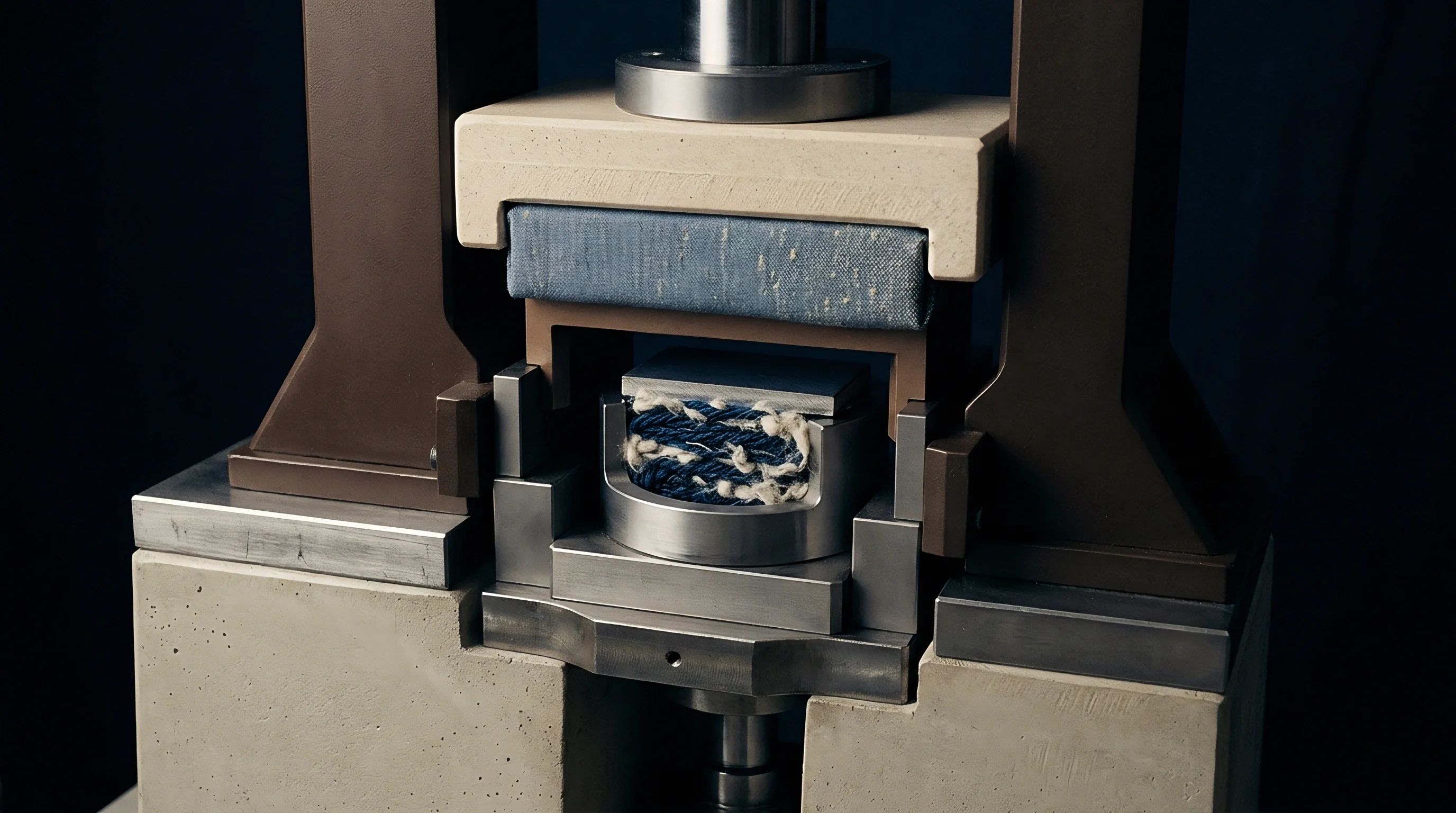
Woven geometry defined by warp and weft cover factors above 0.88 restricts liquid displacement. Flattened, low-dpf (denier per filament) yarns deform under weaving tension, forming non-circular, slit-like capillary geometries that present higher hydraulic drag than ideal cylindrical pores. Yarn twist restricts liquid transport.
High yarn twist further compacts the filament bundle, closing inter-filament channels and forcing dye liquor to rely entirely on slow, molecular diffusion to shade the yarn core.
The structural anisotropy of woven fabrics creates directional hydraulic resistance variations. Flow parallel to the warp direction experiences lower resistance due to continuous yarn alignment, whereas flow perpendicular to the fabric plane faces tortuous, discontinuous paths through intersecting warp and weft crossovers. Low circulation rates cause stripes.
Fluid transport across the fabric thickness requires traversing tortuous pore pathways where hydraulic drag continuously depletes fluid kinetic energy, resulting in significant differential pressure loss across the fabric web.
| Fabric Construction | Cover Factor | Mean Pore Size (µm) | Air Permeability (cm³/cm²/s) | Hydraulic Head Loss (kPa) |
|---|---|---|---|---|
| 40D/34f Nylon 6,6 Plain Weave | 0.86 | 12.4 | 18.5 | 3.2 |
| 50D/72f Polyester Micro-Twill | 0.91 | 6.8 | 8.2 | 8.7 |
| 70D/144f Polyester High-Density Plain | 0.94 | 3.1 | 2.4 | 16.4 |
| 100D/288f Micro-Filament Ripstop | 0.96 | 1.9 | 0.9 | 24.8 |
| Air permeability measured according to ASTM D737 at 125 Pa pressure differential. Hydraulic head loss determined across fabric sample at 1.5 m/s liquor cross-flow velocity. | ||||
Processing high-density woven fabrics with inadequate hydraulic penetration mechanisms generates specific surface and internal defects. Shades appear lighter in areas subjected to high compression, and core extractions reveal un-dyed white filament cores beneath a deeply dyed fabric surface.
- Filament Core Ring-Dyeing occurs when dyestuff exhausts completely on outer filament surfaces before fluid shear forces dye liquor into the yarn center, causing low abrasion fastness and color change during garment wear.
- Center-to-Selvedge Shade Banding arises from uneven cross-web hydraulic resistance during reel or beam dyeing, where liquor bypasses the dense central fabric web in favor of lower-density selvedge regions.
- Rope Mark Creasing forms when dense synthetic fabrics are processed in low-shear jet machines, where stiff, poorly lubricated fabric folds experience high local mechanical pressure without adequate fluid film cushioning.
- Surface Color Bronzing results from localized dyestuff hyper-accumulation within stagnant boundary layers, causing dye precipitation and poor crocking fastness on the fabric face.
Fabric builds with extremely tight filament packing demand slower heating gradients and higher mechanical turnover to achieve complete dye penetration into the yarn interior.

Nozzle
Mechanical energy applied by circulation pumps generates the force necessary to strip stagnant fluid films from yarn bundles. Jet dyeing machine nozzles serve as the primary transducer converting hydraulic pump energy into high-velocity fluid kinetic energy. Jet nozzles generate pressure drops.
By forcing the dye liquor and fabric rope through a constricted orifice, the nozzle generates localized turbulent shearing forces that dismantle static boundary layers, driving deep liquor exchange through the fabric web.
ISO 105-J03 color difference failures above half a Delta E unit trigger bath re-leveling protocols that increase thermal degradation risks.
Nozzle design and internal cross-sectional geometry directly govern the pressure gradient across the fabric web. Venturi-type nozzles accelerate liquor flow through a converging section before expanding into a mixing chamber, creating a localized pressure drop that pulls the fabric rope forward. This sudden pressure change forces liquor through the inter-yarn pores, inducing micro-turbulent convection inside the weave architecture and stripping away viscous surface films.
Differential Pressure Gradients in Jet Dyeing Chambers
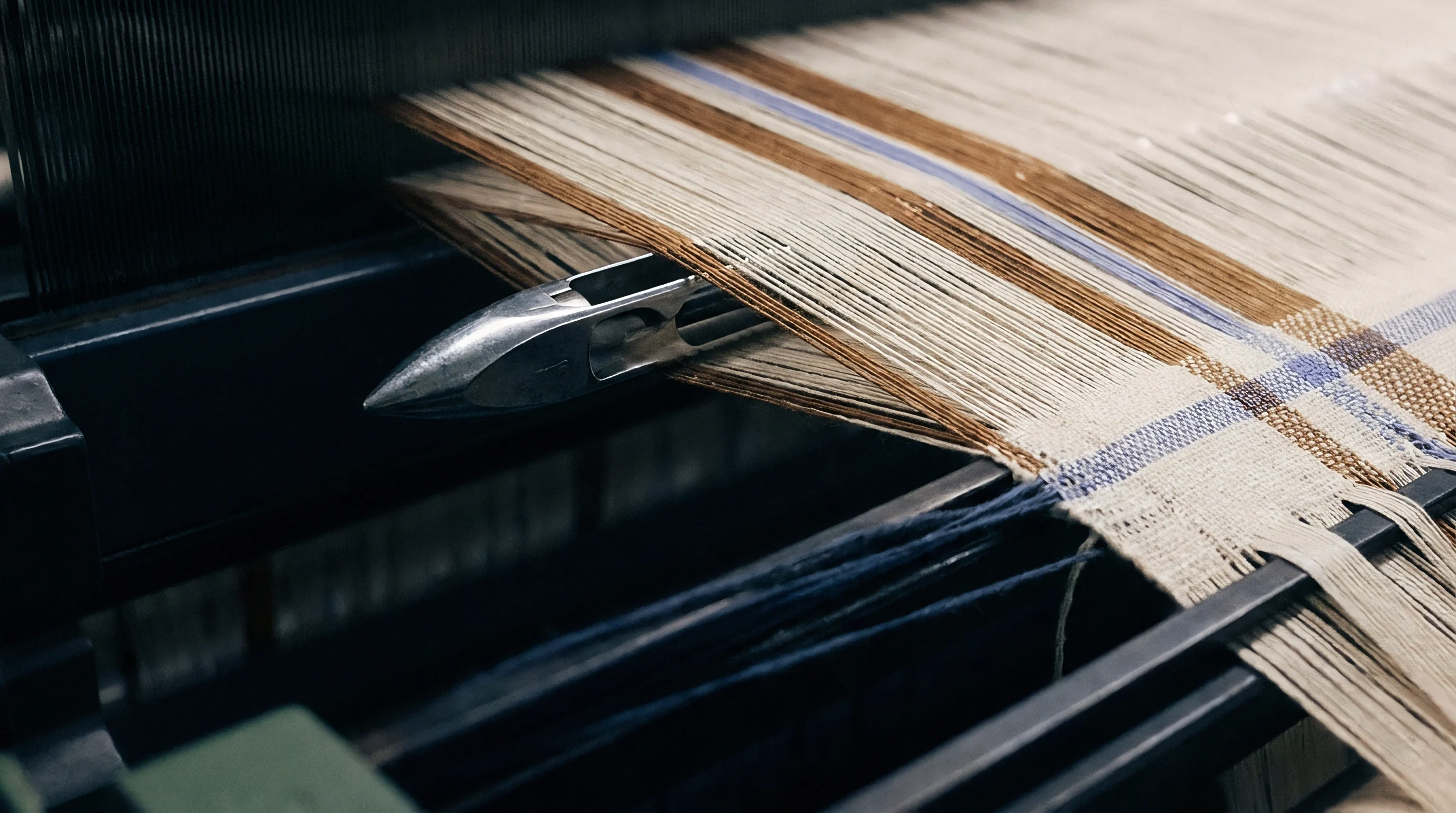
Bath circulation through restricted venturi passages generates shear stress along the fabric surface. The differential pressure between the nozzle inlet and the transport tube outflow establishes the driving force for cross-web liquor transport. Shade levelness demands turbulent penetration.
Operating at higher pump frequencies increases this differential pressure, generating higher velocity gradients that compress the fluid boundary layer thickness to sub-micron dimensions.
Excessive differential pressure, however, induces excessive mechanical tension on sensitive high-density constructions. High mechanical tension stretches synthetic fibers at elevated dyeing temperatures, causing warpwise distortion, density variations, and permanent thermal creasing. Modern jet dyeing equipment employs variable-gap circular nozzles that allow independent adjustment of liquor flow volume and nozzle differential pressure, enabling precise tuning of hydrodynamic shear without over-tensioning the fabric rope.
Worked Calculation of Fluid Resistance and Flow Energy
Consider a dyehouse processing a 300-kilogram lot of 100 percent micro-denier polyester woven fabric (75-denier / 144-filament warp and weft, 140 ends per inch, 110 picks per inch, finished weight 115 grams per square metre, total fabric surface area approximately 2,600 square metres) in a high-temperature jet dyeing machine with a liquor ratio of 1:8. Total liquor volume equals 2,400 litres (2.4 cubic metres). The machine circulation pump operates at a volumetric flow rate of 1,200 litres per minute (0.02 cubic metres per second), yielding a total bath turnover cycle time of 2.0 minutes.
The fabric rope travels through a circular venturi nozzle with a throat diameter of 65 millimetres (cross-sectional area of 0.003318 square metres). Liquor velocity through the nozzle throat reaches 6.03 metres per second. Assuming liquor density of 980 kilograms per cubic metre at 130 degrees Celsius and dynamic viscosity of 0.00021 Pascal-seconds, the Reynolds number inside the nozzle throat is calculated as:
Re = (density × velocity × diameter) / viscosity = (980 × 6.03 × 0.065) / 0.00021 = 1,829,350
This high Reynolds number confirms a fully turbulent flow regime within the nozzle throat. To determine the hydraulic boundary layer thickness along the fabric rope surface passing through the nozzle, the boundary layer equation for turbulent flow along a surface applies:
delta = 0.37 × x / (Re_x ^ 0.2)
For a nozzle length x = 0.25 metres and local Reynolds number Re_x = 7,035,000, the calculated boundary layer thickness delta is 0.00037 metres (370 micrometres) under static conditions, but compresses under localized turbulent cross-shear to approximately 8.5 micrometres. The fluid shear stress (tau) exerted on the fabric surface equals:
tau = 0.5 × f × density × velocity²
Using a friction factor f of 0.008 for dense micro-denier fabric, the shear stress reaches 57.1 Pascals. This shearing force provides sufficient kinetic energy to overcome the capillary entry pressure of 14.2 kilopascals calculated for the 3.1-micrometre average pore radius of the fabric, ensuring thorough liquor turnover inside the yarn matrix every 2 minutes.
| Fabric Cover Density | Nozzle Gap (mm) | Differential Pressure (bar) | Liquor Velocity (m/s) | Boundary Layer Thickness (µm) | Levelness Index (Delta E) |
|---|---|---|---|---|---|
| Standard Plain Weave (CF 0.78) | 140 | 0.35 | 3.2 | 22.4 | 0.28 |
| Medium Micro-Twill (CF 0.85) | 110 | 0.55 | 4.8 | 14.1 | 0.35 |
| High Density Down-Proof (CF 0.92) | 85 | 0.85 | 6.5 | 8.2 | 0.42 |
| Ultra-Dense Military Ripstop (CF 0.96) | 65 | 1.25 | 8.1 | 4.8 | 0.58 |
Execution of a high-density dyeing sequence requires systematic adjustment of machine parameters to maintain boundary layer compression throughout the thermal ramp.
- Load the fabric rope into the vessel and prime the circulation system with demineralized water at 40 degrees Celsius to establish uniform rope flotation.
- Set the circulation pump variable frequency drive to deliver a minimum liquor turnover rate of one complete bath volume every 90 seconds.
- Adjust the adjustable venturi nozzle gap to achieve an initial differential pressure of 0.6 bar across the transport tube.
- Inject pre-dissolved wetting and leveling auxiliaries over a 10-minute dosing window while maintaining continuous mechanical circulation.
- Initiate the thermal ramp at a controlled rate of 1.0 degree Celsius per minute from 60 to 130 degrees Celsius for synthetic fibers.
- Increase pump frequency at 100 degrees Celsius to raise nozzle differential pressure to 0.9 bar, compensating for thermal fluid expansion and maintaining turbulent shear.
- Hold at maximum dyeing temperature for 45 minutes while monitoring rope speed to ensure zero fabric slippage in the transport chamber.
- Cool the bath at 1.5 degrees Celsius per minute down to 80 degrees Celsius before initiating rinse cycles to prevent thermal shock creases.
The precise threshold where hydrodynamic shear transitions from beneficial boundary layer thinning to mechanical fiber filamentation in ultra-microdenier fabrics remains an active point of operational debate in dyehouse engineering.
Agent
Chemical auxiliaries alter liquor equilibrium to lower interfacial energy at the liquid-solid junction. While mechanical nozzle pressure provides kinetic driving energy, chemical surfactants alter the thermodynamic properties of the bath to dismantle the boundary layer film. Dynamic wetting surfactants reduce both static and dynamic surface tension, allowing dye liquor to wet hydrophobic filaments rapidly under high-speed fluid motion.
Surfactants that lower dynamic surface tension below 30 millinewtons per metre dismantle the stagnant liquid layer surrounding dense synthetic filaments.
Surfactant molecules align at the fluid interface, orienting hydrophobic tails toward the synthetic fiber wall and hydrophilic heads toward the aqueous bath. This molecular orientation reduces the solid-liquid contact angle from hydrophobic values above 80 degrees to wetting values below 20 degrees. Lower contact angles reduce the capillary entry pressure requirement, enabling liquid penetration into 2-micrometre inter-filament gaps under moderate hydraulic heads.
Surfactant Kinetics and Boundary Layer Penetration
Dynamic surface tension values dictate how rapidly active bath components suppress interfacial drag. Under jet dyeing conditions, new liquid-solid interfaces are created continuously at rates exceeding several square metres per second. Standard equilibrium surfactants migrate too slowly to lower surface tension at these rapid creation rates.
Dynamic wetting agents, particularly short-chain ethoxylated alcohols and sulfosuccinate derivatives, possess ultra-fast adsorption kinetics, migrating to freshly exposed fiber surfaces in milliseconds.
Fast-acting surfactants depress the dynamic surface tension at short surface ages (10 to 50 milliseconds), preventing liquid bead-up and accelerating capillary transport through micro-channels. By decreasing interfacial friction, these auxiliaries also reduce the effective viscosity of the stagnant boundary layer, promoting micro-turbulent mixing directly adjacent to the filament wall. This chemical boundary layer suppression works synergistically with mechanical nozzle shear to enhance dye mass transfer rates.
Dyestuff Aggregation at High Liquor Velocity
Molecular clustering in disperse and reactive bath chemistry directly alters diffusion behavior across stationary liquid barriers. Highly aggregated dye complexes exhibit larger hydrodynamic radii, lowering their diffusion coefficients according to the Stokes-Einstein equation. Smaller molecular or un-aggregated dye species diffuse significantly faster across residual boundary layer films than large molecular clusters.
High fluid shear forces inside jet nozzles help disperse dyestuff aggregates, maintaining dyestuff in a molecularly dispersed or ultra-fine dispersion state. Dispersing agents added to the bath must exhibit high shear stability to prevent thermal or mechanical precipitation under extreme nozzle velocity. If dispersing agents break down under shear, dyestuff agglomeration occurs, resulting in specking, filtration stains on dense web faces, and severe reduction in fastness properties.
| Surfactant Chemical Class | Equilibrium Surface Tension (mN/m) | Dynamic Surface Tension at 50ms (mN/m) | Foam Height at 130°C (mL) | Core Penetration Time (s) |
|---|---|---|---|---|
| Non-Ionic Fatty Alcohol Ethoxylate | 28.5 | 44.2 | 120 | 18.4 |
| Anionic Sodium Diisobutyl Sulfosuccinate | 31.2 | 29.8 | 250 | 6.2 |
| Low-Foaming Alkyl Phosphate Ester | 32.0 | 33.5 | 15 | 8.1 |
| Fluorinated Ethoxylate Surfactant | 19.8 | 26.4 | 180 | 4.5 |
Selecting chemical wetting package components for dense woven processing requires evaluating performance across multiple chemical parameters.
- Dynamic Wetting Kinetics must match or exceed the bubble formation rate corresponding to maximum nozzle fluid creation speeds during bath circulation.
- High Shear Thermal Stability prevents chemical auxiliary cloud-point separation and precipitation when subject to temperature ramps up to 130 degrees Celsius under 1.2 bar pressure.
- Low Foam Generation Potential protects circulation pump efficiency, preventing pump cavitation and loss of hydraulic head during high-velocity nozzle discharge.
- Dyestuff Compatibility guarantees zero ionic interaction or complexation with active disperse, acid, or reactive dye molecules present in the bath.
Chemical suppliers frequently attribute unlevel shade results to improper machine temperature control, defending their surfactant formulations by placing fault on thermal program execution.
Audit
Commercial specifications for high-density goods demand verified penetration metrics alongside visual shade matching. Standard surface spectrophotometry fails to detect ring-dyeing and interior core white spots inside densely packed micro-denier yarns. Quality verification procedures must combine surface colorimetry with cross-sectional optical microscopy and extraction testing to confirm true cross-web dye levelness.
Securing consistent bulk delivery requires establishing objective hydraulic processing protocols within mill technical dossiers. Fabric specifications should detail maximum acceptable air permeability thresholds, target cover factors, and required nozzle operational parameters. By tying commercial purchase order clearance to quantified physical metrics, buyers prevent mills from running high-density fabrics on underpowered equipment that relies on prolonged, high-temperature thermal leveling to mask underlying boundary layer penetration failures.
Contractual Tolerances for Penetration and Levelness
Standardized evaluation protocols measure shade variance across the inner, middle, and outer layers of dyed rolls. Color difference calculations using the CIEDE2000 formula set upper acceptability limits for batch uniformity. For technical outer-wear and down-proof high-density fabrics, commercial contracts typically specify an overall Delta E of less than 0.50 units across the roll, with intra-roll core-to-surface variance restricted to less than 0.40 units.
Cross-sectional shade verification requires microtome sectioning of dyed yarn bundles followed by digital image analysis. The ratio of dye intensity at the yarn core to dye intensity at the outer yarn perimeter defines the penetration index. High-density fabrics achieving a penetration index above 0.85 pass commercial qualification, ensuring the dyed fabric retains color fastness when subjected to surface abrasion, flexing, and domestic laundering.
Acceptance Criteria for High Cover Dye Lots
Technical buyer dossiers require physical testing data alongside spectrophotometric color values prior to shipment clearance. Laboratory verification protocols include measuring crocking fastness (ISO 105-X12), wash fastness (ISO 105-C06), and abrasion color fastness (ISO 12947-2). High boundary layer resistance during dyeing directly degrades wet and dry crocking fastness due to surface dye deposition.
Incoming lot inspection requires sampling three full-width swatches per 1,000 metres of dyed fabric. Swatches undergo spectrophotometric mapping across nine discrete points to verify left-center-right uniformity. Any lot exhibiting systematic edge-to-center shade deviation exceeding 0.45 Delta E units is rejected or flagged for secondary laboratory extraction analysis before release to the cutting floor.
Incorporating an ISO 105-J03 color difference tolerance clause below 0.6 Delta E units measured across core-to-surface yarn extractions forces mills to document boundary layer shear parameters on every batch production log.