Desorption Rate Constant Modeling in Counter Current Cellulosic Fabric Washing
Counter-current cellulosic washing rate constant models optimize bath temperatures and intermediate nip squeezes to maximize solute extraction per litre of water.
Substrate
Pore Structure and Contaminant Entrapment
Alkaline wet-processing baths cause severe swelling in cellulosic materials. Raw cotton fibers feature microfibrillar networks with pore diameters from 1.5 to 10 nanometers. During reactive dyeing, electrolyte salts like sodium sulfate or sodium chloride drive dye molecules into the swollen interior of the cellulose matrix.
Under alkaline conditions, a substantial portion of the reactive dye hydrolyzes instead of forming covalent bonds with the cellulose hydroxyl groups. This hydrolyzed byproduct stays trapped in the internal pore liquid rather than binding to the polymer wall.
When cotton fibers swell in water, the inter-crystalline passages narrow while the path length for entrapped solutes to reach the fiber surface grows longer. Extracting unfixed hydrolysate requires two steps: molecular diffusion from the pore capillary out to the surface, and convective mass transport through the static boundary layer around the yarn bundle. In continuous woven fabric processing, yarn twist density and weave sett form macroscopic channels that hamper mass transport further.
High cover factor plain weaves compress intra-yarn space, leaving stagnant liquor pockets that resist mechanical exchange.
Continuous washing ranges operating above 60 metres per minute require mandatory boundary layer turbulence to prevent mass transfer stagnation.

Boundary Layer Dynamics and Solute Release
Liquids around individual filaments stay static until external mechanical agitation breaks the fluid film. Increasing liquor velocity relative to the fabric thins the boundary layer. In static or low-flow wash baths, boundary layer resistance dominates overall mass transfer, driving hydrolyzed dye concentration at the fiber surface near saturation.
Dynamic ranges use high-velocity fluid jets, submerged squeeze rolls, or ultrasonic agitation to shear off this film, shifting control back to internal pore diffusion.
Inside cellulosic pores, hydrolyzed dyestuffs diffuse about two orders of magnitude slower than in bulk water. High molecular weight reactive dyes with multiple sulfonate groups face steric hindrance inside swollen pores, which depresses the effective diffusion coefficient. Bath temperature shifts this equilibrium by widening pore channels and raising solute kinetic energy.
Overlooking how temperature affects internal pore transport leaves unfixed hydrolysate behind during high-speed washing passes.
Retaining hydrolyzed dye below the surface causes color bleeding during drying. As moisture evaporates from the fabric core on stenter frames, residual solutes migrate with the water front to the yarn surface. This thermal migration concentrates unfixed dye on the outer face of the yarns, spoiling wash fastness in later commercial laundering.
Gradient

Counter-Current Cascade Mechanics
Continuous washing ranges run liquor counter to fabric movement to maintain strong concentration gradients across every unit. Fresh water feeds into the final box where the fabric carries the lowest contaminant load, while spent liquor overflows back toward the entry box where raw fabric arrives with the highest concentration of salt and hydrolyzed dye. This arrangement preserves a steady driving force along the entire range, preventing localized equilibrium stagnation.
Transfer efficiency in each wash compartment depends on stage concentration equilibrium. A single box running equal liquor volume and fabric throughput hits a maximum theoretical dilution limit set by bath volume ratio and liquor carryover. Cascading liquor across discrete compartments turns the concentration profile into a steep step-function, cutting the total water needed to reach target residual dye levels on the cloth.
| Stage Number | Liquor Temp (°C) | Fabric Speed (m/min) | Solute Concentration (g/L) | Nip Pickup (%) | Fastness Rating (ISO 105-C06) |
|---|---|---|---|---|---|
| Box 1 (Entry) | 50 | 80 | 14.2 | 75 | Grade 2.0 |
| Box 2 | 70 | 80 | 8.6 | 72 | Grade 2.5 |
| Box 3 | 90 | 80 | 4.1 | 70 | Grade 3.5 |
| Box 4 | 95 | 80 | 1.8 | 68 | Grade 4.0 |
| Box 5 | 80 | 80 | 0.6 | 68 | Grade 4-5 |
| Box 6 (Exit) | 60 | 80 | 0.1 | 65 | Grade 5.0 |

Flow Efficiency and Inter-Stage Contamination
Weir overflows move liquor between compartments without back-mixing. When fabric line speed increases without a matching increase in counter-current pumping, boundary layers drag contaminated bath liquid forward into cleaner downstream boxes. This drag-out carryover degrades the concentration gradient by carrying high-solute liquor into boxes meant for final rinsing.
- Short-Circuiting Flow Paths occur when incoming fresh water bypasses the active agitation zone and runs straight into the weir overflow, cutting bath renewal efficiency by 30 to 45 percent.
- Thermal Inversion Zones form when cold feed water sinks to the bottom of the tank, creating temperature layers that slow dye desorption along lower roller paths.
- Squeeze Nip Slippage lets excess contaminated liquor slip between boxes under low nip pressure, raising downstream solute concentrations above equilibrium limits.
- pH Buffer Accumulation occurs when residual alkali from fixation carries over into hot wash boxes, driving dyestuff hydrolysis instead of extraction.
A bath temperature drop from 90°C to 70°C reduces the desorption rate constant of hydrolyzed Reactive Black 5 by 42 percent in 220 g/m² woven cotton.
Poor fastness often stems from inadequate liquor interchange across high-speed counter-current wash boxes rather than excessive dyestuff hydrolysis levels.
Calibration
Mathematical Derivation of the Desorption Rate Constant
Desorption of unfixed solute from swollen cellulosic fabric follows first-order mass transfer kinetics provided liquor renewal stays high enough to avoid surface saturation. The rate at which contaminant concentration changes on the fabric over time is proportional to the difference between the fabric matrix concentration and bath equilibrium concentration, expressed as:
dC_f / dt = -k_d (C_f – K C_l)
In this expression, C_f represents residual solute concentration on the fabric in grams per kilogram of dry fiber, C_l is bath solute concentration in grams per liter, K is the equilibrium partition coefficient of the solute between cellulose and water, and k_d is the desorption rate constant in reciprocal seconds (s^-1). Integrating across fabric dwell time (t) in a single wash stage yields the non-equilibrium extraction profile:
C_f(t) = K C_l + (C_f,0 – K C_l) exp(-k_d t)
Dye diffusion controls the overall desorption rate. Calculating k_d requires tracking concentration changes in a closed-loop test cell across different temperatures and flow velocities. This constant combines internal pore diffusion and exterior film boundary transport into a single operational parameter.

Why Does Thermal Energy Accelerate Desorption Kinetics?
Thermal agitation weakens hydrogen bonds between hydrolyzed dye molecules and cellulose. Raising bath temperature provides the activation energy bound solute molecules need to detach from pore sorption sites and move into the mobile pore liquid. The temperature dependence of the desorption rate constant follows the Arrhenius relationship:
k_d = A exp(-E_a / (R T))
Here, A is the pre-exponential frequency factor, E_a is the activation energy of desorption in joules per mole, R is the universal gas constant (8.314 J/mol K), and T is absolute temperature in Kelvin. Heavy reactive dye structures with high affinity for cellulose need higher activation energy to desorb quickly, requiring wash bath temperatures above 90°C to maintain effective kinetics.
| Dye Structure Class | Molecular Mass (g/mol) | Activation Energy E_a (kJ/mol) | k_d at 60°C (1/s) | k_d at 90°C (1/s) | Partition Coefficient K |
|---|---|---|---|---|---|
| Monochlorotriazine (MCT) | 615 | 32.4 | 0.018 | 0.062 | 0.12 |
| Vinyl Sulfone (VS) | 500 | 28.1 | 0.025 | 0.081 | 0.08 |
| Bis-Monochlorotriazine | 1140 | 44.8 | 0.007 | 0.034 | 0.25 |
| Polyfunctional Hetero | 980 | 39.2 | 0.011 | 0.048 | 0.19 |
For a working example, consider a continuous wash line running 220 g/m² woven cotton fabric at 60 metres per minute through a box with an active submerged path length of 12 metres. That gives a dwell time of 12 seconds per box. If fabric enters Box 3 carrying 15.0 grams of hydrolyzed Vinyl Sulfone dye per kilogram of fabric, with bath solute concentration kept at 2.0 g/L and temperature at 90°C, the table gives k_d = 0.081 s^-1 and K = 0.08.
First, calculate the equilibrium fabric concentration achievable in this bath: K C_l = 0.08 2.0 = 0.16 g/kg. Substituting these values into the integrated kinetic rate equation gives C_f(12) = 0.16 + (15.0 – 0.16) exp(-0.081 12). The exponential term resolves to exp(-0.972) = 0.3783.
Multiplying by the initial concentration difference yields 14.84 0.3783 = 5.614 g/kg, and adding the equilibrium base gives a final outlet fabric concentration of 5.77 g/kg. This single wash stage extracts 9.23 grams of contaminant per kilogram of cloth.
If bath temperature in Box 3 drops to 60°C from insufficient steam injection, k_d falls to 0.025 s^-1. The calculation gives exp(-0.025 12) = exp(-0.30) = 0.7408, raising outlet concentration to 0.16 + (14.84 0.7408) = 11.15 g/kg. Extracted contaminant drops from 9.23 g/kg to 3.85 g/kg ~ a 58 percent loss in washing performance caused entirely by thermal kinetic decay.
Whether micro-cavitation technologies can permanently lower the activation energy of pore diffusion in dense cellulosic weaves remains unproven on continuous high-speed lines.

Squeeze
Mechanical Extraction and Carryover Mass Balance
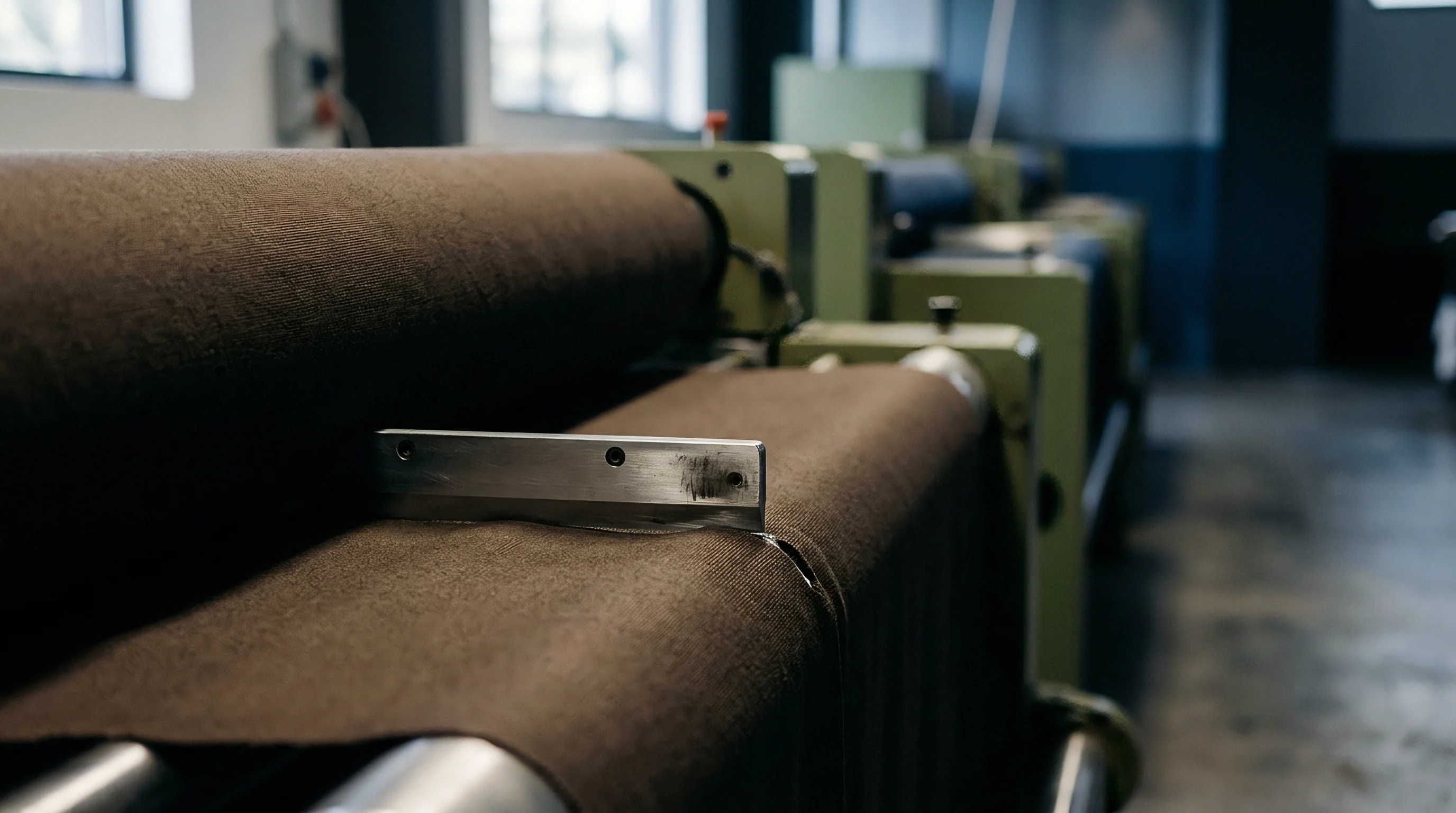
Inter-stage squeeze nips act as mechanical gatekeepers between concentration steps in continuous washing ranges. Liquid carryover leaving a squeeze nip includes bound water inside fiber capillaries and free liquid clinging to yarn intersections. Thorough mechanical squeezing reduces the mass of liquor carried forward into the next wash box, protecting the overall concentration gradient.
Wet pickup percentage measures the mass of liquor remaining on fabric relative to dry fabric mass after mechanical squeezing. A nip operating at 85 percent wet pickup carries 0.85 kilograms of contaminated bath liquid per kilogram of dry cloth. Reducing nip pickup to 60 percent cuts the forward transport of dissolved contaminants by nearly 30 percent before mass transfer kinetics even begin in the next box.
Lowering wet carryover at intermediate nip rollers accelerates solute extraction more effectively than doubling fresh water flow into the tail wash box.
Nip Calibration Procedure
Accurate squeeze pressure settings across high-speed lines prevent localized liquor retention. The standard calibration protocol for intermediate squeeze rollers involves these operational steps:
- Verify pneumatic cylinder pressure gauges against certified reference transducers to ensure equal loading on left and right roller arms.
- Pass static nip impression paper through the unheated roller gap to record the contact footprint across the full face width of the bowl.
- Measure the width of the carbon imprint at 100-millimeter intervals across the roll face to identify crown wear or center-flexion gaps.
- Adjust pneumatic pressure until impression width variation across the working width stays under five percent.
- Cut three 100 cm by 100 cm fabric samples from the left, center, and right positions of a running cloth web immediately after the squeeze nip.
- Weigh the wet samples immediately on a sealed field balance, dry them at 105°C for two hours, and reweigh to compute absolute local wet pickup.
Elastic deformation of soft rubber rolls increases contact area but lowers peak nip pressure, degrading extraction efficiency on dense woven fabrics. Hard synthetic rubber coatings (85 to 90 Shore A durometer) generate narrow nip zones with high peak hydrostatic pressure, stripping surface water films away from tight yarn structures.
Maintaining a uniform nip impression across the full roller width prevents localized liquor retention that ruins wet fastness along fabric selvedges.
Analysis
Spectrophotometric Measurement and Kinetic Parameter Fitting
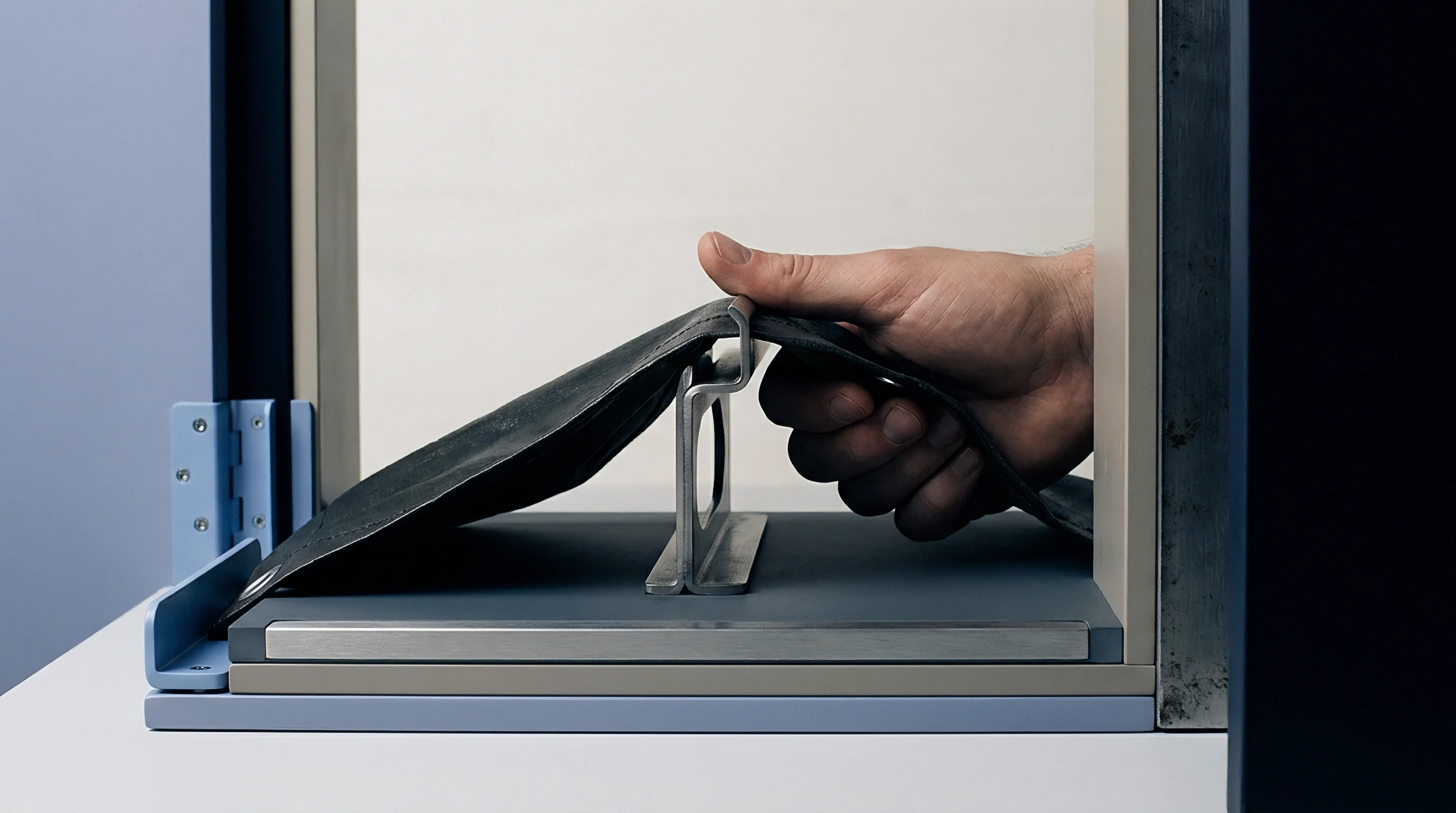
Determining desorption rate constants in the laboratory requires real-time tracking of solute concentration changes in controlled extraction cells. Absorbance values measured by UV-Vis spectrophotometry at maximum absorption wavelength (λmax) map directly to dye concentration through the Beer-Lambert law. Standardized fabric specimens are immersed in stirred, constant-temperature wash baths while a continuous flow circuit pumps liquor through quartz cuvettes in the spectrophotometer.
Plotting the natural logarithm of dimensionless concentration ratios against immersion time yields a straight line whose slope gives the experimental desorption rate constant. A steep initial slope reflects rapid boundary film diffusion, whereas the tailing portion reveals internal pore diffusion constraints. Non-linear regression models separate these two phases to yield distinct rate constants for surface film transport and intra-fiber pore extraction.
Executing wash-off steps below ISO 105-C06 Method C2S temperature thresholds leaves unfixed hydrolysate in the fiber core, triggering wet fastness rejections during garment assembly.
Fastness Verification Protocols
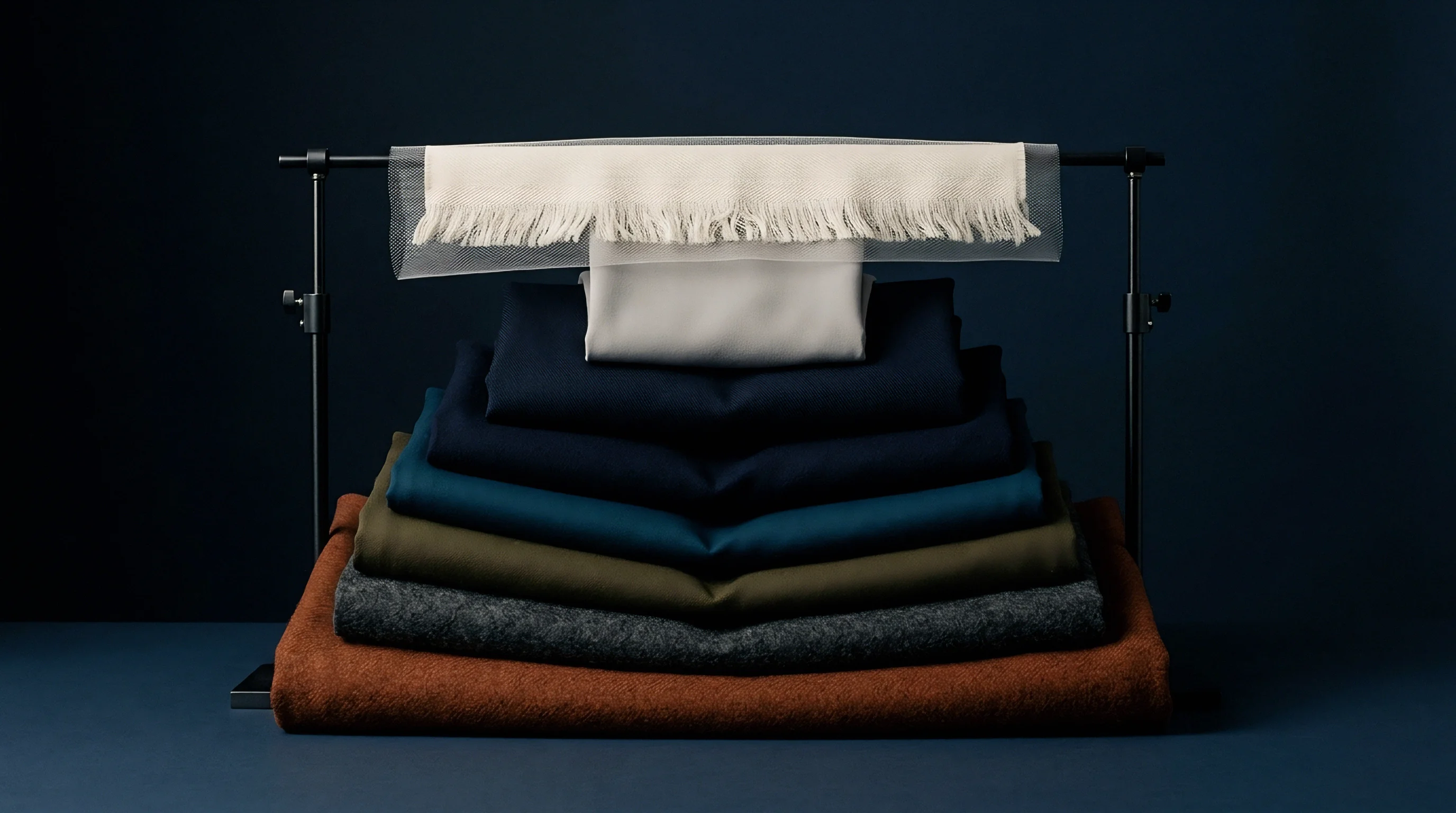
Standardized wash fastness testing confirms whether modeled desorption rates produce the required performance in production. Standard ISO 105-C06 Method C2S requires laundering fabric specimens at 60°C with perborate-boosted reference detergent and steel balls for 30 minutes, followed by evaluating staining on adjacent multifiber strips under D65 illuminants.
- Yarn Twist Multiplier Verification should take place before setting line speed, as high-twist ring spun yarns retard intra-yarn mass diffusion by 25 percent compared to open-end rotor yarns.
- Hydrolyzed Dye Extraction Ratios must reach at least 98.5 percent of total unfixed dye prior to final stenter drying to avoid fastness degradation.
- Submerged Fabric Path Length needs to be checked against machine drawings to calculate actual residence time per compartment at high line speeds.
- Bath Liquor Turbidity Index must stay below target absorbance limits to ensure fresh water feed rates prevent liquor saturation in terminal wash boxes.
Inserting a requirement for ISO 105-C06 Method C2S compliance with a maximum delta E of 0.8 into the greige purchase agreement forces converters to re-rate wash box liquor ratios before starting bulk production.
Valuation
Water, Steam, and Capital Equipment Trade-Offs
Continuous washing economics hinge on balancing capital expenditure for additional wash compartments against utility expenses. A 4-box range demands high fresh water flow rates to maintain the concentration gradient needed for target fastness ratings, while an 8-box range increases initial capital outlay but cuts specific water consumption per kilogram of cloth.
Heating cold fresh water up to target wash temperatures of 95°C consumes massive quantities of thermal energy, making water volume the primary driver of steam utility costs. Reducing fresh water intake through optimized counter-current flow lowers boiler thermal load and reduces steam expenditure per finished metre of fabric.
| Range Configuration | Specific Water Use (L/kg cloth) | Steam Consumption (kg/kg cloth) | Line Speed Capability (m/min) | Fastness Pass Rate (%) | Utility Cost per Metre ($) |
|---|---|---|---|---|---|
| 4-Box Basic Range | 18.5 | 2.4 | 45 | 88.5 | 0.068 |
| 6-Box Standard Range | 10.2 | 1.3 | 70 | 96.2 | 0.041 |
| 8-Box High Efficiency | 6.5 | 0.8 | 90 | 99.4 | 0.027 |
| 8-Box with Vacuum Extraction | 4.8 | 0.6 | 100 | 99.8 | 0.022 |
Landed Cost Optimization
Optimizing desorption rate constants lets converters maximize fabric throughput without risking fastness failures. Raising bath temperature from 70°C to 95°C increases hourly steam costs but allows line speed to rise from 50 to 80 metres per minute. That higher hourly fabric output dilutes fixed overhead and machine depreciation, lowering total conversion cost per metre.
Capital investments in intermediate vacuum extraction heads or ultra-high pressure squeeze nips pay off by reducing carryover liquor volume between stages and avoiding the fastness losses that trigger table rejections. Lowering carryover permits higher line speeds while maintaining strict ISO 105 fastness compliance across high-volume production runs.