
Standard Quantitative Chemical Separation of Cotton Polyester Yarns
Standard chemical separation of cotton polyester yarns uses 75% sulfuric acid dissolution with gravimetric recovery corrected for commercial moisture regain.
Standard chemical separation of cotton polyester yarns uses 75% sulfuric acid dissolution with gravimetric recovery corrected for commercial moisture regain.

Quantify commercial blend mass through oven desiccation and statutory regain allowances to eliminate hysteresis and condensation errors in customs audits.

Non-linear fiber loss in dual nozzle spinning causes composition drift that alters yarn mass, pilling resistance, and customs classification thresholds.

Converting laboratory dry chemical reports to standard commercial regain mass prevents tariff misclassification and aligns invoice billing with landed net weight.

Seasonal raw cotton purity shifts alter chemical extraction mass ratios, triggering customs tariff reclassifications across chief weight thresholds.

Determining cotton viscose yarn blend composition requires solvent extraction pretreatment, precise reagent temperature control, and empirical d-factor corrections.

Verifying declared synthetic fiber ratios requires standardized chemical dissolution, precise moisture regain adjustments, and statistical sampling to avoid customs reclassification.

Sulfuric acid extraction isolates polyester residue to verify yarn composition against commercial moisture regain standards and tariff weight thresholds.

Commercial mass calculations prevent paying for atmospheric moisture by basing billing on clean dry mass plus official fiber regain allowances.

Wet finishing contraction alters fabric mass per square metre and relative fiber weight fractions, driving tariff classification drift and landed cost escalation.

Unextracted spinning oils distort oven-dry fiber mass ratios, triggering false chief-weight customs reclassifications between cotton and viscose tariffs.
Solvent extraction adjustments correct non-fibrous loss and moisture regain to convert raw dry residual weights into accurate commercial mass for tariff settlement.
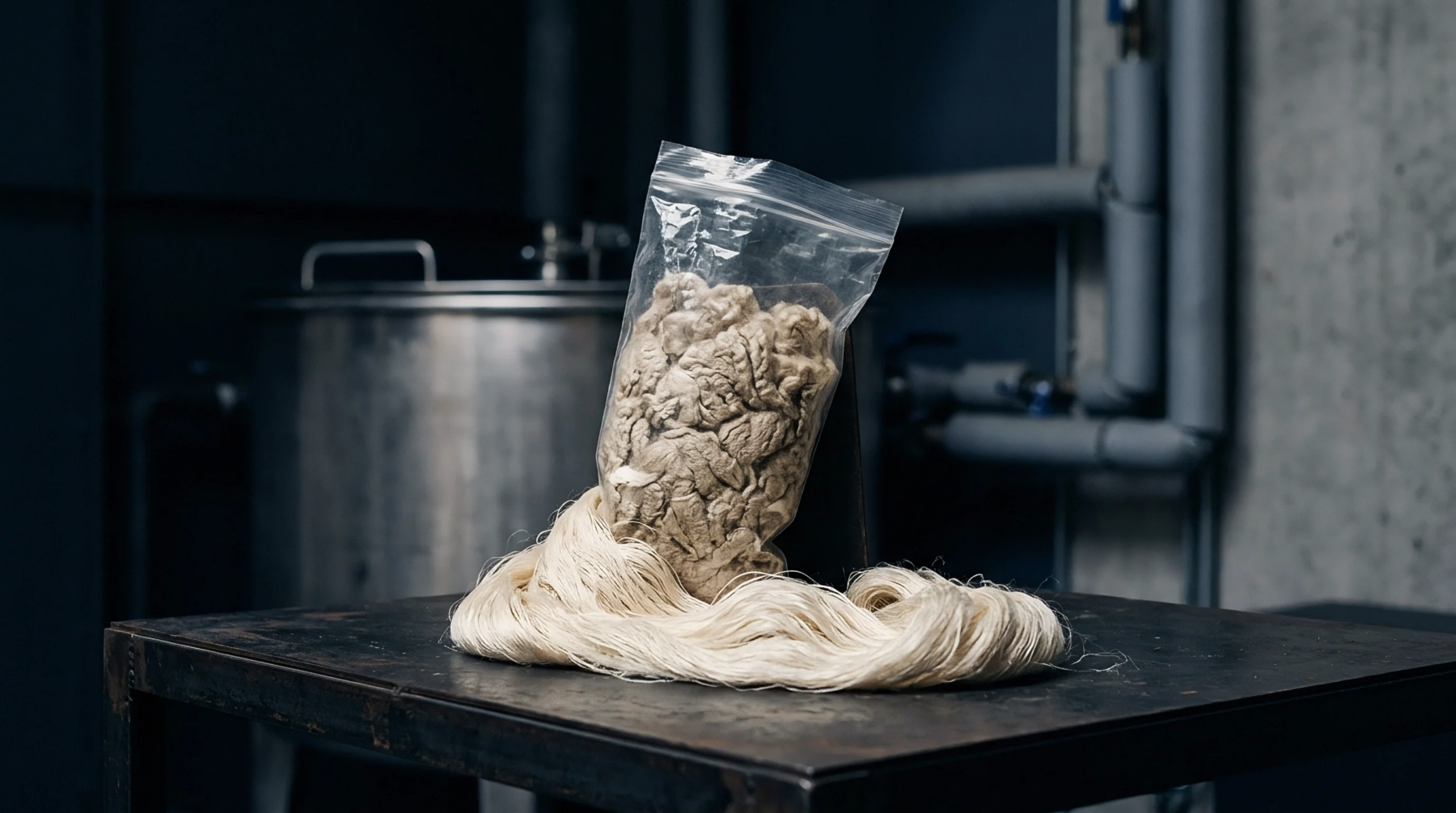
Commercial mass equals oven-dry mass multiplied by standard regain allowances, establishing an immutable billable weight independent of transit moisture shifts.

Fibre composition dictates physical durability, moisture regain, dye chemistry, and customs classification before spinning machinery turns.
Expertise is a utility, not a secret. sentiention™ publishes its working knowledge as open reference: intelligence layer covering the materials it sources, the markets it enters, and the reference that serves both.