Surface Disruption
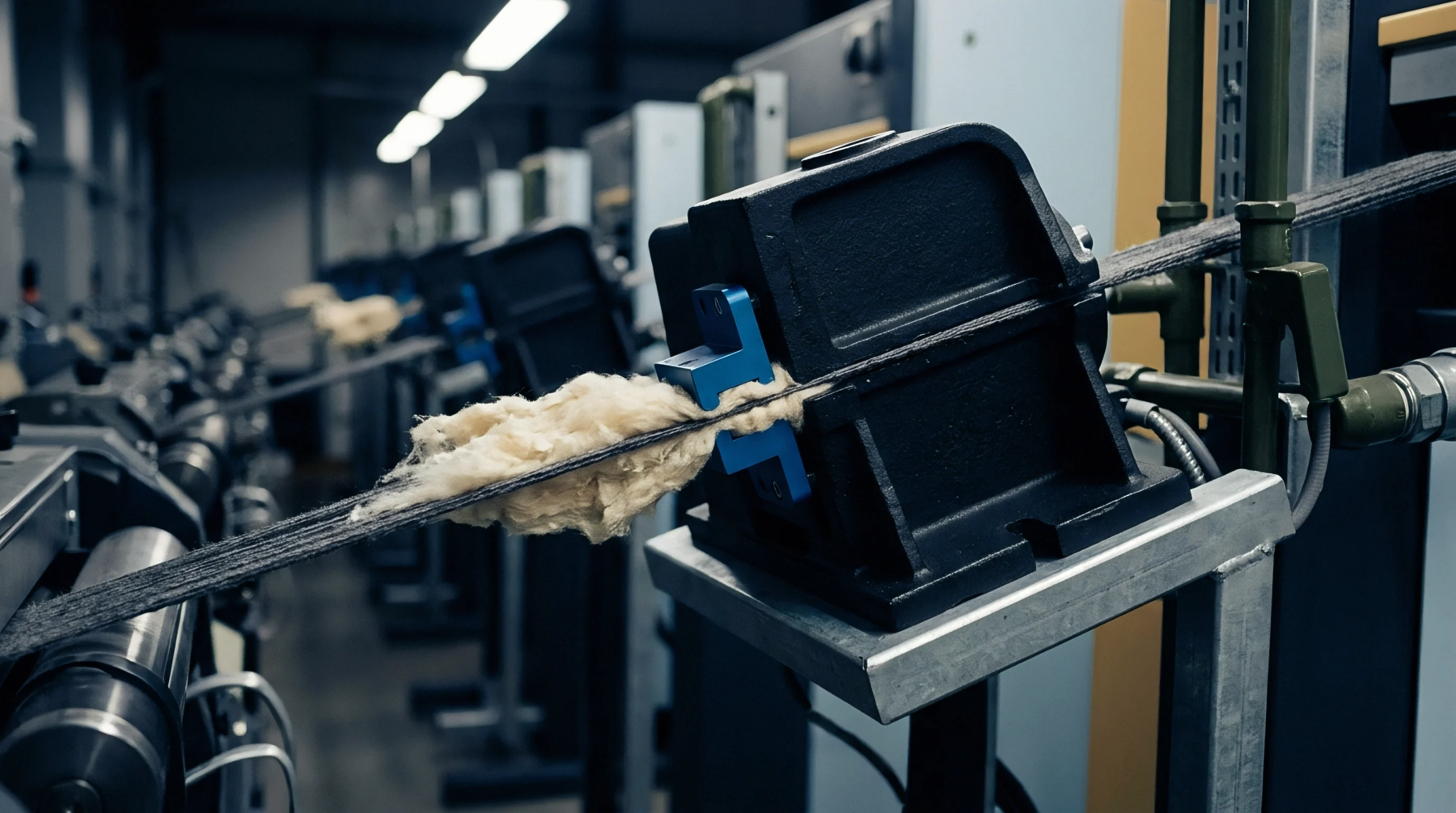
Mechanical abrasion of individual synthetic filaments appears as a superficial whitening or localized loss of luster on dyed fabrics where friction occurs during high speed textile finishing operations. Micro scuffing happens when the coefficient of friction between a guide surface and a polymer chain exceeds the material threshold for heat dissipation. As the filament travels across a stationary ceramic or metallic contact point, thermal energy builds at the interface point.
The energy forces a physical reorientation of the molecular structure on the outer surface of the individual fibre. Because the deformation is localized to the topmost layer of the synthetic filament, the structural integrity of the yarn strand remains mostly intact while the optical properties of the surface change permanently. Light scatters differently across the damaged site compared to the surrounding smooth areas, creating a dull gray patch that rejects uniform dye uptake during the subsequent exhaustion process.
Textile mills monitor these zones of friction closely to prevent permanent batch defects during the warping and drawing stages.
Inspection Parameter
The verification of micro scuffing takes place through controlled visual inspection under standard D65 illuminants using a grey scale for contrast assessment against an untreated control sample. Operators perform these assessments at the grey fabric stage before the final heat setting process locks in the altered morphology. Technicians identify these regions by tilting the fabric at varying angles to catch reflections on the crown of the yarn.
If the whitening persists under magnification of ten times, the condition is confirmed as mechanical damage rather than a surface contaminant like spin finish residue or sizing salts. The detection threshold depends upon the denier of the yarn and the luster of the original filament count. Heavier yarns show lower sensitivity to mild abrasive contact than fine microfibres, where the high surface area makes every individual filament vulnerable to damage.
Process Consequence
Persistent micro scuffing creates uneven light reflection that survives the dyeing cycle and appears as streaks in the finished garment. Dye molecules require a uniform surface geometry to bond with the polymer matrix in a consistent manner across the entire fabric roll. Damaged zones alter the rate of dye diffusion into the filament core, leading to lighter shades that differ from the surrounding dyed area.
These zones often hold onto soil more easily during the lifecycle of the consumer good, as the disturbed surface creates microscopic pockets for particulates to lodge within the filament skin. Finishing plants mitigate these issues by replacing worn ceramic guides with polished materials that offer superior heat dissipation.
Production Boundary
Prevention stops where material properties dictate the limit of friction tolerance for the specific synthetic polymer chosen for production. High melt point polymers allow for increased processing speed compared to low transition materials that soften rapidly under load. When a production line hits the speed limit of the fibre, no amount of guide maintenance prevents damage to the filaments.
The presence of these marks establishes the maximum effective throughput of a manufacturing machine, independent of the mechanical capacity of the drives or the motors. Constant monitoring of these subtle defects provides an objective limit on the processing speed for any synthetic yarn blend.