Spectroscopic Characterization of Micro-Spatial Finish Anisotropy in Technical Textiles
Spectroscopic micro-mapping resolves local finish depletion across yarn apexes that causes barrier failure despite compliant bulk chemical add-on assays.


Variance
Combustion ion chromatography following DIN EN 14582 records 1,240 milligrams of total fluorine per kilogram on a 300-denier high-tenacity nylon 6,6 woven twill. That quantity satisfies the technical data sheet for a C6 fluorochemical oil- and water-repellent finish. The cloth still wets out within ten seconds under an AATCC 22 spray rating assessment, dropping the expected grade of 100 down to 50.
Bulk extraction tests confirm the correct mass fraction of repellent solids across the square meter. The failure originates in the micro-spatial distribution of the polymer film across yarn crowns and inter-yarn valleys.
Fluorochemical and silicone formulations depend upon low surface energy arrangements at the exterior fiber-air boundary. When convective heat in the stenter oven drives drying liquors toward rapid evaporation, capillary action pulls uncrosslinked fluoropolymer solids toward yarn crossover points. The crests of the warp and weft yarns lose their protective fluorinated sheath, exposing bare polyamide fibers to droplet impingement.
Bulk analytical methods completely homogenize this topology, dissolving ten grams of specimen into a uniform solution that masks local depleted zones.
A surface concentration below 0.3 micrograms per square millimeter on yarn crowns causes instantaneous water droplet penetration regardless of bulk fluorochemical mass.
Micro-spatial anisotropy appears across three distinct structural levels in technical textiles. Filament bundles possess an inner core and an outer perimeter, yielding radial finish disparities. Woven architectures display differences between yarn crossover valleys and yarn apexes.
Finishing lines with one-sided kiss-roll application or asymmetric infrared pre-drying generate pronounced face-to-back finish divergence. Standard laboratory assurance relies on area-averaged metrics, letting non-uniform lots pass incoming inspection before failing barrier audits in field use.
- Apex Sheath Starvation leaves the uppermost filament curves stripped of protective low-energy perfluoroalkyl tails as liquor recedes into interior capillaries.
- Pore Neck Pooling concentrates crosslinked siloxanes into dense glassy agglomerates that crack under cyclic shear loads during transit.
- Weft Crimp Asymmetry directs migratory finish flow preferentially along slack filling yarns while tightly tensioned warp filaments remain dry.
- Hydrophilic Surfactant Segregation pushes re-wetting emulsifiers toward yarn peripheries during late evaporation phases, neutralizing hydrophobic repelling action.
Uncontrolled migration during dry-down leaves structural defects across technical cloth that ruin chemical durability. Substrates showing this morphology shed their water repellency after three commercial laundering cycles, while properly anchored coatings withstand thirty cycles. A batch showing extreme spatial dispersion fails the buyer’s liquid-barrier specification and creates immediate financial rejection across subsequent manufacturing runs.


Spot
Focal plane array detectors coupled with Fourier-transform infrared instrumentation capture tens of thousands of individual spectra across a four-hundred-micrometer field of view. The analytical field resolves localized finish gradients without chemical extraction or destructive milling. Operators trace characteristic absorption bands across specific pixel coordinates, matching infrared frequencies to distinct functional groups within the textile finish formulation.
The asymmetric carbon-fluorine stretching vibrations between 1,150 and 1,250 reciprocal centimeters indicate fluoropolymer deposition, while silicone methyl rock bands at 1,260 reciprocal centimeters pinpoint polydimethylsiloxane finishes.

Can Confocal Raman Resolve Subsurface Fluoropolymer Gradients?
Excitation lasers centered at 785 nanometers penetrate deeply into synthetic filament bundles, avoiding the fluorescence interference common to shorter wavelengths. Raman scattering targets the symmetric carbon-fluorine stretching vibration at 730 reciprocal centimeters alongside polyester backbone vibrations at 1,615 reciprocal centimeters. Step sizes of 0.5 micrometers in the axial plane permit three-dimensional reconstruction of finish penetration depths within single yarns.
The ratio between the finish band intensity and the fiber core intensity reveals the exact radial decline of chemical active agents from yarn exterior to core.
| Modality | Spatial Resolution | Probe Depth | Chemical Marker | Specimen Preparation | Acquisition Period |
|---|---|---|---|---|---|
| ATR-FTIR FPA | 3.5 to 5.0 µm | 0.5 to 2.0 µm | C-F band at 1,210 cm⁻¹ | Diamond contact mount | 4 minutes per tile |
| Confocal Raman | 0.8 to 1.2 µm | 10 to 45 µm | C-F stretch at 730 cm⁻¹ | Sectioned embedding resin | 25 minutes per map |
| FE-SEM EDX | 0.1 to 0.3 µm | 0.8 to 1.5 µm | Fluorine K-alpha line | Carbon conductive coating | 15 minutes per raster |
| ToF-SIMS | 0.08 to 0.15 µm | 1.0 to 2.0 nm | CF₃⁺ ion fragments | High vacuum cryo-stage | 40 minutes per patch |
High-energy electron beams coupled with energy-dispersive X-ray spectroscopy map elemental fluorine, silicon, and phosphorus alongside infrared vibrational data. The electron beam scans across yarn cross-sections prepared with a cryogenic ultramicrotome, generating elemental distribution maps at sub-micron resolution. Time-of-flight secondary ion mass spectrometry complements this raster by identifying the chemical fragmentation patterns of perfluoroalkyl side chains within the uppermost two nanometers of the yarn surface.
The physical morphology of the textile limits absolute quantitative accuracy on rough surfaces.
Surface roughness scatter degrades quantitative infrared baseline stability across yarn crimp valleys.
Signal attenuation occurs when non-planar filament surfaces lose intimate optical contact with internal reflection elements during attenuated total reflectance measurements. Germanium crystals with a high refractive index mitigate optical distortion, yet they risk mechanically crushing delicate hollow-core insulation fibers. Analysts resolve this tension by combining non-contact confocal Raman mapping with low-pressure micro-attenuated total reflectance sweeps.
What remains undetermined is whether absolute molecular orientation of perfluoroalkyl chains can be separated from simple local mass accumulation during rapid routine scans.

Nip
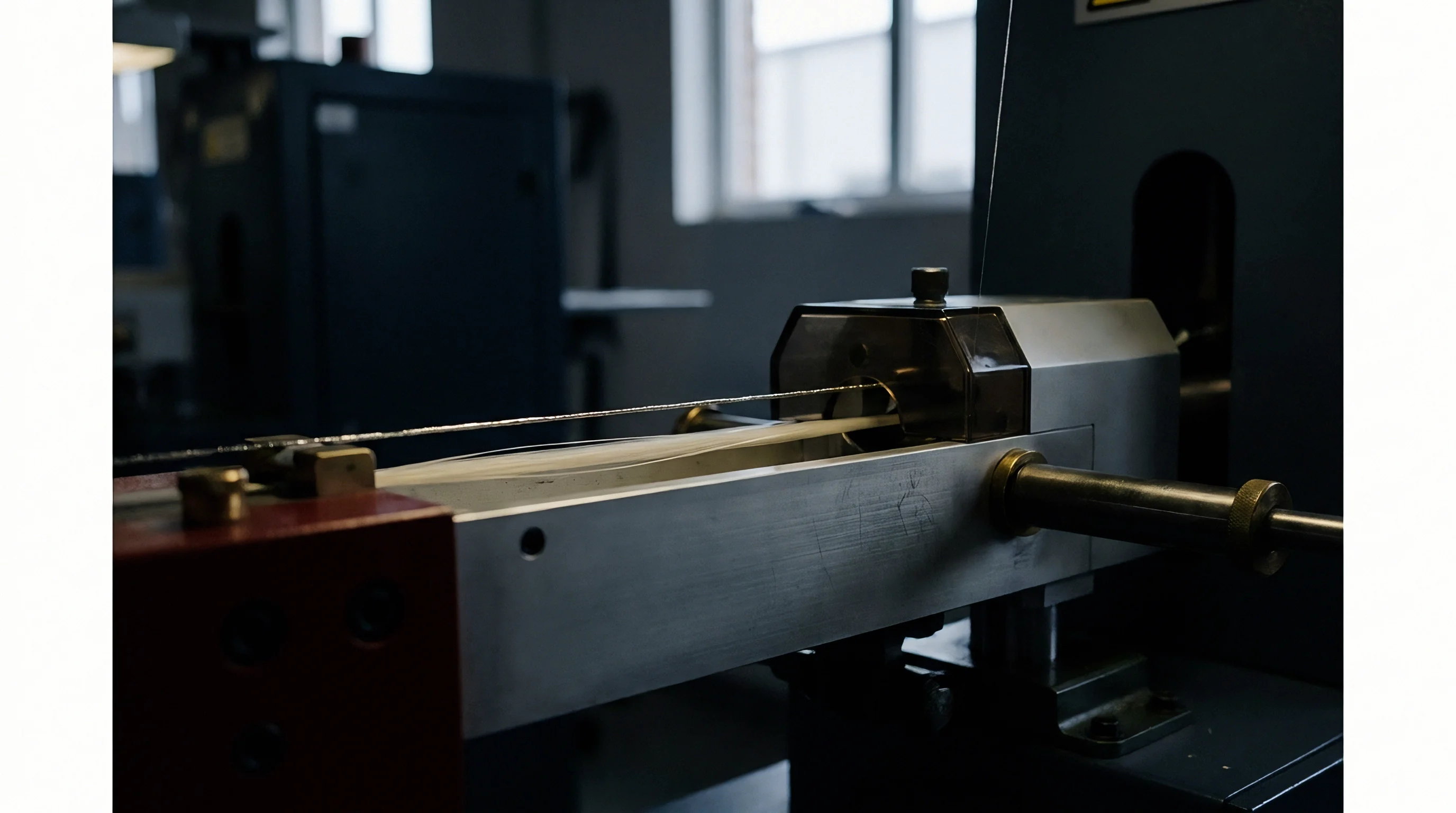
Two rotating steel cylinders clad in synthetic rubber squeeze finishing emulsions into the textile base under three to five bar of gauge pressure. Mechanical compression forces the liquid chemical mixture into the interior voids between warp and weft yarns. Capillary forces instantly compete with hydrostatic displacement the moment the wet sheet exits the squeeze zone.
Tight yarn structures generate negative capillary pressure, drawing finishing liquor out of wide inter-yarn interstitial pores and into narrow intra-yarn filament gaps.

Drying Kinetics Governing Cross-Sectional Migration
High convective airflow inside the initial zones of a tenter frame drives rapid solvent flash-off, triggering solute migration along thermal vectors. The dimensionless Peclet number, calculated as the ratio of convective transport rate to diffusive transport rate, determines whether finish molecules remain uniformly dispersed or travel outward toward the evaporating liquid front. Peclet values exceeding 1.0 force repellent polymers toward external yarn crowns, creating extreme radial concentration differences.
Low Peclet numbers below 0.2 allow finishes to diffuse uniformly across fiber matrices, producing balanced coverage throughout the yarn package.
- Verify wet pick-up percentages across left, center, and right tenter tracks to prevent gross roll-to-roll liquid imbalances.
- Engage intermediate-wave infrared pre-dryers immediately after padding to elevate core liquid temperatures without initiating surface skinning.
- Throttle initial convective air velocities below fifteen meters per second while wet moisture content remains above thirty percent.
- Ramp air temperatures progressively across six heating chambers from 110 degrees Celsius up to the crosslinking threshold of 170 degrees Celsius.
Improper tension controls during transport stretch warp yarns, tightening their internal fiber packing and rejecting finishing liquor into adjacent weft structures. The resulting anisotropic coverage leaves the warp direction vulnerable to hydrostatic burst failures under EN 20811 pressure testing. Calender rollers running at unequal surface speeds impart shear stresses that strip uncrosslinked coatings away from yarn tops, accumulating excess resin behind yarn crests.
| Air Velocity | Zone 1 Temperature | Peclet Number | Crown-to-Valley Ratio | Spray Rating |
|---|---|---|---|---|
| 24 m/s | 145 °C | 2.8 | 4.2 : 1 | 60 |
| 18 m/s | 130 °C | 1.6 | 2.7 : 1 | 75 |
| 12 m/s | 115 °C | 0.7 | 1.4 : 1 | 90 |
| 6 m/s | 100 °C | 0.2 | 1.1 : 1 | 100 |
Converters operating high-speed processing ranges often state that increased curing heat easily compensates for slight padding disparities across the roll width.

Sheath
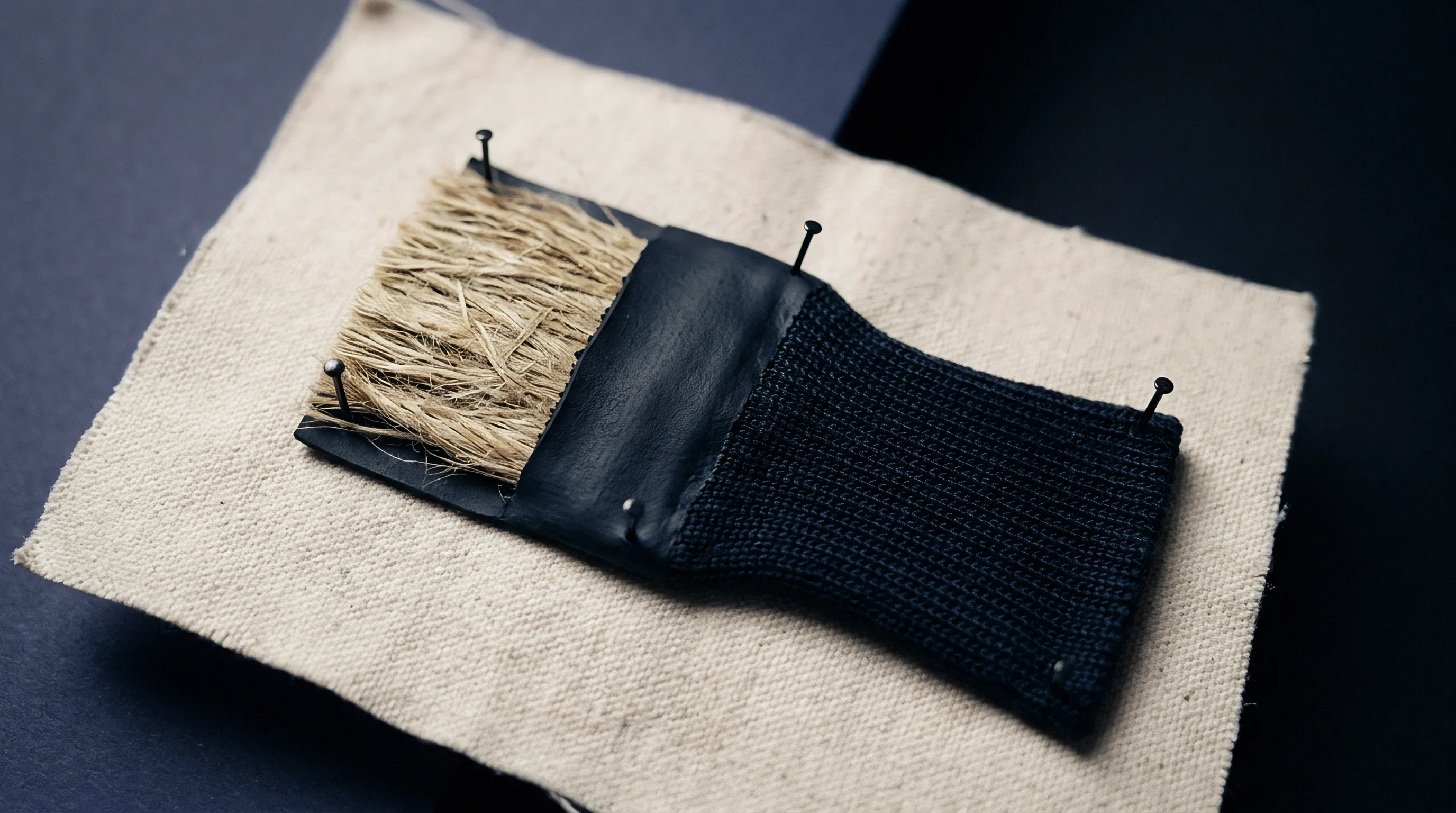
Cross-sectional inspection of treated single filaments shows whether chemical active ingredients coat the exterior circumference evenly or concentrate into asymmetric patches. In industrial monofilament filtration media and parachute fabrics, finish localization dictates mechanical endurance and airflow resistance. Concentrated polyurethane or fluoropolymer deposits form localized rigid zones along the outer filament skin.
These hardened zones crack under biaxial flexing, propagating stress fractures directly into the underlying oriented synthetic polymer core.

What Drives Asymmetric Cross-Wicking across Crimp Geometries?
Weft insertion introduces physical bends into warp yarns, establishing variable curvature radii along each repeating unit cell. Liquid finishing agents migrate along these curvature gradients toward points of maximum compressive strain during the thermal setting process. Woven twills exhibit greater structural bias than plain weaves due to longer yarn floats that expose broad surface areas to hot tenter airflow.
Fluid dynamics in micro-grooves dictate that wetting fronts accelerate along parallel fiber channels while stalling at perpendicular yarn intersections.
Under EN ISO 13934-1 testing, localized resin embrittlement along filament sheaths lowers warp tensile retention by twenty percent.
Spectroscopic mapping confirms that chemical repellent finishes migrate inward when hydrophilic sizing agents linger on greige yarn bases. Residual polyvinyl alcohol or polyacrylic sizes retain moisture, repelling hydrophobic fluorocarbon finishes toward outer filament crowns. The interface between the sized yarn core and the fluorinated sheath exhibits poor cohesive bonding.
Mechanical abrasion strips the outer chemical envelope away during routine laundering, exposing raw hydrophilic fibers that absorb moisture rapidly.
Similar physical segregation happens during semiconductor fabrication when photoresist solvents evaporate unevenly across etched wafer topologies. Sourcing specifications must identify chemical distribution directly rather than assuming total chemical quantity guarantees barrier reliability. Acceptance verification on technical yardage requires definitive micro-scale spatial boundaries.
- Mid-Roll Core Swatches cut twenty meters past the seam capture stabilized stenter thermal equilibrium conditions.
- Edge Strip Specimens removed five centimeters inward from the pin tenter selvedge detect convective edge-cooling deviations.
- Warp Crimp Segments isolated under stereomicroscopy allow targeted spectroscopic laser alignment on yarn crests.
- Cross-Sectional Mountings polished with diamond paste expose clean internal filament profiles for micro-Raman profiling.
The standard technical delivery clause under DIN EN ISO 14419 establishes that fluorochemical finishes must provide uniform liquid repellency across the full usable width of the piece goods, converting localized oil repellency drop-offs into actionable non-conformities.

Exposure
Commercial contracts for protective textiles carry severe liabilities when localized finish failures cause field penetration of hazardous fluids. Liquid chemical protective clothing certified under ISO 16602 Class 3 requires uniform resistance to liquid permeation under pressure. A protective suit showing flawless bulk fluorochemical concentration can fail localized permeation tests if seam interfaces or yarn crowns exhibit chemical finish gaps.
The import clearance of technical textiles hinges on batch compliance certificates matching physical container contents.

Surveillance Protocols for Port Border Detentions
Customs authorities operating within the European Union enforce strict PFAS limits under the POPs Regulation (EU) 2019/1021 alongside REACH Annex XVII entry 68. The current legal limit restricts perfluorooctanoic acid and its salts to twenty-five parts per billion, with total perfluorooctanoic acid-related substances capped at one thousand parts per billion. Importers face mandatory cargo detention and destruction orders when laboratory tests uncover banned substances.
The published limits rest on whole-sample solvent extractions analyzed via liquid chromatography-tandem mass spectrometry on ten grams of pulverized fabric, based on European Chemicals Agency sampling guidance from 2022. This regulatory framework assumes that chemical concentration remains homogeneous across the shipment. A ten percent change in laboratory extraction efficiency shifts border test results across the threshold between compliant clearance and immediate container impoundment.
A specific operational uncertainty involves the localized degradation rate of fluorotelomer finishes exposed to shipboard container humidity during four-week ocean transits. Hydrolytic breakdown of side-chain acrylate linkages generates free fluorotelomer alcohols in localized zones where water droplets condense inside shipping rolls. Testing laboratories currently report a broad range between five and fifty parts per billion for free perfluorooctanoic acid generated through this mechanism.
In the presence of this analytical variability, risk managers demand accelerated aging data under ISO 139 before authorizing balance payments to exporting mills.
| Standard | Test Parameter | Bulk Finish Assay | Observed Failure Point | Root Cause |
|---|---|---|---|---|
| AATCC 127 | Hydrostatic pressure | 1.5% solids add-on | Drop at 35 mbar | Inter-yarn valley finish void |
| ISO 4920 | Surface wetting | 1,100 mg/kg total F | Spray rating 70 | Warp crown fluoropolymer starvation |
| ASTM F903 | Chemical penetration | Target weight met | Failure at 12 minutes | Surfactant pooling in pore necks |
| EN ISO 14419 | Oil repellency | 1.8% C6 fluoropolymer | Grade 2 on weft face | Thermal migration to roll backing |
Bulk chemical verification confirms the quantity of repellent formulation applied inside the padder bath. Micro-spatial spectroscopic characterization proves whether that formulation reached its intended protective positions across the yarn landscape. Relying exclusively on total mass fractions creates unhedged product liability risks in critical safety markets.
Finish uniformity across the smallest weave unit remains the only true foundation for barrier longevity.