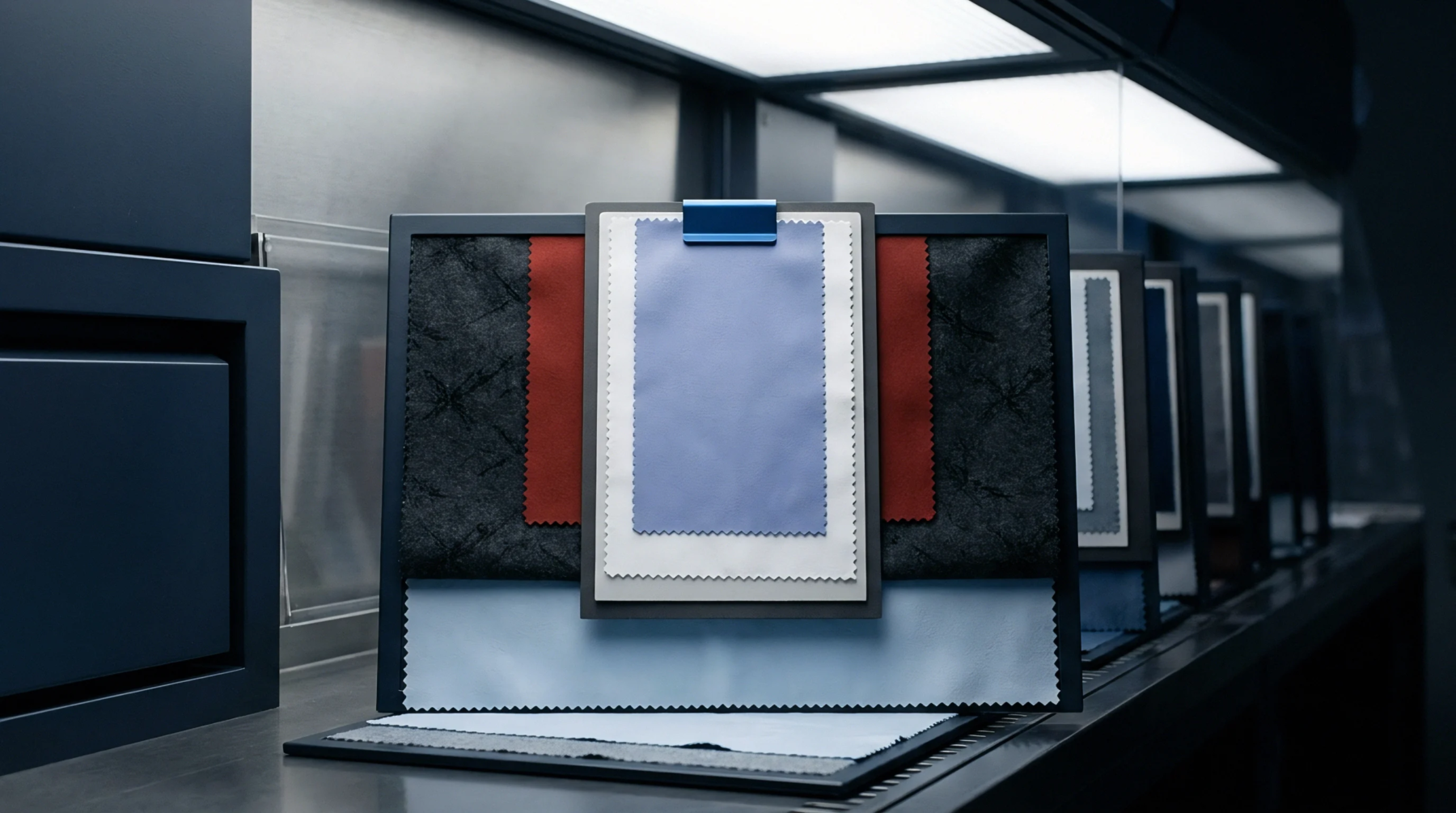
Spray Assessment
Standardized wetness evaluations measure the resistance of textile fabrics to wetting by water under controlled spray conditions. The method specified in AATCC 22 generates a visual comparison scale for fabrics that have received hydrophobic finishes. It does not measure water penetration under pressure, focusing instead on surface water absorption.
Nozzle Mechanics
Standard testing apparatus uses a glass funnel connected to a spray nozzle positioned at a fixed distance above the test specimen. Through this setup, AATCC 22 delivers a set volume of distilled water to the fabric surface held at a forty-five degree angle. The run of water mimics a sudden rain shower on a garment.
Repellency Grading
Visual comparison charts guide the observer in assigning a rating from zero to one hundred based on the pattern of wetting. In AATCC 22, a higher score represents superior resistance, where one hundred shows no sticking or wetting of the upper surface, and zero means complete wetting of both faces. Wetting patterns are compared to standard photographic standards to ensure consistency among different lab technicians.
This grading is conducted immediately after the spray cycle terminates to prevent drying from skewing the results of the assessment, offering a rapid, repeatable, and visual metric of treatment durability.
Mill Calibration
Finishing plants rely on this protocol for rapid quality control during the application of durable water repellent chemistry. Because the method takes very little time and requires simple equipment, the production line can be adjusted almost in real time to correct chemical pick-up issues. It represents the primary test for outdoor gear before more advanced barrier evaluations are carried out.