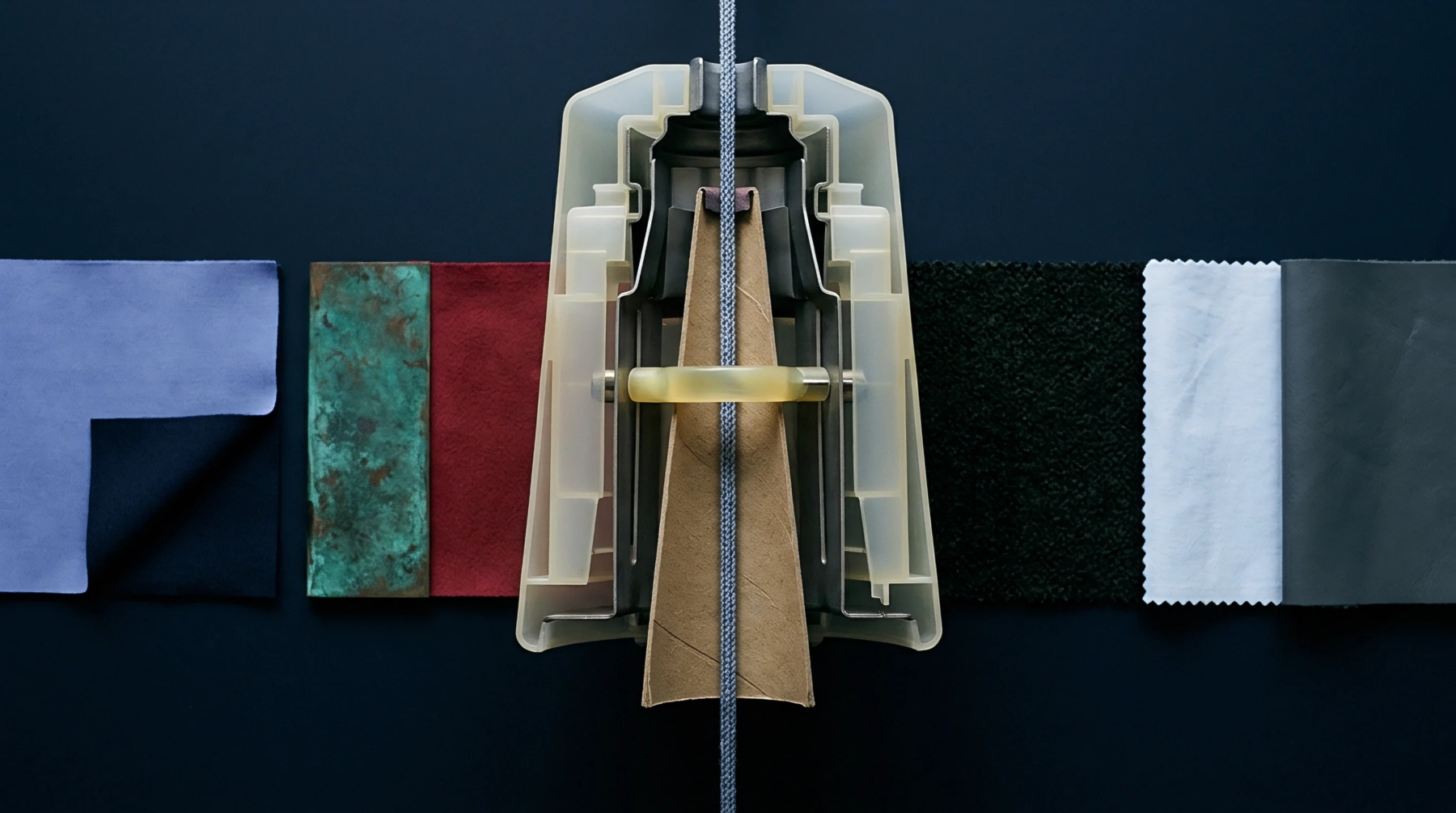
Polyurethane Filament
Synthetic polyurethane filament used without a covering yarn provides maximum elasticity and recovery in knitted structures while maintaining a low fabric weight per unit area. Mills often integrate bare elastane into circular knits to achieve high stretch levels for activewear and foundation garments. The material consists of a long chain synthetic polymer that can extend to several times its original length and return to its initial state without permanent deformation.
It represents the rawest form of stretch component available to a knitting mill. Engineers specify the decitex of the filament to control the power of the fabric and the degree of compression provided to the wearer. The lack of a protective sheath allows for higher stretch but leaves the polymer exposed to chemical degradation from oils or perspiration.
Friction Control
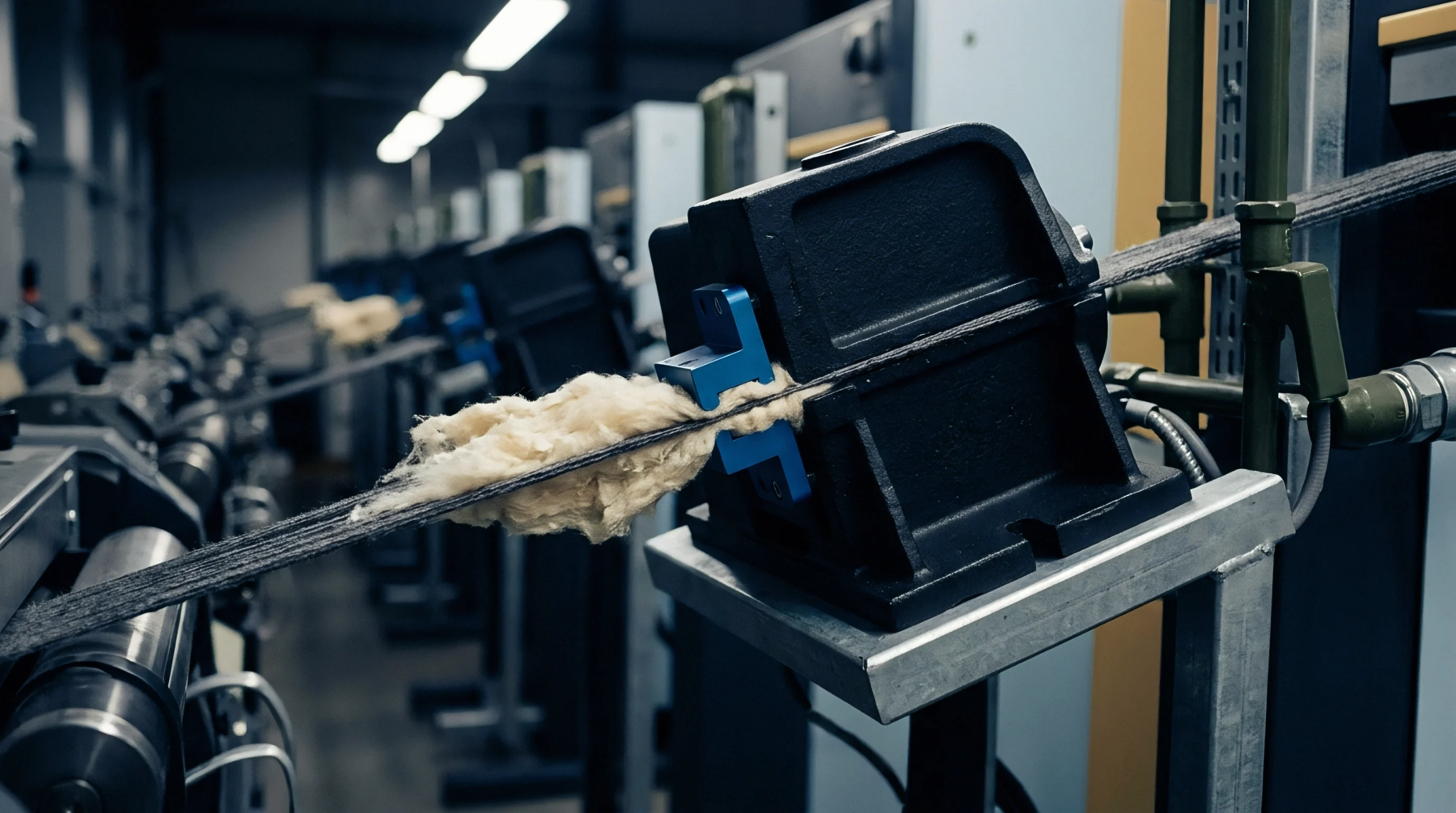
Processing this material requires specialized feeding systems because the surface of the polymer is naturally tacky and creates high levels of drag during high speed knitting. Bare elastane must pass through ceramic guides and specialized tensioners that prevent the yarn from snapping or creating uneven loops in the fabric. Lubrication is applied during the spinning process to facilitate smooth unwinding from the spool.
If the friction is not managed, the yarn may drag and create barre across the width of the knitted tube. Mills often use ceramic coated rollers to minimize the heat generated by the contact between the moving filament and the machine parts. High tension during feeding results in narrow fabric widths and poor length consistency.
Monitoring systems detect tension variations to ensure the elastic property remains uniform across the entire batch of material. Air humidity in the knitting room must be kept constant to prevent the polymer from becoming excessively sticky. Constant tension is required to avoid variation in the final garment dimensions.
Plating Dynamics
Knitting technology allows for the simultaneous feeding of a ground yarn and an elastic component to create a plated structure where the stretch yarn remains hidden. Bare elastane is typically fed at a lower tension than the companion yarn to ensure it sits on the inside of the loop. This placement protects the polymer from abrasion and prevents the filament from breaking during use.
Technicians adjust the feeder angle to ensure the two yarns do not twist around each other during the stitch formation.
Recovery Behavior
Finished garments rely on the internal tension of the knitted loops to maintain their shape after repeated stretching cycles. Bare elastane provides a more immediate and forceful recovery than covered yarns because there is no outer wrap to restrict the contraction of the core. This characteristic makes it suitable for high performance leggings and medical compression hosiery.
Excessive heat during the finishing process can damage the molecular bonds of the polymer and lead to a loss of elasticity. Dyeing temperatures must be carefully controlled to preserve the integrity of the stretch. The material stays stable under normal washing conditions.
It degrades when exposed to high concentrations of chlorine or sun oils.