Liquid Retention
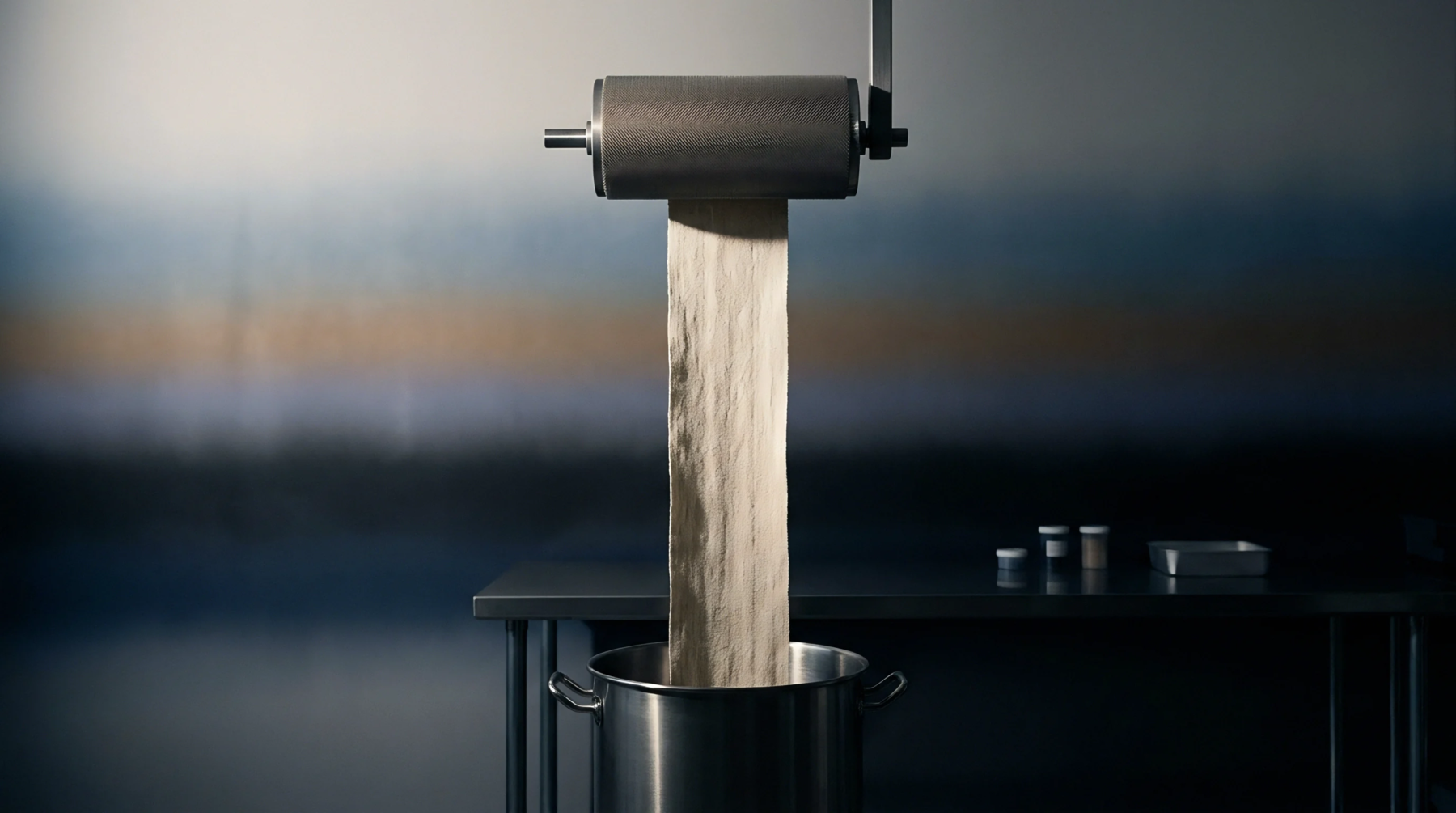
Liquid retention during chemical padding quantifies the precise mass of bath liquor absorbed by a textile substrate prior to mechanical expression between squeeze rollers. Padder wet pickup operates as a core metric inside continuous wet processing ranges where chemical liquor must distribute uniformly across woven or knitted widths before condensation or fixation. Mill operators calculate this parameter by comparing dry fabric weight against saturated fabric weight immediately after immersion and liquid displacement.
Standard procedures demand accurate weighing before compression against rubber or metal rolls. Deviations from target limits cause uneven dye penetration or binder migration across heavy cotton canvases and synthetic blends.
Squeeze Dynamics
Pressure application at the nip point dictates the final liquor ratio retained within internal capillary spaces. Roller hardness expressed in Shore durometer units and pneumatic loading forces determine how much liquid leaves the substrate. Higher nip pressures expel greater volumes of water, lowering residual moisture levels but risking crush marks on delicate filament yarns.
Operators adjust air cylinder pressures constantly to counteract roll deflection across wide finishing ranges.
Dry Basis
Calculation methods rely on bone dry mass values to eliminate moisture variations present in incoming greige goods. Technicians dry small sample swatches in laboratory ovens before saturation to establish a reliable baseline. Subsequent wet mass measurements divided by dry mass yield the precise percentage value utilized for recipe replenishment.
Temperature fluctuations in the pad bath alter solution viscosity, which subsequently shifts the calculated retention percentage without mechanical adjustments.
Process Control
Quality assurance protocols verify padder wet pickup continuously to maintain shade consistency throughout long production runs. Automated chemical dosing systems respond to fluid depletion by injecting concentrated auxiliary agents back into the trough. Fabric speed variations through the immersion zone also influence absorption mechanics, requiring synchronized drive motors across the entire machinery train.
Final verification occurs at the entry festoon of the drying chamber where moisture sensors monitor residual liquid content.