Chemical Compound
Reactive dye molecule that utilizes a vinyl sulfone group to form a stable chemical link with cotton fibres operates effectively under moderately alkaline conditions. Dyers often use a vinyl sulfone dye for cold pad batch applications where the high reactivity of the molecule allows for fixation at room temperature. This chemical class provides excellent wet fastness because the covalent bond formed between the dye and the cellulose is resistant to washing.
The application stops when the alkali concentration becomes too high, leading to the hydrolysis of the dye before it can react with the fibre.
Reactive Chemistry
The chemical mechanism involves the conversion of a precursor sulfate ester into the active vinyl sulfone form through an elimination reaction in the presence of alkali. Once activated, the dye molecules seek out the hydroxyl groups on the cellulose polymer to create a permanent ether bond. This reaction requires precise control of the pH level to maximize the fixation rate and minimize the amount of hydrolyzed dye that remains on the fabric surface.
If the bath temperature rises too high, the rate of hydrolysis increases, reducing the final color depth. Technical managers monitor these chemical variables to ensure the consistency of the shade across different production lots.
Fixation Process
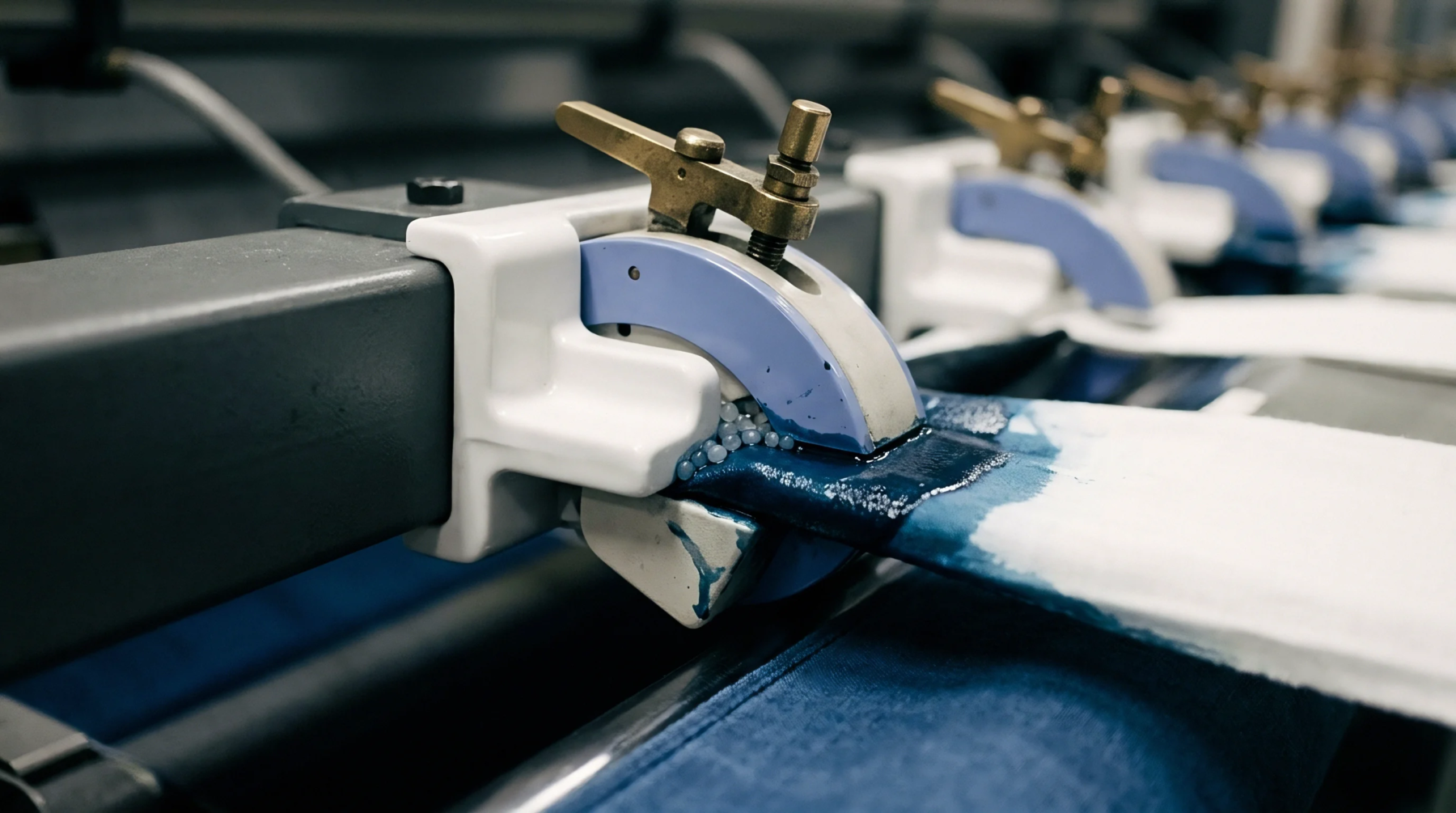
Fixation occurs over several hours in a batching process where the fabric roll is rotated to prevent the seepage of the dye liquor toward the edges. During this time, the active dye molecules penetrate the amorphous regions of the cotton fibre to establish the chemical bonds. The efficiency of this stage depends on the uniform distribution of the alkali throughout the fabric web.
If the saturation is uneven, the resulting color will show variations in depth or tone across the width of the roll. Modern pad batch machines use automated dosing systems to maintain the correct ratio of dye and alkali. The rotation of the roll is critical because gravity can pull the liquid downward, causing a concentration gradient that leads to shading defects.
After the batching period is complete, the fabric must undergo a thorough washing sequence to remove any unreacted or hydrolyzed dye from the fibre surface. This removal is necessary to prevent the dye from bleeding during consumer use. The washing process starts with a cold rinse, followed by several hot soaping stages that ensure the final product meets the required fastness standards.
If any hydrolyzed dye remains, the wash fastness of the fabric will drop, leading to complaints about color transfer.
Commercial Application
Industrial users prefer these dyes for their versatility in both exhaust and continuous dyeing methods. Because the bond is highly stable, the dyed textiles withstand repeated laundering without color loss or staining of other garments. This reliability makes the dyes a standard choice for high volume basics such as t-shirts and towels.
The cost effectiveness of the cold pad batch method also reduces the energy consumption of the dye house. By achieving deep shades at lower temperatures, mills can lower their operational costs while maintaining high quality standards.