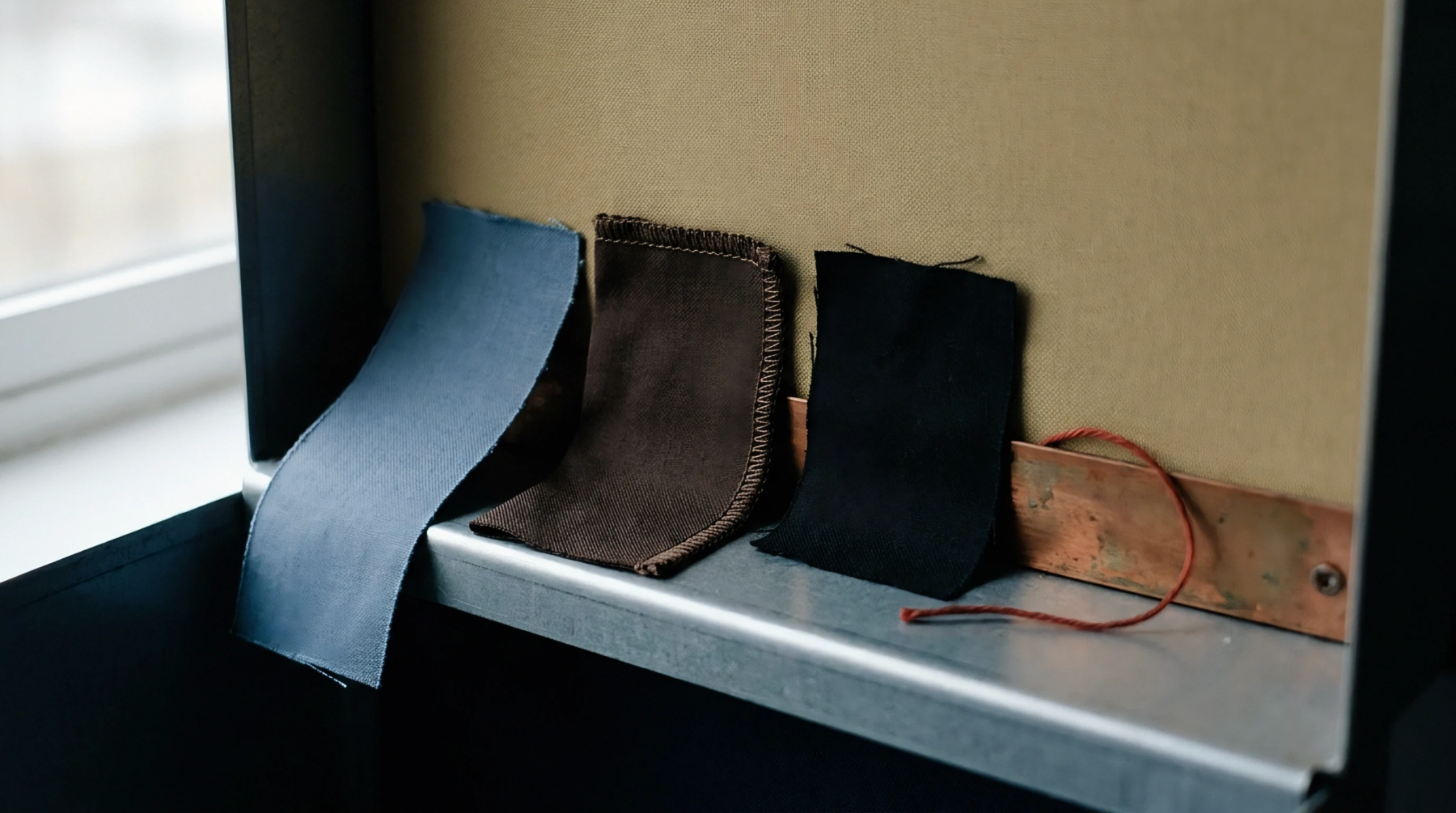
Moisture Gradient
Moisture migration between adjacent fabric layers during steam pressing indicates the differential diffusion potential. This metric defines the driving force for vapor transfer when a temperature imbalance exists across a multi-ply textile assembly. It governs the rate at which humidity shifts from a saturated surface toward a drier inner core within a material stack.
The measure applies strictly to non-equilibrium states where thermal energy alters the chemical activity of water molecules.
Energy Equilibrium
Thermal gradients across these textile layers determine the magnitude of vapor flow. A high differential diffusion potential promotes rapid drying cycles while an insufficient capacity risks residual moisture trapping within the structure. Synthetic fibres with low regain values resist this transition compared to natural wool or cotton counterparts.
Excessive heat application increases the vapor pressure gap beyond the baseline absorption rate of the specific fibre blend.
Process Control
Quality inspectors utilize this measurement to standardize industrial finishing parameters for heavy garment sections. Production engineers adjust steam timing until the differential diffusion potential remains within the tolerance range for the lightest base cloth. Laboratory testing involves measuring mass loss across calibrated samples under controlled pressure.
Results from these procedures predict bulk behavior during final heat-set stages.
Fabric Integrity
High levels of localized vapor movement cause permanent distortion in delicate synthetic knits. Uneven drying rates create internal stress that leads to shrinkage or surface puckering in the finished garment. Proper monitoring of the physical variables allows manufacturers to prevent structural degradation during high-speed finishing operations.
Control over these variables ensures dimensional stability across different lots of technical fabric.