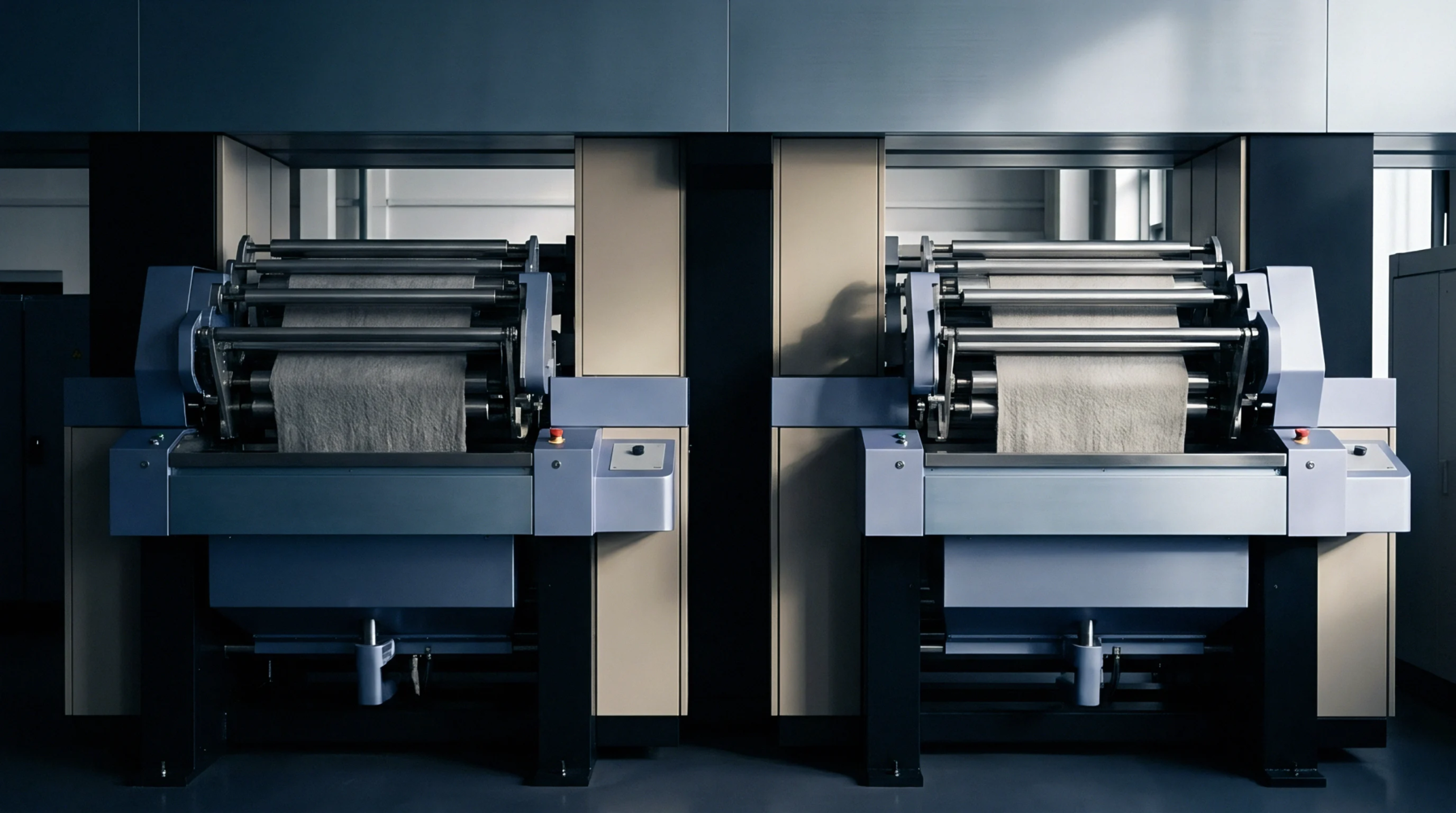
Tension Control
The tensile force exerted on a continuous fabric lane as it moves through processing machinery determines processing stability and width retention. Dynamic web tension must be actively managed to prevent fabric distortion or breakages during high-speed finishing operations. This variable changes constantly with line speed.
Regulation Mechanism
Load cells installed on guiding rollers measure the force of the moving fabric and send real-time feedback to drive motors. These motors adjust the relative speed of successive rollers to maintain stable dynamic web tension throughout the range. If tension rises too high, the fabric will neck down and lose finished width, whereas low tension causes slack and creasing.
Control systems must update continuously to compensate for fabric wetting or drying, which alters the material’s elasticity.
Deformation Risk
Elastomeric fabrics are extremely sensitive to tension spikes, which can cause permanent stretching and distort finished garments. Restoring the correct tension before the fabric enters the curing oven is critical to securing stable dimensions. Proper tension ensures quality finishing.
Testing Routine
Handheld tensiometers are used by operators to verify the digital readout of the machinery load cells during run-up. Regular calibration prevents drift in tension measurements. Controlled winding keeps the dynamic web tension within established limits.