Contractual Chain of Custody Protocols for Subcontracted Post Audit Textile Converting Operations
Enforce textile custody across commission finishing by combining physical selvage tracers, strict mass balance boundaries, and enforceable bailment terms.


Gate
A buyer tracing finished greige through external finishing operations faces physical commingling the moment untreated rolls leave a primary facility. Unaudited commission finishing houses frequently consolidate yardage across distinct spinning allocations, mixing yarn lots across automated entry j-boxes and open-width preparation ranges. The chain breaks on physical continuity.
When an off-site partner completes scouring, mercerization, or continuous vat pad-steam dyeing without explicit custodial controls, upstream certifications detailing fiber origin, yarn provenance, and environmental compliance become unverified assertions. Securing custody across an outsourced loop requires contractual mechanisms that link the exact physical identity of raw woven goods directly to certified finished yardage delivered to the apparel factory.
Post-audit remediation fails when physical trace anchors are omitted from the initial commercial purchase agreement. Many buyers attempt to reconstruct chain of custody through paper manifests, commercial freight bills, and processing invoices issued long after rolls have cleared downstream inspection. Fabric records generated after the fact remain structural fabrications.
Mills routinely split master batches between corporate facilities and unvetted municipal commission houses to absorb seasonal dyehouse overflow, concealing subcontracted volume behind primary bills of lading. Controlling secondary processors demands immediate, enforceable containment protocols enacted before rolls clear warehouse dispatch.
A contract lacking raw greige identification tokens permits downstream processors to substitute off-spec yards during commission finishing runs without technical detection.
Chain integrity demands that physical markers survive continuous wet operations. Secondary scouring, caustic boil-off at 95 degrees Celsius, pad-steam reduction, and stenter framing strip standard water-soluble identification tags and surface chalk lines. Robust protocols bind individual roll piece numbers to indelible selvage matrix markers or high-density heat-set transfer barcodes designed to withstand aggressive oxidative and alkaline baths.
These physical anchors feed directly into digital verification registries before greige transit initiates. Subcontractors cannot claim unassigned processing losses or blend yardage when physical entrance markers undergo mandatory scanning at secondary facility loading docks.
Legal recourse evaporates when buyers draft supply contracts devoid of clear physical custody clauses. Standard purchase orders treat finishing as an incidental service embedded within wholesale unit pricing. In contrast, chain of custody schedules treat converting operations as bailment arrangements wherein ownership of the greige substrate remains with the buyer or the prime contractor, transferring strictly defined physical custody to the subcontractor.
This legal distinction shifts the burden of proof. The finisher accounts for every linear meter entering their premises, balancing input mass against finished yield, off-cut waste, and extraction scrap.
A subcontractor operating without custody constraints treats off-spec lots as ordinary yield loss, selling the remaining off-cut material into regional gray markets to recover chemical overhead.


Transit
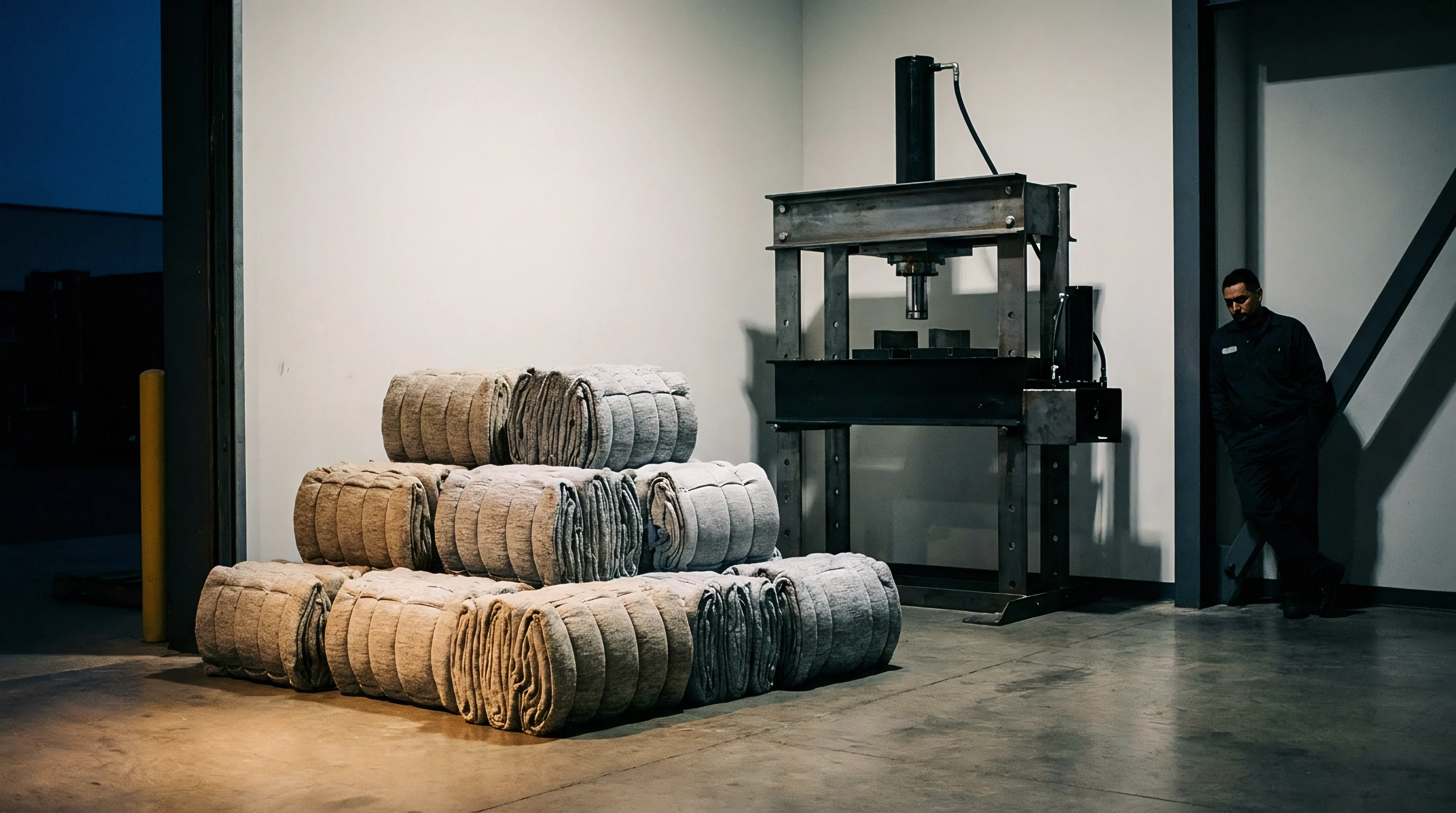
Greige displacement between facilities introduces severe physical contamination risks and chain vulnerabilities. Loading uninspected dry greige rolls onto flatbed freight carries ambient humidity shifts, dirt ingress, and handling punctures that degrade mechanical selvages. Standard logistics contracts govern total parcel delivery rather than textile substrate preservation.
Transport contracts serving converting pipelines mandate enclosed poly-wrap envelopes with minimum 80-micrometer thickness, sealed with tamper-evident tape bands numbered consecutively against dispatch manifests. A broken transport seal flags immediate lot isolation at the receiver platform.

Tamper Evidence in Overland Greige Movement
Physical movement between weaving plants and commission wet-finishing plants generates unmonitored transfer windows. Commission houses frequently source extra yards from alternative spinning batches to balance output yields, substituting inferior yarns to cover chemical runoff defects. Mitigating this practice involves applying serialized security zip-ties through the central hollow core and roll selvage fringe of every woven beam or a-frame batch.
Receivers verify seal integrity before offloading fabric into wet processing pits.
Serial verification eliminates undocumented swap operations. When primary contractors sublet finishing without buyer authorization, logistics bills display mismatched dispatch timestamps and transport distances exceeding direct transit vectors. Contract provisions define precise transit corridors, designating direct route parameters and capping intermediate handling dwell periods.
Transshipment staging yards introduce undocumented moisture absorption, skewing total mass measurements when incoming dyehouse receivers assess dry greige mass per unit area under standardized ISO 3801 conditioning parameters.
Dispatch manifests matching incoming receiving mass within a strict 1.5 percent tolerance prevent unauthorized lot substitutions during cross-district freight transfer.
Custody contracts establish rigorous receiving protocols at the converting facility dock. The receiver inspects seals, logs vehicle cargo seals against bill-of-lading entries, and measures incoming moisture values with handheld dielectric resistance probes. Discrepancies generate automatic holds.
The contract stops all preparation processes until the prime supplier issues formal verification.
The standard logistics clause holds the freight operator and prime mill jointly liable for undocumented parcel seals, shifting investigative costs directly onto the subcontracting coordinator.

Assay
Physical verification must survive harsh industrial chemistry. Commission dyeing houses subject wovens and knits to intense wet processing sequences, including desizing enzymes, boiling caustic soda, hydrogen peroxide bleaching, boiling-point dye liquor baths, and drying chambers operating up to 200 degrees Celsius. Traditional paper roll tags, ink stamps, and adhesive stickers disintegrate or detach under these mechanical actions.
Retaining custody across continuous preparation demands physical tracking systems integrated directly into the structural architecture of the textile goods.
Resistant Tracers and Selvage Encoding Systems
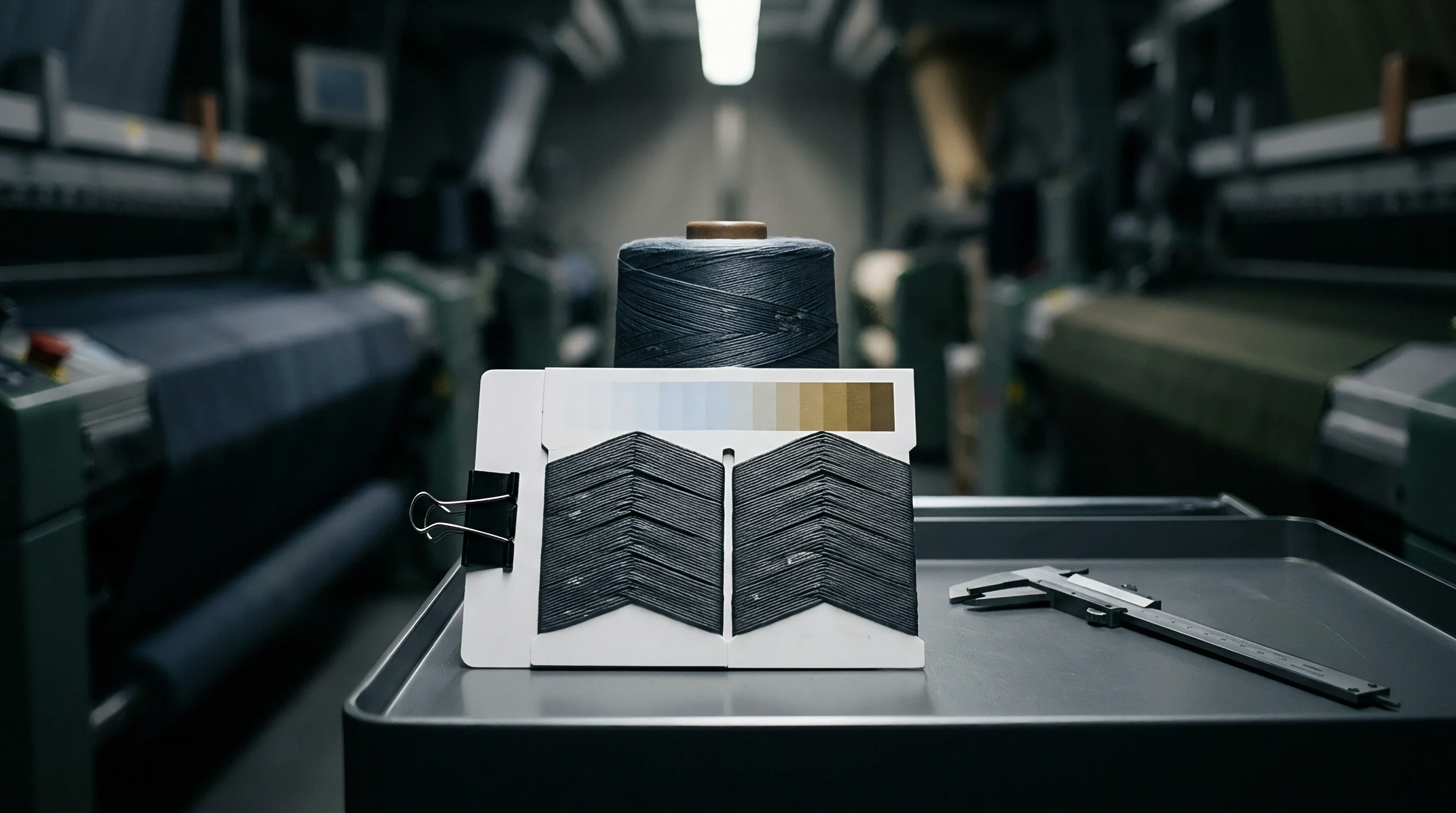
Indelible synthetic markers applied directly to raw selvages maintain traceability across continuous ranges. Woven selvages accept continuous laser-etched matrix coding or thermal-transfer polyimide tags carrying high-contrast two-dimensional codes. Tag adhesives must resist saponification during alkaline scour cycles and resist dissolution within continuous organic solvent scouring installations.
Scanning stations positioned directly at greige batch entry, padder feed, and stenter uncurlers verify roll sequence throughout operations.
Synthetic DNA tags and inorganic micro-tracers blended directly into the initial sizing liquor or applied via specialized yarn stripes yield absolute physical proof of lot origin. These micro-particles withstand alkaline boiling, continuous pad-steam reduction, and thermosol curing steps. Technicians isolate target swatches, running rapid field polymerase chain reaction evaluations or optical spectroscopic analyses to verify fiber pedigree directly at the delivery table.
When lab analysis detects tracer absence, the roll fails custodial continuity regardless of clean paper documentation.
| Tracer Technology | Chemical Exposure Limit | Thermal Tolerance Peak | Retention Mechanism | Verification Methodology |
|---|---|---|---|---|
| Polyimide Micro-Labels | pH 1 to 13 continuous | 240 degrees Celsius | Cross-linked acrylic adhesive | Handheld optical matrix reader |
| Synthetic DNA Suspensions | pH 2 to 12 selective | 190 degrees Celsius | Cellulosic hydrogen binding | qPCR bench analysis |
| Inorganic Rare-Earth Fluorophores | pH 0 to 14 extreme | 400 degrees Celsius | Mechanical filament entrapment | Fluorescence emission spectrometry |
| Indanthrene Selvage Yarns | pH 2 to 14 vat stable | 220 degrees Celsius | Insoluble dye pigment crystallization | Optical color-match inspection |
| High-Density Direct Inkjet Codes | pH 4 to 10 moderate | 180 degrees Celsius | Pigment-binder cross-linking | Machine vision scanning camera |
Optical brighteners and finishing chemical residues introduce background noise during optical spectroscopic detection. Inorganic rare-earth fluorophores solve this limitation by emitting distinct spectral signatures under calibrated ultraviolet light wavelengths, ignoring optical whitening agents. These microscopic inorganic particles embed mechanically within multi-filament twist spaces, resisting vigorous washing, mechanical brushing, and sanforizing compaction.
Their presence remains constant from raw loom takeoff to the retail sales floor.
Adoption costs balance against catastrophic inventory write-downs. Tracer formulation, application labor, and reading equipment add roughly 0.04 to 0.09 dollars per linear meter to finishing bills. While primary converters frequently resist this expenditure, it eliminates unverified sub-tier substitutions.
Downstream disputes over non-compliant yarn usage collapse when micro-particle assays definitively prove the physical absence of specified fibers.
Field verification data indicates that rare-earth inorganic tracers maintain ninety-eight percent signal retention following four consecutive domestic wash evaluations conducted under ISO 6330 laundering standards. Moving this baseline requires altering mechanical compaction or introducing extreme scouring chemicals that degrade the primary cellulosic matrix.
When an unverified lot fails trace assay, the commission plant foreman typically argues that aggressive desizing formulations accidentally stripped the target chemical markers from the cloth structure.

Yield
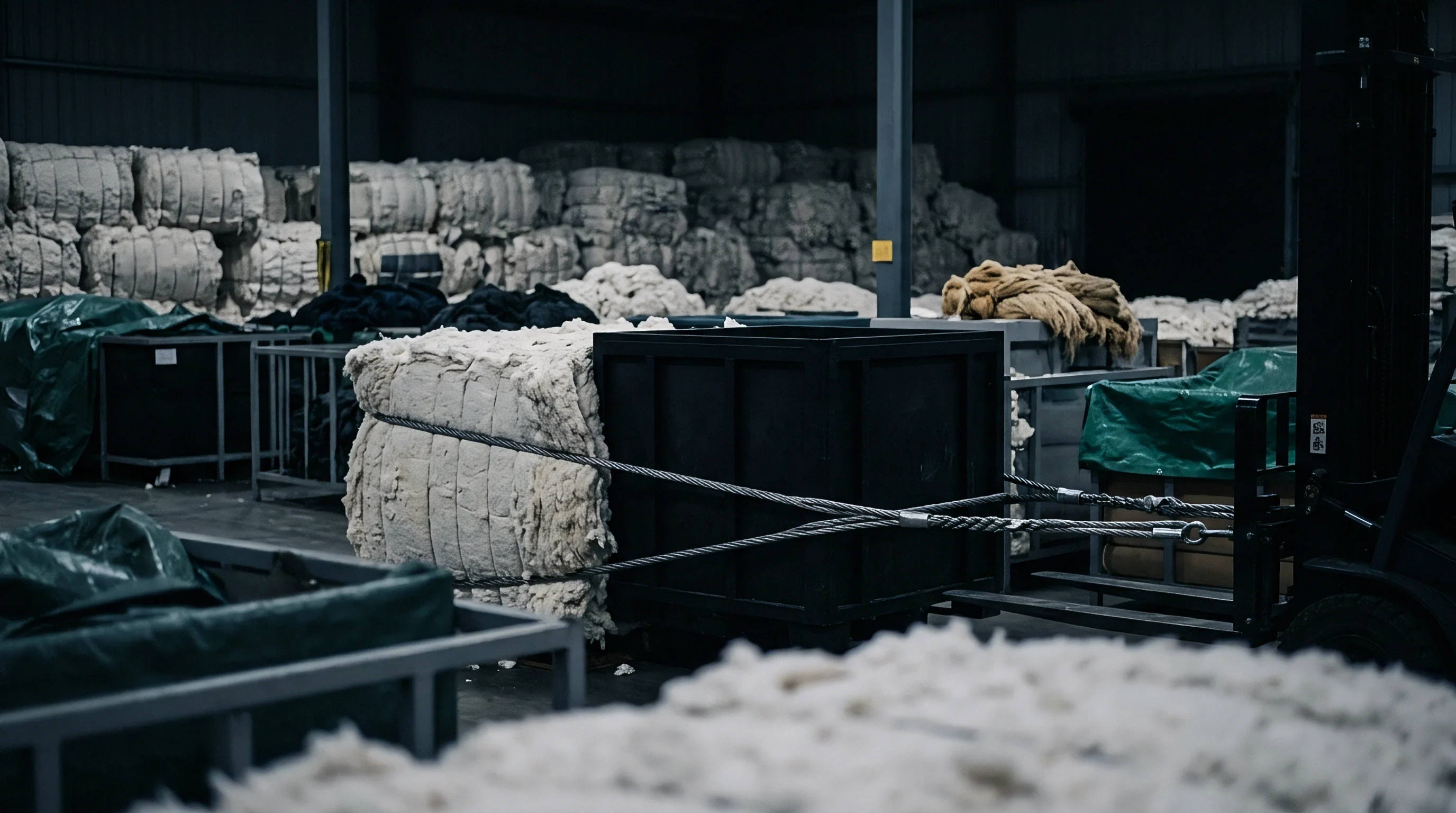
Mass balance accounting forms the mathematical foundation of textile chain of custody verification. Commission converting processes inevitably cause physical mass transformations: raw sizing starches wash out during desizing, lint sheds during mechanical shearing, moisture contents fluctuate during thermal drying, and chemical finishes add mass during pad finishing. Failure to quantify these standard physical transformations creates broad accounting margins that conceal unauthorized yardage diversions and yarn lot mixing.

Are Mass Discrepancies Contractually Actionable?
A buyer cannot verify chain integrity without tracking the physical balance between greige input mass and finished fabric output mass. Greige cotton twill contains sizing materials representing 6 to 12 percent of dry yarn weight, alongside 1 to 3 percent natural waxes and pectins. Desizing, scouring, and bleaching strip these non-cellulosic constituents, reducing dry substrate weight.
Subsequent finish baths reverse this loss. Applying melamine resin stiffeners, fluorochemical water repellents, or polyorganosiloxane softeners adds back dry chemical mass. The audit protocol maps every stage through precise mass equations, leaving no untracked yardage gaps.
Calculations govern allowable processing tolerances. Consider a typical finishing campaign processing a 10,000-meter lot of 3/1 cotton twill woven at 250 grams per square meter greige weight, carrying an initial 8 percent sizing add-on. Total incoming greige mass equals 2,500 kilograms.
Preparatory desizing and scouring eliminate the 200 kilograms of starch size and 50 kilograms of natural non-cellulosic impurities, leaving 2,250 kilograms of pure cellulosic substrate. Continuous pad-cure application of a fluorochemical finish targets a 2.5 percent solids add-on, bringing theoretical dry fabric mass to 2,306.25 kilograms. Factoring in an allowable 1.5 percent physical waste factor from seam off-cuts, pin stenter trimming, and automated end-of-batch scrap, the net expected finished yield calculates to 2,271.65 kilograms.
A mass balance discrepancy exceeding 2.0 percent between dry chemical intake and finished fabric yield confirms unauthorized yardage skimming or unapproved production splitting.
Physical roll length expands or contracts based on mechanical stenter tension, overfeed setups, and sanforization compaction. Length metrics alone fail to verify volume custody. A finisher can excessively tension greige goods in the machine direction to generate an extra 4 percent finished length, diverting excess unprocessed greige into illicit inventory.
Weighing fabric rolls after conditioning under ISO 139 standard atmospheres (20 degrees Celsius, 65 percent relative humidity) exposes length manipulation by revealing low mass per unit area values that fail specification tolerances.
The following parameters define standard mass variance profiles across typical continuous converting routes, establishing thresholds for legal custody compliance:
- Greige desize loss accounts for 6.0 to 11.5 percent dry weight reduction depending on initial warp yarn sizing recipes and yarn count complexity.
- Scour extraction allowance covers 1.2 to 2.8 percent mass reduction through removal of natural pectins, waxes, and residual cotton seed coat fragments.
- Finishing solids add-on registers an increase between 1.0 and 4.5 percent, verified by comparing dry pre-pad and post-cure swatch masses.
- Mechanical selvedge trim generates a permanent 1.0 to 2.2 percent physical loss through automated edge rotary trimming along the stenter pin line.
- Sanforizing shrinkage compaction yields a 3.0 to 7.0 percent linear length reduction while proportionally increasing final grams per square meter density.
Documenting these material balance equations directly within the converting service contract prevents ambiguous processing claims. Subcontractors accept contractual liability for unexplained yield variances exceeding narrow engineering bands. Clear commercial clauses mandate complete documentation of scrap, selvedge waste, and wastewater sludge residues to confirm mass disposition.
The standard balance clause enforces immediate payment withholding on all processing fees whenever finished shipment mass falls more than two percent below the minimum calculated mass boundary.


Breach
Detecting a broken chain of custody must trigger clear, rapid legal remedies. Weak agreements often leave buyers limited to minor invoice discounts when illegal subcontracting or untraceable processing occurs. Real protection requires clear contract structures that classify chain of custody non-compliance as a material breach of performance, justifying immediate lot rejection, supplier disqualification, and recovery of downstream losses.

Contractual Language and Commercial Consequences
Converting agreements must establish clear bailment terms. The buyer or the primary contractor retains legal title to all raw fabric, yarns, and Greige rolls at every step of processing. The subcontracted converting plant holds the material strictly as a bailee, possessing no legal right to pledge, encumber, commingle, or resell the substrate.
When an audit uncovers unapproved subcontracting or compromised roll identities, the conversion facility forfeits all processing fees and must immediately return all physical goods upon demand.
The master services agreement must include explicit indemnification clauses covering secondary processing. Textile processing failures create expensive downstream complications. Scoured yardage contaminated with non-compliant dye chemistry or mixed with unverified yarn lots can contaminate thousands of cut garments, sparking consumer recalls, environmental regulatory fines, and cancelled retail deliveries.
The subcontracting agreement holds the processor and prime supplier jointly liable for all associated replacement, transit, and disposal expenses.
| Violation Level | Physical Detection Trigger | Commercial Consequence | Remediation Obligation |
|---|---|---|---|
| Minor Discrepancy | Unmatched individual roll label, unbroken package seal | Lot payment release freeze | Complete physical barcode recertification within 48 hours |
| Material Variance | Mass balance deviation between 2.0 and 5.0 percent | 15 percent billing deduction across total run | Mandatory mass balance reconciliation audit and yarn assay |
| Critical Breach | Broken perimeter seal, unlisted third-party plant delivery | Immediate batch rejection and fee forfeiture | Immediate freight recovery of all raw goods at supplier expense |
| Systemic Fraud | Tracer assay negative, counterfeit roll markings | Master vendor agreement termination | Full inventory reimbursement plus direct retail exposure liability |
Post-audit remediation clauses prevent processors from stalling corrective actions through endless re-testing cycles. Standard agreements mandate that when verification tests identify traceability failures, an authorized independent testing laboratory takes final custody samples within five business days. The subcontractor funds the independent testing.
If the third-party analysis confirms the failure, the buyer rejects the entire commercial lot without paying conversion fees, invoice overheads, or shipping surcharges.
Managing chain of custody risk through aggressive contractual clauses alters converter floor behavior. Subcontractors enforce rigorous internal tracking when financial survival depends on clear physical traceability. When contracts treat traceability as an optional administrative request, factory operators cut corners to maximize machinery throughput, compromising the buyer’s quality and supply chain integrity.
The field remains divided on whether commercial contracts can realistically enforce full inventory reimbursement for non-compliant fabric batches after they have been cut into finished garments and distributed across overseas retail destinations.