Torsional Imbalance
Residual mechanical twist energy stored in spun staple or textured continuous filament yarns causes fibers to untwist, curl, or snarl when freed from tension. Processing equipment records yarn torque when twisting, spinning, or drawing operations impart internal stresses that remain unrelaxed before knitting or interlacing. The physical phenomenon induces immediate loop spirality in single jersey circular knits, cockling in woven structures, and snarling along yarn feeding paths.
Controlling torsional energy demands steam autoclaving, chemical relaxing treatments, or balanced alternate-twist constructions.
Twist Mechanics
Ring spinning rings and draw-texturing spindles force fibers into helical conformations that naturally seek structural equilibrium through rotational movement. Highly twisted single cotton yarns harbor significant torsional energy, twisting back on themselves to form tight snarls whenever delivery tension drops. The resulting rotational bias forces individual knitted loops to tilt along the wales, causing completed fabric tubes to skew away from true vertical grain lines.
Synthetic filaments textured via false-twist processes accumulate residual torsional stress unless secondary heating zones set the modified crimp into an equilibrium state. Twisting two balanced single yarns together with opposite twist directions cancels out individual torsional forces, producing balanced plied yarns.
Snarl Assessment
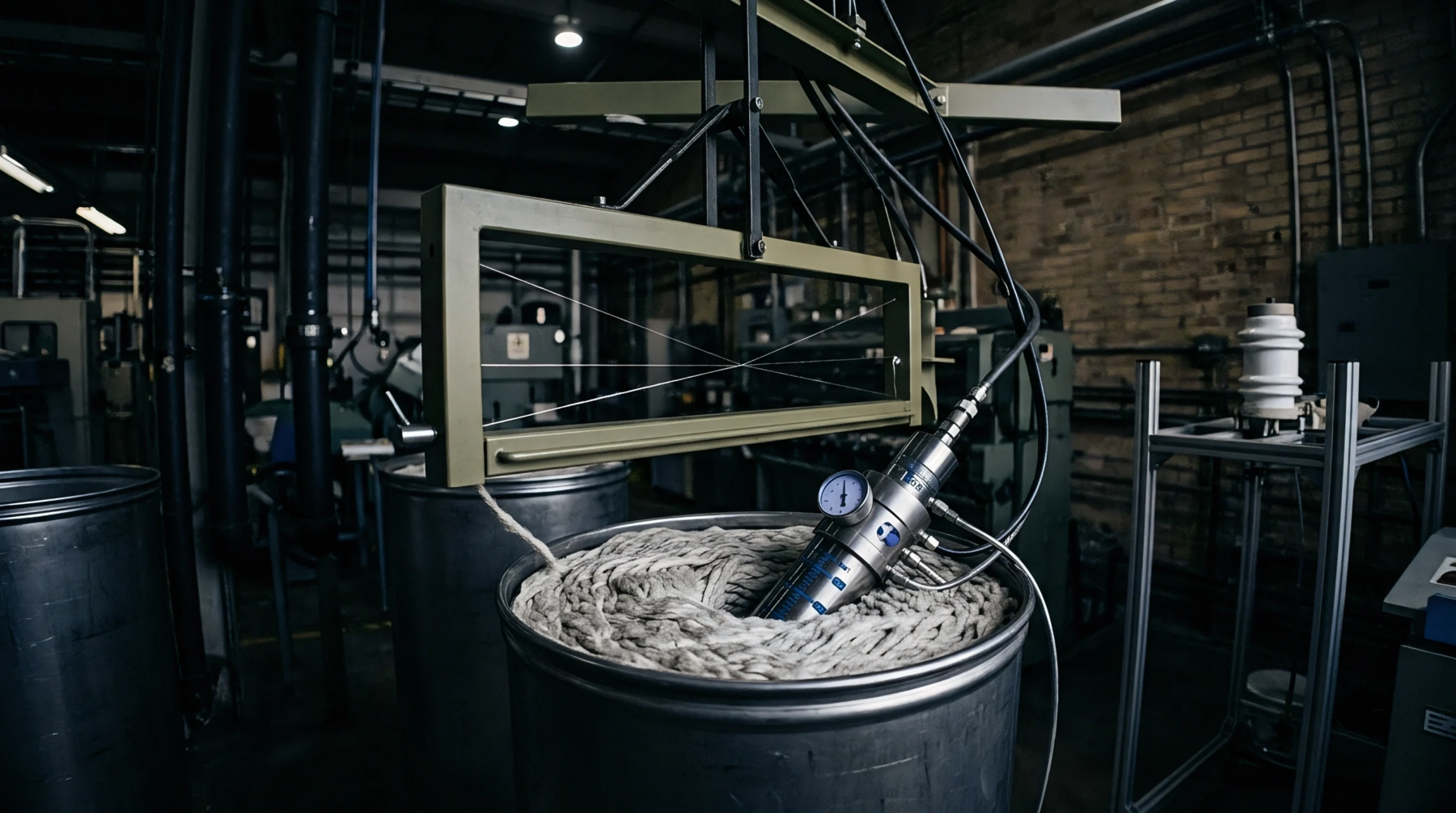
Testing laboratories evaluate torsional severity using standardized snarl test procedures, such as measuring loops formed in relaxed yarn strands suspended under nominal weights. The technician measures the number of turns a suspended yarn loop executes around its own axis, recording snarl turns per unit length as an index of live twist. Optical inspection frames confirm whether circular single jersey displays wale spirality angles exceeding permissible garment tolerance levels, typically capped at five percent.
Knit fabric with uncorrected torque causes side seams to twist toward the front of finished T-shirts after initial home laundering.
Downstream Mitigation
Knitting plants counteract torsional skewing by feeding alternating S-twist and Z-twist yarn packages into adjacent machine feeders. Vacuum steaming autoclaves treat yarn packages with pressurized moist steam to set helical twists, melting temporary hydrogen bonds and relaxing molecular stresses within cotton cellulose. Synthetic processing lines run active yarn packages through secondary heating chambers to nullify rotational tendencies before roll winding.
Eliminating residual yarn torque guarantees perpendicular grain alignment, straight garment side seams, and predictable cutting room performance.