Calibrating Blowroom Multispectral Sorters for Transparent Polyolefin Removal
Calibrating blowroom sorters for clear polyolefin removal pairs 1690 nm infrared sensing with polarized lighting and synchronized valve timing to stop dye resist faults.


Wavelength
Detecting transparent polypropylene baling twine and polyethylene film inside raw cotton tufts hinges on targeting the molecular absorption bands of hydrocarbon chains. Standard trichromatic charge-coupled device cameras capture color differentials across red, green, and blue spectra, failing completely when clear polyolefin sheets enter the optical chute. Cellulose and polyolefins present indistinguishable visual transmission curves in visible light between 400 and 700 nanometres.
Raw cotton carries clear agricultural film. Multispectral sorter arrays overcome this invisibility by pairing visible light sensors with short-wave infrared detectors operating between 900 and 1700 nanometres. Polypropylene possesses characteristic carbon-hydrogen bond stretching overtones at 1210 nanometres, 1390 nanometres, and a dominant absorption band at 1690 nanometres.
Unbleached seed-cotton cellulose displays high surface reflectance across those same wavebands, driven by hydroxyl groupings that absorb primarily above 1900 nanometres and around 1450 nanometres where ambient moisture resides.
Optical separation units installed directly behind the fine opener process tuft streams moving at pneumatic velocities between 12 and 22 metres per second. In this fast transit environment, multispectral line-scan sensors sample the falling curtain at line rates exceeding 15 kilohertz. The sorter calculates an instantaneous band ratio between the reference band at 1050 nanometres and the absorption band at 1690 nanometres for each spatial pixel across the machine width.
Polyethylene stretch wrap and polypropylene strapping tape cause immediate drops in the reflectance quotient. Uncontaminated lint tufts maintain a flat ratio regardless of fiber discoloration or botanical trash contamination.
A short-wave infrared band tuned to 1690 nanometres delivers a fourfold absorption differential between transparent polyethylene film and dry cellulose tufts at standard 65 percent relative humidity.
Moisture content inside the blowroom line alters the baseline calibration. Water displays intense absorption at 1450 nanometres and introduces secondary absorption tails that bleed into adjacent detector windows. When incoming raw cotton shifts from 5.5 percent moisture regain to 8.5 percent regain, the raw reflectance floor of the cellulose background drops by up to eighteen percent across the short-wave infrared band.
Calibrating the sensor array without compensating for ambient moisture causes widespread false positive triggers against damp cotton clusters. Modern sorting software compensates by balancing the 1450 nanometre moisture channel against the 1690 nanometre polymer channel before executing an ejection command.
| Material Class | Peak Absorption Band (nm) | Reflectance Index at 1690 nm | Polarized Light Shift | Primary Chemical Bond Responsible |
|---|---|---|---|---|
| Upland Raw Cotton Cellulose | 1450, 1940 | 0.82 to 0.88 | Randomized depolarizing | Hydroxyl (O-H) stretching |
| Oriented Polypropylene Twine | 1210, 1390, 1690 | 0.18 to 0.24 | Strong birefringent rotation | Methylene (C-H) overtone |
| Low-Density Polyethylene Film | 1215, 1410, 1720 | 0.22 to 0.29 | Moderate phase delay | Aliphatic chain vibration |
| High-Density Polyethylene Wrap | 1210, 1730 | 0.20 to 0.27 | High linear retardation | Crystalline carbon backbone |
Mill technical teams verify sensor response curves by feeding synthetic polyolefin test swatches of calibrated thickness through the drop chute at sixty-minute intervals during shift startup. Mill specifications based on raw material purchase terms prescribe that any lot exhibiting more than two polyolefin faults per twenty kilograms on the downstream tester undergoes immediate price discounts under the standard international cotton contract terms.


Lamp
Illumination hardware forms the mechanical foundation of multispectral detection. The system pairs high-frequency halogen incandescent tubes with solid-state light-emitting diode arrays positioned behind anti-reflective quartz glass panels. Quartz glass demands constant dusting.
Halogen sources generate the broadband infrared spectrum necessary for polymer overtone excitation, while narrow-band light-emitting diodes illuminate the inspection line with targeted visible and near-ultraviolet wavebands. Tungsten lamps drift over time. Filament thinning reduces infrared radiant emission by three to seven percent every five hundred operating hours, shifting the baseline color temperature and eroding detection sensitivity toward thin film fragments.

Is Polarized Backlighting Sufficient for Transparent Films?
Birefringence detection isolates transparent synthetic polymers by tracking changes in light polarization angles. Polypropylene twine and polyethylene films undergo intense mechanical stretching during manufacturing, aligning their internal polymer chains along linear axes. This molecular orientation causes anisotropic refraction.
Polarized light passing through a clear synthetic film experiences phase shifts that rotate the plane of polarization. Cotton fibers consist of spiraled cellulose fibrils that scatter light diffusely without coherent angular rotation. Positioned behind the falling cotton stream, a linear polarizing filter illuminates the inspection zone while a second crossed polarizer sits in front of the camera sensor.
Clear film fragments rotate the transmission angle and register as glowing white objects against a pitch-black background.
Dirty glass baffles scatter backlighting and blind optical arrays to thin transparent sheet edges.
Cotton wax accumulation on the optical viewing plates creates optical distortion that mimics synthetic birefringence. Raw cotton sheds plant waxes and micro-dust continuously across the optical drop zone. The detector registers zero contrast.
Technicians combat surface fouling through continuous laminar air curtains and automated wiper mechanisms that cycle across the quartz glass face every thirty minutes.
- Filament output degradation shifts the absolute short-wave infrared baseline, causing the machine to lower its detection threshold and miss films thinner than twenty-five microns.
- Condensation on optical baffles scatters polarized beams across the receiver aperture, creating localized ghost anomalies that prompt unnecessary air valve actuation.
- Thermal drift in silicon photodiodes elevates background dark currents, reducing the dynamic signal-to-noise ratio during high-temperature mill operating shifts.
- Uneven LED array decay creates localized dark corridors across the conveyor width, letting polyolefin particles pass through undetected near machine side walls.
Field mechanics frequently report that sorter performance drops because operators delay replacing blackened halogen tubes until complete filament failure occurs.


Valve
Pneumatic rejection systems translate multispectral optical readings into physical ejection through high-speed solenoid valves. The manifold spans the working width of the machine, typically housing between 64 and 128 discrete air nozzles spaced at pitch intervals of 8 to 16 millimetres. Air pressure drops across manifolds.
When the image processor registers a polyolefin signature, it tracks the defect down the trajectory column and issues an energizing pulse to the corresponding valve nozzle. The reaction window requires millisecond accuracy. Operating line velocities of 18 metres per second mean a delay of four milliseconds displaces the targeted trash fragment by more than seven centimetres, causing the air blast to miss the contaminant entirely.

Do High Ejection Pressures Fracture Fragile Filaments?
Air jet pressures inside the ejection manifold typically range from 0.55 to 0.75 megapascals. Excessively high manifold pressure tears delicate, fibrillated polypropylene twine into thousands of micro-filaments. These shredded fragments disperse across the cotton tuft stream, multiplying the final defect count in the spinning sliver.
Clean compressed air supply free from lubricating oils and atmospheric moisture determines valve response repeatability. Particulate clogging inside the 1.2-millimetre nozzle orifices increases valve opening latency from two milliseconds to six milliseconds.
Calibrating ejection timing involves balancing trigger duration against lint waste percentages. Ejection delay governs target accuracy. The sequence below outlines the mechanical calibration path for synchronized contaminant ejection:
- Align line-scan optical triggers with pneumatic nozzle coordinates by passing a single pigmented calibration card through the left, center, and right edges of the sorting zone.
- Measure drop transit velocity across the optical plane to the valve plane using an auxiliary photodiode sensor pair.
- Input the measured fall time into the line control terminal to set the fundamental valve actuation delay between twelve and twenty-two milliseconds.
- Adjust valve blow duration in increments of one millisecond to establish an air curtain width matching twice the diameter of the maximum tuft dimension.
- Test compressed air tank recovery rates under simulated continuous firing to ensure the main air regulator maintains pressure stability within five percent.
- Audit the rejected waste container to verify the ratio of foreign matter to rejected clean lint fiber.
Incorrect pneumatic valve timing leaves the polyolefin fragment in the production stream while ejecting unsoiled raw cotton tufts, escalating clean fiber waste without reducing yarn contamination faults.

Threshold
Signal processing algorithms inside modern sorters apply dual-tier discrimination thresholds based on contaminant pixel area and spectral differential amplitude. A single thin film fragment may register across twelve contiguous camera pixels, each displaying an absorption value thirty percent above background cellulose. The threshold matrix cross-references the spatial cluster size against the infrared absorption magnitude.
Setting thresholds too aggressively forces the ejector array to fire continuously at harmless seed-coat fragments and dark leaf trash. Good fibre ejects alongside contaminants. Spinners trade yield against defect counts.
Balancing separation efficiency against fiber loss remains the central operating challenge of blowroom management.
The operational threshold configuration balances detection probability against lint carry-over. Small clear plastic fragments below five millimetres in length challenge automated sorters. As cotton tufts move through the air duct, synthetic films fold within fiber clumps.
The sorter only identifies foreign matter exposed directly to the line of sight. Mechanical opening prior to the sorting stage must individualize tufts to a mean weight below 0.15 grams. Opening rollers operating at 850 revolutions per minute disentangle heavy clusters without breaking the natural staple length of the raw lint.
| Sensitivity Profile | Pixel Cluster Minimum | SWIR Differential Floor (%) | Clear Polyolefin Removal Rate (%) | Lint Loss by Weight (%) |
|---|---|---|---|---|
| Coarse (Defect Focus) | 24 pixels (approx. 12 mm) | 45 | 68 to 74 | 0.12 to 0.18 |
| Standard Industrial | 12 pixels (approx. 6 mm) | 30 | 86 to 92 | 0.35 to 0.48 |
| Fine Combed Yarn | 6 pixels (approx. 3 mm) | 18 | 94 to 98 | 0.85 to 1.25 |
| Ultra-Fine Specialty | 3 pixels (approx. 1.5 mm) | 10 | 97 to 99 | 1.80 to 2.60 |
Machine software manages pixel aggregation through spatial filter kernels that discard isolated single-pixel anomalies caused by camera sensor noise. The sorter administrator establishes operational settings by choosing specific baseline limits:
- Cluster aggregation window defines the geometric distance over which the processor links non-contiguous optical anomalies caused by translucent folds.
- Moisture compensation offset elevates the short-wave infrared trigger floor automatically when the mill air conditioning pushes relative humidity above 70 percent.
- Secondary ejection boost fires neighboring valves when the registered contaminant diameter exceeds ten millimetres, preventing edge escape.
- Lint suppression parameter blocks valve triggers on low-density signals produced by floating single-fiber fly within the sensor viewing chamber.
Wider pixel grouping windows lower false trigger occurrences while letting narrow slivers of split twine slip downstream into the carding machine.
Defect
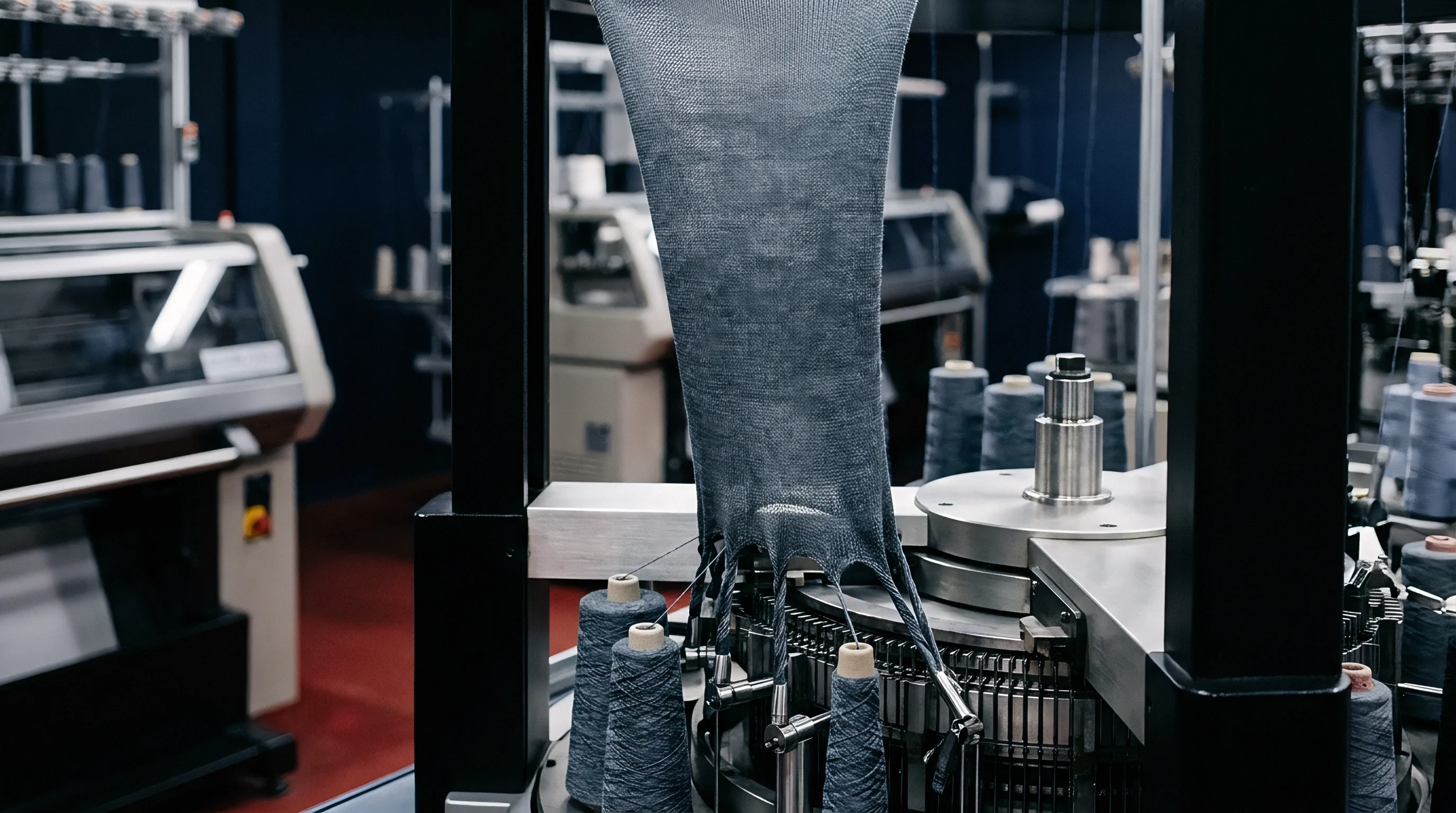
Unremoved polyolefin material enters the carding machine, where cylinder wires break large sheets into microscopic fibrillated strands. Clear fragments survive carding intact. These synthetic particles resist commercial dyestuffs used for natural cellulose.
When knitted or woven material enters reactive, direct, or vat dyeing baths, the cotton fibers take up the dyestuff while the non-polar polyolefin inclusions remain undyed. Polyolefin melts at low heat. During stenter frame drying and thermal finishing, low-density polyethylene melts at 105 to 115 degrees Celsius, smearing across surrounding cotton fibers.
The finished cloth displays white streaks, structural holes, or resist specks known as white barres.
Downstream detection of polyolefin defects in spun yarn relies on capacitive and optical yarn clearers mounted on automated winding machines. Optical sensors identify dark impurities through light obstruction, but transparent polyolefins yield minimal visible contrast in standard clearing slots. Polarized light yarn clearers detect the synthetic inclusions, but winding line speeds exceeding 1200 metres per minute limit the clearing efficiency of clear plastic to approximately 80 percent.
The spinning mill faces severe financial claims if defective yarn reaches the knitting floor.
Under ITMF foreign matter settlement rules, undetected colorless polyolefin inclusions forfeit buyer tolerance bands and expose the spinner to complete lot rejection at final wet-finishing.
Financial outcomes shift dramatically based on blowroom sorter calibration parameters. The worked construction below tracks fifty tonnes of raw cotton spun into Ne 30 combed knitting yarn under standard international operational conditions. Take fifty tonnes of raw cotton at a purchase price of 2.10 dollars per kilogram, carrying an initial baseline contamination of 42 clear polyolefin fragments per ton.
| Parameter | Coarse Sensitivity Setting | Standard Industrial Setting | Fine Combed Yarn Setting | |
|---|---|---|---|---|
| Polyolefin Removal Efficiency | 71% | 89% | 96% | |
| Escaped Contaminant Count (Lot Total) | 609 fragments | 231 fragments | 84 fragments | |
| Blowroom Good Lint Loss (%) | 0.15% | 0.42% | 1.10% | |
| Cost of Lost Clean Fiber ($) | $157.50 | $441.00 | $1,155.00 | |
| Yarn Clearer Knife Cuts on Winder | 182 cuts | 69 cuts | 25 cuts | |
| Uncut Defects in Finished Yarn | 427 faults | 162 faults | 59 faults | |
| Estimated Dyeing Claims per Ton of Fabric ($) | $280.00 | $110.00 | $35.00 | |
| Total Contamination-Related Cost per 50t Lot ($) | $14,157.50 | $5,941.00 | $2,905.00 | |
| Assumptions: 50,000 kg input mass; yarn conversion yield 82%; finished knitted cloth realization valued at $4.80/kg; standard commercial deduction applied per contaminated dye lot based on 100 kg batch isolation. | ||||
Does the industry possess an economically viable sensor technology capable of detecting sub-millimetre clear film fragments fully encapsulated inside high-speed compressed cotton tufts without generating excessive lint waste?
Recourse
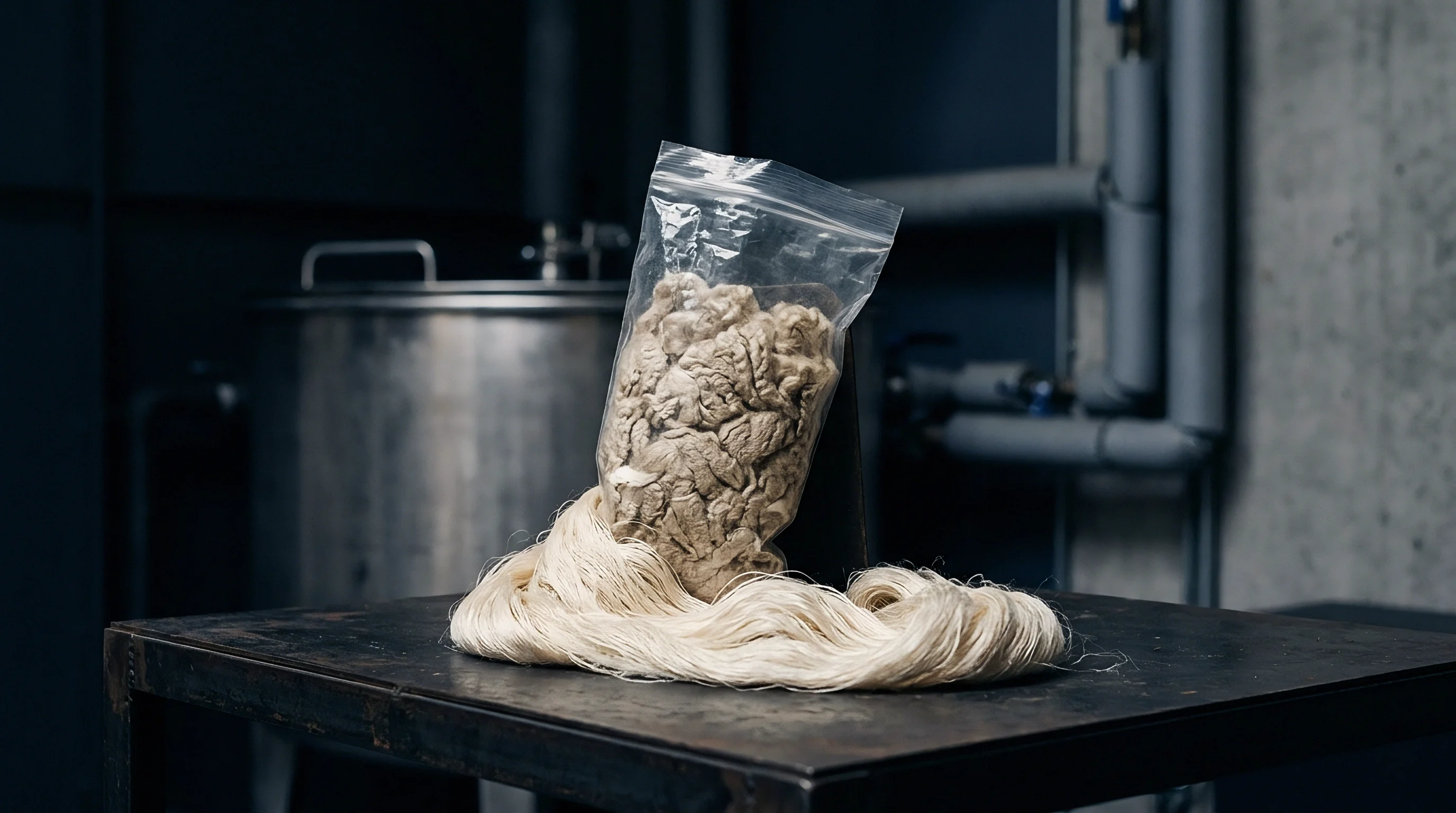
Commercial contracts governing raw cotton fiber purchases establish explicit guarantees covering moisture, staple length, micronaire, and trash content, yet clear polyolefin contamination remains notoriously difficult to arbitrate under standard trading rules. The International Cotton Advisory Committee and national trade associations classify transparent plastics under foreign matter penalties, but assigning origin liability requires physical proof. Claims multiply after finishing.
Spinning mills bear downstream risk. Once the bale tie bands are cut and the plucker mixes forty bales across the laydown, proving which specific ginner packed the plastic twine requires tracing individual packaging film fragments back to bale wrapper chemistry.
Spinners absorb the monetary penalty of synthetic fragments long after the spinning frame converts the sliver into greige goods.
Mill sourcing managers protect production margins by enforcing strict raw bale specifications. Contracts mandate the exclusion of polypropylene baling wraps, requiring ginners to wrap bales in non-woven cotton bagging or approved bio-based covers. Spinning mills conduct manual inspection rounds during bale staging, peeling outer layers from ten percent of delivery lots to search for frayed twine ends before laydown loading.
Test lots isolate contamination frequency. When incoming lots show high polyolefin counts, the plant engineering group recalibrates the blowroom sorter optical windows, tightening sensor thresholds to fine settings despite the accompanying lint loss.
Downstream fabric claims from dyeing houses land directly on the spinner. When a batch of dyed circular-knit cloth shows white resist specks, the dye-house invoices the yarn manufacturer for the full value of the damaged piece goods, including dyeing chemical charges and cut-and-sew loss penalties. The yarn supplier retains sample cones from every winding shift, running laboratory knitting and dyeing trials on twenty-kilogram samples to identify polyolefin contamination before shipping containers depart the mill yard.