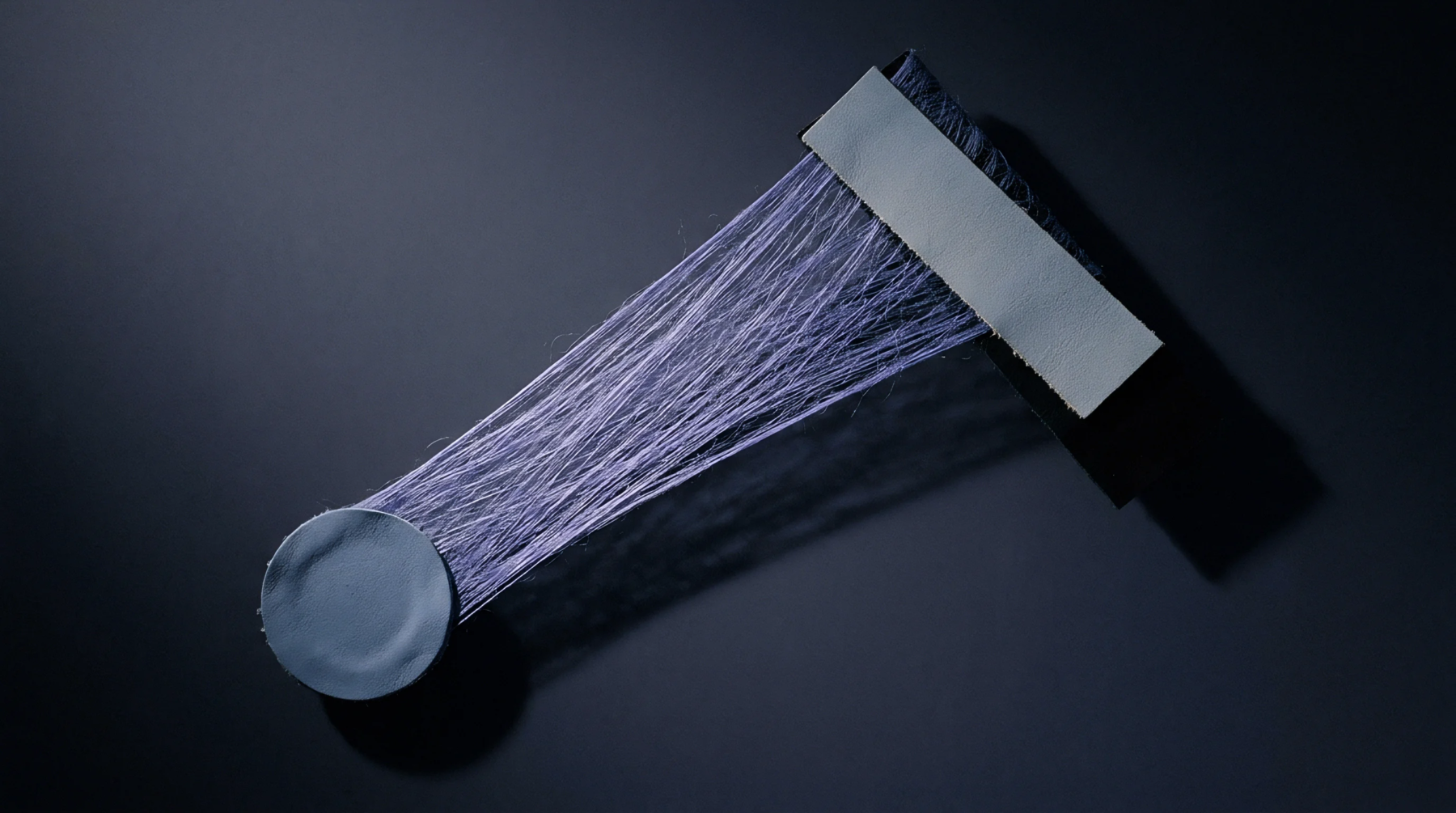
Capacitance Measurement
Capacitance testing of spun yarns evaluates mass variation by monitoring the electric field disturbances between parallel sensor plates. In textile laboratory analysis, dielectric screening provides a continuous profile of yarn diameter and density as the strand passes through the test zone. This method identifies thin spots and thick spots.
Sensor Sensitivity
Oscillatory electric fields between the plates must react only to the volume of the textile material and its moisture content. When applying dielectric screening, the test instrument operates at high frequencies to minimize the impact of ionic conductivity on the results, ensuring that only physical mass changes register. The accuracy of the test depends on maintaining a stable gap between the electrodes and avoiding air currents that could deflect the yarn.
Blend Interference
Mixing different fibres with distinct electrical properties can alter the signal received by the testing plates. Under dielectric screening, a blend of polyester and cotton produces a composite signal that requires specialized software adjustments to interpret correctly.
Calibration Routine
Operators must set the baseline before running a new test batch to account for ambient humidity. Without proper dielectric screening setups, the humidity of the testing room can bias the mass variation curve. Regular zeroing of the sensor plates keeps the measurement error below one percent.