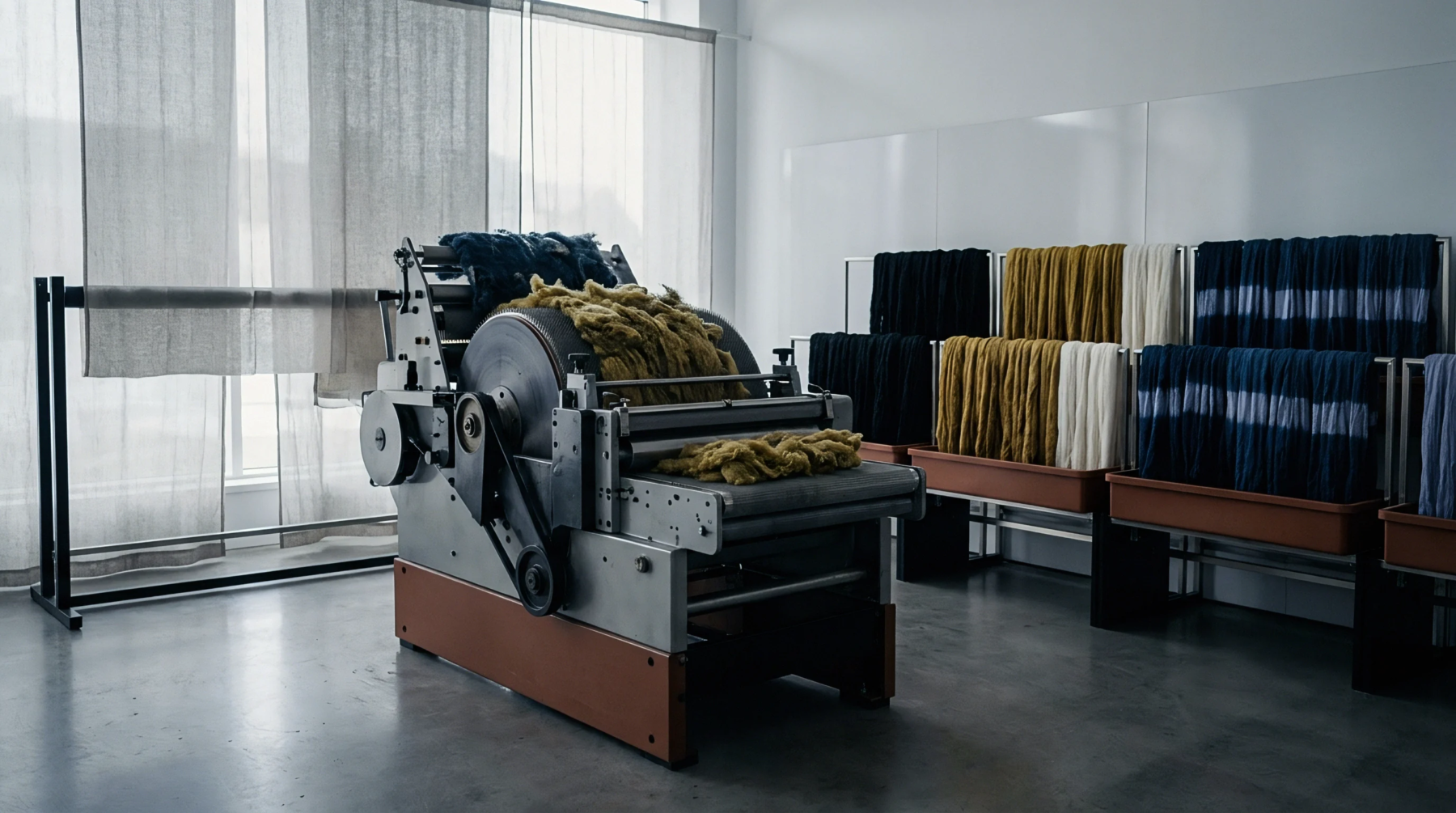
Fibre Intermediate
A continuous, untwisted strand of parallelized textile fibres emerges from the final stage of drafting to ensure weight uniformity before roving or spinning. This drawframe sliver represents the last opportunity to correct mass variations in the material flow by stretching the bundled fibres through a series of weighted rollers. Precision during this phase determines the final yarn quality and prevents the appearance of thickness variations in the finished fabric.
Drafting Mechanism
High-speed rollers move at different surface velocities to pull the bundled fibres into a thinner and more even stream. The drawframe sliver receives its linear density through this mechanical attenuation. Success here relies on the correct setting of the nip distance between the rollers.
Blending Accuracy
Mixing different fibre types happens by feeding multiple input strands into the machine at once. A drawframe sliver contains the proportional blend of cotton and polyester required for the final fabric specification. Manufacturers measure the sliver weight per yard to verify the blend ratio is correct.
Quality Checkpoint
Laboratory tests check for short-term and long-term thickness deviations across the length of the strand. If the drawframe sliver shows high cv values, the resulting yarn will possess thin spots that cause breakage during weaving.