Cotton Fiber Length Distribution Parameters in Sliver Preparation
Cotton sliver length distribution parameters dictate drafting wave severity, hook reversal efficiency, comber noil waste cost, and ring yarn break rates.
Gauge
Staple length distributions in cotton sliver preparation govern drafting stability and downstream yarn strength. The transformation of compressed raw stock into carded and drawn linear assemblies alters both the cumulative frequency profile and the proportion of short fragments. Mill laboratories tracking these movements rely on dual measurement regimes: high-volume bundle testing for raw bale laydowns and individual fiber testing for slivers.
High Volume Instrument lines assess Upper Half Mean Length and Uniformity Index through optical scanning of combed beards. Advanced Fiber Information System analyzers individualize thousands of fibers via pneumatic airflows and electro-optical sensors, recording discrete measurements for every entity.
The distinction between weight-biased metrics and numerical metrics creates significant discrepancies during sliver inspection. Weight distributions favor longer cotton entities because a thirty-millimeter fiber contains three times the mass of a ten-millimeter fragment. Numerical distributions treat each fragment equally, revealing the true population density of broken pieces that destabilize drafting aprons.
When evaluating breaker or finisher slivers, relying solely on weight-based parameters masks severe fiber fragmentation generated by aggressive carding wire or worn feed plates.
Upper quartile length reflects the longest twenty-five percent of fibers by weight under ASTM D5866.
Carding teeth induce breaks. The resulting fragments shift the cumulative length distribution curve toward shorter intervals. High Short Fiber Content values correlate with increased drafting waves, higher yarn unevenness, and elevated ring rail breakages.

Length Metrics across Raw Bales and Carded Slivers
Instrument evaluations trace fiber dimensions from compressed warehouse packages through opening lines. Raw bale stock typically exhibits a balanced distribution governed by seed variety, ginning practices, and environmental conditions. Passage through the licker-in cylinder and carding flats breaks weak, poorly developed filaments.
Consequently, carded sliver displays a lower Mean Length and an elevated Short Fiber Content compared to the original bale laydown.
| Process Stage | Mean Length by Weight (mm) | Upper Quartile Length (mm) | SFC by Weight (<12.7 mm %) | SFC by Number (<12.7 mm %) | 50% Span Length (mm) | 2.5% Span Length (mm) |
|---|---|---|---|---|---|---|
| Bale Laydown | 24.6 | 29.2 | 8.4 | 21.8 | 13.8 | 28.7 |
| Card Mat Feed | 24.2 | 29.0 | 9.1 | 23.2 | 13.5 | 28.5 |
| Card Sliver | 23.1 | 28.6 | 12.8 | 28.4 | 12.4 | 28.1 |
| Breaker Drawing Sliver | 23.4 | 28.8 | 11.9 | 26.9 | 12.9 | 28.3 |
| Finisher Drawing Sliver | 23.6 | 28.9 | 11.4 | 26.1 | 13.2 | 28.4 |
| Combed Sliver (16% Noil) | 26.8 | 31.2 | 4.2 | 12.1 | 15.8 | 30.8 |
| Testing conducted under standard atmospheres of 21 ± 1 degrees Celsius and 65 ± 2 percent relative humidity per ASTM D1776, using AFIS Pro 2 calibrated against standard benchmark cottons. | ||||||
Card sliver consistently presents the poorest length metrics across the entire spinning mill preparation line. Mechanical opening actions detach fiber clumps through high-velocity impact, shearing weaker structures. Drafting passes on drawframes partially reverse this damage by straightening curled fibers, which allows length sensors to register true fiber extent rather than contracted hook configurations.
Weight Distribution versus Numerical Frequency
Single-fiber optical analysis registers both cumulative mass fractions and discrete population counts. The weight distribution provides the basis for Upper Quartile Length, representing the length exceeded by seventy-five percent of the sample mass. Mean Length by weight calculates the average value across all mass increments.
In contrast, the numerical frequency distribution counts each fiber as a solitary unit regardless of its linear density or cross-sectional area.
Drafting amplifies length scatter. When an operator assesses Short Fiber Content by weight, a value of nine percent appears manageable. The corresponding Short Fiber Content by number for the same sliver often exceeds twenty-four percent.
This means nearly one out of every four fibers traveling through the drafting rollers lacks sufficient length to span the gap between successive drafting nips.

Sampling Protocols for Linear Assemblies
Technicians isolate ten-meter lengths from running creels under controlled tension. The technician cuts away the initial two meters to eliminate operator handling deformation. Subsamples drawn from twenty random sliver cans produce a composite test specimen of five thousand individualized fibers.
The operator conditions these specimens for twenty-four hours before testing on calibrated optical counters.
- Mass bias distortion occurs when laboratories rely exclusively on fibrograph span lengths to predict spinning performance, hiding high numbers of short broken fibers.
- Pneumatic fiber curling alters length channel readings on automated classifiers, artificially shifting the upper quartile measurement downward by up to one millimeter.
- Electrostatic clumping in transport chutes causes twin fibers to register as single coarse entities, skewing both weight-length calculations and neps-per-gram figures.
- Moisture regain variance shifts measured linear density and alters fiber stiffness, producing false increases in measured short fiber fractions when relative humidity drops below sixty percent.
Specifying sliver purchase contracts around numerical short fiber limits protects buyers against downstream spinning stoppages. High short fiber counts generate fly in the ring room and increase yarn hairiness on winding machines.

Hook
Mechanical carding operations exert aggressive forces on individual cotton filaments. As fibers pass from the feed roll to the licker-in, wire teeth tear apart compressed tufts, fracturing brittle cell walls. The main cylinder moves the separated fibers past revolving flats where wire-to-wire combing straightens and parallels the assembly.
During the high-speed transfer from the cylinder to the doffer, fibers bend, buckle, and fold across wire points.
The geometric form assumed by fibers during doffer condensation defines the hook profile of the delivered sliver. Fibers emerge from the card doffer with distinct hook orientations: leading hooks at the forward end of the sliver, trailing hooks at the rearward end, and double hooks bent at both extremities. Independent tracer fiber studies demonstrate that trailing hooks predominate in raw card web, constituting more than half of the total population.
Leading hooks account for approximately fifteen to twenty percent, while double hooks and straight fibers comprise the remainder.
Card web transfer reverses ninety percent of trailing hooks during initial drawframe drafting.
Trailing hooks enter first. When card sliver feeds directly into a breaker drawframe, the direction of sliver withdrawal inverts the hook orientation relative to the drafting zone.
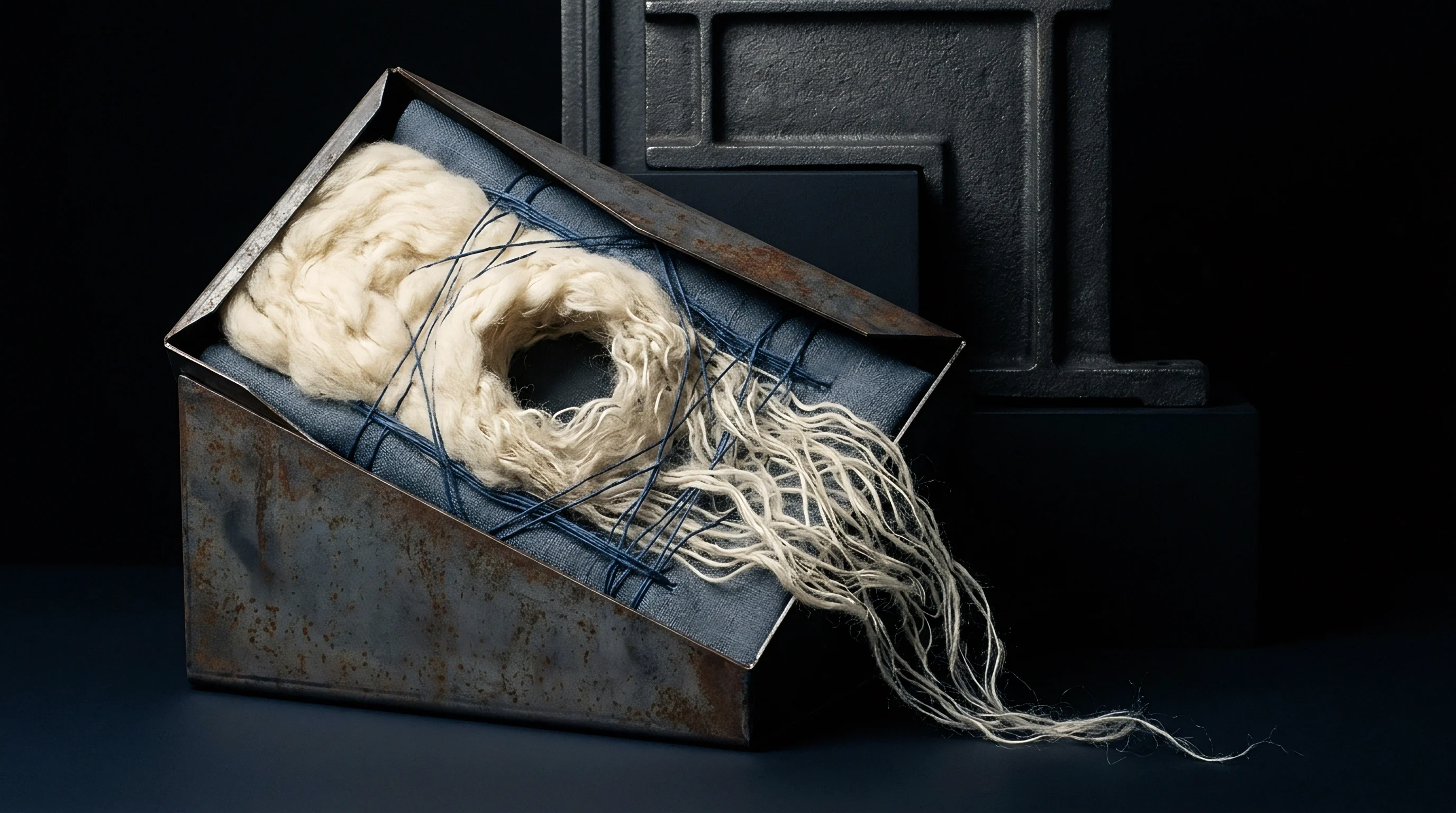
Mechanical Orientation in Card Web Deposition
Cylinder wires transfer randomized fibrous masses to the slower surface of the doffer. The surface speed differential between the cylinder, running at thirty-five meters per second, and the doffer, rotating at under one meter per second, forces cotton fibers to decelerate abruptly. The leading ends of fibers transfer to the doffer teeth while their trailing tails remain engaged with the faster cylinder wire.
As the cylinder pulls away, the trailing tails fold backward, forming hooked configurations.
| Cylinder-to-Doffer Speed Ratio | Trailing Hooks (%) | Leading Hooks (%) | Double Hooks (%) | Straight Fibers (%) | Drafting Force Peak (cN) |
|---|---|---|---|---|---|
| 35:1 | 54.2 | 17.8 | 12.4 | 15.6 | 420 |
| 40:1 | 57.6 | 16.5 | 13.1 | 12.8 | 465 |
| 45:1 | 61.2 | 15.1 | 14.3 | 9.4 | 510 |
| 50:1 | 64.8 | 13.9 | 15.5 | 5.8 | 560 |
High speed ratios increase fiber fracture and intensify trailing hook formation. The mechanical consequence manifests as increased cohesion and elevated drafting resistance in the card sliver.

Reversal Dynamics across Successive Drafting Passes
Material flow between machines alters the direction of bent fiber ends. Coiling card sliver into a can reverses the strand orientation from bottom to top. When the technician feeds this can into the creel of a breaker drawframe, the trailing hooks from the card enter the drafting system as leading hooks.
This inversion is beneficial for fiber straightening.
Leading hooks entering a roller drafting zone experience gentle, sequential extension. The front roller pair grips the straight tail while the hooked head accelerates, pulling the fiber straight against the friction of surrounding filaments. Conversely, trailing hooks entering a drafting nip are gripped at their bent apex, causing them to jam and break, which generates additional short fragments.
Combing eliminates hooked terminals. Spinning systems require an even number of drafting operations between the card doffer and the ring spinning spindle. An odd number of reversals presents trailing hooks to the spinning triangle, resulting in poor yarn tenacity, elevated end breaks, and unacceptable mass variation.
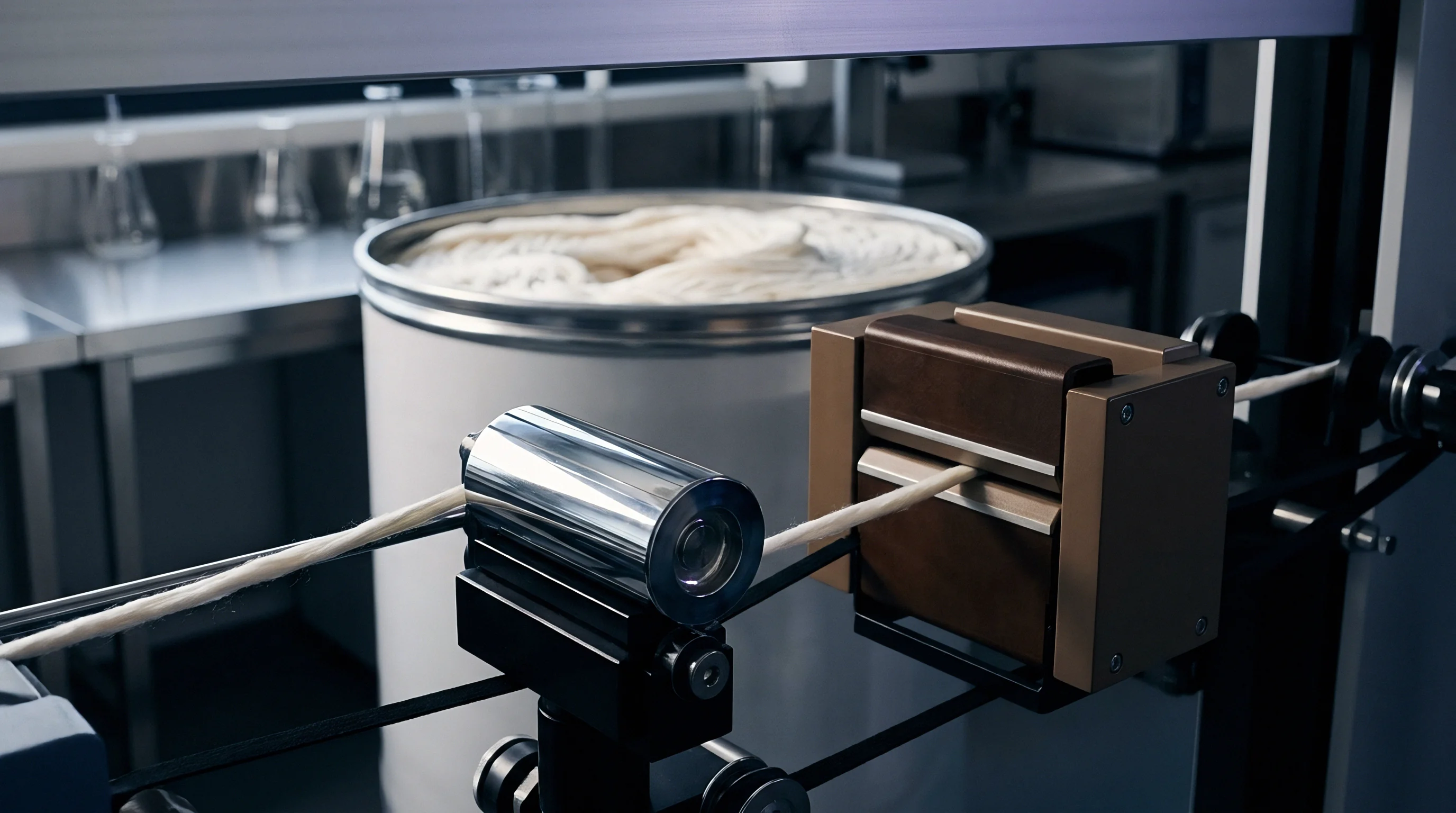
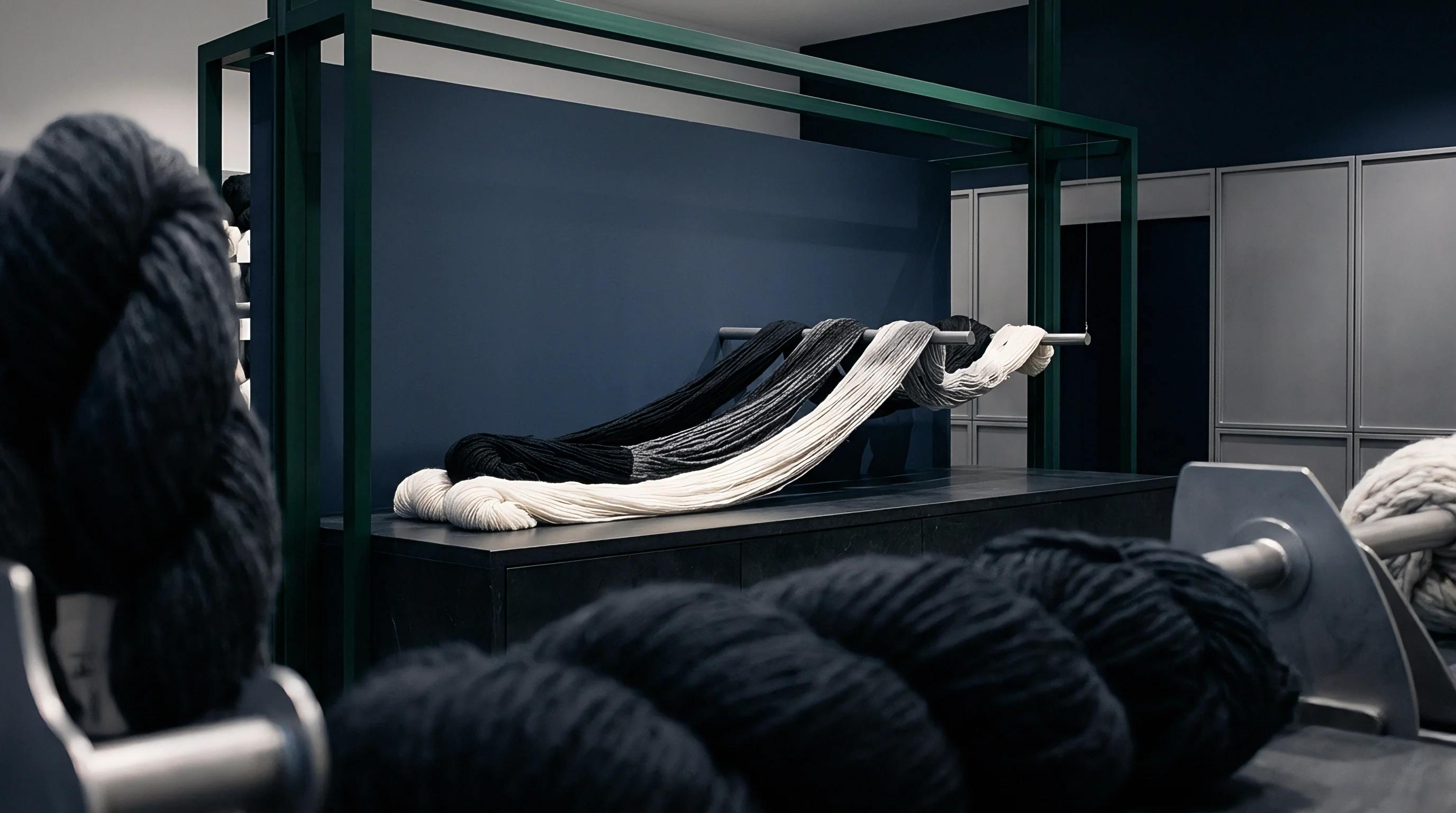
Nip
Linear density reduction relies on pairs of steel and rubber-covered rolls rotating at differential surface speeds. The spacing between successive pairs of rollers represents the roller gauge. Setting this distance requires an exact balance between fiber control and mechanical safety.
If the distance is set narrower than the longest cotton fibers in the distribution, the front rolls grip the leading ends while the back rolls clamp the trailing ends, snapping the fibers across the drafting field.
Fibers under fifteen millimeters float. Filaments lacking attachment to either the back or front roller nip drift freely within the drafting zone. These floating fibers move at unpredictable velocities, propelled only by boundary-layer air currents and inter-fiber friction.
As floating fibers cluster, they create cyclic waves of mass variation that show up as distinct peaks on the spectrogram.
Roll grip fails when staple span falls below the mechanical nip boundary.
Short fragments migrate outward. The uncontrolled movement of floating elements forces shorter fragments to the periphery of the drafting strand, where they shed as fly or wrap around drafting aprons.
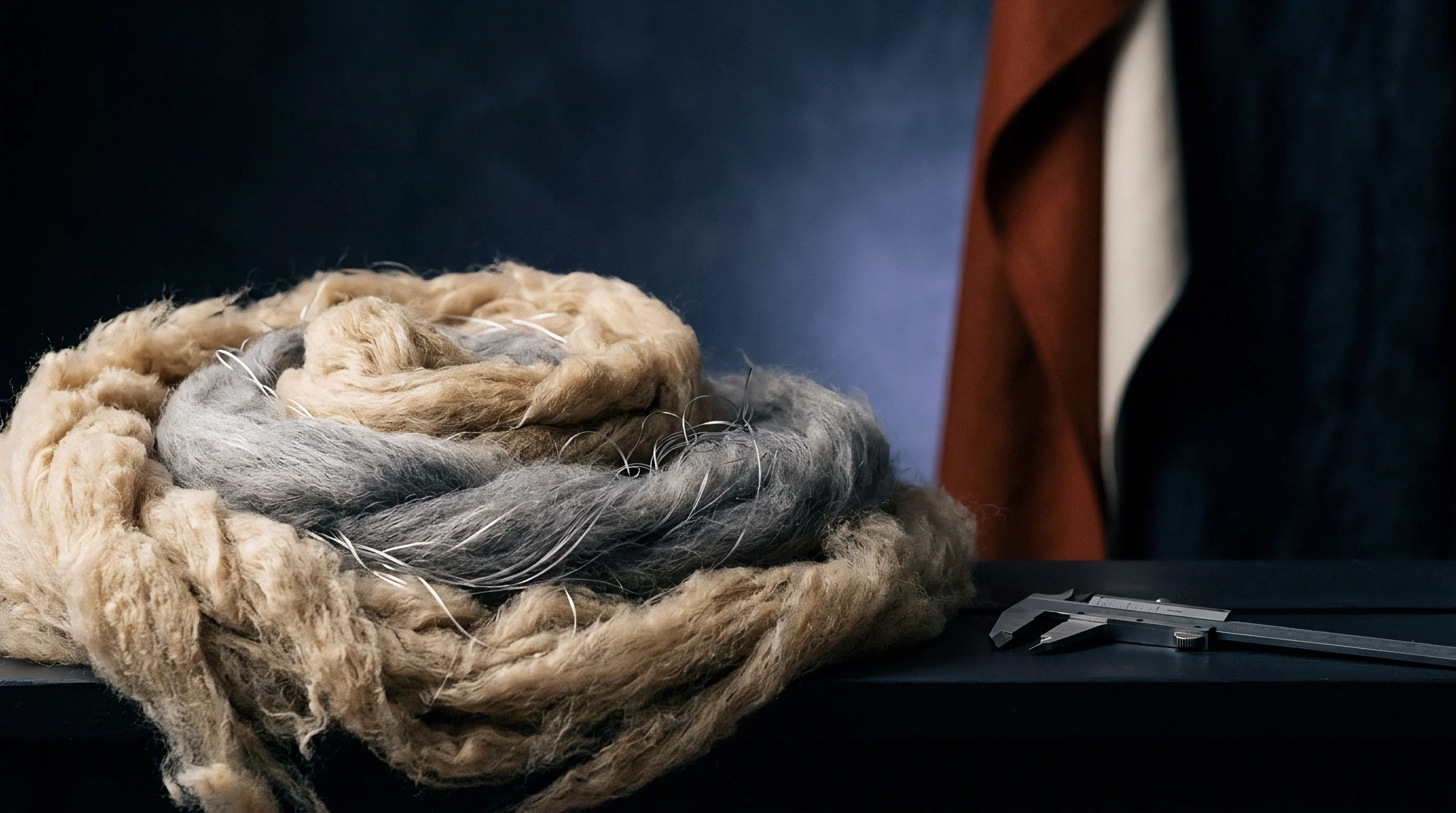
Does Roller Gauge Setting Dictate Floating Fiber Accumulation?
Top roller distances relative to staple boundaries establish the uncontrolled zone in drafting passages. When processors widen the roller gauge to accommodate long fibers, the uncontrolled zone expands. A wider zone allows a larger fraction of the short fiber distribution to float without mechanical restraint.
Autolevelling mechanisms cannot correct floating fiber waves. Open-loop and closed-loop autolevellers on modern drawframes measure total sliver mass variation entering or leaving the machine. They adjust the main draft ratio to compensate for long-wavelength sliver thickness changes.
Autolevellers lack the frequency response needed to capture the rapid, millimeter-scale mass shifts caused by floating fiber clusters.
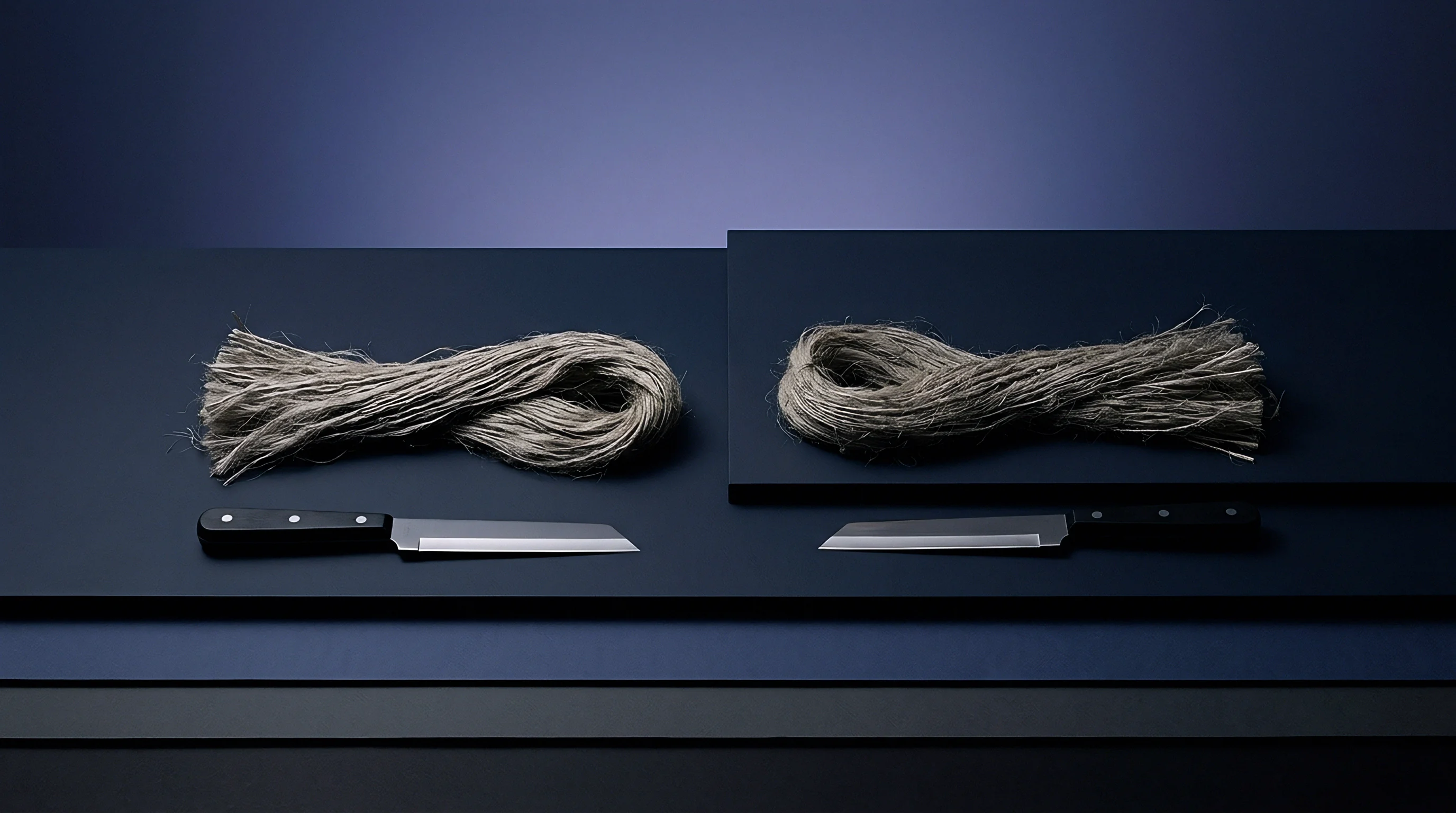
Drafting Waves and Mass Fluctuations
Uneven acceleration among uncontrolled filaments produces periodic thickness cycles in delivered strands. A cluster of floating fibers accelerates suddenly to front-roll speed, leaving an empty, thin spot behind it. This alternating dense and sparse structure constitutes a classic drafting wave.
In high-speed cold metal rolling mills, strip thickness depends on roll gap rigidity and lubrication film thickness. In cotton sliver preparation, drafting stability depends similarly on inter-fiber friction and the boundary clamping pressure exerted by the synthetic rubber cots. If cot hardness drops below seventy-five Shore A or surface grooving develops, clamping pressure deteriorates, accelerating floating fiber detachment.
- Gauge clearance baseline establishes the minimum distance between the front and middle roller nips, calculated by adding three millimeters to the Upper Quartile Length by weight.
- Break draft selection sets the preliminary tension draft between middle and back rollers to break inter-fiber cohesion without initiating mass drafting.
- Cot hardness audit verifies that drafting roll coverings maintain eighty-three Shore A hardness on breaker frames and seventy-eight Shore A on finisher frames to resist grooving.
- Pressure bar adjustment positions the central deflecting bar to press the fiber fringe downward, introducing artificial frictional resistance that arrests floating fibers.
Friction coefficients vary with wax. Cotton lots containing high sugar deposits or variable surface wax alter drafting forces unpredictably, leading to sudden slip-stick drafting oscillations.
How much floating fiber accumulation can a finisher drawframe tolerate before yarn count coefficient of variation exceeds contract thresholds remains an open commercial question.

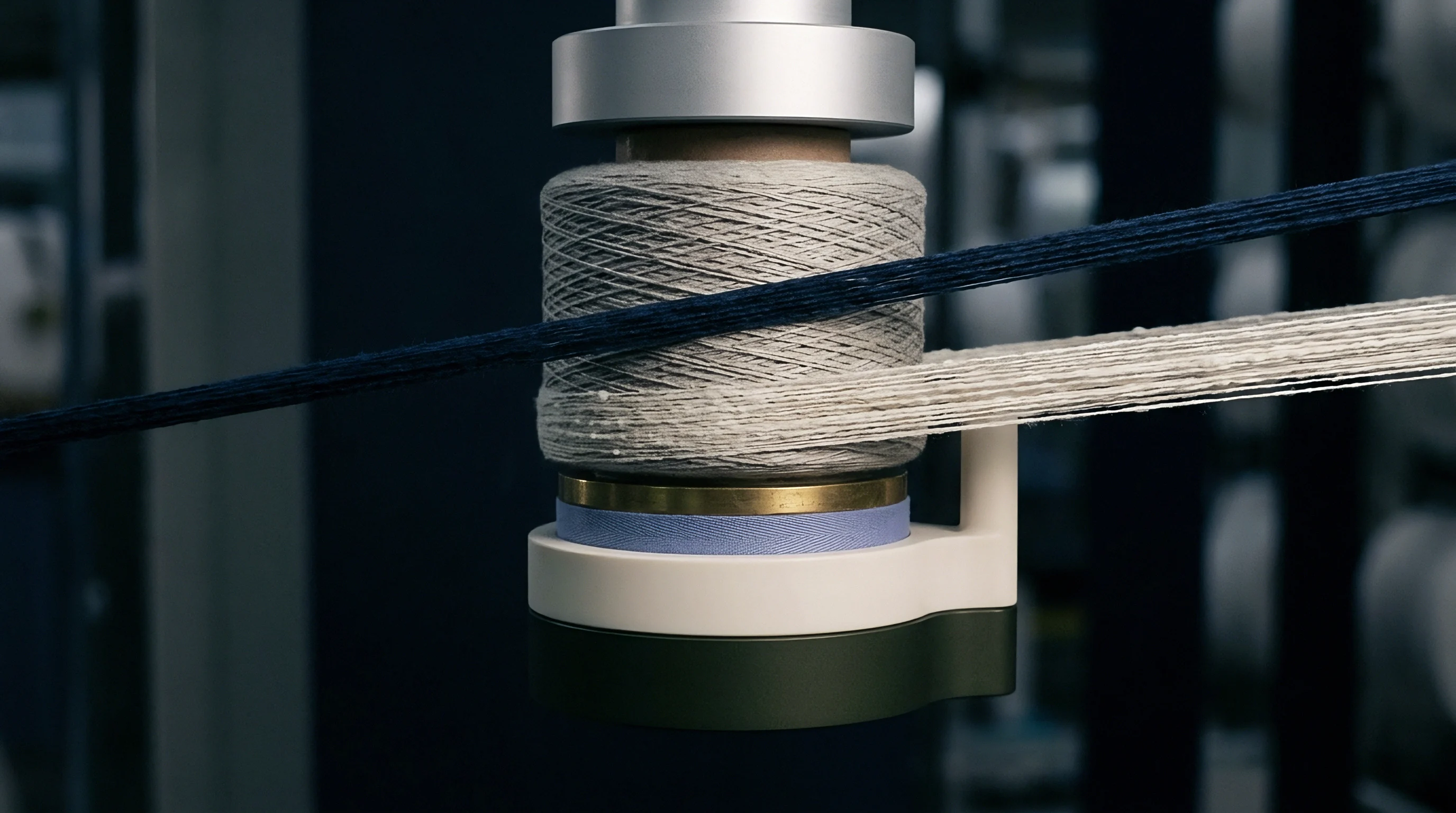
Comb
Preparation of uniform laps precedes the mechanical extraction of short fragments and neps. The combing machine processes parallelized lap sheets, clamping them in intermittent nipper jaws. A revolving half-lap cylinder dressed with saw-tooth wire strips combs through the projecting fiber fringe, removing all entities unheld by the nippers.
A top comb needle strip descends into the fringe as detaching rollers withdraw the combed fibers, collecting remaining short fragments from the tail ends.
The combing process fundamentally alters the shape of the fiber length distribution curve. While carding and drafting displace the distribution toward shorter intervals through fiber breakage, combing selectively truncates the lower tail of the distribution. The machine removes fibers shorter than twelve to fifteen millimeters, leaving a modified distribution characterized by high Mean Length, compressed dispersion, and minimal Short Fiber Content.
Comber noil extraction contracts short fiber content below five percent on combed sliver.
Nippers release clamped fringes. The detaching roller pair grips the combed leading ends and pulls them forward, piecing the freshly combed tuft onto the trailing end of the previous combed web. The overlap creates an intermittent piecing seam that requires subsequent drawframe leveling.

Do Autoleveller Corrections Suppress Fiber Fraction Variance?
Sensor displacement mechanisms modulate overall draft ratios to smooth out heavy or light yardage. However, autolevellers cannot selectively segregate or reposition short fibers within the strand. A sliver with a severe Short Fiber Content defect retains that defect through drawframe autolevelling, showing up later as low yarn elongation and weak yarn tenacities on automatic cone winders.
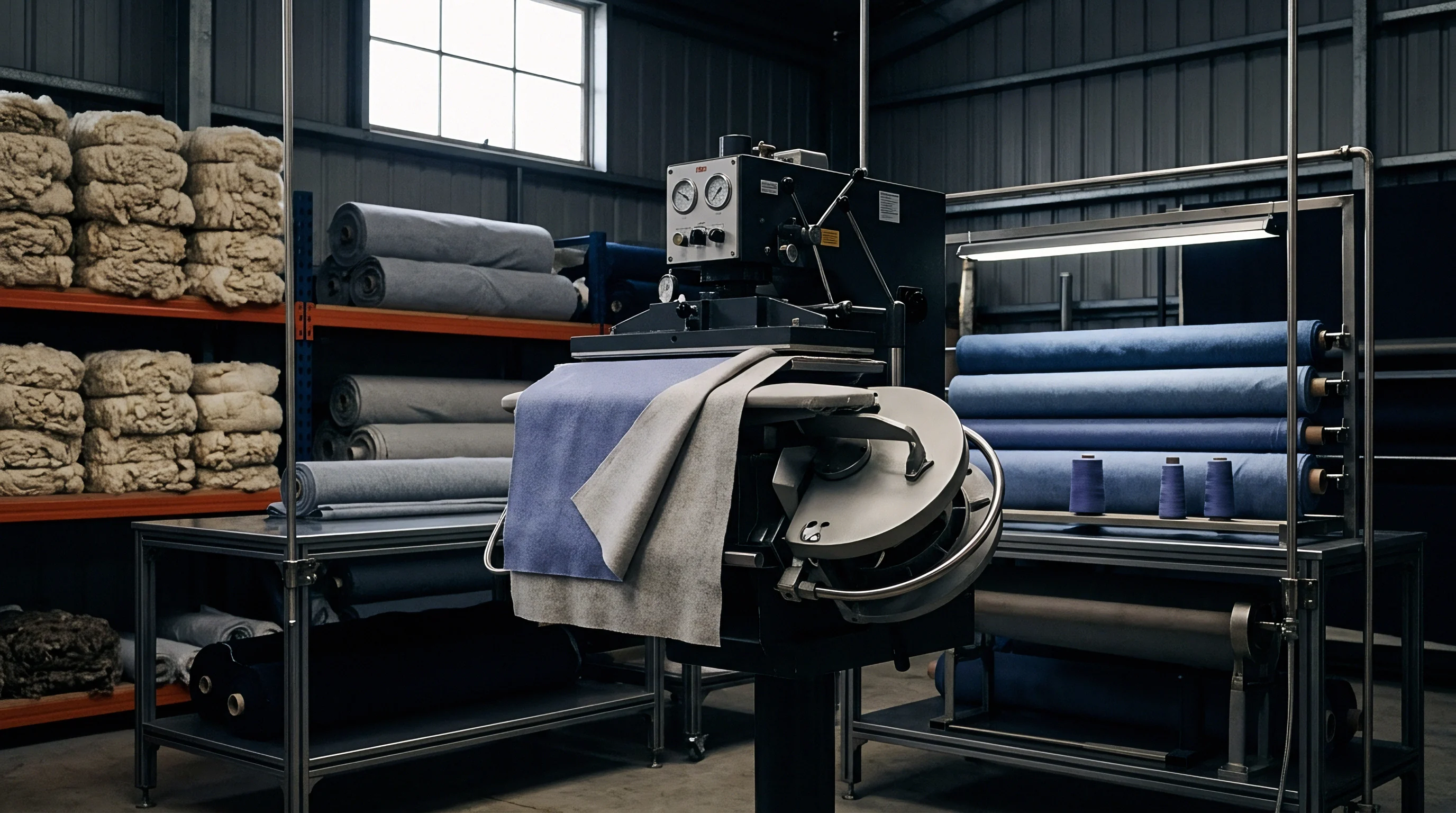
Lap Preparation and Detaching Distance
Sheet formers align slivers into cohesive mini-rolls with controlled surface cohesion. Sliver lap and ribbon lap passages or modern breaker-drawframe lap formers parallelize the input strands. Proper lap preparation ensures that trailing hooks face the comber nippers, allowing comber needles to straighten them rather than comb them out as waste.
The detaching distance specifies the clearance between the clamping line of the nippers and the nip line of the detaching rollers. Increasing the detaching distance forces the comber to extract longer fibers into the waste stream, raising the noil percentage and increasing the Upper Quartile Length of the combed sliver.
| Comber Configuration | Noil Extracted (%) | Sliver UQL (mm) | Sliver SFCw (<12.7 mm %) | Noil Mean Length (mm) | Noil SFCw (<12.7 mm %) |
|---|---|---|---|---|---|
| Uncombed Lap Feed | 0.0 | 28.9 | 11.8 | — | — |
| Light Combing (Low Waste) | 12.2 | 30.4 | 6.1 | 12.4 | 62.5 |
| Medium Combing (Standard) | 16.0 | 31.2 | 4.2 | 13.8 | 54.2 |
| Heavy Combing (Fine Count) | 20.5 | 32.1 | 2.8 | 15.2 | 46.8 |
Noil extraction drops total yield. Extracting twenty percent waste improves fiber length metrics, but increases the raw material cost per kilogram of finished yarn.
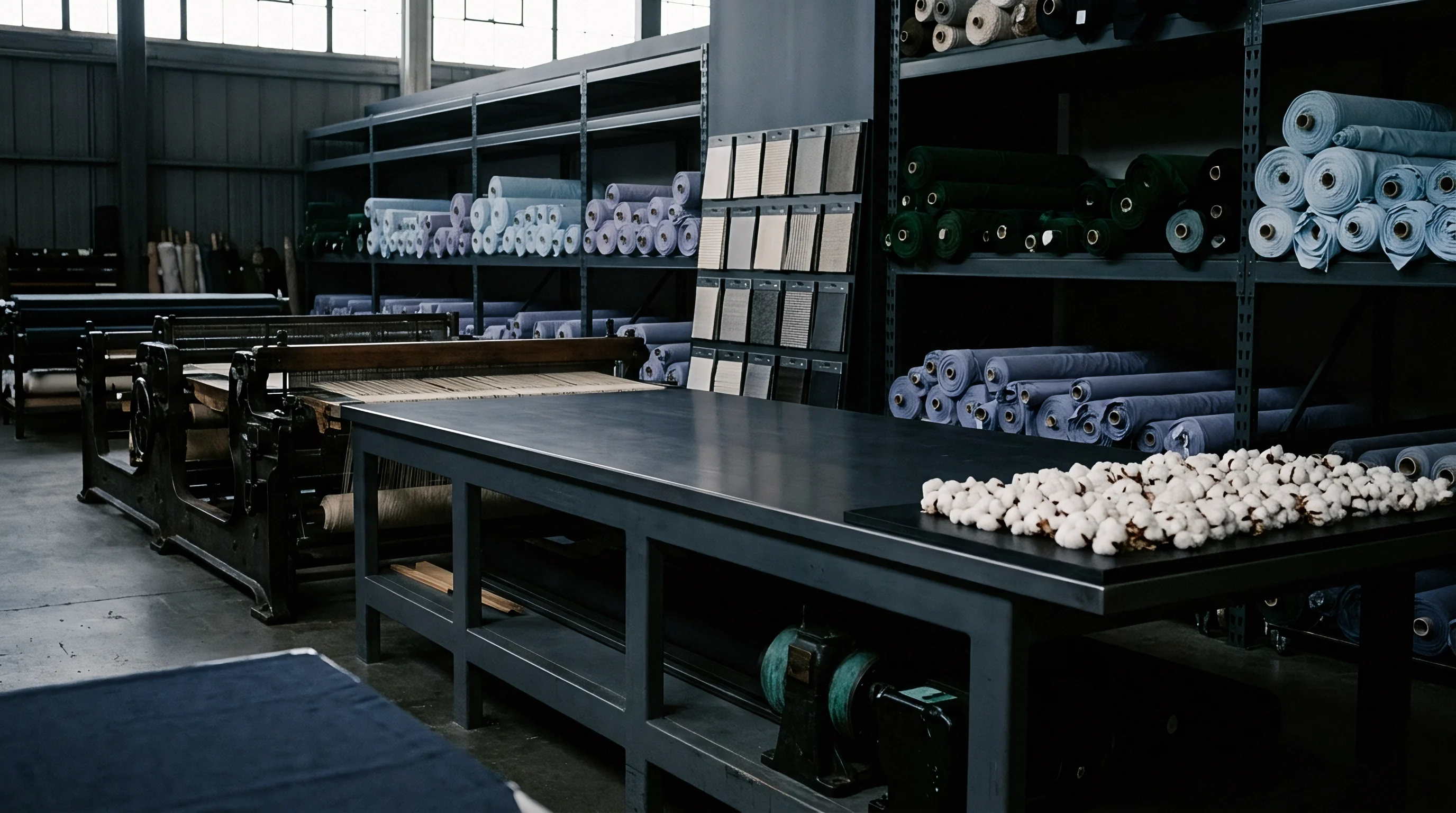
Comber Noil Extraction Economics
Separation of sub-half-inch fibers imposes direct yield losses on spinning lines. Consider a spinning facility processing fifty metric tons of raw cotton daily to manufacture Ne 40/1 combed ring-spun yarn. The raw cotton arrives at a landed price of 2.10 US dollars per kilogram, with an initial Upper Quartile Length of 29.0 millimeters and a Short Fiber Content by weight of 10.5 percent.
Operating the combers at sixteen percent noil yields forty-two metric tons of combed sliver daily. The comber noil sells to open-end rotor spinning mills or nonwoven manufacturers at a discounted price of 0.95 US dollars per kilogram. Net raw material cost per kilogram of combed sliver is calculated by deducting the noil byproduct credit from the total raw lint expenditure:
Fifty thousand kilograms of lint cost 105,000 dollars. Eight thousand kilograms of comber noil generate 7,600 dollars in byproduct revenue. The net outlay for forty-two thousand kilograms of combed sliver equals 97,400 dollars, resulting in a net fiber cost of 2.319 dollars per kilogram of sliver.
If the mill increases comber noil extraction to twenty percent to suppress Short Fiber Content from 4.2 percent down to 2.8 percent, forty thousand kilograms of combed sliver emerge from fifty thousand kilograms of lint. Ten thousand kilograms of comber noil return 9,500 dollars. The net fiber expenditure of 95,500 dollars spread over forty thousand kilograms yields a net fiber cost of 2.388 dollars per kilogram of sliver.
The extra four percent noil extraction adds 0.069 dollars per kilogram to sliver manufacturing cost. For an annual production of twelve thousand metric tons, this operational adjustment demands an additional 828,000 dollars in working capital. The technical manager must balance this expenditure against the commercial value of fewer spinning end breaks and reduced yarn hairiness.
- Detaching distance calibration governs waste extraction percentages, shifting the cut-off boundary on the cumulative frequency curve.
- Top comb needle density controls cleaning efficiency, with thirty needles per centimeter required for fine counts to strip trailing nep cores.
- Feed length per cycle dictates the thickness of the fiber fringe presented to the cylinder needles, directly altering fiber breakage rates.
- Nipper grip uniformity prevents slippage of long fibers into the noil collection stream during backward half-lap combing strokes.
Suppliers often claim that elevated raw cotton short fiber counts can be neutralized simply by turning up comber waste extraction, ignoring the resulting direct margin erosion.

Spindle
Delivery strands entering the roving frame or spinning triangle carry the cumulative geometric history of the preparation line. If the finisher drawframe sliver carries an elevated Short Fiber Content, the spinning triangle becomes unstable. Fibers under fifteen millimeters fail to incorporate securely into the twisting yarn core.
Instead, their ends protrude from the surface, shedding onto drafting cots or floating away as waste fly.
Thin places trigger breaks. A high population of short fibers causes mass irregularity in the spinning zone. When a thin place coincides with a cluster of short, untwisted fibers, the tensile force applied by the traveler exceeds the bundle strength, causing an instantaneous yarn break.
Ring spinning frames running high short-fiber slivers experience elevated end break rates, dropping operator efficiency and elevating labor costs.
Short fiber accumulation directly elevates downstream spinning end breaks and hairiness.
Trash particles lodge in teeth. Accumulated foreign matter in sliver drafting zones forces fibers aside, intensifying localized fiber scatter.

Downstream Ring Rail Breakage Rates
Rotational tension applied during insertion of twist stresses weak sliver segments. Modern ring frames operating at eighteen thousand revolutions per minute subject fibers to high centrifugal and tensile forces. Slivers containing more than twelve percent Short Fiber Content by weight generate over thirty end breaks per thousand spindle hours.
Reducing sliver Short Fiber Content below seven percent cuts breakage rates to under twelve per thousand spindle hours.
Roving twist controls cohesion. When drafting combed sliver on roving frames, low Short Fiber Content reduces roving hairiness and allows lower twist multipliers. Lower twist multipliers increase roving delivery speeds and accelerate ring spinning draft initiation.
Mass Variance and Count Strength Product
Evenness testers calculate CV percentage along twenty-five-millimeter cut lengths. Fiber length distribution parameters dictate the theoretical limit of yarn evenness. Martindale formulas confirm that yarn mass unevenness increases as the number of fibers in the cross-section decreases, or as fiber length variation broadens.
Slivers with broad length distributions yield yarns with poor Count Strength Product values.
Roll runout degrades yarn count. Eccentricity in drawframe or spinning rolls compounds the drafting irregularities caused by short floating fibers. Tension drafts stretch slivers.
Excessive tension between the drawframe calendar roll and the coiler head pulls fibers apart, damaging length uniformity before cans reach the roving frame.
Controlling fiber length parameters throughout sliver preparation safeguards downstream spinning efficiency and protects finished yarn consistency.