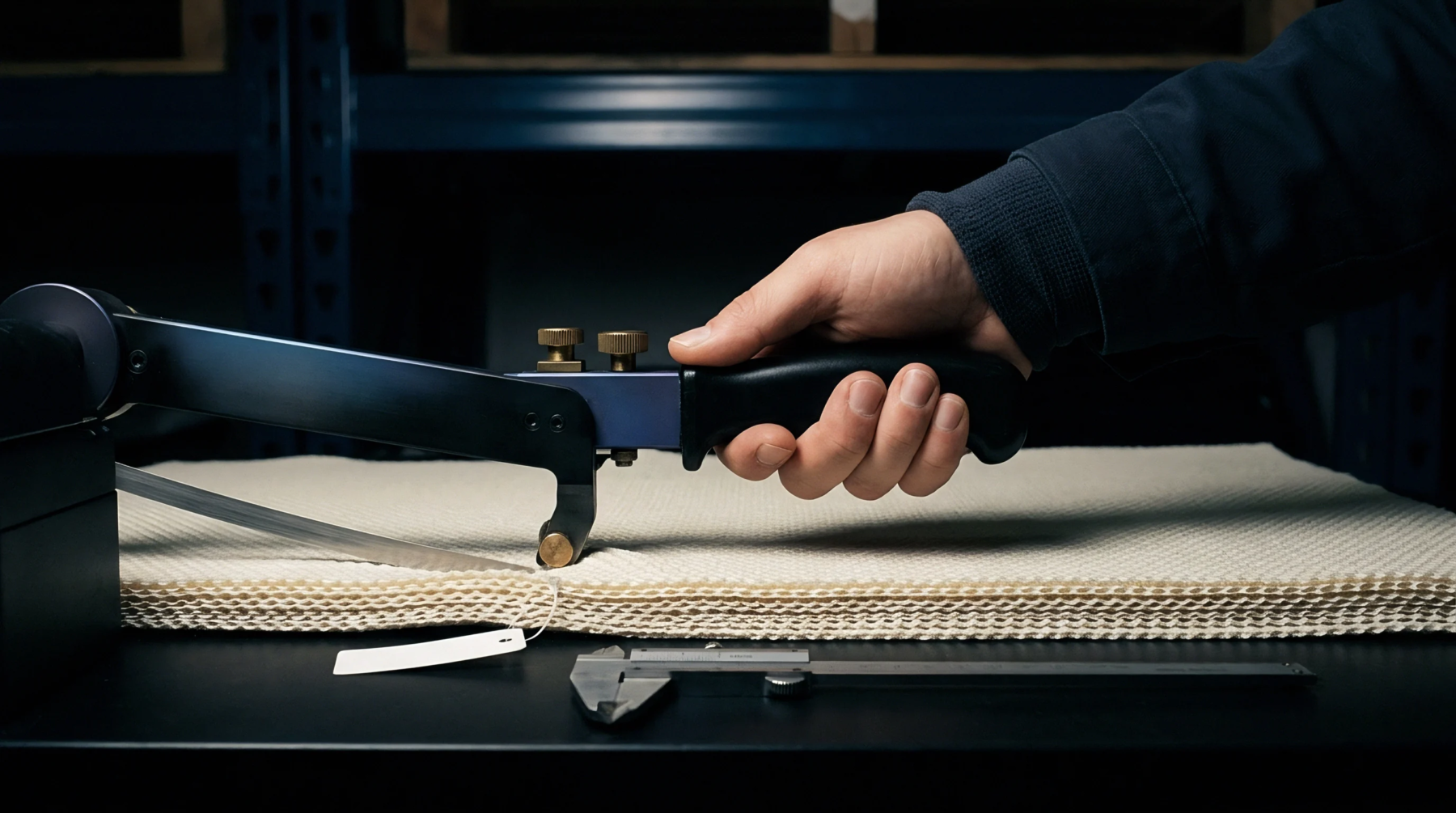
Swatch Sampling Position Deciding Whether a Batch Passes
Physical swatch position across fabric width and length determines chemical compliance, requiring three-point cross-web sampling to validate batch pass status.
High-temperature polymerization of textile finishing agents creates a permanent covalent bond between adjacent cellulose molecular chains to lock fibre geometry against deformation during laundering or daily wear. durable press resin curing functions as a final stabilization stage for woven cotton goods after chemical padding and partial drying. Factory operators apply specific concentrations of urea formaldehyde or dimethyloldihydroxyethyleneurea to the fabric surface before mechanical heat treatment sets the structure. The reaction locks the molecular position to prevent wrinkling and ensures the material retains a crisp appearance despite repeated washing cycles.
Quality control teams verify this stage by measuring the aesthetic recovery angle of fabric samples under standardized laboratory conditions.
Heat exposure within a tenter frame triggers the condensation reaction that links reactive resin groups to the hydroxyl units of cotton fibres. This transition happens as internal moisture levels drop below five percent and thermal energy overcomes the activation barrier for crosslinking. Accurate temperature control prevents premature fibre yellowing while ensuring consistent network density across the entire fabric width.
Sensors monitor heat transfer rates because uneven distribution leads to localized weak points that tear during high-stress garment assembly or consumer use. Uniformity remains the primary goal during this phase because deviations create permanent variations in drape and hand feel that subsequent wash steps cannot correct.
The dimensional stability provided by this reaction limits the natural swelling of cotton fibres when exposed to aqueous detergent solutions. Water uptake drops significantly because the resin network occupies the interstitial spaces between polymer chains. Rigid junctions between chains reduce the ability of the fabric to shrink or stretch under mechanical tension.
Manufacturers define the performance limits by testing the shrinkage percentage after multiple tumble drying sessions. These measurements confirm that the chemical bond prevents chain slippage even when the polymer matrix experiences thermal agitation. High resin density increases fabric stiffness and simultaneously decreases the tear strength of the finished material.
Excessive crosslinking produces brittle fibres that fail under impact or sharp bending forces. Technicians balance the chemical load to achieve wrinkle resistance without compromising the structural integrity of the base yarn. The reaction stops when the heat source deactivates or the catalyst depletes.
Fabric mills perform durability trials to ensure that the chemical network survives standard enzymatic or caustic wash procedures without degrading into soluble fragments. Residual chemicals often trigger skin reactions if the neutralization wash fails to remove free formaldehyde from the interstitial spaces of the weave. Precise regulation of the curing interval prevents residual monomers from migrating to the fabric surface where they could impact human health or garment odour profiles.
Correctly managed bond densities maximize the longevity of the garment shape throughout its service life.
Physical swatch position across fabric width and length determines chemical compliance, requiring three-point cross-web sampling to validate batch pass status.
Expertise is a utility, not a secret. sentiention™ publishes its working knowledge as open reference: intelligence layer covering the materials it sources, the markets it enters, and the reference that serves both.