Widthwise Variation
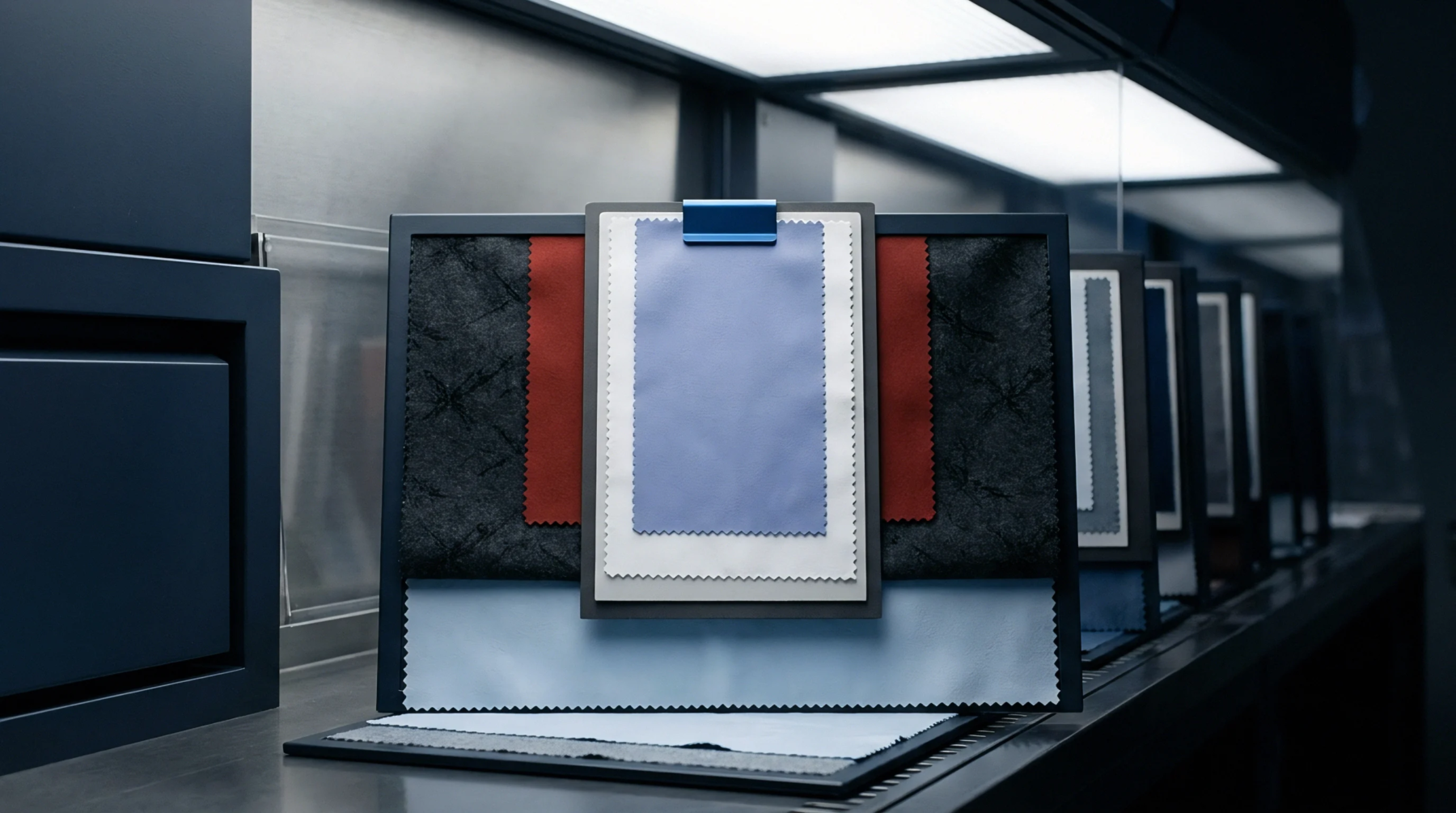
The variation in color across the width of a dyed fabric roll indicates a failure in dye application or pressure distribution during the finishing process. In roll-to-roll dyeing, edge to edge shading is tested by cutting swatches from the left, middle, and right of the fabric web. These swatches are evaluated under standardized lighting or measured with a spectrophotometer.
Processing Origin
Roller and heating discrepancies during the continuous dyeing cycle are the primary origins of such variations. If the center of the roll has less pressure, more dye liquid remains there, resulting in a darker center stripe. Alternatively, non-uniform heating across the stenter frame can cause different dye migration rates during drying.
To measure this systematically, mills record color differences between the left-to-center and right-to-center sections. A color difference exceeding a delta E of zero point five is usually rejected.
Visual Impact
When panels cut from different sections of the width are sewn together, the resulting garment displays visible lines at the seams. This defect ruins the appearance of a shirt or trousers and forces the factory to reject the finished pieces.
Remediation Bound
Adjusting roller deflection or correcting the air distribution in the stenter can reduce this variation. However, once the fabric is dyed and cured, this defect cannot be corrected without completely stripping and redyeing the lot.