Homogeneous Dispersion
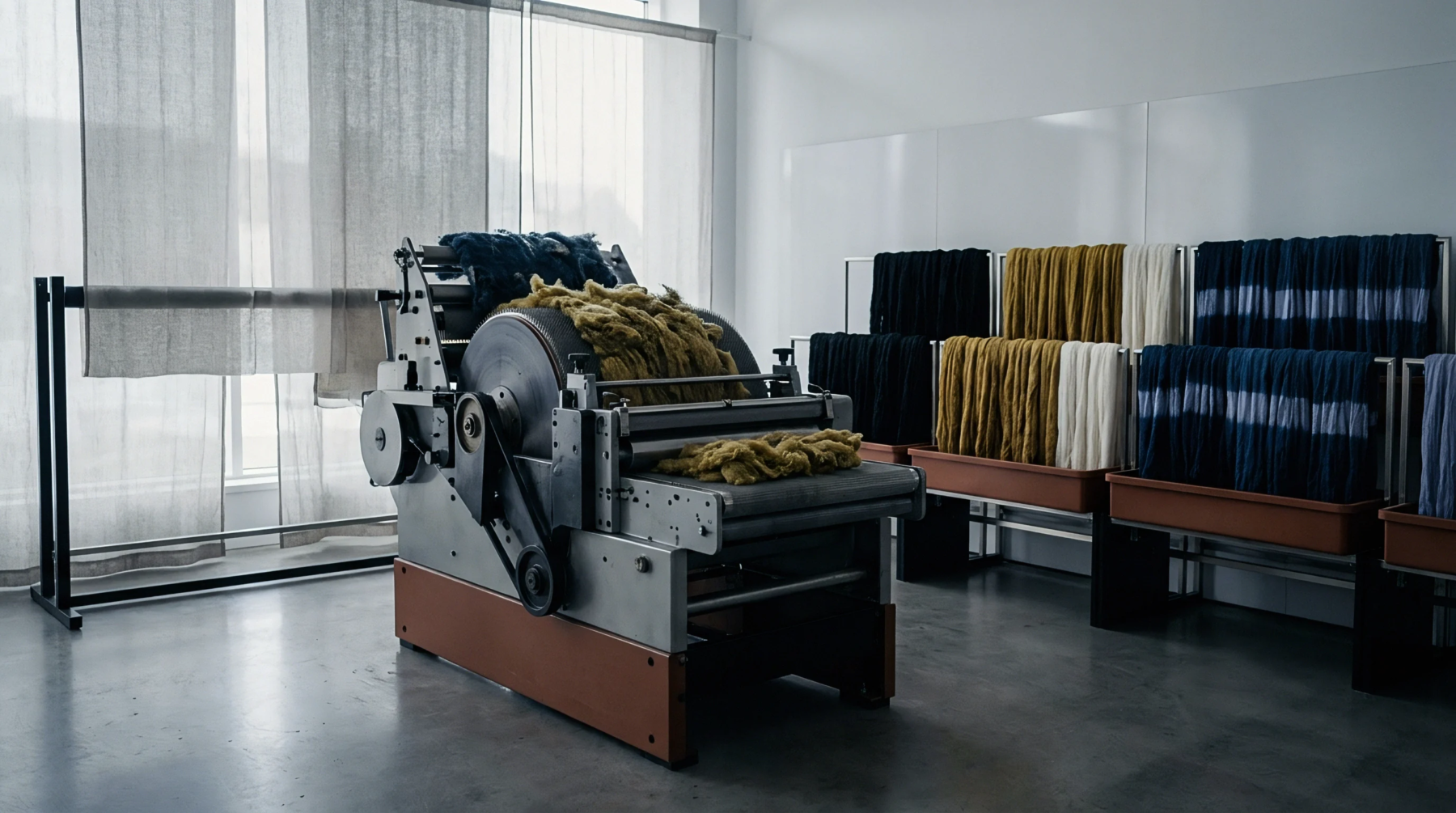
Uniform distribution of discrete fibre types within a single yarn or fabric mass characterizes this state. An intimate mixture occurs when individual fibres of differing chemical composition or physical properties lose their distinct spatial identity through intensive mechanical processing. Production machinery such as carding engines or draw frames facilitates this alignment, ensuring that the resulting component performs as a singular material entity.
Processing Requirement
Pre-spinning stages provide the mechanical force necessary to achieve this distribution. Operators feed specified mass ratios of differing fibre lots into the blowroom line where heavy rollers begin the reduction of locks into smaller tufts. Subsequent carding actions straighten individual fibres, allowing those with different denier ratings or dye affinities to intersperse at the microscopic level.
Consistent bulk density depends entirely upon the repetition of these passages through the equipment.
Quality Benchmark
Laboratory analysis of transverse yarn cross sections confirms the success of the blending procedure. Technicians examine digital slices of the fibre bundle under high magnification to count the frequency of each constituent type along the diameter. Non-uniform results indicate poor mechanical settings or incompatible fibre lengths, both of which degrade the appearance of dyed output.
Verification Threshold
Statistical variance in component distribution defines the limit of acceptable material integration. Mills set target deviation ranges for sample cross sections, rejecting any batch that exceeds these thresholds due to the risk of uneven colouration during wet processing. Proper mechanical alignment prevents the migration of one fibre species toward the yarn core while leaving the other at the surface.