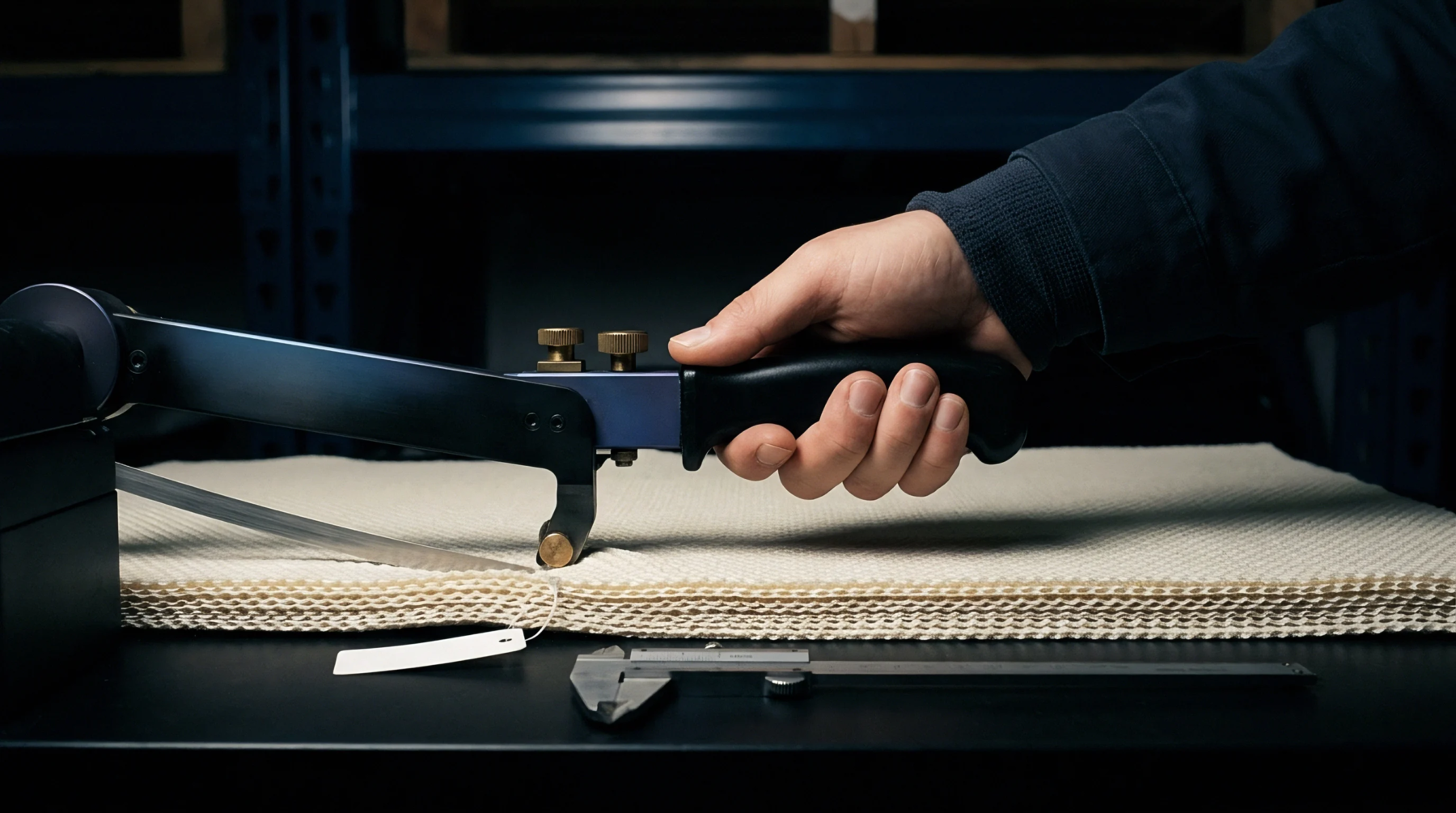
Force Transduction
An electromechanical transducer used to measure the tensile or compressive force applied to a material during mechanical testing. A load cell converts the mechanical force into an electrical signal that is recorded by the test software. This instrument is calibrated against certified weights at regular intervals to maintain laboratory accreditation, and it registers the tension required to rupture yarn or fabric, which is critical for determining material suitability.
Calibration Protocol
Operators attach standard masses to the assembly and compare the displayed output to the true weight to verify linearity. Any deviation outside the tolerated range requires adjustment by a certified technician. This procedure must occur annually to comply with international textile testing standards.
Range Limitation
Every transducer has a maximum capacity that cannot be exceeded without causing permanent deformation to the internal strain gauges. Using a device rated for heavy canvas to test fine silk yarn results in poor resolution and inaccurate data. Selecting the correct model ensures both sensor safety and high measurement precision.
Quality Contribution
Accurate force readings allow mills to verify that their products meet the minimum strength requirements specified by their commercial buyers. This prevents the shipment of weak material that could fail during garment manufacture or use. Reliable tensile data is essential for securing long term supply contracts.