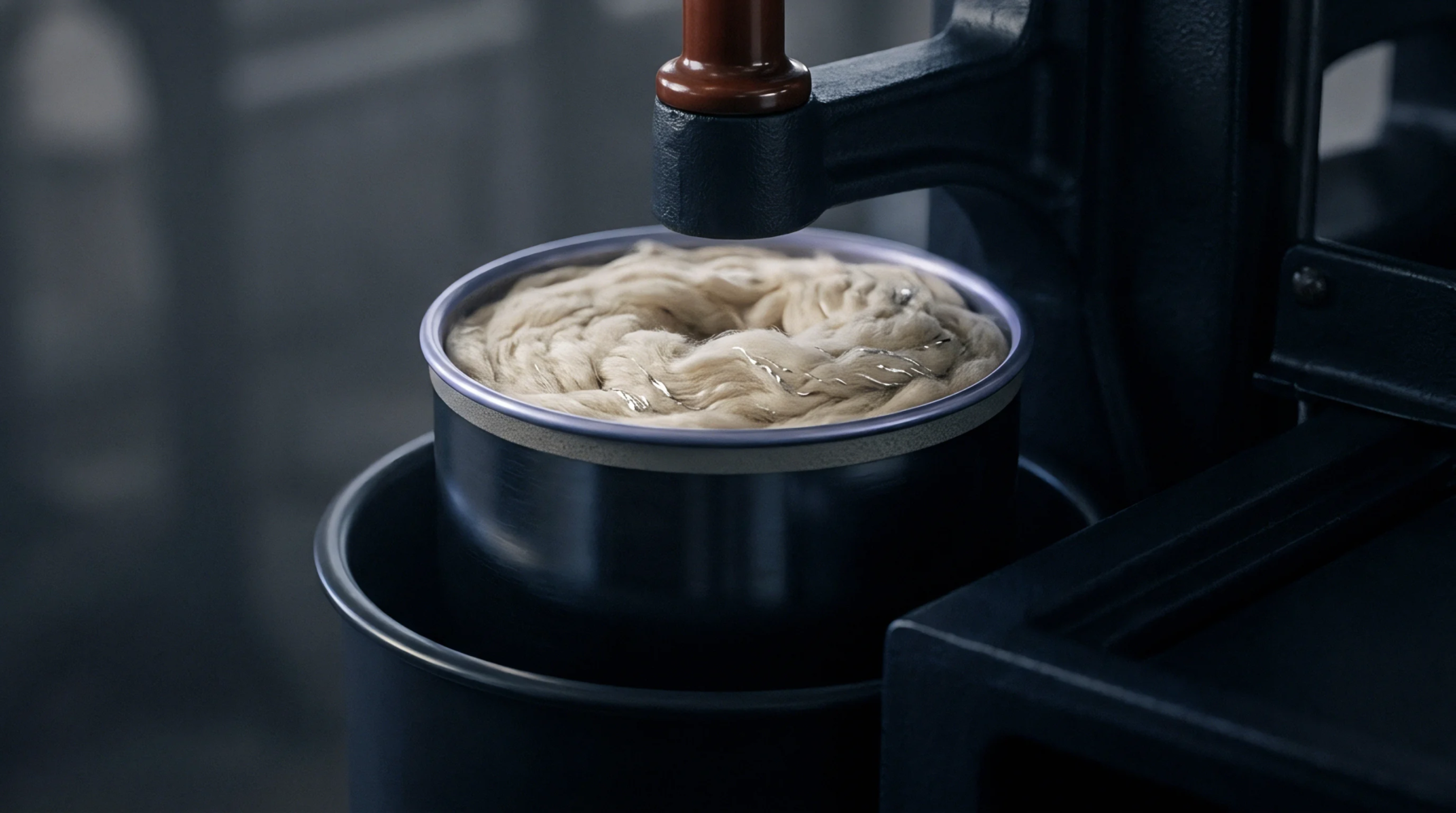
Air Permeability Measurement
Air flow resistance through a fixed mass of loose cotton fibre determines the specific surface area and average maturity of the material. This micronaire range provides a standardized value calculated by forcing a steady stream of air through a compressed plug of fibres inside a calibrated testing chamber. Higher readings indicate coarser or more mature fibres with larger individual diameters while lower readings identify finer or less mature fibres that restrict air passage.
The metric influences downstream processing speeds and uniformity in yarn manufacturing by dictating how many fibres occupy a cross section of a thread.
Processing Compatibility
Variations within a batch require separation or blending to prevent inconsistent dyeing and uneven fabric surface texture. Uniformity in these values allows spinning mills to maintain constant mechanical tension and twist levels during production. Fibre batches with extreme differences create neps or excessive waste during the carding stage as the machinery struggles to process disparate lengths and diameters at a single setting.
Chemical Affinity
Dye uptake efficiency changes according to the maturity level identified by this measurement. Immature fibres lack the secondary cell wall thickness necessary to absorb pigments at the same rate as mature fibres, creating streaks or light spots in the finished textile. Mills compensate for these variances by adjusting dye bath duration or temperature, though such corrections add cost and complexity to the finishing department.
Calibration Boundary
International standards define the numerical limits of these values based on the weight of the test specimen and the required pressure differential across the plug. Testing equipment must undergo periodic verification using cotton calibration samples with known values to ensure consistent results across different laboratory environments. Air leakage around the sample chamber or moisture content in the cotton can introduce false results that misrepresent the physical structure of the fibres.
Proper humidity control in the lab remains essential for accurate readings.