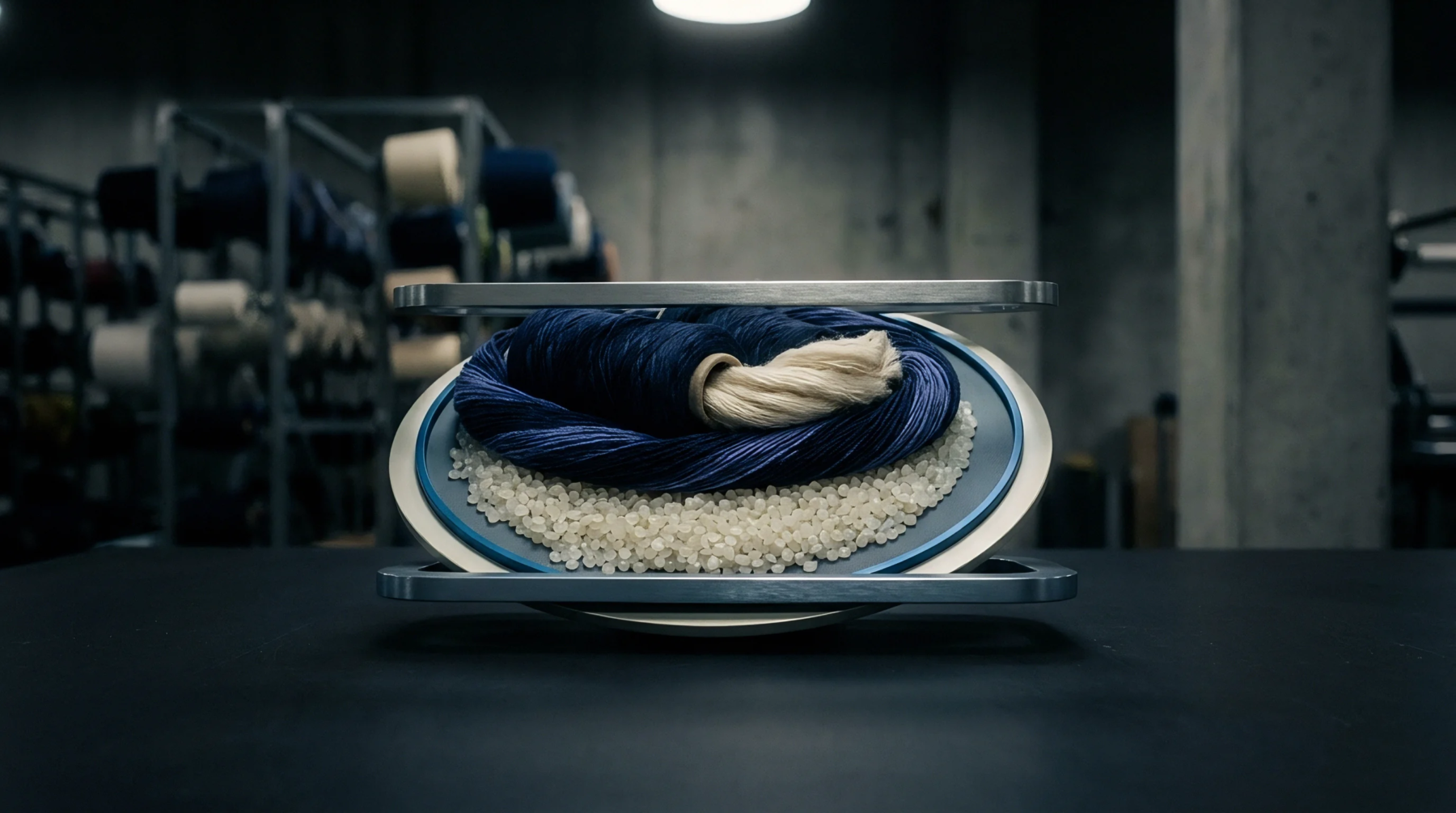
Thermoplastic Resin
Lightweight polyolefin polymer used extensively in the production of non-woven fabrics and moisture-wicking base layers. Utilization of polypropylene offers the lowest density of any commercial fiber, allowing for the creation of bulky yet light insulation. Hydrophobic properties make the material a standard choice for medical gowns and face masks.
Functional Benefit
Fiber structure does not absorb water into its structure, so moisture moves through the fabric via capillary action rather than soaking the yarns. Inherent hydrophobic properties prevent the growth of bacteria and fungi, which is a common issue with natural fibers in damp conditions. Low thermal conductivity ensures that heat is retained near the body, supporting its use in cold-weather athletic gear.
Recycling Profile
Material recovery involves melting the used fiber back into pellet form for secondary industrial applications.
Production Limitation
Difficulty in dyeing the fiber requires the addition of pigments during the melt extrusion process rather than traditional vat dyeing. Because it has a very low melting point, polypropylene cannot be ironed or exposed to high-heat drying cycles without permanent damage to the fabric structure. Manufacturers must label these garments with specific care instructions to prevent the loss of texture and shape during consumer use.