Resolving Microscopic Polypropylene Fibril Detection Limits in High Velocity Pneumatic Blowroom Ducts
Optical detection of microscopic polypropylene in pneumatic blowroom ducts demands 100 kHz line scan sensors and 365 nm UV-A excitation to prevent yarn defect claims.


Duct
Air velocity inside pneumatic transport lines determines the physical trajectory of uncleaned cotton tufts. Blowroom piping systems convey raw fiber lots from bale openers through cleaning machinery at line speeds ranging between twelve and twenty-five meters per second. Microscopic polypropylene fibrils, originating from woven bale packaging materials or agricultural bundling twines, move alongside raw cotton tufts within these enclosed channels.
Differences in aerodynamic drag, fiber density, and surface area create complex particle trajectories across the pipe cross-section.
Static charges force particles against walls. Air velocity governs transport. Raw cotton tufts form loose aggregates with an effective density significantly lower than that of compressed polyolefin film ribbons.
While cotton tufts readily suspend in high-speed air streams, flat polypropylene fibrils experience lateral drift toward duct boundaries due to lift forces generated by high velocity shear layers.

Aerodynamic Behavior of Fibrillated Packaging Polypropylene
Packaging materials made from extruded polyolefin ribbons break down into elongated strands during bale opening operations. These fragments feature thickness profiles between ten and fifty micrometers and width profiles between zero point two and one point five millimeters. When introduced into a pneumatic conveyer operating at eighteen meters per second, the Reynolds number inside a standard four-hundred-millimeter round pipe exceeds four hundred thousand, establishing fully turbulent airflow.
Drag coefficients for thin flat ribbons differ substantially from spherical cotton tuft models. A flat fibril aligned perpendicular to the airflow experiences high drag, matching fluid speed within milliseconds. The same fibril aligned parallel to fluid vectors presents a minimal cross-sectional profile, slipping relative to surrounding air and lagging cotton tuft velocity.
This velocity slip creates spatial separation between cotton aggregates and synthetic contaminants, altering the expected arrival time of fibers at downstream optical sensing locations.
| Parameter Type | Raw Cotton Tufts | Polypropylene Fibrils | Operational Delta |
|---|---|---|---|
| Effective Density (kg/m³) | 15 to 35 | 890 to 910 | +855 kg/m³ polymer mass concentration |
| Terminal Velocity (m/s) | 0.8 to 1.4 | 2.1 to 3.8 | Higher settling velocity in boundary zones |
| Aerodynamic Drag Coefficient | 0.65 to 1.10 | 0.15 to 1.28 | High variance based on ribbon orientation |
| Pipe Radial Position | Center-stream dominant | Boundary layer wall proximity | Lateral displacement toward duct walls |

Tuft Shadowing and Boundary Layer Mass Divergence
Dense fiber aggregates enclose foreign contaminants as air carries the material stream past optical detection stations. Tuft density obscures small particles. When a microscopic synthetic filament sits embedded within a three-gram cotton tuft, ambient or directional light cannot penetrate to illuminate the polymer surface.
Optical sensors fail to capture non-reflecting internal defects regardless of camera resolution or frame rate.
Boundary layer deceleration near internal pipe walls compounds optical detection friction. Air friction reduces flow velocity within five millimeters of the duct surface to less than sixty percent of center-stream velocity. Synthetic strands traveling along duct boundaries spend longer duration inside the optical inspection window, yet their close proximity to reflective steel or acrylic surfaces degrades signal contrast.
Optical reflection from duct walls creates background noise, requiring precise optical polarization and anti-reflective window treatments.
At transport velocities exceeding eighteen meters per second, a ten-micrometer polypropylene fibril lags cotton tuft aggregates by up to three milliseconds due to differential drag coefficients.
Failing to account for velocity differential across duct profiles leaves foreign particles undetected until yarn spinning, resulting in full-lot scrap orders at the dye house.

Kinematics
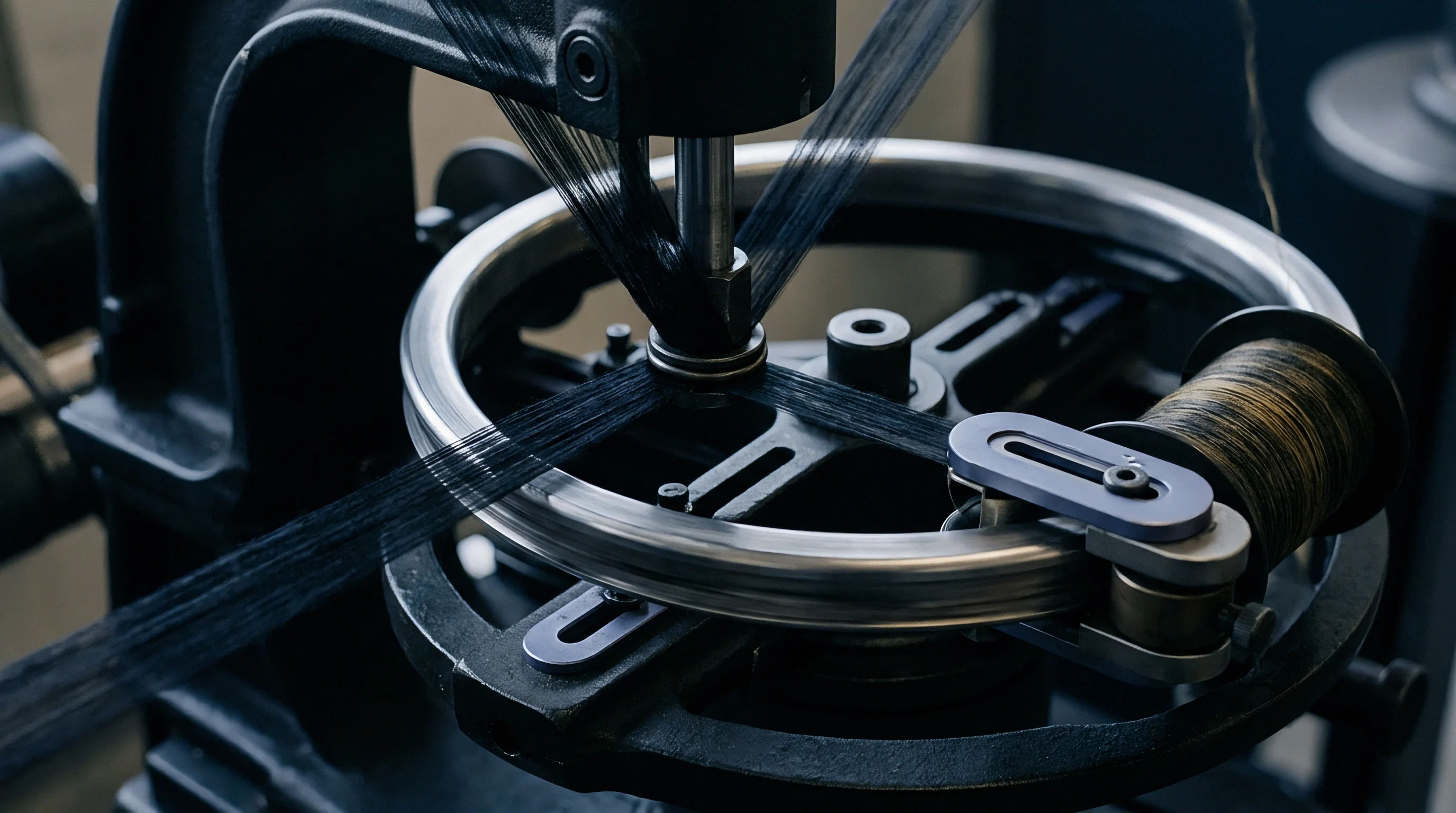
Particle displacement velocity dictates sensor exposure limits in blowroom cleaning machinery. Capturing sharp optical images of a twenty-micrometer polymer filament moving at twenty meters per second presents severe spatial temporal constraints. Exposure times exceeding ten microseconds result in severe motion blur, spreading the optical signal of a micro-fibril across multiple camera pixel rows and dropping peak signal intensity below detection thresholds.
High scanning rates require intense illumination. To maintain sub-millimeter spatial resolution without image distortion, line scan cameras must operate at line frequencies above one hundred kilohertz. At these frame rates, each individual sensor exposure lasts between five and eight microseconds, demanding extreme light flux on the target inspection plane to achieve acceptable signal-to-noise ratios.

Line Scan Rates for Sub-Millimeter Particle Capture
Linear sensor arrays operating in continuous capture mode require high sampling frequencies to resolve tiny synthetic filaments. A camera array featuring four thousand ninety-six pixels mapped across a six-hundred-millimeter duct width provides a nominal spatial resolution of zero point one four six millimeters per pixel. If a polypropylene strand measures fifty micrometers in diameter, its physical width occupies less than half a pixel column width.
Line rate synchronization depends on actual transport speed. When line rates lag duct transport speed, moving target particles pass through the optical scanning plane without triggering sufficient pixel sensor transitions. Conversely, oversampling at excessive line rates generates redundant data arrays, overwhelming digital signal processors and introducing processing latency into high-speed pneumatic ejection systems.

Motion Blur Mitigation in High Velocity Transport
Pneumatic transport speeds reaching twenty meters per second distort optical images when illumination pulse times exceed ten microseconds. Motion blur spreads the photon charge generated by a tiny reflecting particle across adjacent sensor pixels. This diffusion reduces peak intensity values, preventing signal amplification circuits from distinguishing a synthetic fibril from standard cotton trash background noise.
- Motion blur distortion blurring fibril edges across adjacent camera pixel columns when exposure timing exceeds particle transport duration.
- Shadow occlusion occurring when dense cotton tufts shield transparent filaments from optical illumination sources inside transport ducts.
- Spectral overlap confusing bleached cotton natural fluorescence with unpigmented polymer luminescence under non-selective ultraviolet wavelengths.
- Pneumatic air turbulence redirecting ejected waste back into clean fiber streams due to unstable duct pressure differentials.
Short-pulse strobe lighting mitigates motion blur by reducing effective illumination timing to two microseconds or less. High-power LED arrays pulsed in exact synchrony with line scan camera triggers freeze particle movement. Light intensity degrades near duct corners.
Delivering concentrated flux across the entire pipe width requires customized optical lenses that compensate for corner light attenuation.
ISO 1833 chemical separation fail rates increase threefold when pneumatic sorting efficiency drops below ninety-two percent on raw cotton lots.
Equipment manufacturers routinely attribute missed foreign particles to uncalibrated bale opener production rates rather than camera sensor limits.

Luminescence
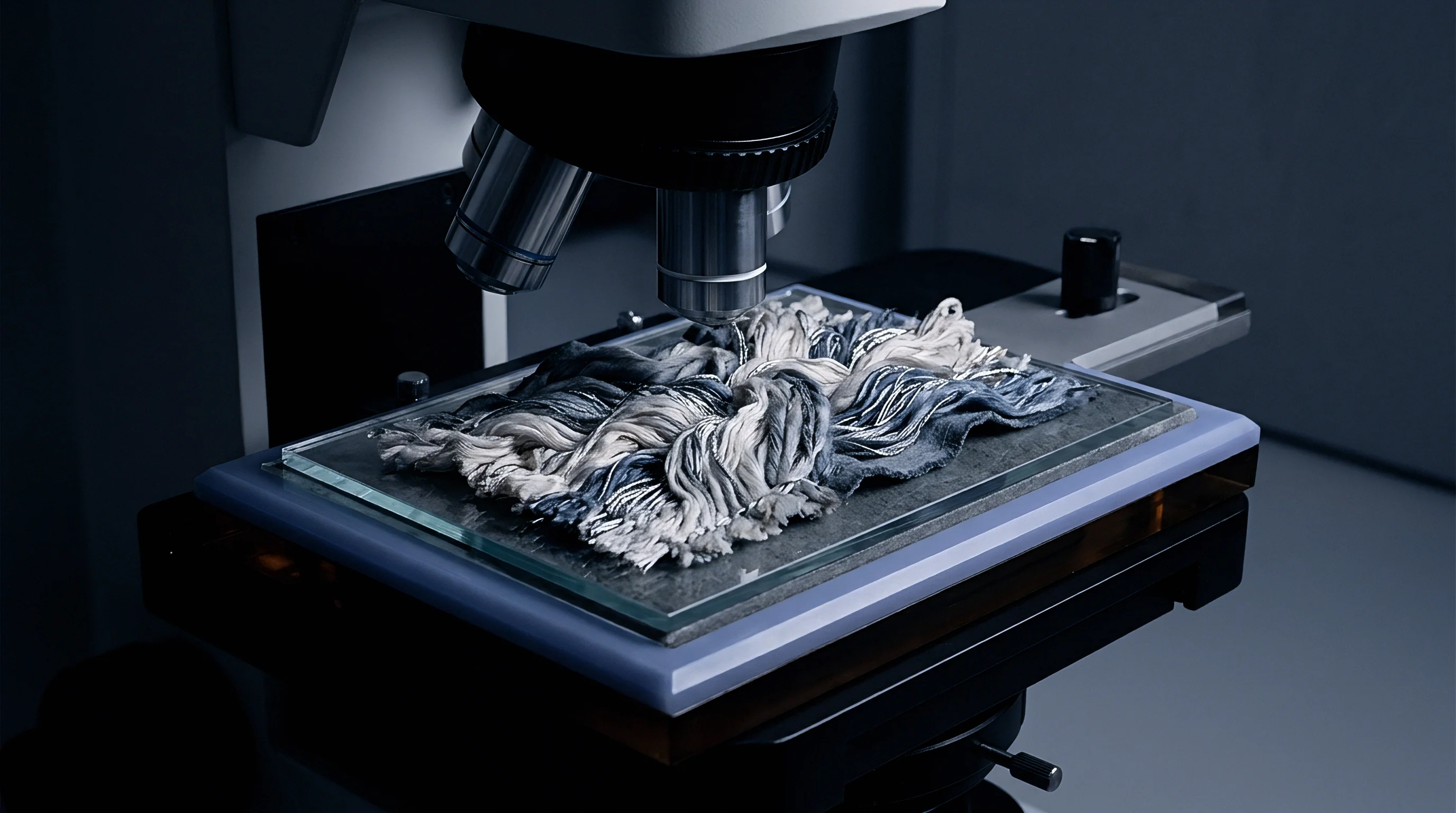
Optical identification relies on excitation wavelengths that induce fluorescence in synthetic polymers while leaving natural cotton fibers muted. Polypropylene in its pure chemical state exhibits minimal spectral response under standard visible light. Commercial packaging tape manufacturers add titanium dioxide whitening agents, anti-oxidants, and optical brighteners during polymer extrusion.
These additives absorb ultraviolet radiation and re-emit photons within visible wavelength bands.
Standard light sources miss clear filaments. Raw unbleached cotton contains natural flavonoids and organic pigments that produce baseline fluorescence under broad-spectrum light. Achieving reliable separation requires narrow excitation bands that maximize synthetic additive emission while suppressing organic cotton background reflection.

Ultraviolet Excitation Mechanics for Unpigmented Polymers
Narrowband light emitting diodes operating at three hundred sixty-five nanometers trigger distinct photon emissions in clear polyolefin tape. At three hundred sixty-five nanometers UV-A, raw cotton cellulose absorbs excitation energy with low fluorescence yield, maintaining a low background intensity. Polyolefin packaging fragments containing residual optical brighteners fluoresce strongly between four hundred twenty and four hundred sixty nanometers, creating bright blue signals against a dark cotton matrix.
Excitation at three hundred ninety-five nanometers presents different spectral dynamics. While three hundred ninety-five nanometer LEDs offer higher optical power output per watt, this longer wavelength excites organic cotton leaf trash, seed coat fragments, and natural waxes. The resulting background noise obscures microscopic filaments, degrading automated detection algorithms.
| Optical Sensor Class | Excitation Wavelength | Target Emission Band | Signal Contrast Index |
|---|---|---|---|
| UV-A Narrowband LED | 365 nm | 420 nm to 460 nm | 8.4 relative ratio over raw cotton |
| UV-A Broad-Spectrum LED | 395 nm | 440 nm to 500 nm | 3.1 relative ratio (high trash noise) |
| Polarized Visible Linear | 450 nm to 650 nm | Reflective cross-polarization | 5.2 relative ratio on clear tape |
| NIR Hyperspectral Line Scan | 980 nm to 1650 nm | Absorbance bands at 1210 nm | 9.1 relative ratio (independent of additives) |

Should Optical Rejection Thresholds Adjust for Cotton Dust Intensity?
Microscopic leaf fragments and seed coat fragments emit background radiation that interferes with automated sensor gating. High trash cotton lots produce elevated ambient fluorescence spikes that trigger false-positive air blasts, ejecting clean cotton fibers alongside contaminants. Adjusting threshold sensitivity dynamically based on running background noise levels stabilizes sorting performance across variable cotton grades.
Fixed threshold settings cause excessive fiber loss when processing low-grade raw cotton containing high leaf content. Dynamic algorithms measure baseline background intensity continuously over five-millisecond rolling windows. When background fluorescence climbs due to localized dust clouds, the optical gating system scales its trigger threshold upward, maintaining selectivity for high-intensity polyolefin emissions.
Polarized cross-lighting isolates translucent polyolefin ribbons against raw cotton fiber matrices without requiring thermal spectral imaging.
Whether multi-wavelength excitation arrays can isolate recycled polyolefin blends without increasing false-positive ejection rates remains an open empirical question across commercial spinning operations.

Resolution
Digital signal processing separates minor synthetic contaminants from background organic noise inside blowing channels. Signal processors execute real-time spatial filtering, threshold analysis, and blob recognition on incoming pixel streams. A valid polyolefin candidate must satisfy minimum intensity, area, and aspect ratio parameters before triggering downstream pneumatic ejectors.
Raw cotton trash background complicates detection. Microscopic fibrils exhibit high length-to-width ratios, appearing as continuous linear features across consecutive line scans. Spatial recognition algorithms exploit this geometry, differentiating elongated filaments from spherical trash particles or dark leaf fragments through directional convolution kernels.
Signal-to-Noise Ratio Baseline in High Trash Environs
Raw cotton contains variable concentrations of botanical debris that reflect light across multiple spectral bands. Defining a robust detection boundary requires calculating the signal-to-noise ratio where signal represents peak light intensity reflected or emitted by a synthetic particle, and noise represents background reflectance from raw cotton fibers and botanical dust.
Signal processing units calculate localized variance across the camera field. When processing high-grade combed cotton, background noise variance remains low, enabling detection of synthetic particles down to fifteen micrometers in width. Low-grade cotton containing high bark and leaf content elevates background noise variance, forcing operators to increase minimum detection limits to forty or fifty micrometers to prevent system overload.
Spatial Pixel Density Requirements for Micro Fibrils
Camera sensor pitch defines the minimum detectable strand width in high-speed optical inspection boxes. Resolving a twenty-micrometer fibril requires an optical magnification system that maps that fibril across at least two complete camera sensor pixels to satisfy the Nyquist sampling criterion. Single-pixel hits are routinely discarded as electronic noise or cosmic ray spikes by digital signal processors.
High spatial resolution demands massive processing bandwidth. A dual-camera system operating at one hundred kilohertz line rates with four thousand pixels per camera generates eight hundred megabytes of raw sensor data per second. Field-programmable gate arrays process this stream on-board, performing real-time thresholding to identify target coordinates within three microseconds of optical exposure.
- Calibrate the LED array output to baseline intensity using an unbleached cotton standard swatch.
- Adjust camera exposure timing to match pneumatic duct line velocity measured via pitot tube.
- Set optical sensor threshold gates above raw cotton trash fluorescence noise background.
- Pass test strands of twenty-micrometer polyolefin tape through the detection chamber at operational line speed.
- Measure ejector nozzle delay times against physical fiber deflection positioning inside the collection bin.
Consider an operational scenario where a six-hundred-millimeter duct runs raw cotton at twenty meters per second. Utilizing an eight-thousand-pixel line scan sensor yields a spatial resolution of seventy-five micrometers per pixel. A twenty-micrometer fibril fails to cover a full pixel area, reducing effective signal intensity to twenty-six percent of full-scale emission.
To register a detection event under these conditions, light source power must increase by a factor of three point eight relative to baseline standards for millimeter-scale contamination.
Standard purchase contracts applying ISO 1833 chemical separation clauses shift financial liability for non-reactive synthetic contamination entirely onto the yarn spinner when foreign fiber content exceeds zero point zero five percent by weight.


Separation
Pneumatic divert systems discharge detected foreign materials from the pneumatic transport flow through high-speed valve manifolds. High-speed solenoid valves mounted on a air manifold fire concentrated blasts of compressed air directly across the fiber path when activated. The target foreign particle, along with a minimal quantity of surrounding cotton fiber, is deflected into a waste suction chute for collection.
Fibril mass dictates pneumatic ejection timing. Because microscopic polyolefin strands weigh less than zero point zero five milligrams, air blast force must be delivered with extreme spatial precision. Overly aggressive air blasts create severe turbulence inside transport pipes, disturbing adjacent clean fiber streams and entraining discarded contaminants back into the main line.
Pneumatic Ejector Response Mechanics and Valve Latency
High-frequency solenoid valves actuate within two milliseconds of receiving a trigger signal from the camera processor. Total system response time combines optical exposure delay, FPGA processing latency, air valve mechanical opening time, and compressed air pulse flight time from nozzle tip to target particle trajectory. At transport speeds of twenty meters per second, a total delay of four milliseconds means the target particle moves eighty millimeters downstream between detection and ejection.
Ejector nozzle spacing determines spatial selectivity. Mounting air nozzles at five-millimeter center-to-center intervals across the duct width enables targeted air blasts. Actuating a single nozzle isolates small contaminants, whereas actuating adjacent nozzles simultaneously accommodates larger, tangled polyolefin ribbons.
- Duct wall glass cleanliness ensuring optical window transmittances remain above ninety-four percent during continuous operation.
- Compressed air supply pressure maintaining six bar minimum header pressure to secure immediate ejection valve response.
- Ejector manifold alignment aligning high-speed air jets precisely with camera pixel coordinate maps.
- Waste chamber negative pressure preventing air backflow from re-entraining rejected polypropylene into downstream blowing lines.
Good Fiber Carryover and Yield Optimization
Air blast duration governs the mass ratio between rejected polyolefin strands and accompanying clean cotton fibers. Excessive valve dwell times increase good fiber carryover, discharging valuable cotton lint into mill waste streams. Optimizing nozzle pulse duration to three milliseconds limits waste fiber loss while securing comprehensive foreign particle removal.
| Blast Dwell Duration | Target Ejection Success Rate | Cotton Yield Loss Per Ejection | System Selectivity Rating |
|---|---|---|---|
| 1.5 ms pulse | 78.2 percent | 0.08 grams cotton | High specificity / risk of missing micro-bits |
| 3.0 ms pulse | 96.5 percent | 0.22 grams cotton | Optimal balance for commercial operations |
| 5.0 ms pulse | 99.1 percent | 0.58 grams cotton | Excessive good fiber carryover loss |
| 8.0 ms pulse | 99.4 percent | 1.12 grams cotton | Unacceptable mill yield reduction |
Valve delay settings determine fiber waste. Precision calibration matches compressed air arrival to particle flight trajectories within two-millimeter positional tolerances. Microscopic particles exhibit variable drag characteristics, causing slight flight time variations that demand wide blast patterns to achieve acceptable ejection success rates.
Excessive ejection valve dwell duration converts clean lint into high-value mill waste without improving downstream yarn purity.
Increasing air header pressure always reduces valve response variance before optical recalibration becomes necessary.


Tolerance
Commercial yarn sales contracts enforce strict foreign fiber count limits to protect fabric knitters and weavers from batch rejections. Polypropylene resists standard reactive dyes. When microscopic polyolefin strands pass undetected through blowroom cleaning lines, carding machines, and spinning frames, they wind directly into finished yarn.
During fabric dyeing, these synthetic strands refuse dye uptake, forming bright white streaks across dyed cloth.

Commercial Defect Limits and Uster Contamination Standards
Standard benchmark guidelines categorize synthetic particle counts per hundred kilograms of processed fiber. High-end ring spinning mills producing combed cotton yarns for luxury apparel enforce contamination limits below two polypropylene particles per hundred kilograms of raw cotton. Standard rotor mills producing coarse weaving yarns permit up to ten particles per hundred kilograms before applying price discounts.
Quality audits evaluate incoming raw cotton bales using manual classing and automated optical sampling. Detecting microscopic fibrils in dense raw bales presents severe statistical sampling limits. A twenty-tonne cotton shipment containing thirty isolated polyolefin strands can return clean test reports from standard ten-bale inspection protocols, surfacing defects only when the entire lot passes through blowroom pneumatic systems.
Financial Impact of Unfiltered Polypropylene on Finished Fabric
Unreactive synthetic strands remain undyed in reactive dye baths, creating visible white streaks across finished goods. A single white filament running through a hundred-meter roll of dyed jersey fabric downgrades the entire roll from first-quality to second-quality status. This price reduction slashes fabric value by thirty to fifty percent, wiping out mill operating margins on the affected lot.
| Processing Stage | Defect Discovery Mechanism | Remediation Action Required | Financial Exposure Per Tonne |
|---|---|---|---|
| Blowroom Transport Line | Automated optical duct ejection | Pneumatic waste collection disposal | $12 to $25 (waste fiber cost) |
| Ring Spinning Frame | Optical clearers on winding head | Yarn cut and automatic splice | $80 to $150 (lost efficiency) |
| Knitting / Weaving Mill | In-line fabric optical inspection | Greige cloth downgrading or scrap | $450 to $900 (fabric discount) |
| Piece Dyeing House | Post-dyeing finished fabric inspection | Manual thread removal or garment scrap | $1,800 to $4,500 (full scrap value) |
Undetected filaments create costly white streaks. Downstream liability clauses in raw fiber procurement contracts mandate that spinners verify foreign matter removal through certified test records before issuing batch compliance dossiers. Managing landed costs demands rigorous upstream contamination rejection during initial blowroom processing.